





 Portuguese
  English
  Spanish
  6 min of reading
  2 comments


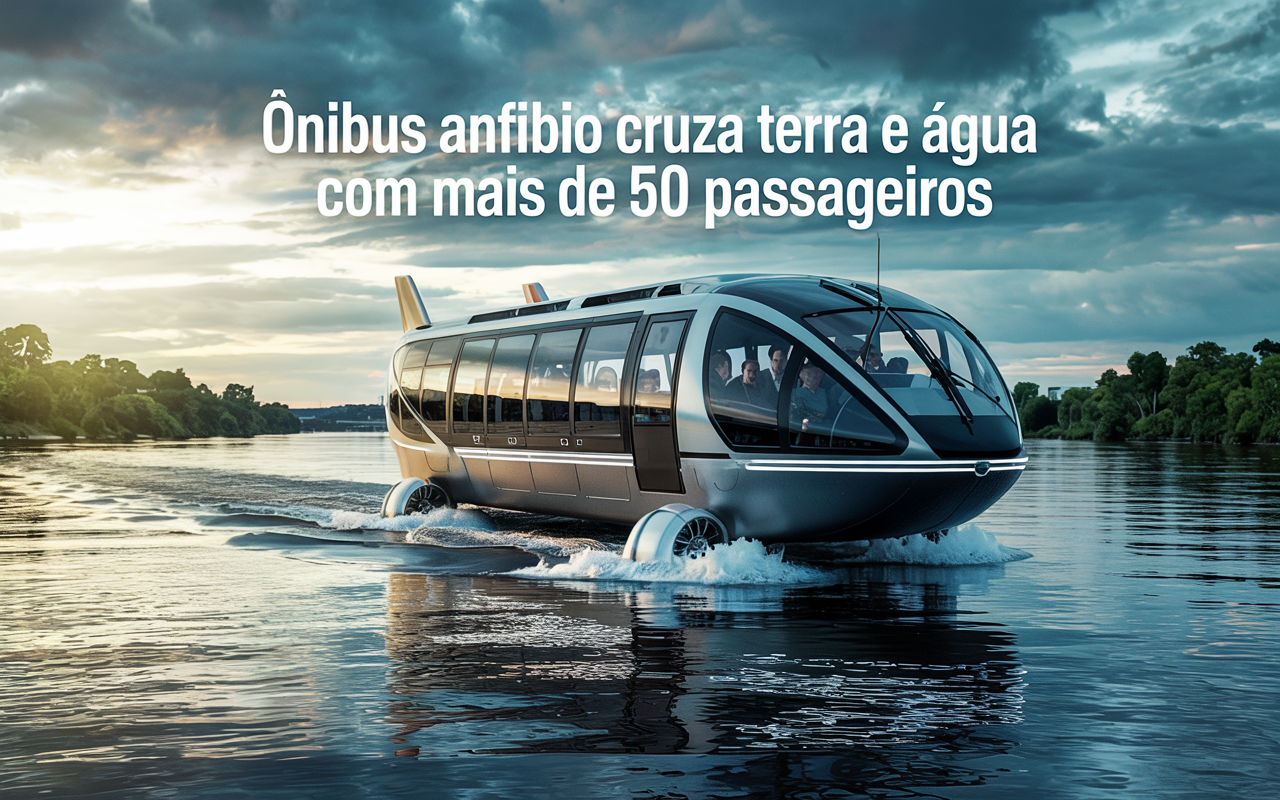


Meet the Amfibus, the Amphibious Bus from Dutch Amphibious Transport. At 3.8 meters tall, with powerful engines and a helicopter-like fuselage, it travels on land and water, transporting up to 55 passengers.
Imagine a bus that crosses paved streets, dives into a river, and continues its journey floating like a vessel. It sounds like science fiction, but it is reality: the Amfibus, developed by Dutch Amphibious Transport, is one of the world’s most impressive vehicles. Equipped with engines similar to those used in airplanes, standing 3.8 meters tall, and with a design inspired by helicopter fuselages, it can carry more than 50 passengers, both on land and in water.
Created in the Netherlands, the Amfibus is a practical and futuristic response for cities with large bodies of water, where the integration of land and water transport is vital. It already operates on tourist routes and urban tests in Europe, being considered a landmark in hybrid mobility engineering. There is also a bus longer than 30 meters with a capacity for 350 passengers; the longest bus in the world was a milestone in modern urban engineering
Today you will discover all the details about the bus that travels in water, its operation, history, technical challenges, use in public transport, and the potential to transform the future of urban mobility.
-
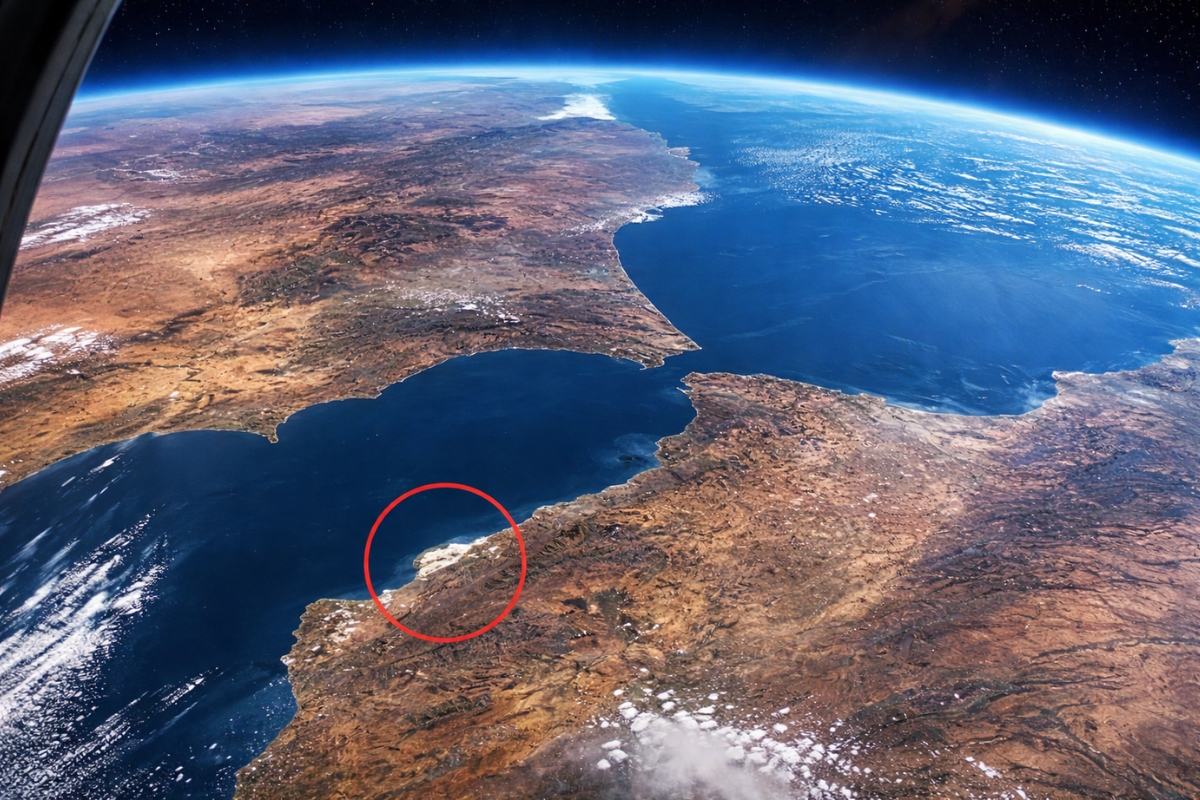
According to an analysis by NASA, only one human-made structure is visible from space, and it is not the Great Wall of China or the Pyramids of Egypt.
-
After 377 years of history, the Brazilian Army will have its first female general: Colonel Claudia Cacho has been promoted to brigadier general by Lula and will receive the sword and command baton this Wednesday in Brasília.

-
A Mercado Livre customer opened their package and found 32 resumes of people looking for jobs crumpled as protective paper inside the box, exposing names, addresses, documents, and phone numbers of dozens of candidates.

-
Iceberg A23a, one of the largest in the world, is undergoing accelerated collapse and may disappear: what explains the end of the ice giant?


What Is an Amphibious Bus?
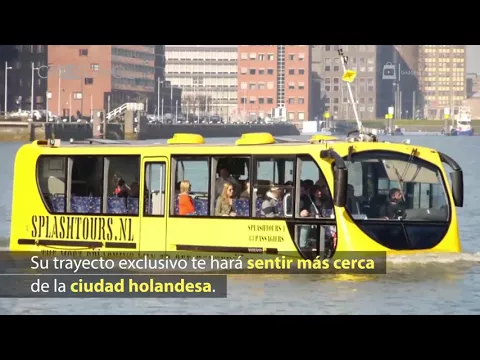

An amphibious bus is a hybrid vehicle designed to operate in both land and water environments. The technology combines aspects of automotive engineering with nautical principles, creating a versatile mode of transportation that can leave a roadway and continue navigating through rivers, lakes, or urban canals.
Unlike military armored vehicles with amphibious capability, the Amfibus was developed for civil, tourist, and urban use, focusing on safety, efficiency, and comfort.
Amfibus: The Bus That Travels on Water and Land
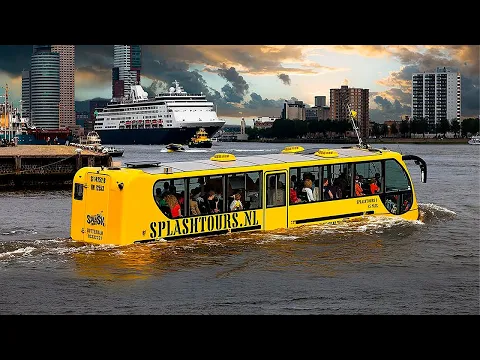
The Amfibus is the most well-known and advanced civil amphibious bus in the world. Developed in the Netherlands, the vehicle is manufactured by Dutch Amphibious Transport Vehicles (DATV) and was designed to provide public transportation in cities surrounded by canals and rivers — such as Rotterdam, Amsterdam, Stockholm, and London.
Technical Specifications of the Amfibus
- Height: 3.8 meters
- Length: 13.8 meters
- Capacity: up to 103 passengers
- Land Engine: Euro 6 diesel engine with 4×2 drive
- Water Engine: water jet propellers (type jet propulsion) similar to those used in speedboats
- Automatic conversion from land to water mode
- Body Material: lightweight and reinforced composites inspired by aircraft fuselages
- Buoyancy control: reinforced with equilibrium tanks and sealed hull
How Does the Amfibus Work?
The operation of the Amfibus is based on a bi-modal propulsion system:
- On land, it operates like a regular bus, with wheels, pneumatic suspension, and automatic transmission.
- In water, the wheels partially retract and enter “free wheel” mode. Jet engines (jet drives) come into action, allowing for navigation with maneuverability similar to riverboats.
The transition between modes takes less than 2 minutes and can occur on inclined ramps, ports, or reinforced shores. The entire system is operated by a single trained driver, with no need for manual changes in controls.
Design Inspired by Helicopters and Airplanes
One of the distinguishing features of the Amfibus is the use of aerospace materials, such as fiber-reinforced composites inspired by helicopter fuselages. This makes the vehicle:
- Light enough to float with stability;
- Corrosion-resistant caused by fresh or saltwater;
- Capable of withstanding the impact of small waves and variations in current.
The aquatic engine system, in turn, was inspired by aero-jet engines, providing strong, quiet, and precise thrust — ideal for urban environments and rivers with controlled currents.
Where Is the Amfibus Already in Use?
The Amfibus has been tested or operated in the following countries:
Netherlands
Tests in Rotterdam, with routes crossing the Maas River. The vehicle connected neighborhoods separated by water, reducing commuting time by 70% during peak hours.
United Kingdom
In 2010, the Amfibus was tested as an alternative to the Glasgow ferry in Scotland. Despite praise for the innovation, issues with strong winds and rough seas prevented its definitive adoption.
Sweden and Denmark
Used on tourist routes between the canals of Stockholm and Copenhagen, with direct boarding from historic streets to water journeys.
Singapore
In the study phase as a solution for integration between commercial districts and tourist islands in the coastal region.
The Amphibious Bus in Tourism
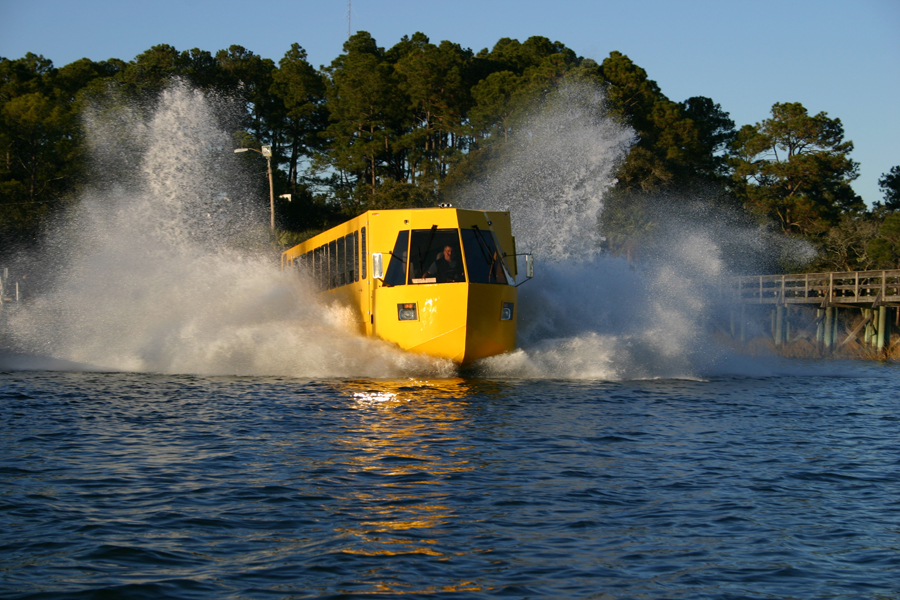
The touristic use of the Amfibus has become one of its main applications. Urban tourism companies in cities with canals or rivers exploit the visual and technological appeal of the vehicle to offer:
- Thematic city tours;
- Evening cruises with dinner on board;
- Educational routes for schools and universities;
- Corporate events and exclusive experiences.
The bus’s futuristic shape, combined with the visual transition from land to water, creates a scenic and unforgettable experience for tourists, as well as promoting the city as a hub of innovation.
Safety and Regulation
The Amfibus strictly complies with road and maritime safety standards, being certified for both means. This includes:
- Mandatory equipment such as life buoys, vests, VHF radios, and flares;
- Stability control and ABS brakes in land mode;
- Certification based on the standards of the IMO (International Maritime Organization) and the EU (European Union) for urban transport.
Operational teams are trained for both traffic situations and nautical emergencies, and the vehicle has dual redundancy for propulsion and steering.
What Are the Challenges of the Amphibious Bus?
Despite the advantages, the Amfibus faces technical and operational challenges:
- High manufacturing costs, with values that can exceed € 900,000 per unit.
- Need for specific infrastructure, such as transition ramps and specialized maintenance.
- Navigation limitations, especially in rough waters, with winds above 30 km/h.
- Political or bureaucratic resistance to integration into traditional public systems.
- Reduced lifespan in saline environments without rigorous maintenance.
The Future of Amphibious Buses
The advancement of urban mobility requires solutions that reduce the need for multiple transfers. The Amfibus and similar projects demonstrate that it is possible to integrate different modalities into a single vehicle — and this could revolutionize:
- Transportation in riparian and island regions, such as the Amazon or the Marajó Archipelago in Brazil;
- Access to flooded communities, where conventional buses do not operate;
- Tourist infrastructure in coastal cities with high visitor traffic.
Companies in Asia and Latin America have already shown interest in the concept, and pilot projects should start by 2026, with electric or hybrid versions of the vehicle.
The Amfibus in Brazil: Is It Possible?
In Brazil, the amphibious bus concept is still little explored, but it holds great potential. Some cities where the project could be tested include:
- Manaus (AM) – with rivers flowing through urban areas and riverside communities;
- Belém (PA) – strong tourist appeal and canal infrastructure;
- Recife (PE) – interconnection between neighborhoods separated by rivers and old bridges;
- Rio de Janeiro (RJ) – integration between the South Zone and nearby islands of Guanabara Bay.
With investments in infrastructure and local regulation, the bus that travels on water and land can become a solution for integrated and sustainable mobility in the country.
The Amfibus, with its futuristic design, powerful engines, and the capacity to cross streets and rivers with over 100 passengers, represents a true revolution in urban mobility. More than a technological innovation, it is a symbol of what public transport can become: efficient, versatile, and ready to face the geographical challenges of large cities.
The success of the amphibious bus depends on strategic urban vision, investments in innovation, and public-private partnerships. But one thing is certain: it has already proven that the mobility of the future does not have to choose between land or water — it can simply use both paths.









Eu acho perfeito, e me surpreende isso não estar sendo usado em mais lugares, acho que no Brasil seria de muita ajuda, principalmente para locais como rios, onde cidades ficam ilhadas e as pessoas precisam usar barcos, chamadas de chalanas, porém esse ônibus anfíbio ajudaria muito eles, e também nos casos de alagamentos como o que aconteceu no Rio Grande do Sul.
Em Manaus não daria certo dentro da cidade pois há uma poluição gigantesca, passagens de nível, pontes, viadutos muito próximas a linha d’água.