





 Portuguese
  English
  Spanish
  5 min of reading
  1 comment


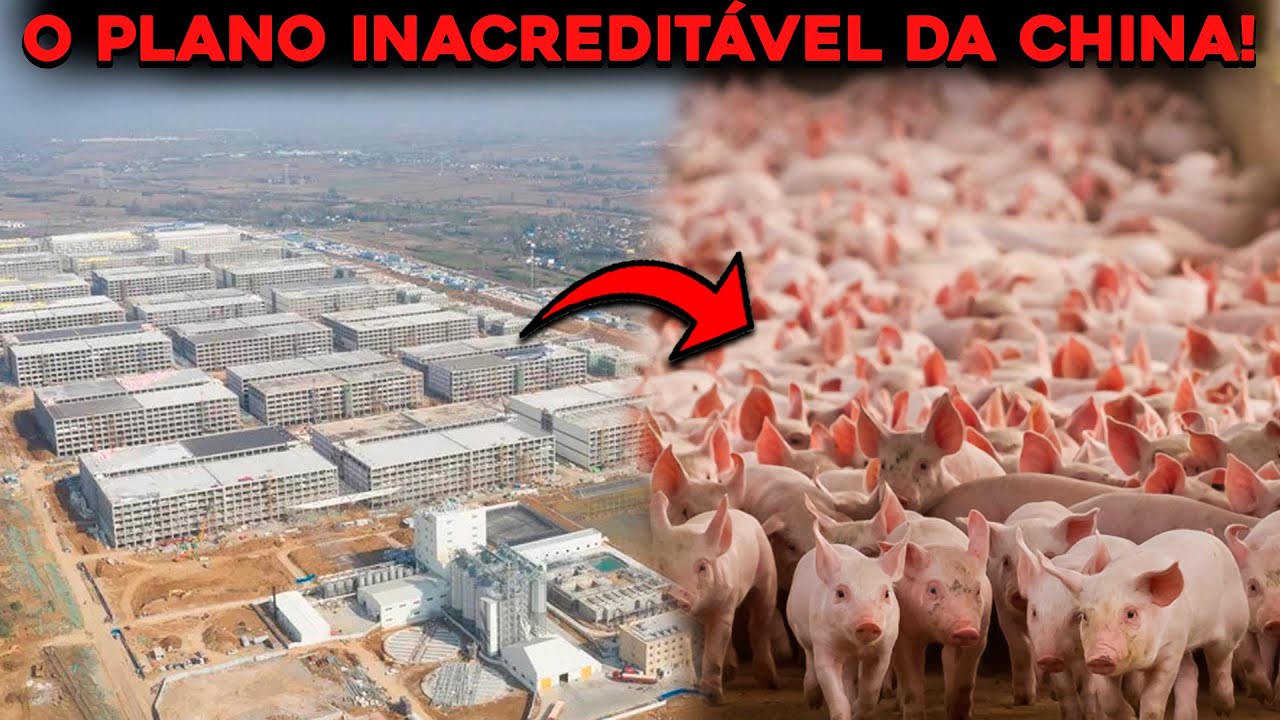


Vertical Pig Farms In China Operate Buildings Up To 26 Stories And Produce Over 1 Million Pigs Per Year With Automation And Extreme Biosafety.
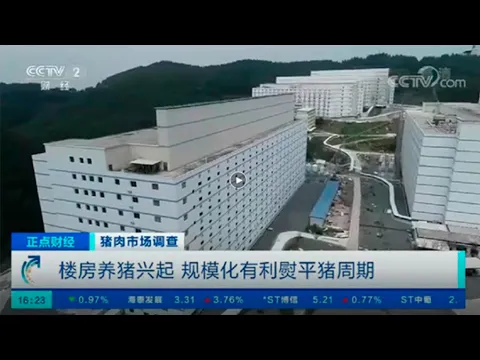
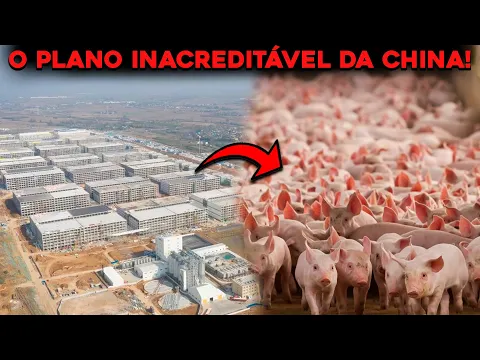
In November 2022, when the pig production unit of 26 stories was officially inaugurated in the city of Ezhou, Hubei province, the world realized that China was completely rewriting the rules of animal production. The gigantic concrete building, comparable to a residential skyscraper, became a symbol of a silent revolution: the transition from pig farming in traditional pens to a highly densified vertical system operated by continuous monitoring technology. Reports from outlets such as The Guardian, BBC, Al Jazeera, and Reuters state that a single facility is capable of producing over 1 million pigs per year, a number equivalent to the annual production of entire cities in the West.
The phenomenon is not isolated. In recent years, China has been heavily investing in vertical pig farming to meet the world’s largest consumption of pork. The logic is clear: with land scarcity, rising demand, and constant threats from diseases such as African swine fever, raising animals in giant buildings allows for total environment control, biosafety, and productivity on an industrial scale.
Vertical Farms: The New Frontier of Animal Protein
The change did not happen by chance. African swine fever devastated much of the Chinese herd between 2018 and 2020, drastically reducing national production. The sector’s response was to accelerate farming models that reduced sanitary risks and increased productive efficiency.
-
The rise in oil prices in the Middle East is already affecting Brazilian sugar: mills in the Central-South are seeing their margins shrink just as ethanol gains strength.
-
Rain gains strength in April, potentially exceeding 150 mm, placing the North, Northeast, and the coasts of the South and Southeast at the center of the heaviest forecast of the week.

-
A fish that survives out of water, crawls on land until it finds another river, and whose female lays 80,000 eggs at once is infesting rivers and lakes in Brazil, and no one can stop this invasion.

-
WEG took its technology to Spain to create a solar irrigation system that operates independently without needing an electrical grid, and now farmers control everything remotely via their mobile phones.
It is in this context that the “hog hotels” or “pig buildings” emerged, as the Chinese themselves have nicknamed them.
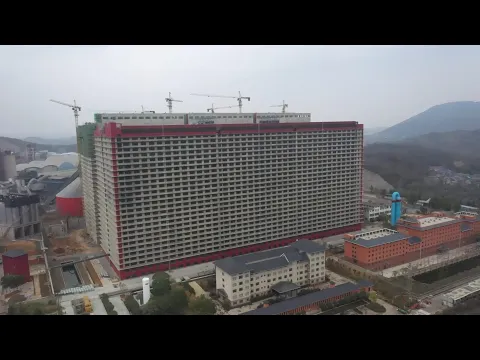

The Ezhou skyscraper operates with a strict biosafety system. Each floor functions as an autonomous sector, separated by airtight doors and industrial air filters. The interior is managed by sensors that control temperature, ventilation, humidity, people circulation, automated feeding, and waste disposal. The movement of animals is calculated to maximize weight gain and minimize cross-contamination.
Companies like Muyuan Foods and New Hope Group, some of the world’s largest producers of animal protein, are at the forefront of this process, investing billions of dollars in structures that resemble residential buildings but function as live pig factories.
The Logic Of Extreme Density And Automation Applied To Animals
The operation is a combination of simple technology with advanced automation. Conveyors, electric tractors, pneumatic systems, and digitized feeding lines replace tractors and trucks. Vertical production reduces the area needed to raise the same number of animals in traditional structures by up to 70%.
Each floor houses thousands of pigs divided by age, weight, and production phase. Births occur in an isolated sector, with a trained team. The cycle continues on upper floors, where animals undergo fattening and sorting before being sent for slaughter.
Environmental control allows animals to gain weight at a faster rate, with lower mortality and less expenditure on heating and ventilation. In regions of inland China, where temperatures vary drastically, this environmental stability represents a strategic advantage.
The Numbers That Impress The World – Pig Megafarms
International reports show that China slaughters over 700 million pigs per year, about half of the world’s total production. In this scenario, a single vertical farm that produces over 1 million pigs annually represents a huge technological leap for the country.
The production capacity of industrial buildings allows for:
- reduction of logistics costs
- greater sanitary safety
- less water and feed usage per animal
- complete isolation from external diseases
- continuous monitoring and full automation
The scale impresses economists and worries environmentalists, who question the impact of such dense and mechanized production. But for the Chinese government, verticalization ensures internal supply and reduces dependence on imports in one of the country’s most sensitive markets: that of pork.
Biosafety: The Invisible Battle That Shaped The New Model
The devastation caused by African swine fever was, according to analysts, the main driver behind the creation of pig buildings.
The highly contagious disease spreads rapidly in extensive and open farming. Verticalization with air filtration, access control, and advanced sanitization drastically reduces the risk of new outbreaks.
The entry to the farm is rigidly controlled. Employees go through disinfection chambers, change clothes and shoes, and follow standards comparable to those of laboratories. Trucks transporting feed and animals enter through separate bays to avoid direct contact with the interior.
These mechanisms, according to reports from the BBC and Al Jazeera, were designed to transform each floor into a sanitary barrier.
Cost, Scale And The Economic Side Of Industrial Protein
China consumes over 55 million tons of pork per year. This means that any fluctuation in production affects inflation rates, protein costs, and social stability. Vertical megafarms emerge as a strategic response to ensure predictable supply, regardless of weather, diseases, or seasonality.
Economists highlight that vertical production reduces land costs, one of the most critical factors in populous provinces. By stacking animals as if they were apartments, the country can multiply productivity per hectare, something impossible in conventional pig farming.
Furthermore, buildings can be constructed near major urban centers, reducing logistical costs for meat transportation.
The Global Debate On The Chinese Model
On one hand, the technology is impressive, but on the other, it generates criticism. Animal welfare experts point out that the superdensity of the buildings reduces circulation space and brings the model closer to an industrial production line. Environmentalists also question the volume of waste produced by such large units and the reliance on filtration systems to prevent contamination.
Still, analysts agree on one point: China has created a model that will likely be copied by other countries with land shortages, high protein demand, and the need for strict biosafety.
Regardless of the criticisms, the country has established a new chapter in industrial-scale animal production, and vertical farms demonstrate that, for China, the future of protein is not in pastures, but in concrete floors.







Não sabia. Impressionante.