





 Portuguese
  English
  Spanish
  4 min of reading
  1 comment


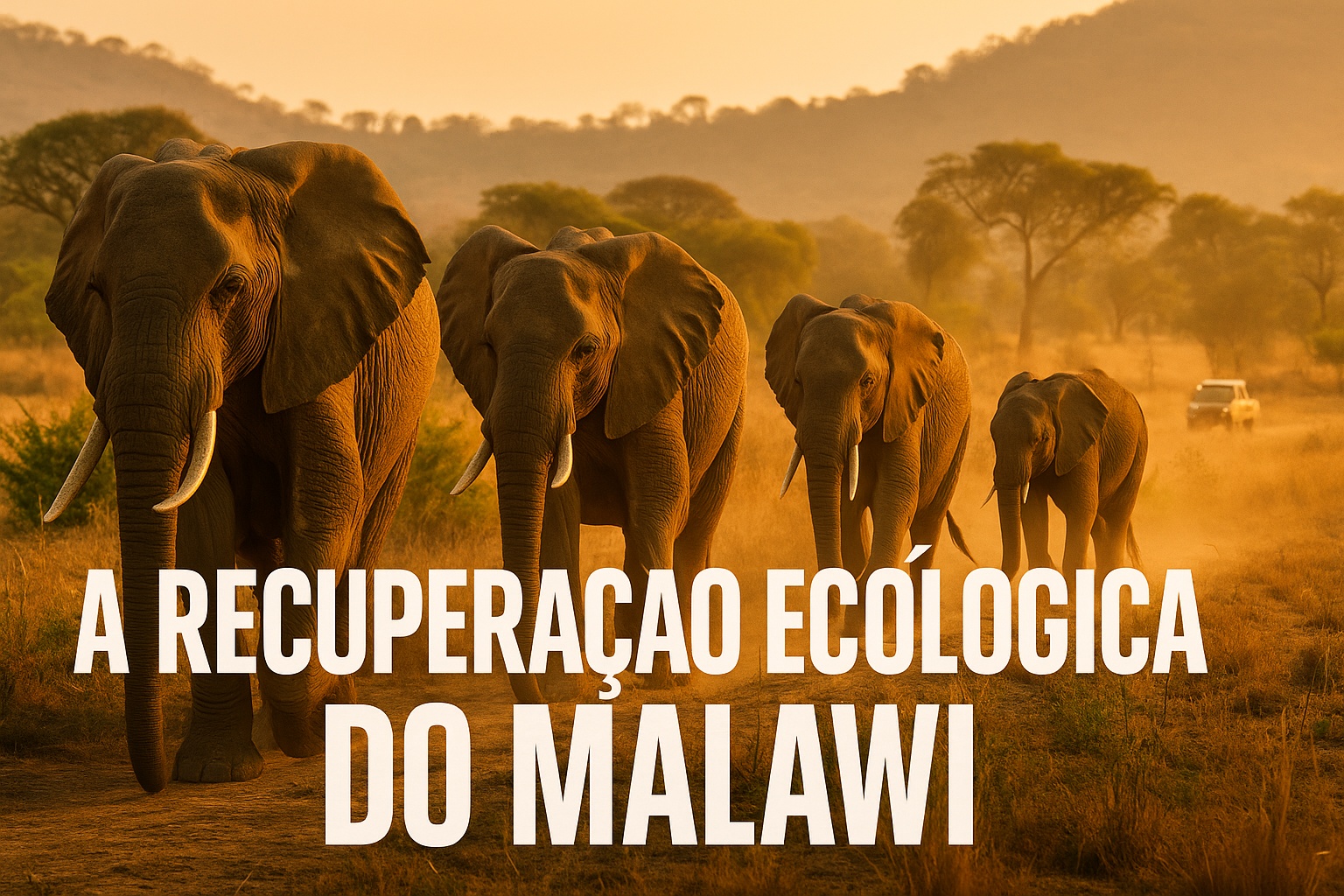


With More Than 500 Elephants Reintroduced, Malawi Saw Reserves Reborn, Wildlife Return, and Scientists Surprised by Rapid Ecological Recovery.
Malawi is at the center of one of the most impressive stories of ecological restoration ever recorded in modern Africa. A small country, marked by decades of illegal poaching, loss of wildlife, and virtually empty reserves, managed to reverse a scenario that experts considered irreversible. And it all started when it decided to do something bold: move hundreds of elephants from overcrowded areas to regions where the species had nearly disappeared.
Between 2016 and 2017, in an unprecedented operation on the continent, around 520 elephants were captured, sedated, transported by truck, and in some cases, lifted by special cranes before being taken to the Nkhotakota Wildlife Reserve, one of the oldest areas in the country that was almost empty at the time. For decades, the location had been devastated by illegal hunting: fewer than 100 elephants remained, and much of the larger wildlife had simply vanished. The landscape was silent.
The plan was clear: restore ecological balance by returning the megafauna that had shaped those landscapes for thousands of years to the ecosystems. The project, led by the African Parks organization in partnership with the government, quickly became the largest and most complex elephant relocation in the world.
-
The village where two rivers run side by side without mixing in Santarém and Alter do Chão reveals some of the most beautiful freshwater beaches on the planet.
-
Brazil’s nuclear submarine with a speed 5 times greater than normal advances after nearly 50 years and R$ 40 billion spent.

-
A Brazilian island charges R$ 0.50 to receive visitors and prohibits any new residents.
-
Why was the Great Wall of China built? The truth that many are unaware of!

The Rebirth of a Reserve That Was on the Brink of Collapse
The impact was almost immediate. Upon arriving in the new territory, the elephants not only adapted: they began to reopen paths, topple invasive shrubs, fertilize the soil with organic matter, and stimulate the germination of plant species that were already in decline. Scientists monitoring the operation recorded changes that were not expected this soon.
The vegetation began to reorganize, small herbivores started appearing more frequently, and the wildlife—once scattered and scarce—began to return in numbers.
There are recent reports of increased sightings of antelopes, zebras, and smaller predators in the restored areas. The presence of elephants created a chain reaction that broke the stagnant cycle of an ecosystem traumatized by poaching.
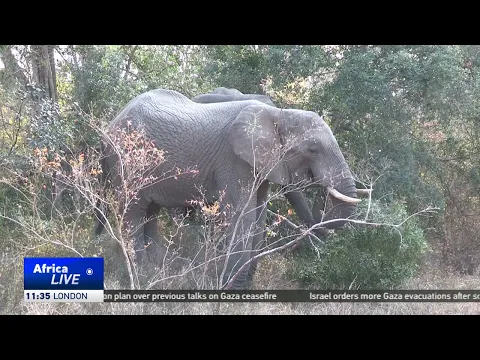

Within a few years, Nkhotakota went from being a nearly abandoned reserve to becoming one of the most studied examples of African Rewilding.
The difference in the trails, clearings, and grazing areas is visible even in aerial images. The reserve gained new life, and with it, the hope that degraded territories can be restored.
The Ecological Role of Elephants and Why Their Return Changed Everything
Elephants are not called “ecosystem engineers” for nothing. They disperse seeds, topple aging trees, reopen natural corridors, and help renew entire landscapes with their movements. In degraded areas, these actions are vital for reactivating processes that depend on natural disturbances, which had been suspended when the species disappeared.
In the case of Malawi, researchers observed:
- Increased movement of smaller species in previously stagnant areas
- Regeneration of native vegetation after natural removal of invasive shrubs
- Return of birds that depend on open areas
- Greater availability of surface water during some times of the year
- Expansion of ecological corridors that were previously blocked
These transformations, although still under study, confirm that the return of a large herbivore can reorganize an entire ecosystem, not through brute force, but through the constant interaction between soil, plants, animals, and landscape.
The Operation That Became a Global Conservation Benchmark
The transport of more than 500 elephants required military logistics, dozens of specialists, sedation structures, helicopters, adapted trucks, and months of planning.
Every phase, from identifying families to the moment of release, was monitored by veterinarians, ecologists, and monitoring teams. The goal was to ensure that the animals maintained their social groups, which are crucial for their survival.
The success of the operation transformed Malawi into a global reference. Countries like Zambia, Namibia, and Rwanda are studying how to replicate the model to restore their own reserves. The case has also reignited the debate about how the translocation of megafauna can be a powerful tool to reverse decades of environmental degradation.
Benefits for Communities and Challenges That Persist
The restoration of the reserves not only brought ecological gains. Nearby communities began to see economic improvements with the rise of ecotourism. Local guides, small traders, and park staff gained new opportunities. Wildlife tourism began to grow again, and Malawi’s international image strengthened.
But challenges remain. Translocated elephants can come into conflict with farmers, and areas without adequate fencing require constant monitoring to prevent animals from escaping and destroying crops. Coexistence between humans and elephants is still a sensitive issue, and mitigation policies remain necessary.
A Country That Bet on Elephants and Reaped Surprising Results
What makes this story so powerful is the combination of a race against time, monumental effort, and results that exceeded even the most optimistic expectations.
Malawi brought life back to reserves considered lost and did so with the species that many believed to be the great symbol of the country’s environmental decline.
Today, Nkhotakota and Liwonde are living examples that, when ecosystems receive back their “natural architects,” the regeneration process occurs faster, stronger, and more profoundly than imagined. Scientists continue to study this transformation, but one thing is already certain: the return of the elephants changed the fate of an entire country.






So happy to hear this. Long live the elephant. They are my favorite creatures on the planet…