





 Portuguese
  English
  Spanish
  5 min of reading
  1 comment


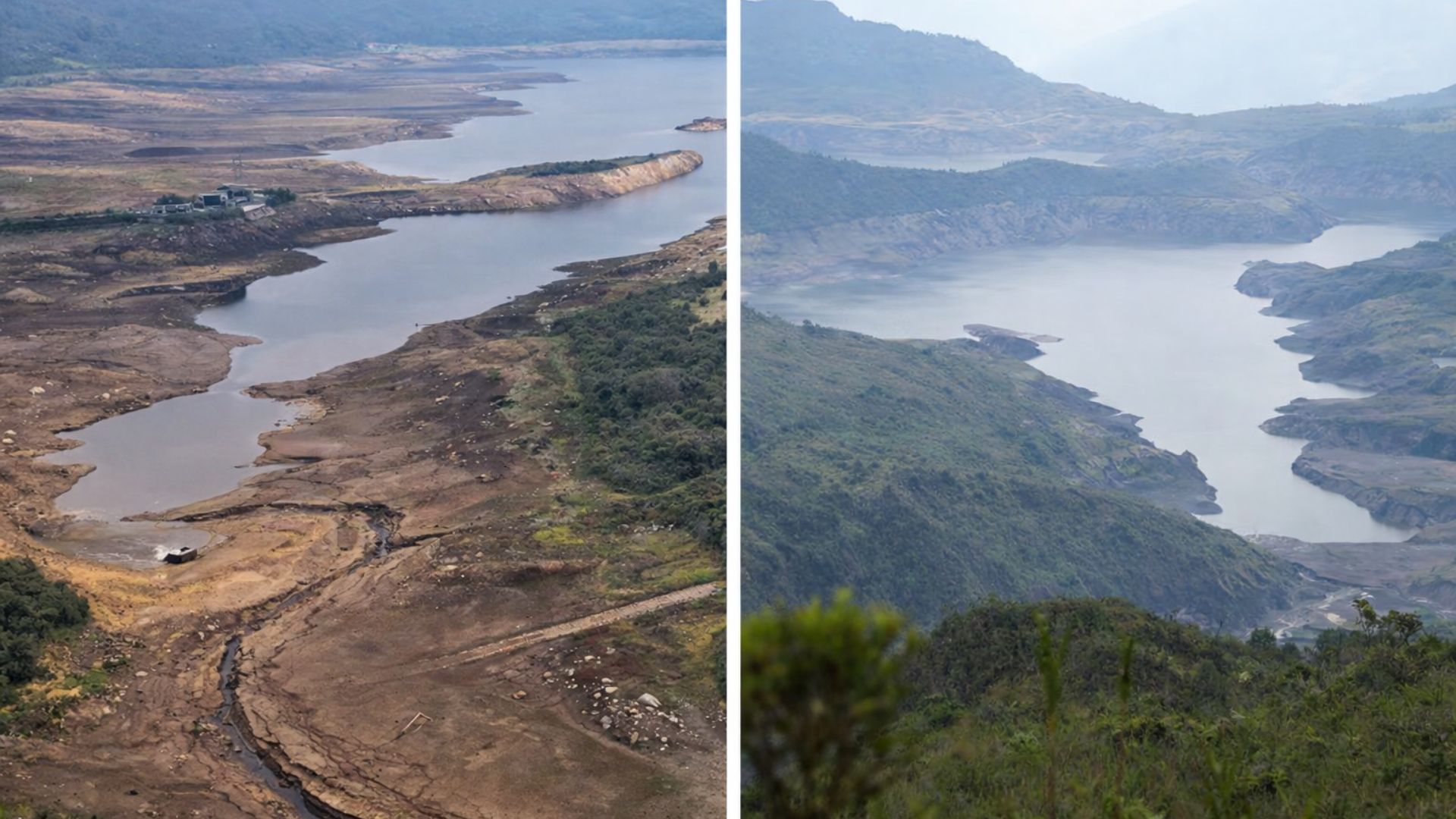


24-Hour Water Rationing Changes Routine in the Colombian Capital and Puts the Chingaza System at the Center of the Debate on Urban Supply, After Reservoir Levels Dropped to a Critical Range and Led to Conservation Measures, Fines, and Consumption Goals for Millions of Residents.
Bogotá, one of the largest capitals in South America, has begun operating under a water rationing system with 24-hour supply interruptions, on a rotating basis among different areas of the city.
The measure was adopted after the Chingaza System, the main set of reservoirs responsible for a large part of the water consumed in the Colombian capital, reached levels considered critical by local authorities and monitoring carried out by specialists and international media.
Water Rationing in Bogotá and Zone Rotation
The rotation was structured to distribute the impact among different regions and reduce daily pressure on the system.
-
Home environment can influence the brain, mood, and well-being: studies indicate an increase of up to 15% in productivity, a reduction of 12% in stress with plants, and a direct impact of the circadian rhythm on the 24 hours of the day.

-
A Brazilian millionaire couple restores a farm over 150 years old in the interior of São Paulo and transforms the historic property with Portuguese tiles, antique furniture, and new spaces into a refuge that blends tradition, comfort, and sophistication.
-
Submerged city in a lake in Minas reveals intact streets, preserved vehicles, and houses after more than 60 years, impressing divers.

-
Yellowstone has started to rise again in an area of the caldera, and the movement rekindles fears surrounding the U.S. supervolcano, as scientists monitor the deformation and try to understand what is happening underground.


The city was divided into nine zones, and each zone goes an entire day without supply, following a repeating calendar.
In practice, the scheme imposes a routine of adaptation for residents and businesses, needing planning to store water and reorganize domestic and commercial tasks.
In neighborhoods with higher population density, the interruption changes the operation of condominiums, schools, and small establishments that rely on water for cleaning, food preparation, and customer service.
Chingaza System at Critical Level and Drought Impact
The city government associated the situation with a combination of prolonged dry weather and reduced rainfall in areas feeding the system, in a context related to the El Niño phenomenon.
According to the municipal administration, the decrease in precipitation and the rise in temperatures directly affected the recovery rate of the reservoirs.
The severity of the scenario gained public dimension with the disclosure of volume measurements in Chingaza and reports that the main storage system approached a minimum level.
In reports published by agencies and international media, the level of the Chingaza System was described as around 15% of capacity, after a sequence of months with low recharge.

In those same publications, consulted experts stated that, without the return of consistent rainfall, there was a risk of the supply collapsing within a few months, a scenario summarized in the expression “Day Zero”, used to describe the moment when the system can no longer meet the city’s demand.
The term was used as a reference to the risk of more severe interruptions if conservation measures were not sufficient to stabilize the available volume.
Fines, Additional Tariff, and Goals to Reduce Consumption
In addition to the rotation, Bogotá adopted rules to reduce consumption and curb waste.
Municipal authorities reported that households exceeding 22 cubic meters of consumption per month may be subject to additional charges, and practices such as washing cars on public streets or using potable water for activities deemed non-essential are subject to fines.
The stated goal was to encourage a permanent reduction in consumption, including on days when there are no cuts in the resident’s area, avoiding demand spikes after supply returns.
The local government also released consumption data to monitor the effect of the restrictions.
According to information presented by the city hall and replicated by reports, water consumption in the city dropped from 17.84 to 16.01 cubic meters per second after the rationing began.
The municipal administration indicated, however, that the desired level to favor reservoir recovery would be to reduce demand to around 15 cubic meters per second.
The goals were presented as an operational reference to measure the effectiveness of the measures and guide adjustments in rational use campaigns.
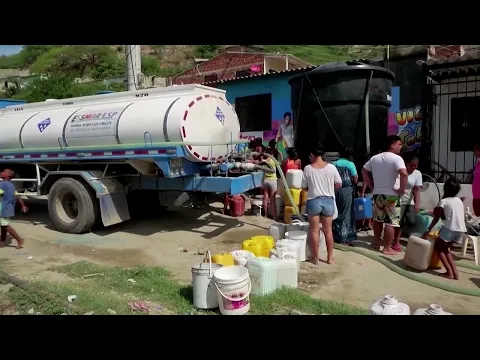

Official Recommendations and Changes in Public Transport
Official recommendations included cost-saving guidelines in daily life, such as reducing shower time and turning off the tap while brushing teeth.
In public statements, Mayor Carlos Fernando Galán made appeals for residents to adjust consumption habits, citing the need to limit water use in domestic activities and avoid waste.
The guidelines were part of a mobilization strategy aimed at reaching residents of different profiles, in a city marked by income contrasts and inequalities in access to infrastructure in some areas.
Operational changes also affected public services and sectors that use water intensively.
The city hall reported that buses in the public transport system, which in many cases were washed daily, would now be washed weekly, as a way to reduce potable water consumption.
Authorities highlighted that internal cleaning routines would be maintained for sanitary reasons, while external cleaning would occur less frequently during the restriction period.
The measure exemplifies how rationing affects urban maintenance procedures and requires a revision of practices considered standard during normal supply periods.
Urban Supply, Dependence on Reservoirs, and Essential Services
The Chingaza System is central to understanding the extent of the crisis in Bogotá.
It is a complex of reservoirs and collection and treatment infrastructure that supplies a significant portion of the capital, making the city sensitive to precipitation variations and changes in recharge rates.
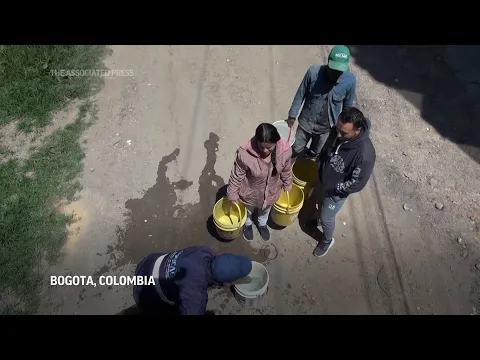
When the stored volume drops to critical levels, the operational maneuvering space tightens, and supply management depends on quick decisions, such as implementing rotations and setting consumption goals.
In this context, short-term measures are applied to reduce immediate demand, while recovery depends on the return of sufficient rainfall in catchment areas and the maintenance of water conservation over time.
The experience in Bogotá also highlights how urban water crises are no longer an issue limited to natural resources and directly interfere with essential services.
Hospitals, schools, restaurants, condominiums, and businesses need to adapt routines to cope with interruptions, and residents begin to plan storage and consumption more rigidly.
In neighborhoods with less capacity to store water, the impact is more noticeable, as a one-day interruption can significantly affect basic activities.
The municipal administration, in turn, needs to balance control measures and awareness campaigns with the maintenance of public services and the oversight of waste.
Bogotá continues to monitor the evolution of the Chingaza System and the results of rationing, while maintaining the 24-hour cut rotation and expanding mechanisms to reduce consumption.
The situation has transformed the discussion about supply into a central theme in urban daily life, with attention focused on reservoir levels, rainfall behavior, and compliance with conservation goals by residents and economic sectors.






O mesmo ira acontecer no Brasil, depois da chegada da Coca-Cola e das mineradoras.