





 Portuguese
  English
  Spanish
  3 min of reading
  0 comments


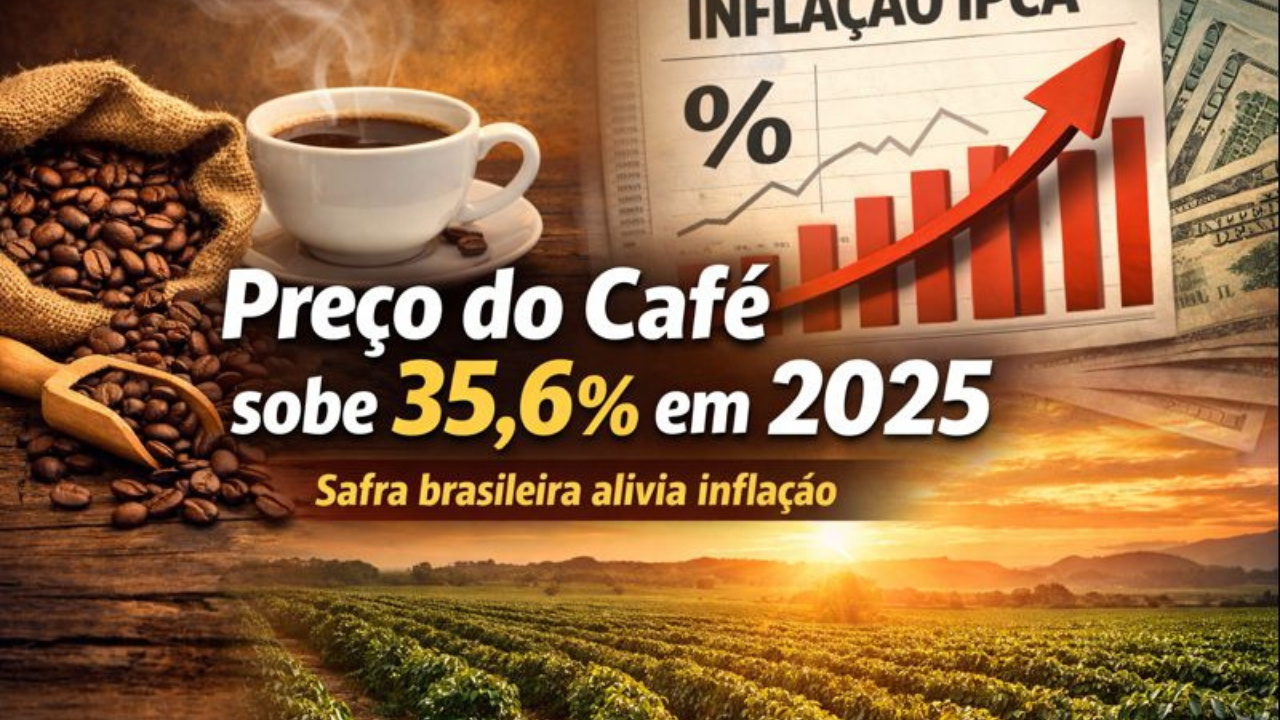
Even With Strong Rise in Coffee Prices, IPCA Inflation Closed 2025 at 4.26%, Within the Target, According to IBGE Data.
The price of coffee for Brazilian consumers closed 2025 with a cumulative increase of 35.65%, according to the National Index of Consumer Prices (IPCA Inflation), released by IBGE this Friday.
The increase was driven by supply issues in Brazil and abroad that began back in 2024, but it lost momentum throughout the second half of the year, with the arrival of the Brazilian crop, improved global coffee supply, and more favorable weather conditions.
Even with the significant cost increase, coffee ended the year having less pressure on inflation than in previous months.
-
Lula responds directly to Trump and says that Pix is from Brazil and will not change under pressure from anyone, after a report from the United States pointed out the Brazilian payment system as an American trade barrier.

-
Amazon has just announced a new fee on all deliveries, and your online purchases will become more expensive starting April 17, including for those buying from the United States here in Brazil.

-
He sold his share for R$ 4 thousand, saw the company become a giant worth R$ 19 trillion, and missed the opportunity of a lifetime.

-
Elon Musk’s Starship megafrocket puts $8 billion at risk, raises alarms in the market, and could affect technology, mining, and space internet startups in the coming years.


Brazil, the second largest consumer of the beverage in the world, behind only the United States, felt the effects of adjustments in the international market, including external factors such as trade measures adopted by the United States that altered global export flows.
IPCA Inflation Closes 2025 Within the Target, Despite the Rise in Coffee Prices
Despite the strong appreciation of the coffee price, IPCA Inflation finished 2025 with an increase of 4.26%, within the official target ceiling of 4.50%.
Coffee accounted for 0.18 percentage point of the final rate, above the contribution recorded in 2024, when it impacted 0.15 points.
According to IBGE, the behavior of food was decisive in preventing a higher inflation rate.
In 2025, the food and beverage group rose less than 3%, the eighth smallest variation since the beginning of the Real Plan.
Accumulation of Almost 90% in Two Years Triggers Alert in the Sector
Although prices lost strength in the second half, the medium-term scenario still raises concerns.
In the two-year period of 2024/2025, coffee accumulated an expressive high of 89.37%, after already having risen 39.60% in 2024.
“Coffee reduced pressure on consumer prices, but there is a long way to go given the strong increase between 2024 and the beginning of 2025,” said Fernando Gonçalves, manager at IBGE, in an interview with journalists.
The data shows that, even with recent relief, the product remains at a high level on supermarket shelves, reflecting accumulated imbalances in the production chain.
Brazilian Crop Reduces Impact and Lowers Prices in the Second Half
The main turning point in the behavior of the coffee price occurred starting in July 2025.
In the first half, the variation even exceeded 80% in 12 months, but began to slow down with the arrival of the Brazilian crop and the partial normalization of production in other producing countries.
In addition, there was less concern about the global coffee supply, especially after the increase in exports from Vietnam, one of the world’s leading suppliers of the commodity.
“The greater supply has already started to appear for the final consumer,” Gonçalves explained.
Exchange Rate and Climate Also Influenced Prices
In addition to increased production, macroeconomic factors helped contain new price increases.
The more favorable exchange rate in Brazil reduced import costs and contributed to balancing the domestic market.
Weather conditions were also milder compared to previous years, reducing risks to production.
According to IBGE, this combination of factors helped alleviate inflationary pressure in the second half, especially regarding food.
Sixth Consecutive Monthly Drop Reinforces Trend of Relief for Consumers
In December, coffee recorded the sixth consecutive monthly drop in the IPCA, with a decrease of 0.26%.
In the accumulated six months, the decrease reached 5.08%, signaling a trend of price stabilization in the short term.
On the other hand, experts warn that the level is still high, a result of the supply shock experienced over the past two years.
Broad Supply Was Decisive in Containing Inflation in 2025
The good grain crop reduced costs, increased food availability, and helped balance family budgets.
“The grain harvest helped a lot to keep inflation within the target and weigh less on consumers’ pockets.
The lower dollar also influenced, as did commodity prices.
But the large supply of products was what helped the most,” Gonçalves concluded.









-

Uma pessoa reagiu a isso.