





 Portuguese
  English
  Spanish
  5 min of reading
  0 comments


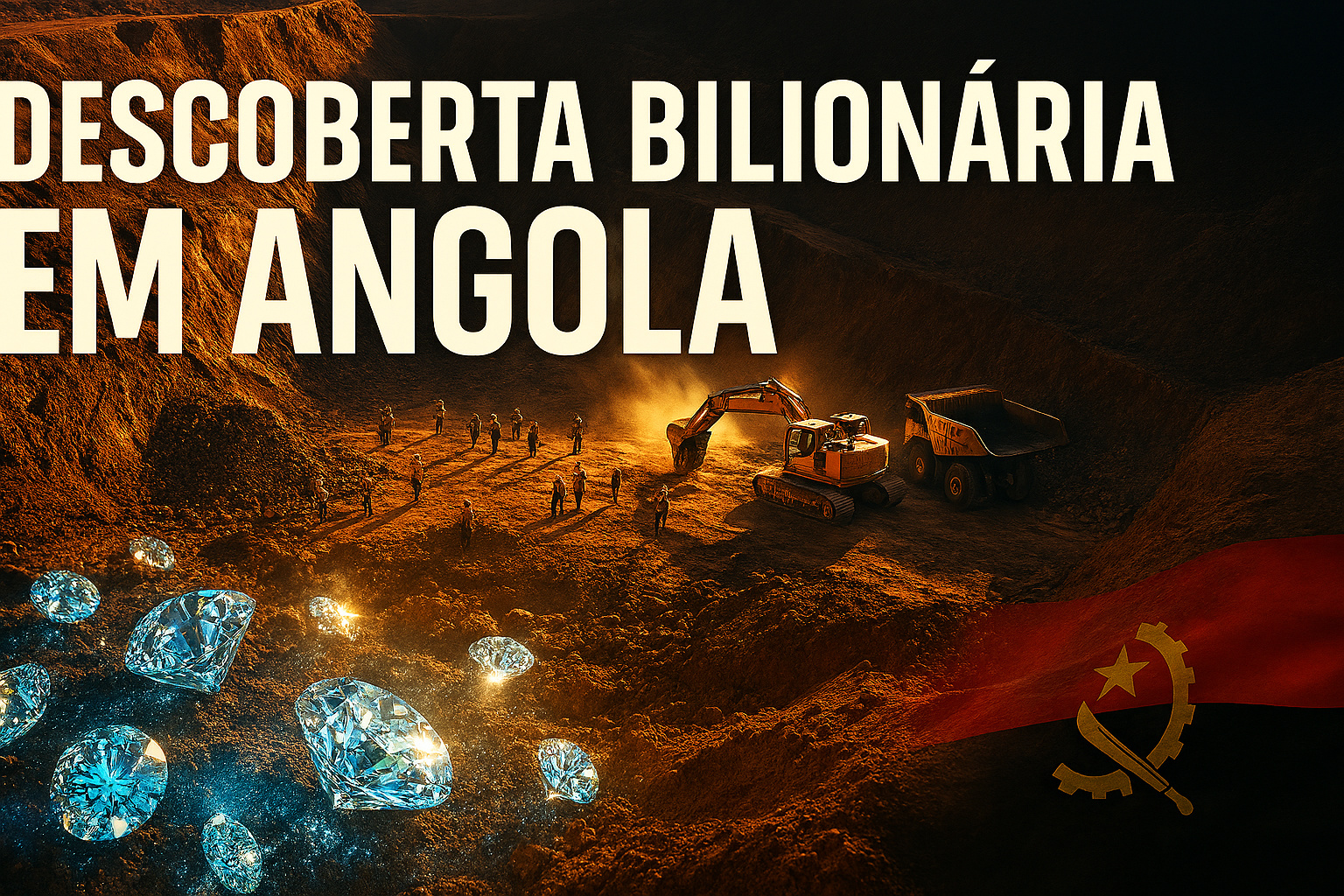
With 628 Million Carats in Reserves, Luele Mine Makes Angola a World Power in Diamonds, with Wealth Valued in Billions of Dollars.
Amidst the vast plains of Lunda Sul, in the northeast of Angola, a colossal discovery changed the course of global mining. Geologists and local workers identified a deposit with 628 million carats in reserves, estimated at billions of dollars, making it the largest diamond mine in the country and one of the largest in the world. The revelation transformed Angola into one of the leading hubs of the global diamond industry, rivaling giants like Botswana and Russia, marking the beginning of a new economic era for the African continent.
The Mine That Redefined African Geology
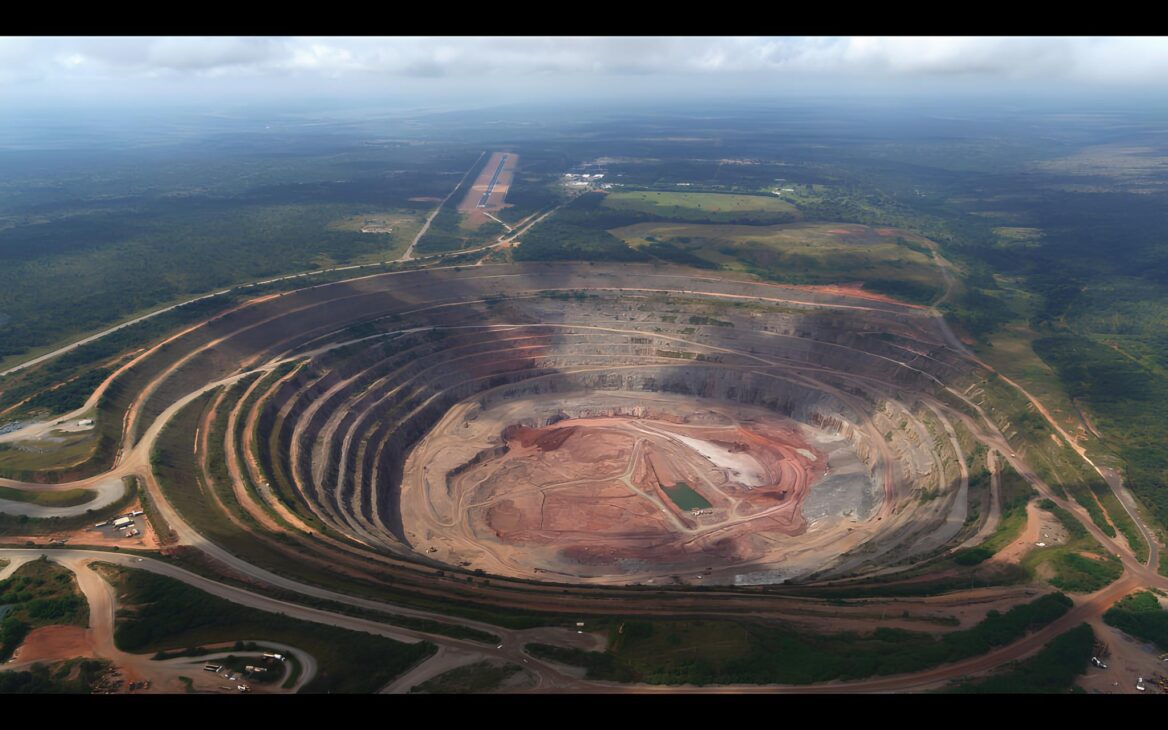
Located about 15 kilometers from the city of Saurimo, the Luele mine (formerly known as Luaxe) is one of the largest diamond discoveries of the 21st century.
According to data from the Angola National Diamond Company (Endiama), the mine houses geological reserves estimated at 628 million carats, with a gross value that may exceed US$ 70 billion, based on the average market price for industrial and gem-quality diamonds.
-
After China, it’s now the turn of the USA to ‘secure’ a share of Brazil’s natural resources: the country buys critical rare earths for R$ 3 billion and enters the center of the global technology dispute.
-
Rare earths are in everything, from cell phones to bullet trains, and what almost no one realizes is why they have become the target of such a delicate global war.
-
Brazil extracts 26.3 million tons of ore from what was previously treated as waste, transforming residues into wealth, producing over 3 million tons of sand, and demonstrating how national mining is relearning to generate value.
-
A $3.5 billion megaproject in Latin America pumps desalinated seawater at 1,050 liters per second over 194 km to keep a copper supermine in the Andes operational for another 20 years.

The project was developed through a joint venture between Endiama and Catoca Mining Company, a company that already operates the fourth largest diamond mine in the world, also located in Angola.
Exploration began experimentally in 2022, and commercial operations were officially launched in November 2023, with the presence of Angolan President João Lourenço.
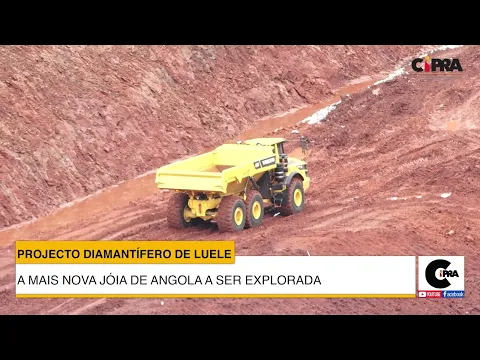

“The Luele mine is a historical milestone for the country and one of the largest diamond discoveries of the last 50 years,” declared Lourenço during the inauguration. “Angola now definitely ranks among the world’s mining powers.”
A Monumental Scale Operation
With state-of-the-art infrastructure, the Luele mine occupies an area of over 1,200 hectares and employs more than 2,000 direct workers.
The initial investment exceeds US$ 600 million, with expectations of growth to US$ 1.3 billion by the end of the decade. The processing plant on site has the capacity to process 12 million tons of ore per year, producing about 4 million carats annually — equivalent to 800 kg of rough diamonds.
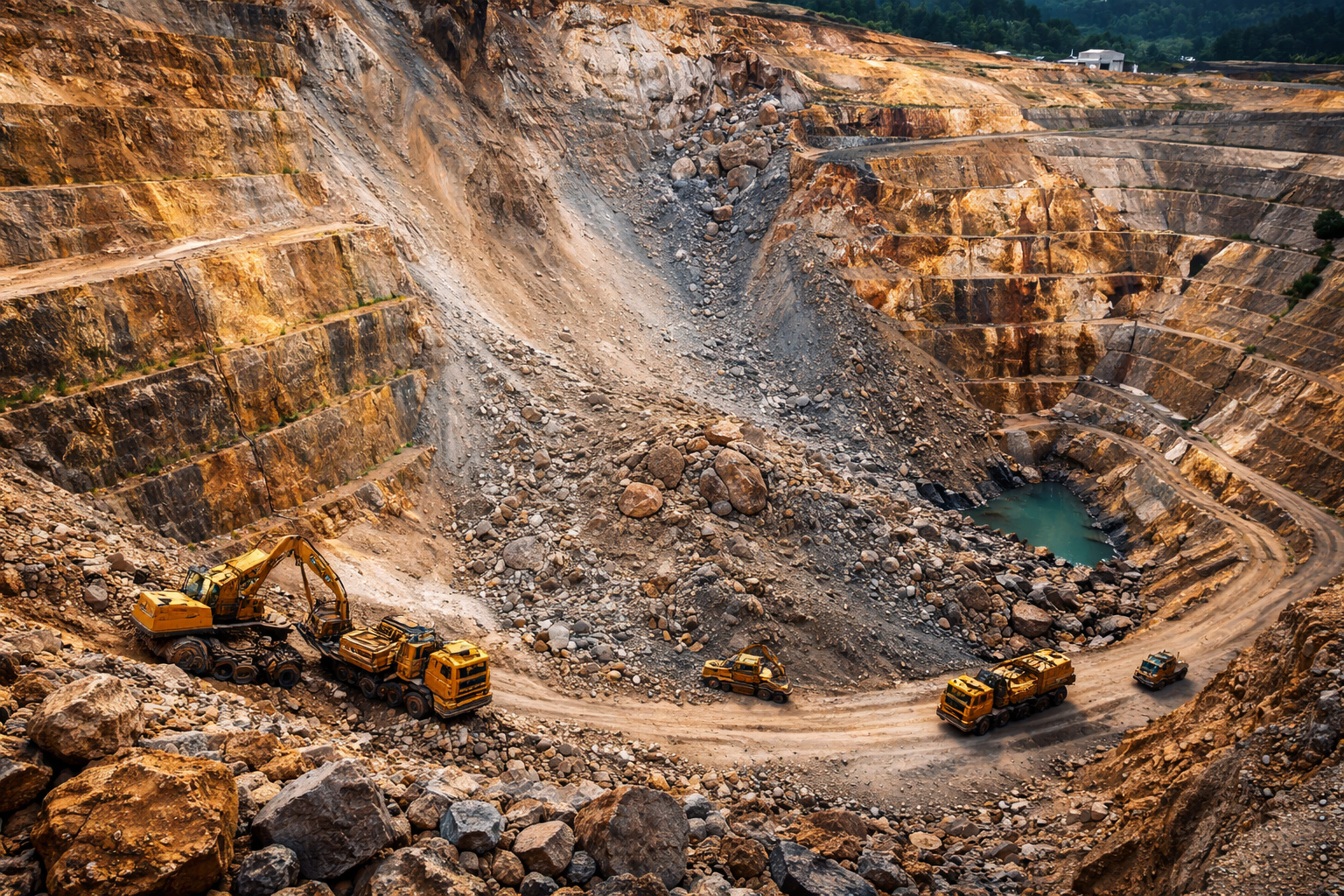
The extraction system is hybrid, combining open-pit excavation with underground mining. The process is automated and monitored by precision sensors that identify diamond concentration in different layers of soil.
A significant portion of the operation is controlled digitally from an integrated center, with technology provided by companies from Russia, South Africa, and Canada.
A Billion-Dollar Engine for the Angolan Economy
With the opening of the Luele mine, Angola jumped from fourth to third place worldwide in diamond production, behind only Russia and Botswana. According to the Ministry of Mineral Resources, Petroleum, and Gas (MIREMPET), the country is expected to reach 14 million carats annually by 2026, doubling the volume exported compared to 2021.
The export of diamonds already accounts for 10% of the national GDP and about 60% of non-oil export revenues.
The new mine could add US$ 500 million per year to public revenue, allowing the government to invest in education, infrastructure, and energy.
Additionally, the project has had a direct impact on local communities: new roads, electrical networks, and water supply systems have been implemented, benefiting over 20,000 residents in the Saurimo area.
Technology and Sustainability in Mining
Unlike traditional mines, Luele was designed to operate under a model of “responsible mining”, focusing on environmental recovery and social inclusion. The plant utilizes water reuse systems and reinforced tailings dams, preventing soil and nearby river contamination.
According to the sustainability director of Catoca Mining, António Henriques, the project aims to prove that it is possible to reconcile high productivity with environmental responsibility: “Our goal is to demonstrate that Angola can produce clean, sustainable, and certified diamonds according to international standards.”
The excavation waste is monitored with pH and turbidity sensors, while part of the excavated soil is reused for reforestation efforts. Additionally, part of the energy used in operations comes from local hydroelectric plants, reducing carbon emissions.
A Past Marked by “Blood Diamonds”
The rise of Angola on the global stage is even more symbolic considering the country’s recent past. During the civil war (1975–2002), diamonds were used to finance armed groups, giving rise to the term “blood diamonds”.
With the end of the conflict, Angola joined the Kimberley Process, an international system that certifies the ethical origin of gemstones.
Today, the country is considered an example of transparent governance in the mineral sector, with digital traceability systems and oversight in partnership with the UN and the World Diamond Council. The Luele mine is the pinnacle of this transformation — a modern, auditable mine with a direct impact on the social development of the interior provinces.
Angola: From Rough Exporter to Cutting Power
Until recently, much of Angola’s diamonds were exported in their raw state. With the advancement of Luele and other plants, the country is betting on the industrialization of cutting. The government aims for 30% of production to be cut internally by 2030, adding value to exports and creating thousands of skilled jobs.
For this, the Diamond Cutting Industry Development Pole of Saurimo was created, with 26 factories installed and partnerships with companies from India, Belgium, and the United Arab Emirates. The pole already generates more than 4,000 direct jobs and puts Angola on the world jewelry map.
The Luele mine is more than just a mineral project — it is a symbol of the new phase of the African economy.
With global demand for diamonds growing and supply becoming increasingly restricted, Angola positions itself as the new strategic frontier of luxury mining.
Mining Journal experts estimate that the total value of Luele’s reserves, considering the average price of gem-quality carats, exceeds US$ 75 billion, enough to place the country among the ten richest in mineral resources in the world.
More than wealth, however, the mine represents autonomy and modernization. The government plans to invest part of the revenue in technical education, infrastructure, and housing, seeking to break the historical cycle of dependence on oil and expand the mining sector as a basis for sustainable development.
The Diamond as a Symbol of Reconstruction
In a country where diamonds were synonymous with conflict for decades, the brilliance of Luele carries another meaning: that of reconstruction.
Today, the stones extracted from there do not finance wars but roads, schools, and jobs. The mine stands as a living proof that Africa can transform its natural riches into engines of prosperity.
And as the chief engineer of the project said during the inauguration ceremony: “These diamonds are not just in the soil. They are in the hearts of the workers who believed that Angola could shine again.”









Seja o primeiro a reagir!