





 Portuguese
  English
  Spanish
 4 min of reading
  0 comments


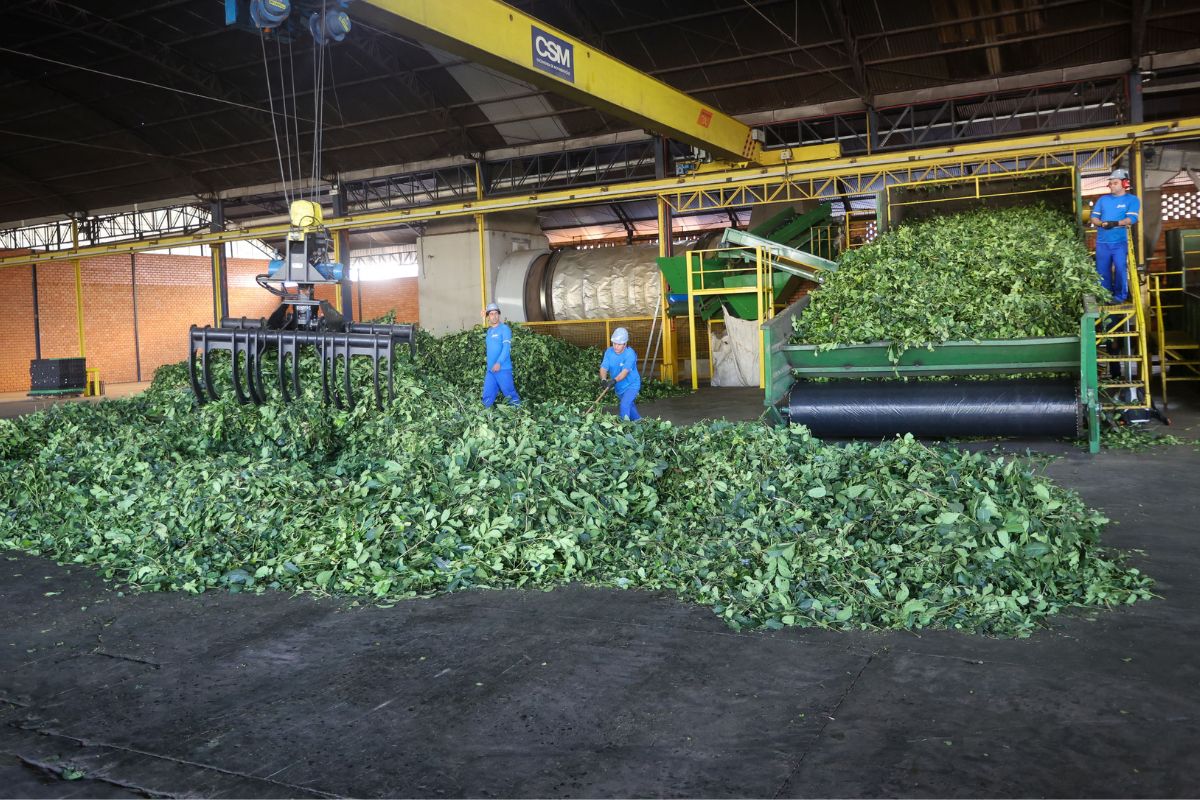
Focusing on Mate Herb Production, the New Research Arrangement in Paraná Promotes Sustainable Innovation, Strengthens the Regional Economy, and Expands Export Potential and New Food Products
The production of mate herb is about to gain new momentum in Paraná with the launch of the Mate Herb Research and Innovation Arrangement: Innovation and Appreciation (NAPI Erva-Mate), according to a report published.
The initiative, supported by the State Government through the Araucária Foundation, brings together universities, research centers, and industry representatives to develop more sustainable and efficient practices throughout the production chain.
The investment of R$ 3.9 million promises to drive technologies that benefit from small producers to the export market, focusing on competitiveness and product quality.
-
Rain gains strength in April, potentially exceeding 150 mm, placing the North, Northeast, and the coasts of the South and Southeast at the center of the heaviest forecast of the week.

-
A fish that survives out of water, crawls on land until it finds another river, and whose female lays 80,000 eggs at once is infesting rivers and lakes in Brazil, and no one can stop this invasion.

-
WEG took its technology to Spain to create a solar irrigation system that operates independently without needing an electrical grid, and now farmers control everything remotely via their mobile phones.
-
The US faces a meat crisis with fires, pests, and strikes, consumption rises and supply falls to the lowest level since 1952, creating a billion-dollar opportunity for Brazilian exports to grow in 2026.


Paraná maintains its position as the national leader, accounting for 17.2% of total Brazilian production, according to 2024 data. São Mateus do Sul stands out as the main extraction hub.
Even with a slight decrease of 11.3% in production value compared to 2023, the sector generated significant R$ 522.8 million, consolidating itself as the second most important non-timber product in the South region.
Green Technologies and Industrial Processes of Mate Herb Promote Gains in Efficiency and Quality
Among the main objectives of NAPI is the modernization of industrial processes for mate herb, coordinated by the State University of Western Paraná (Unioeste) and Embrapa Forests.
The proposal for mate herb production includes the development of unprecedented sensory classification protocols, allowing raw material to be precisely directed for different purposes, such as chimarrão, tererê, or other derivatives.
Professor Vânia de Cássia Fonseca Burgardt from the Federal Technological University of Paraná (UTFPR) emphasizes that the focus is to integrate the chain, from the farm to the final consumer.
According to her, the research aims to reduce contaminants that limit exports, improve harvest yields, and increase the added value of the final product.
“Our challenge is to ensure greater economic return for the small producer without losing sight of sustainability,” she explains.
Additionally, the primary production axis, under the responsibility of Embrapa Forests, will validate genotypes with differentiated chemical and sensory characteristics, implementing innovative and economically viable cultivation systems.
This stage is essential to align productivity with environmental preservation.
Mate Herb and Health: New Products and Opportunities in Food and Export
The third axis of NAPI addresses the development of products aimed at food and well-being, focusing on the functional benefits of mate herb.
Coordinated by UTFPR and the Federal University of Fronteira Sul (UFFS), the project involves participation from Sustentec and international universities, which will conduct clinical studies on the potential effects of mate herb on heart health and metabolism.
These results could open avenues for applications in the pharmaceutical and functional food industries.
Another central point is the encouragement of using mate herb as a food ingredient, with the creation of new recipes and products for schools and restaurants.
The project includes training courses for food service workers and producers, disseminating good practices and technical knowledge on handling and preparation.
This strategy strengthens the production of mate herb in social and educational spheres, expanding its role in regional food security.
The direct involvement of the Mate Herb Producers and Industries Association (Apimate) ensures the practical application of results, favoring technology transfer and local income generation.
Luiz Márcio Spinosa, director of Science, Technology, and Innovation at the Araucária Foundation, emphasizes that NAPI Erva-Mate represents a model of partnership between universities and civil society, aimed at concrete deliveries and measurable results.
Market Expansion and Strengthening Mate Herb Production as a Vector for Sustainable Development
The final stage of the project will be dedicated to communication and feedback of results to various segments of the production chain.
The Rural Development Institute of Paraná (IDR-Paraná) will support the implementation of training and actions that bring together producers, researchers, and industries.
This integration will allow for the conversion of scientific knowledge into applicable solutions, reinforcing the production of mate herb as a pillar of innovation, sustainability, and competitiveness for the state.
NAPI Erva-Mate consolidates Paraná as a national reference in agro-industrial research and sustainability.
By uniting science, technology, and tradition, the program stimulates the full use of mate herb, expanding markets, promoting productive inclusion, and positioning the state as a protagonist in the global bioeconomy agenda.
With this, the production of mate herb becomes not only a cultural symbol but also a strategic driver of development for the future of Paraná.









Seja o primeiro a reagir!