





 Portuguese
  English
  Spanish
  5 min of reading
  0 comments


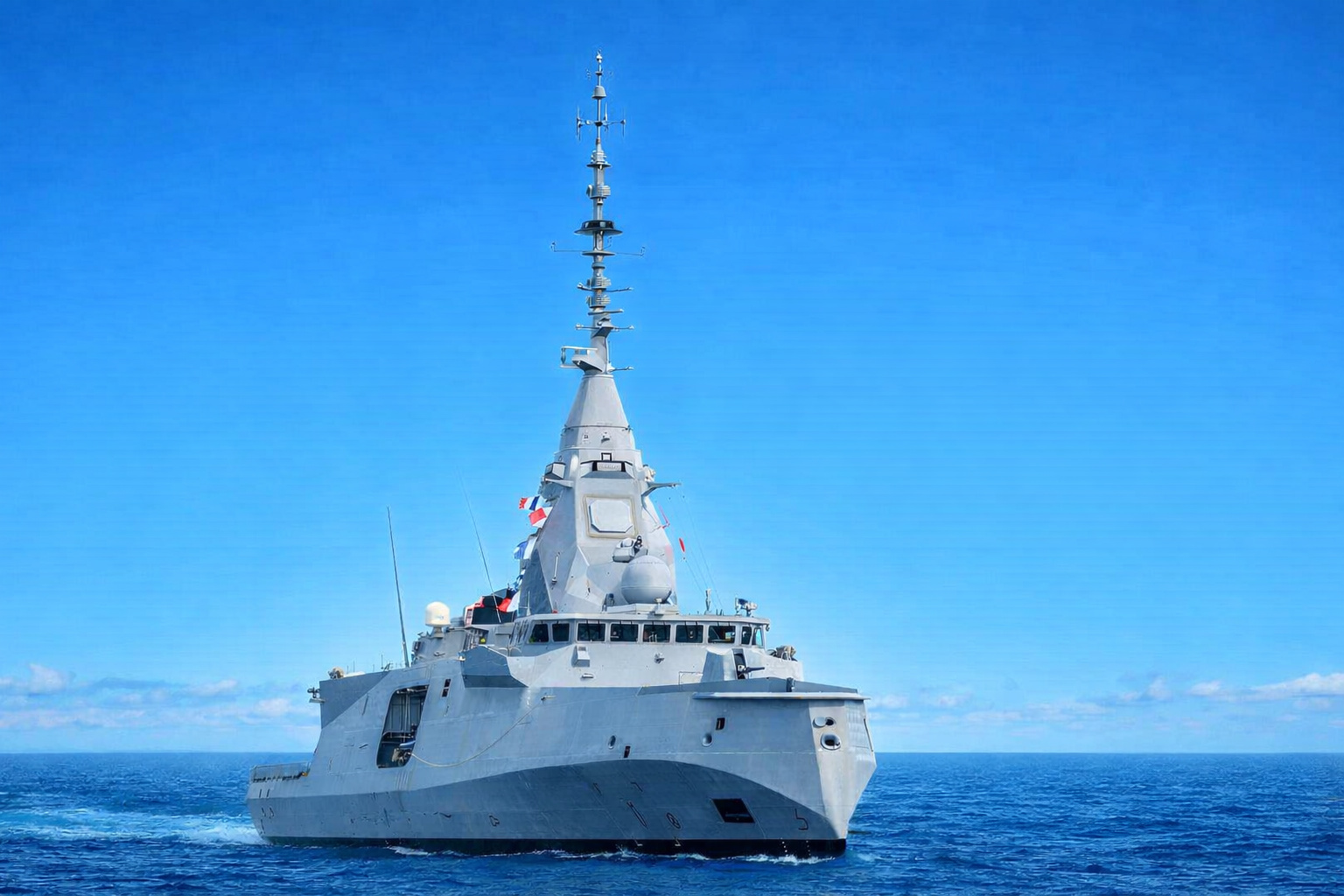
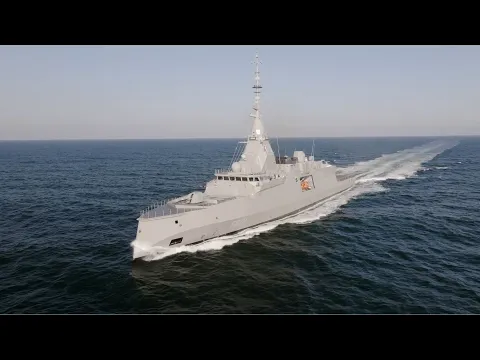
With advanced technology, high automation, and modern combat power, the FDI frigates represent a new naval era, reducing crew, increasing operational efficiency, and redefining current global maritime strategic standards.
In 2017, the Naval Group began the development of the new generation of frigates for the French Navy, known as FDI (Frégate de Défense et d’Intervention). The first ship of the class, the Amiral Ronarc’h, started construction in France and is expected to enter service from 2024, marking a significant change in the design of European warships.
The most striking fact is that, even with around 4,500 tons, the frigate operates with just over 100 crew members, a drastically lower number than equivalent ships, thanks to the high level of onboard automation. This combination of technology, efficiency, and combat power positions the FDI as one of the most advanced platforms ever designed for naval operations in the 21st century.
What is the FDI frigate and why does it represent a new generation
The FDI was conceived as a direct response to changes in the naval warfare environment, which has become dominated by complex threats, such as:
-
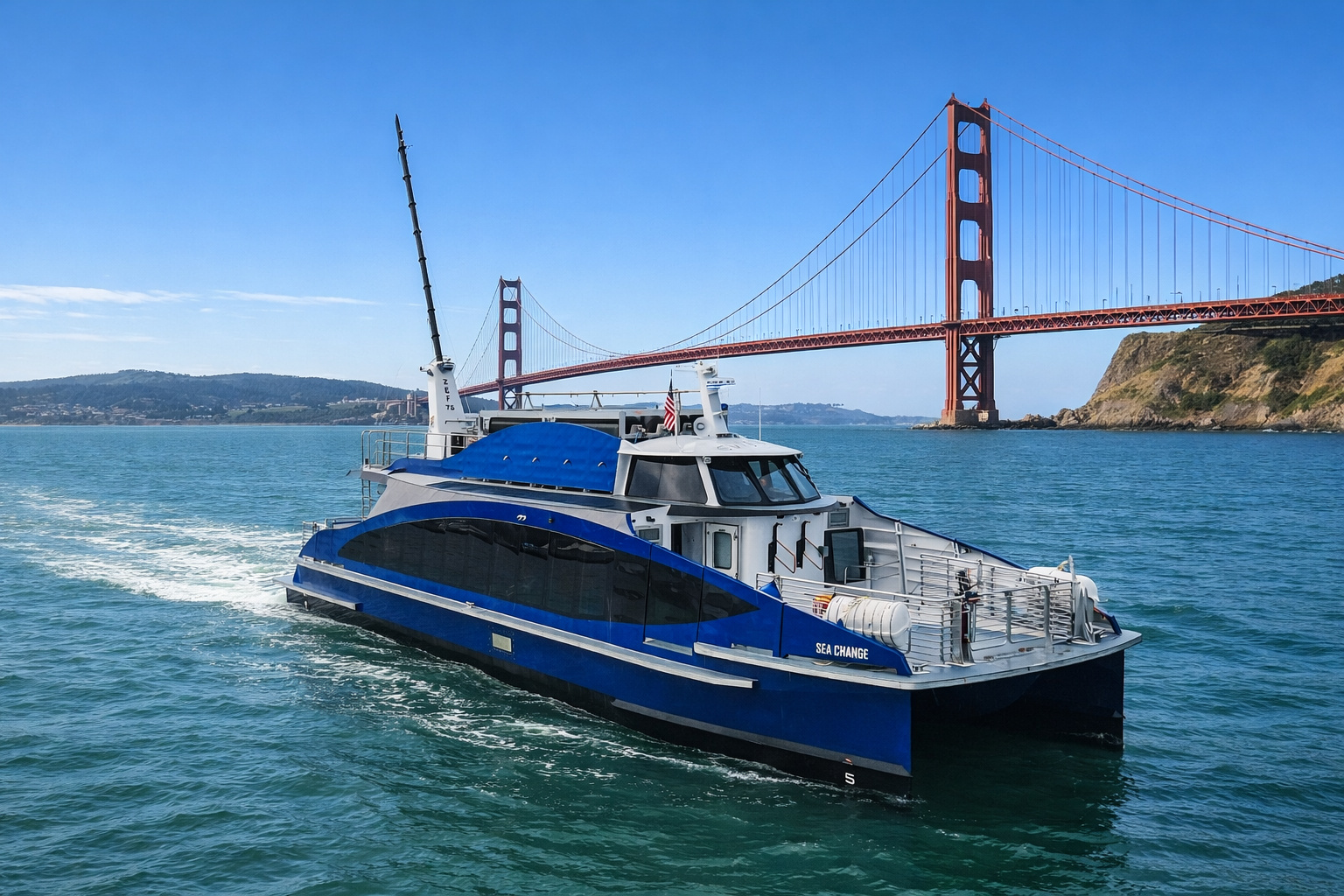
The first commercial hydrogen-powered ferry enters operation in the U.S., eliminates the use of diesel, uses fuel cells to generate clean energy on board, and transforms San Francisco Bay into a landmark of the new era of emission-free navigation.
-
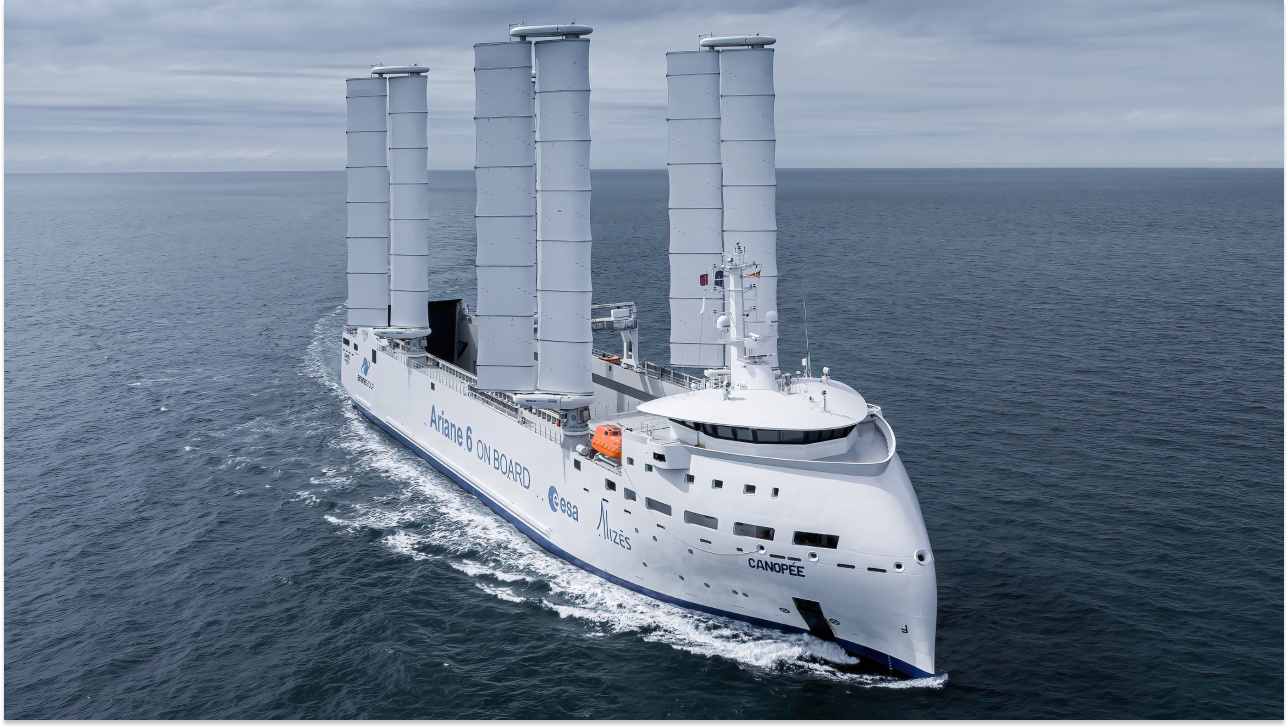
With a length of 121 meters and four rigid sails of 36 meters that automatically rotate to capture the wind, Canopée is the world’s first hybrid industrial cargo ship powered by wind, used to transport rockets and reduce fuel consumption by up to 30% on transoceanic routes.
-
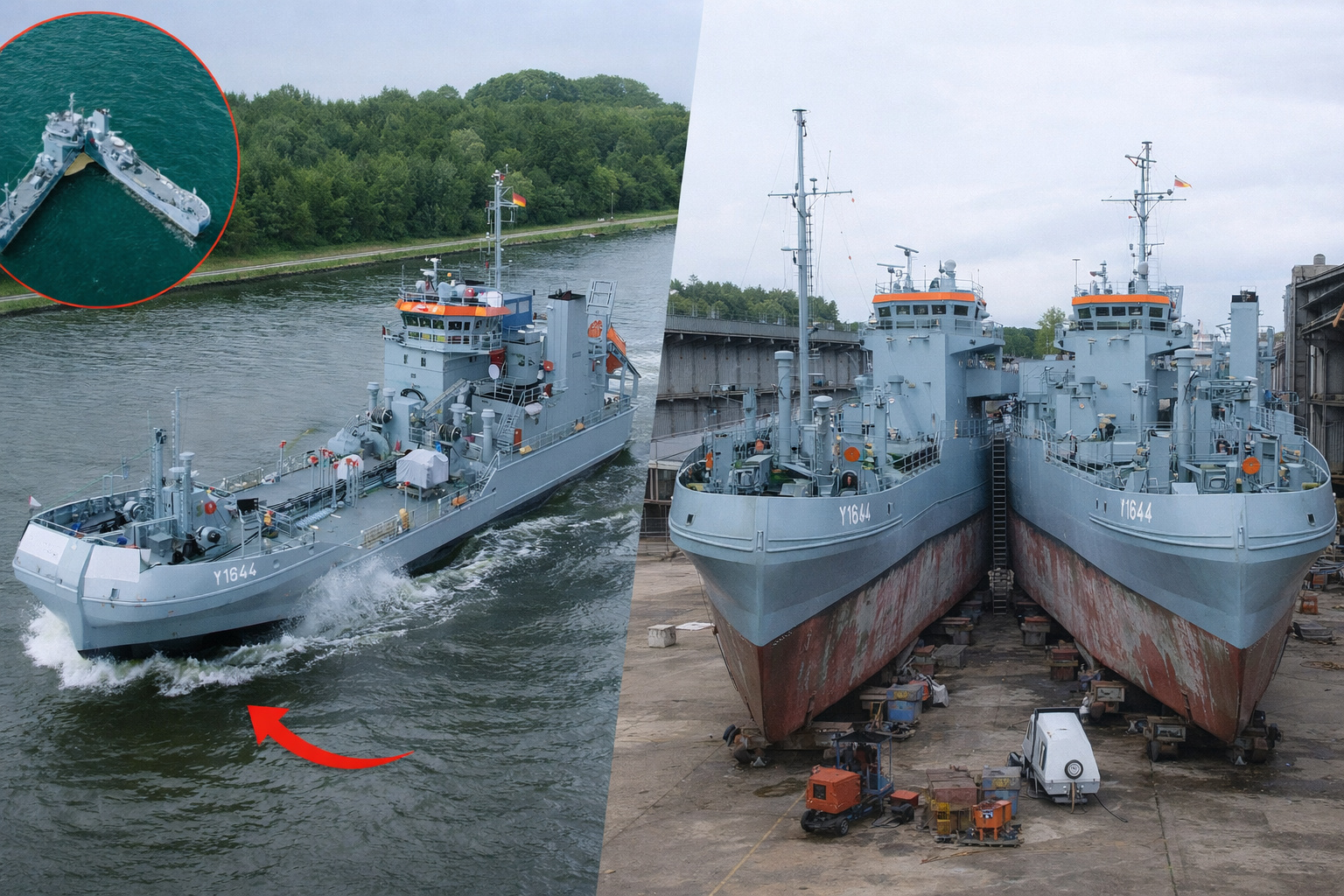
The German ship Bottsand splits its hull in two halves in the middle of the ocean to swallow spilled oil on the surface, separating the oil from the water inside a 790 cubic meter tank and then closing again. It is the only ship in the world factory-designed to split in half as part of normal operations, and the crew of six people who operate everything is civilian.
-
With almost 70 meters in width at the stern and a shape resembling a “giant slice of cheese,” the Ramform Titan tows up to 24 seismic cables to sweep the ocean floor in 3D and reveal oil reserves hidden beneath kilometers of sediment.

- High-speed cruise missiles;
- Maritime and aerial drones;
- Quieter submarines;
- Simultaneous attacks across multiple domains.
Unlike traditional frigates, which prioritized specific functions, the FDI was designed as a multifunctional platform. This means the ship can operate simultaneously in air defense, anti-submarine warfare, land attack, and maritime area control, without relying on constant support from other units.

AESA SeaFire Radar Redefines Detection Capability
One of the main advancements of the FDI lies in its radar system. The ship is equipped with the SeaFire radar, developed by Thales Group, based on AESA (Active Electronically Scanned Array) technology. The system uses four fixed panels installed on the superstructure, allowing 360-degree coverage without the need for moving parts.
This architecture allows tracking of hundreds of targets simultaneously, including aircraft, missiles, and low-signature threats, with high precision and rapid response. Additionally, the radar is capable of operating in environments saturated with interference, which is essential in electronic warfare scenarios.
Long-range Armament and Strategic Attack Capability
The FDI stands out not only for its sensors but also for its arsenal. Among the main onboard systems are:
- Surface-to-air missiles Aster 30, capable of intercepting threats at long distances;
- Cruise missiles MdCN, used for precision land attacks;
- Torpedoes for anti-submarine warfare;
- Medium-caliber naval gun.
The presence of cruise missiles transforms the frigate into a platform capable of hitting land targets hundreds of kilometers away, expanding its strategic role. This capability allows the ship to operate not only in defense but also in offensive operations.
Reduced Crew and High Level of Automation
One of the most innovative aspects of the FDI is its reduced crew. While traditional frigates can operate with 200 to 300 people, the FDI was designed to function with around 110 to 125 crew members.

This reduction is possible thanks to automated systems that control navigation, system monitoring, maintenance, and combat management. Automation reduces operational costs, improves efficiency, and allows for longer operations with less human wear. Additionally, the ship’s design was conceived to minimize the need for maintenance at sea.
Stealth Design and Signature Reduction
The FDI also incorporates stealth concepts, with a design that reduces its radar signature. Sloped surfaces and system integration help minimize detection by enemy sensors.
This feature increases the ship’s survivability in combat scenarios, especially against modern radar-guided threats. The signature reduction does not make the ship invisible but makes its identification and tracking more difficult.
Integration with Helicopters and Aerial Operations
The frigate features a hangar capable of operating helicopters like the NH90, expanding its operational capabilities. These helicopters are used for anti-submarine warfare, maritime surveillance, and equipment transport.
Integration with aircraft allows for an expanded detection and attack range, making the frigate even more versatile.
International Interest and Export to Greece
The FDI project has also gained prominence in the international market. In 2021, Greece signed a contract for the acquisition of three units of the FDI HN version, in one of the largest recent naval agreements in Europe.

This interest demonstrates that the platform has significant export potential. Adoption by other countries reinforces the relevance of the FDI as a model for future frigates.
Comparison with Traditional Frigates
Compared to previous models, the FDI presents important differences. Older frigates had larger crews, were less automated, and had less integrated systems. The FDI combines a smaller crew, greater system integration, more advanced sensors, and a higher response capability.
This evolution reflects a shift in the concept of naval warfare, where technological efficiency replaces the volume of human resources.
The Role of the FDI in the Future of Naval Warfare
The development of the FDI occurs in a context of global transformation in naval forces. The proliferation of high-precision missiles and drones demands ships capable of reacting quickly and operating in multiple scenarios.
The FDI represents this new generation of ships, where technology, automation, and integration capability define performance on the battlefield. This approach may influence future designs in different countries.
Challenges and Limitations of the New Concept
Despite the advantages, the model also presents challenges. Ships with reduced crews rely heavily on automated systems, which increases the need for technological reliability.
Additionally, the smaller size may limit some capabilities compared to larger ships. This balance between efficiency and robustness is one of the main points of debate in the evolution of modern fleets.

A New Reference for Frigates in the 21st Century
The FDI frigate represents a significant change in how warships are designed and operated. Combining advanced radar, long-range armament, automation, and modern design, it redefines the role of frigates in naval operations.
By reducing dependence on large crews and increasing technological efficiency, the FDI establishes a new standard that may influence fleet development worldwide, marking a new stage in the evolution of naval warfare.








Seja o primeiro a reagir!