





 Portuguese
  English
  Spanish
  4 min of reading
  0 comments


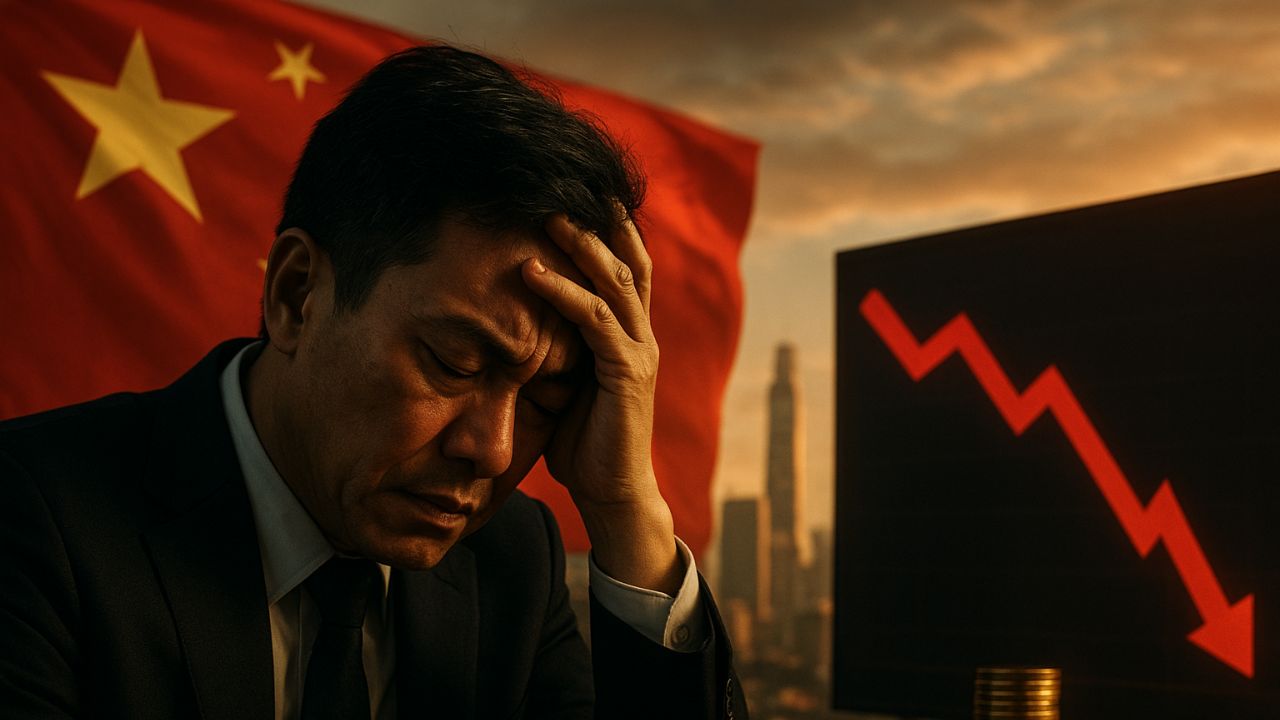
August Data Reveals Sharp Decline in Industrial Production and Retail, Weakening China’s Position in Crucial Tariff Negotiations with the U.S.
The Chinese economy experienced a significant slowdown in August, with crucial production and consumption indicators failing to meet targets, according to official data released on Monday. The National Bureau of Statistics (NBS) reported the slowest retail sales growth since November and the smallest industrial production expansion in a year, painting a concerning picture for the world’s second-largest economy.
This sudden decline occurs at the worst possible moment for Beijing, undermining what was considered its main leverage: economic robustness. As analyzed by Newsweek, China’s internal loss of strength severely complicates its position in critical tariff and trade negotiations with the United States, which are seeking concessions on multiple fronts.
The Numbers of the Slowdown: Retail and Industry in Decline
The NBS data details the extent of the economic weakness. Retail sales, a pillar of internal consumption, increased only 3.4% in August compared to the previous year. This figure not only fell below the forecast of 3.9% by economists surveyed by Reuters, but also marked the slowest growth pace since November of last year.
-
“No one will make us change the Pix,” says Lula after the US report.

-
Lula responds directly to Trump and says that Pix is from Brazil and will not change under pressure from anyone, after a report from the United States pointed out the Brazilian payment system as an American trade barrier.

-
Amazon has just announced a new fee on all deliveries, and your online purchases will become more expensive starting April 17, including for those buying from the United States here in Brazil.

-
He sold his share for R$ 4 thousand, saw the company become a giant worth R$ 19 trillion, and missed the opportunity of a lifetime.


The industrial sector fared no better. Industrial production growth slowed to 5.2% year-on-year, a notable decline from the 5.7% recorded in July. Furthermore, Newsweek highlights that August marked the continuation of Beijing’s deflationary difficulties, with the consumer price index (CPI) falling 0.4% and industrial producer prices plummeting 2.9% compared to the previous year.
Why Timing Threatens China’s Strategy
The main concern, as reported by Newsweek, is the timing of this data. China used its apparent economic resilience as a crucial source of leverage in the current trade dispute with the U.S. Beijing’s narrative was that the country could thrive even without American customers, pressuring Washington for a relaxation of restrictions on its exports.
With industrial production and consumption experiencing their worst month of 2025, this narrative collapses. The slowdown is largely attributed to a notable weakness in consumer spending, a problem that is already affecting China’s beleaguered real estate market. Although Beijing promised to “vigorously boost consumption” by increasing citizens’ income, the reality of August’s numbers places the government under intense pressure.
U.S.-China Negotiations: Tariffs, TikTok, and Russian Pressure
Although the Chinese economy grew 5.3% in the first half of 2025, in line with the official goal of 5%, exports are already showing signs of fatigue. The outcome of ongoing negotiations with the U.S. will determine whether China can maintain this pace. Officials from both countries just concluded a two-day meeting in Madrid, Spain.
The U.S. delegation, led by Treasury Secretary Scott Bessent and Trade Representative Jamieson Greer, placed several controversial issues on the table. In addition to tariffs, Newsweek notes that key areas of contention include the U.S. opposition to China’s purchase of oil from the Russian Federation (an issue that led India to double its tariffs in August) and the future of the video app TikTok.
What to Expect: An “Ad Hoc” Agreement and the Future of TikTok
Despite the tense atmosphere, Secretary Bessent told reporters that a “framework agreement” was reached to transfer TikTok to a U.S.-controlled company. While details were not provided, he stated that President Trump and Chinese President Xi Jinping would “speak on Friday to finalize the agreement.” President Trump described the second day of meetings in Madrid as “very good.”
However, analysts foresee limited results on the broader trade front. Wendy Cutler, vice president of the Asia Society Policy Institute, commented after the negotiations that “there is little time to strike a significant trade agreement.” She anticipates “a series of ad hoc outcomes,” such as a possible Chinese commitment to purchase more soybeans from the U.S. in exchange for delays on certain high-tech export controls.
Currently, an extended tariff truce in August limits rates on Chinese imports to 30% and on American products to 10%, valid until early November. Representative Greer indicated on Monday that the U.S. would be open to extending this deadline “if negotiations continue in a positive direction,” a window that China may desperately need to utilize, given its current economic weakness.








-

-

-

13 pessoas reagiram a isso.