





 Portuguese
  English
  Spanish
  5 min of reading
  0 comments


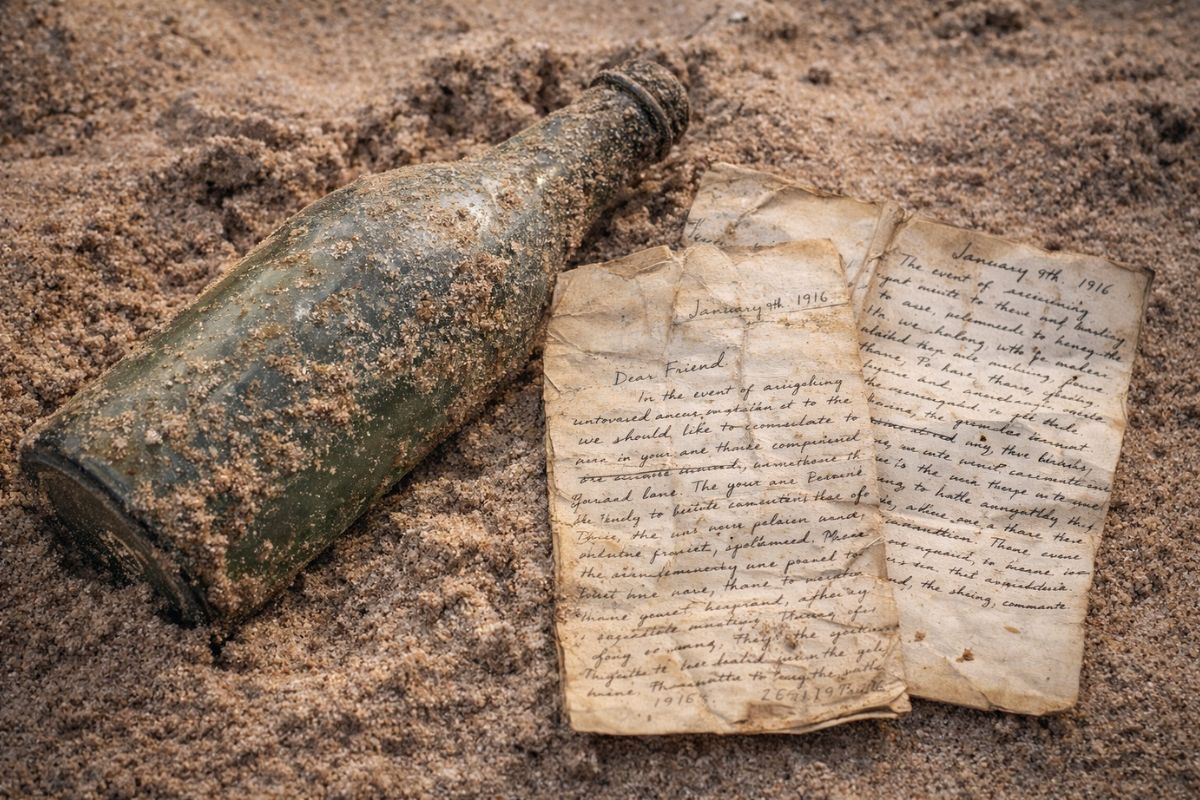
Two Australian soldiers threw a glass bottle into the sea on August 15, 1916, while sailing aboard the HMAT A70 Ballarat heading to the trenches of the Western Front in France, and more than 100 years later a family found the bottle buried on the coast of Western Australia with the letters still legible, revealing words of courage and hope written weeks before one of them died in combat
Two Austrian soldiers threw a glass bottle into the sea on August 15, 1916, on their way to the trenches of World War I in France.
Inside the bottle, they wrote letters. One described the ship’s food as very good and said everyone was happy. The other left an open message for whoever found the bottle.
More than 100 years later, the bottle from the Australian soldiers was found partially buried in the sand of the Western Australian coast, and the letters inside it were still legible.
-
China invests over R$ 4.2 trillion, builds the largest water network in the world with 95,000 reservoirs and 1 trillion m³, expands piped water access to 96% of rural areas, attracts R$ 565 billion in foreign investments, and advances with the “longevity gene” in rice.

-
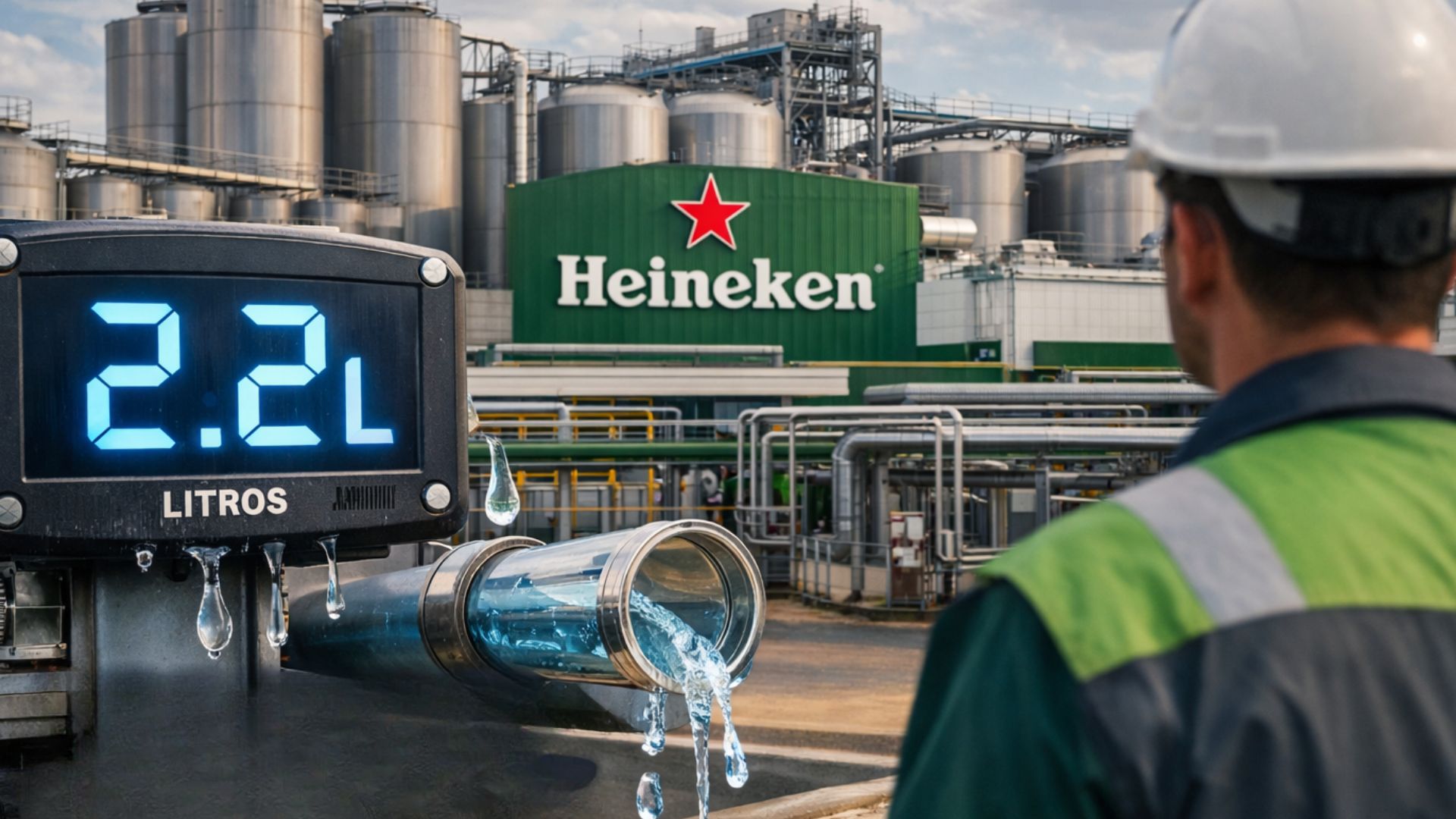
Heineken’s factory in Brazil surprises the world by reducing water consumption for beer production from nearly 10 liters to just 2.2 liters per liter produced, achieving a 23% decrease with real-time technology.
-
This climbing plant covers the walls of the house, blocks up to 80% of solar radiation, and reduces the internal temperature by up to 5 degrees in the summer without spending a dime on the electricity bill, and it also produces bunches of grapes in the backyard.

-
The first city in the world to reach 1 million inhabitants houses a museum with 139,000 ceramic bricks and advanced construction engineering with a steel structure inspired by a Chinese symbol that refers to the walls of the Ming dynasty.


The discovery was made by Debra Brown, her husband, and her daughter during a beach cleanup in Wharton, near Esperance.
According to Revista Oeste, the glass bottle from Schweppes was partially buried in the sand. When opened, the letters were wet but legible.
The words written by the Australian soldiers over a century ago came out of the bottle as if time had stopped inside it, revealing a moment of hope and courage from two men on their way to a war that would kill one of them weeks later.
Who were the two Australian soldiers who wrote the letters
The letters were written by Malcolm Alexander Neville, 27, and William Kirk Harley, 37.
The two Australian soldiers were traveling aboard the HMAT A70 Ballarat, a military transport ship, heading to the trenches of the Western Front in France.
Neville wrote to his mother. He described the ship’s food as very good and said everyone was “happy as Larry,” an Australian expression meaning great contentment.
It was the kind of letter a son writes to calm his mother before going to the most dangerous place in the world.
Harley, whose mother had already passed away, had no one to address his message to.
Instead of writing to someone specific, the Australian soldier left an open message to whoever found the bottle, wishing that the recipient was as well as they were at that moment.
A message written by a man who did not know if he would survive what lay ahead, directed to a stranger he would never meet.
What happened to the Australian soldiers after they threw the bottle
Malcolm Neville died in combat months after writing the letter to his mother.
The 27-year-old Australian soldier who described being happy on the ship did not survive the war that awaited him in France.
The words he put inside the bottle became one of the last records of his voice, preserved by the cork and the glass while the ocean and time did their work.
William Kirk Harley survived the war, but not unscathed. He was wounded twice in the trenches of the Western Front.
Harley returned to Australia but died in 1934 due to cancer possibly related to exposure to gas in the trenches, a common consequence among Australian soldiers who faced chemical warfare in World War I.
The bottle that the two threw into the sea in 1916 survived both of them for nearly a century.
How the bottle from the Australian soldiers survived more than 100 years buried in the sand
Professor Charitha Pattiaratchi, a coastal oceanography expert, explained that the bottle from the Australian soldiers likely spent only a few weeks in the water before washing up on the shore.
After reaching the beach, the bottle was buried in the sand for more than 100 years, protected from the elements by the layer of sand that covered it and by the seal of the Schweppes glass bottle itself.
Recent strong tides and dune erosion in the Wharton area exposed the bottle again, and it was at that moment that Debra Brown and her family found it during the beach cleanup.
The letters were wet but legible.
The combination of thick glass, compacted sand, and the dry climate of the Australian coast created preservation conditions that kept the words of the Australian soldiers intact for over a century.
The paper endured because it was protected from sunlight and oxygen during the entire period it was buried.
The reaction of the families when reading the words of the Australian soldiers written in 1916
Debra Brown used civil records to locate the descendants of the Australian soldiers who wrote the letters.
She found Herbie Neville, the great-nephew of Malcolm, and Harley’s relatives.
Herbie described the discovery as unbelievable and deeply moving when reading the words of his great-uncle that showed courage and hope weeks before dying in combat.
For Neville’s family, the letter was like hearing the voice of someone who died more than 100 years ago.
Ann Turner, Harley’s granddaughter, reported that she and the other four grandchildren were absolutely amazed.
Turner described the feeling as if her grandfather was speaking from beyond, and called the discovery a miracle, strengthening the family’s memory of the Australian soldiers’ participation in World War I.
Debra Brown intends to officially deliver the letters to the families.
A bottle, two letters, and 100 years of silence in the sand
Two Australian soldiers threw a bottle into the sea in 1916, on their way to a war that would kill one of them and injure the other.
The letters they wrote inside the bottle survived more than 100 years buried in the sand, and when they were found, the words of the Australian soldiers were still legible, carrying hope, courage, and an expression of happiness that fate did not allow to last.
The bottle traversed more time than the lives that created it. And the words inside it prove that sometimes what a soldier writes to his mother before going to war can last longer than entire empires.
What would you do if you found a bottle with letters over 100 years old on the beach? Do you think there are still other bottles from Australian soldiers buried on beaches around the world? What moved you the most in this story? Leave your thoughts in the comments and share this article with those who love history and human stories.






Seja o primeiro a reagir!