Portuguese
  Spanish


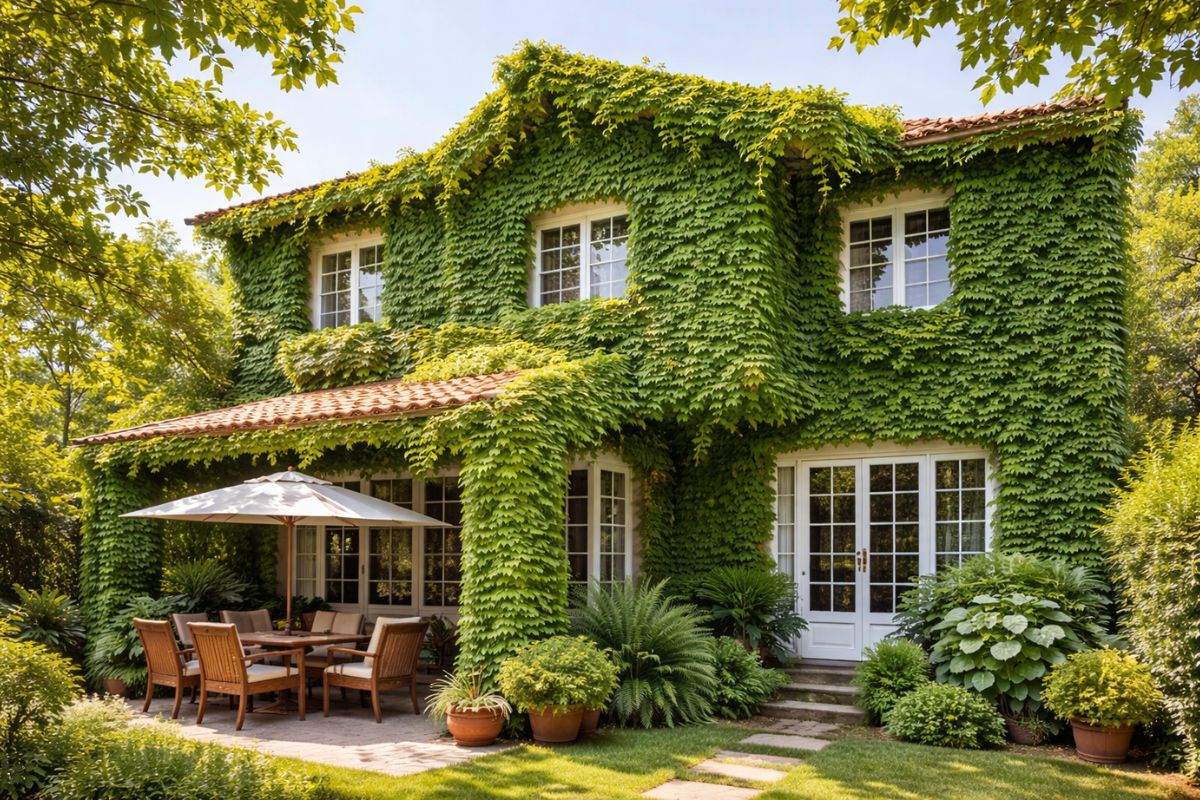

The grapevine (Vitis vinifera) is a climbing plant that forms a living barrier over walls and roofs, blocking up to 80% of solar radiation and reducing the temperature of rooms by up to 5 degrees in the summer, in addition to losing its leaves in winter to allow the sun to warm the house and produce bunches of grapes directly in the backyard
There is a climbing plant that covers the walls of the house, blocks up to 80% of solar radiation, and lowers the internal temperature of rooms by up to 5 degrees during the summer.
It is neither an expensive air conditioning system nor a thermal insulation renovation.
The climbing plant that does all this is the grapevine (Vitis vinifera), which forms a living barrier of broad leaves over walls and roofs, cools the environments without spending a dime on the electricity bill, and still produces bunches of grapes in the backyard.
-
Neon Blue Glow in Brazilian Waters Captivates Locals and Goes Viral, Unveiling Rare “Sea Fire” Phenomenon

-
Forgotten Map Leads Diver to Shipwreck with Gold, Rare Jewels, and Secrets Hidden for Nearly 350 Years
-
Furong: The 2,000-Year-Old Chinese City Built on a 60-Meter Waterfall Becomes a Global Tourist Phenomenon

-
YouTube Inventor Dubbed “Real-Life Tony Stark” Builds Robotic Legs for Father’s Day, Creating a Wheelchair That Conquers Stairs and Rough Terrain




The climbing plant acts as a natural thermal insulator that changes its behavior according to the season.
In summer, the dense leaves block the heat. In autumn and winter, the grapevine loses all its foliage, and the structure of branches allows sunlight to pass freely and warm the indoor spaces during the cold months.
It is thermal comfort all year round, with grapes as a bonus.
How the climbing plant blocks 80% of solar radiation and cools the house

The broad leaves of the climbing plant form a dense barrier that prevents direct sunlight from hitting roofs and masonry walls.
This living plant cover blocks up to 80% of solar radiation, drastically reducing the heating of the walls caused by conduction and convection throughout the day.
With this constant natural shading, the internal temperature of the rooms can drop by up to 5 degrees during the summer.
The cooling effect of the climbing plant is most noticeable when it is positioned on walls facing north and west, which receive the heaviest load of afternoon sun.
But the climbing plant does not just create shade. The Vitis vinifera undergoes a continuous process of cellular transpiration: its leaves release small particles of water that cool the surrounding air and form a mild microclimate attached to the structure of the house.
It is like having a humidifier and a shade provider working at the same time, without consuming electricity.
The natural trick of the climbing plant: shade in summer and sun in winter
The great advantage of the grapevine climbing plant over other shading systems is that it is smart by nature.
In autumn, the climbing plant completely loses its foliage. Without the green barrier, the structure of branches allows sunlight to pass freely and warm the indoor spaces during the cold months.
This means that the climbing plant provides thermal comfort all year round without the resident needing to do anything: in summer it blocks the heat, in winter it lets the sun in.
An artificial fixed awning blocks the sun all year round, even when you want warmth. A curtain needs to be manually opened and closed.
The climbing plant solves on its own the problem that artificial systems cannot: automatically adapting to the season, without energy expenditure and without resident intervention.
And unlike an awning, it still produces grapes.
How to plant and guide the climbing plant on the wall of your house
For the climbing plant to cover the desired area and function as a thermal barrier, planting needs to be done with proper soil preparation and support structure.
The soil needs to have good drainage and be enriched with organic compost or well-rotted manure at the base of the hole before accommodating the seedling of the climbing plant.
The spacing between seedlings should be at least 2 meters to avoid competition for moisture and nutrients.
The climbing plant needs pergolas, arbors, or sturdy trellises that can support the weight of the branches and mature bunches. The young stems should be gently tied to the structure to guide growth in the right direction.
If you do not have a backyard, the climbing plant can be grown in large pots on the balcony, as long as the container has sufficient depth for rooting and regular formative pruning is done to control size.
The climbing plant requires at least 6 hours of direct sunlight per day to complete photosynthesis and produce dense enough foliage to function as a thermal barrier.
The best grape varieties to grow the climbing plant in Brazil
The choice of variety defines the resistance of the climbing plant and the quality of the fruits that will be harvested.
Two cultivars stand out for home cultivation in Brazil: Niagara Rosada, widely consumed fresh and famous for its unmistakable sweet aroma, and Isabel, which dominates the whole juice sector due to its structural strength against pests.
Both are rustic varieties that adapt well to Brazilian climate variations and do not require advanced gardening experience.
The Niagara Rosada grapevine is ideal for those who want to eat the fruit fresh directly from the vine. The Isabel is better for those who prefer to make juices, jellies, or simply want a green barrier more resistant to diseases.
In both cases, the climbing plant will produce the dense vegetation cover that blocks solar radiation and cools the house, in addition to delivering bunches of grapes in the warm season.
The annual care that keeps the climbing plant healthy and productive
The climbing plant needs severe pruning of old stems once a year, always during winter when it is without leaves.
Excessive accumulation of intertwined branches hinders air circulation, creates a stuffy environment, and favors the emergence of fungi on the wet leaves of the climbing plant.
Watering should be moderate and done directly on the soil, avoiding wetting the leaves. The replenishment of natural fertilizer should be done at the beginning of spring to stimulate strong and healthy budding.
In densely built urban areas, the climbing plant on the wall of the house has an additional effect: it reduces radiant heat reflected onto the street and filters impurities from the air.
The integration of a climbing plant like the grapevine into the architecture of the house has ceased to be merely aesthetic: it is a practical solution for thermal comfort that reduces temperature, produces food, and adds value to the property without energy costs.
A climbing plant that cools, feeds, and costs nothing on the electricity bill
The grapevine is a climbing plant that blocks up to 80% of solar radiation, lowers the internal temperature by up to 5 degrees in summer, loses its leaves in winter to let the sun warm the house, and still produces bunches of grapes in the backyard.
It is natural thermal comfort all year round, without spending a dime on electricity, with a climbing plant that adapts itself to the seasons and delivers fresh fruit as a bonus.
If your house turns into an oven on hot days, perhaps the solution is not an air conditioning unit, but a grapevine seedling planted on the right wall.
Have you ever grown a climbing plant on the wall of your house? Did you notice a difference in the internal temperature? Do you prefer Niagara Rosada or Isabel? Leave a comment and share this article with anyone who complains about the heat and pays a lot on their electricity bill.