





 Portuguese
  English
  Spanish
  5 min of reading
  0 comments


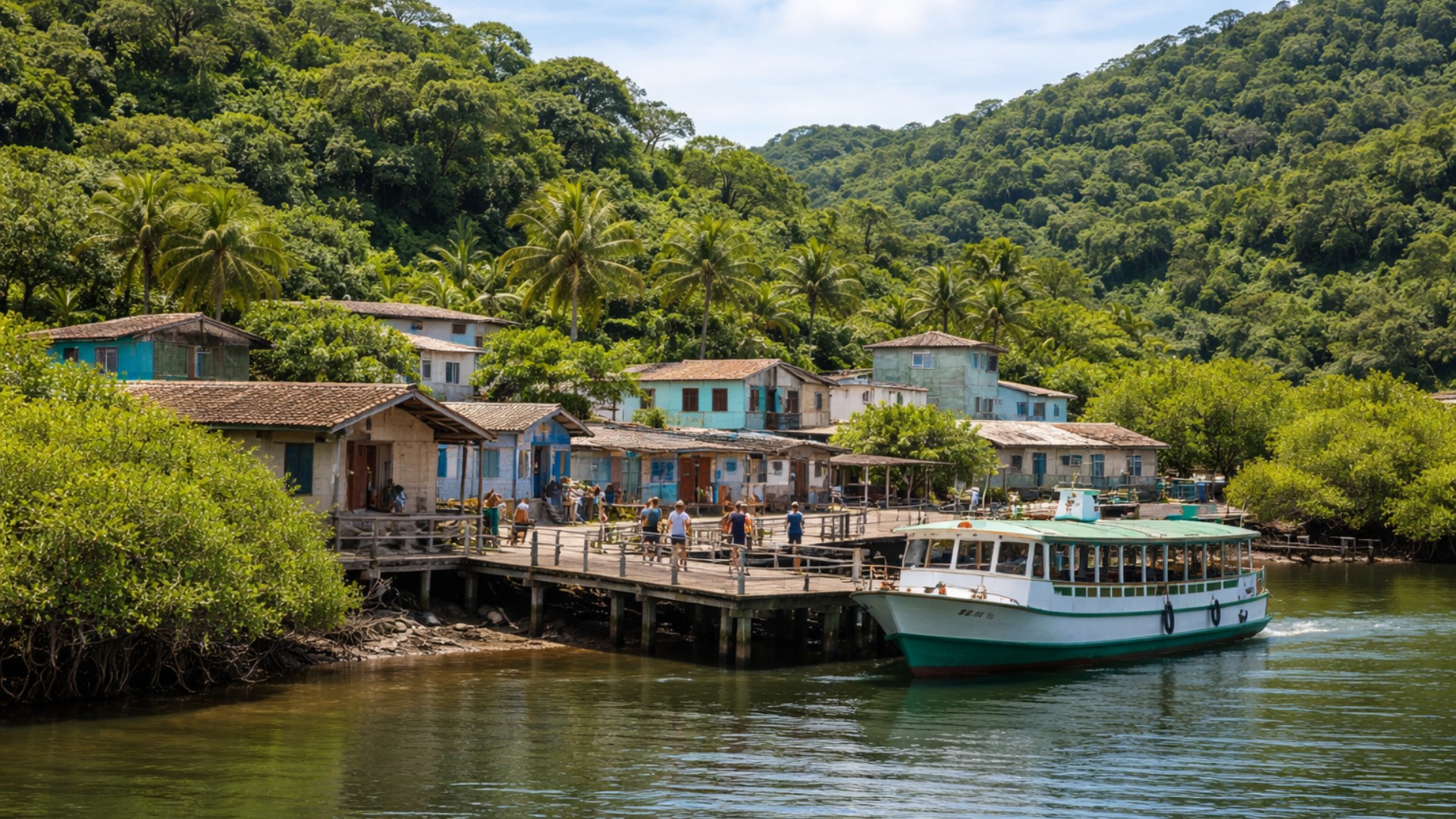
Caiçara community preserves traditional routine in an isolated area of Santos, with access controlled by a cheap boat and a reduced population, maintaining ancient customs even close to the largest port in Latin America and surrounded by mangroves and Atlantic Forest.
About 30 minutes by boat from downtown Santos, Diana Island maintains a routine linked to artisanal fishing, the mangrove, and caiçara culture, with access by a municipal vessel that charges R$ 0.50 for the round trip.
The transport departs from a station behind the Customs House of Santos, in Praça da República, makes a stop at the Air Force Base, and accommodates up to 45 passengers, in addition to the crew.
The community lives in the Continental Area of the municipality, in a region surrounded by mangroves and preserved sections of Atlantic Forest.
-
Why was the Great Wall of China built? The truth that many are unaware of!
-
At 73.8 meters tall, the world’s tallest teapot-shaped building has 15 floors, ensures stability, and impresses with an internal space of 28,000 cubic meters.

-
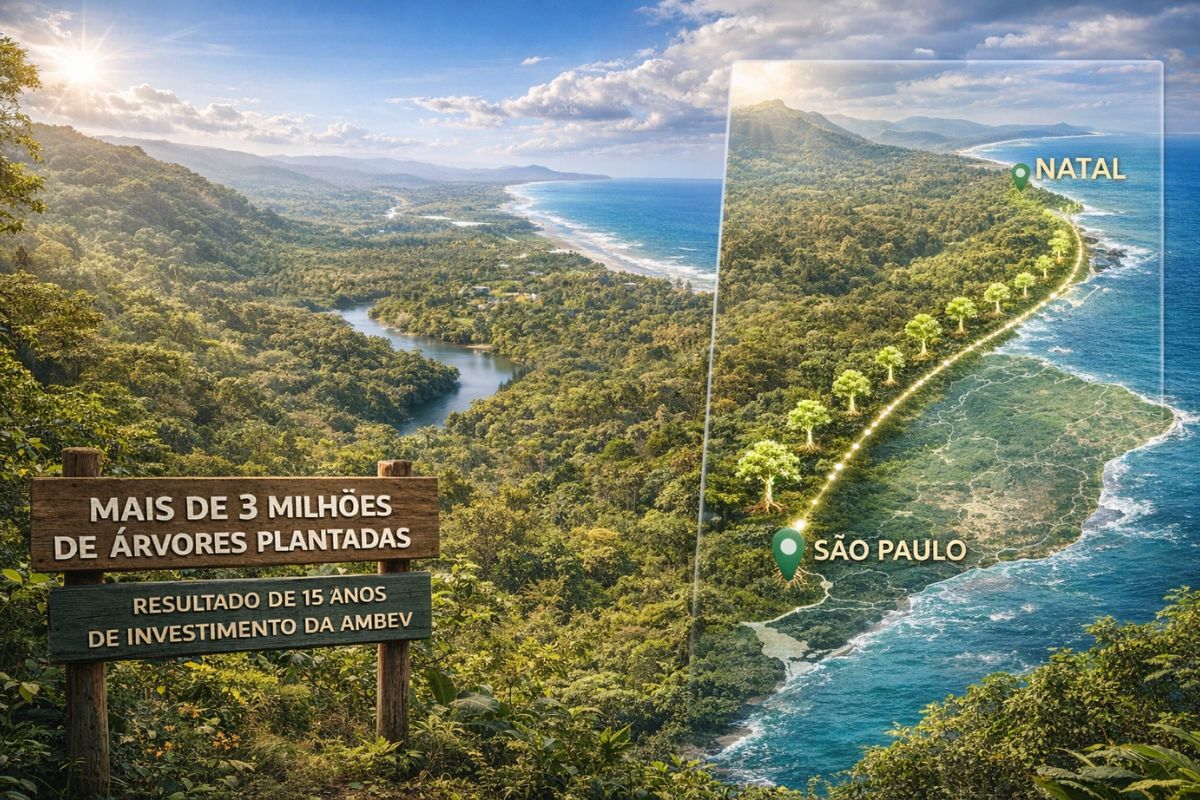
Ambev has planted over 3 million trees and restored an area equivalent to the coastline from São Paulo to Natal, and the result after 15 years of silent investment has finally appeared for all of Brazil to see.
-
A new AI collar technology for cattle eliminates physical fences, creates virtual barriers, monitors animals 24/7, and detects changes in behavior and health.


Limited access and symbolic transport draw attention


Although the crossing is open to visitors, the local dynamics do not function like that of a common expanding neighborhood.
Recent reports and municipal records describe the island as a traditional community that preserves its own rules of coexistence and restricts the arrival of new residents from outside the already established family and social nucleus.
Instead of subdivisions or growing occupation, what is seen is the preservation of a way of life that still resists the intense urbanization of the port and industrial surroundings of Baixada Santista.
The access structure helps explain why the place draws attention.
The ferry serves about 50 families living in the neighborhood and remains the main link between the island and the insular part of Santos.
The fare has a symbolic value, unusual by current standards, and makes the visit one of the cheapest crossings in the region.
At the same time, the limited capacity of the vessel imposes its own rhythm on transportation, far from the intense circulation logic observed in more exploited tourist destinations along the São Paulo coast.
Origin of the name and history of Diana Island
The name of the locality is directly linked to the Diana River, a watercourse that crosses the area and gave identity to the territory.
Before that, the place was known as Fishermen’s Island, a name that reflected the activity that structured the community’s occupation.
The city hall of Santos also mentions an ancient legend about an indigenous woman named Ana, associated with the oral memory of the region.
Over time, the bond with the river ended up prevailing, and the geographical reference took precedence over the old designation.
The formation of the current community did not occur exactly at the point where the village is located today.
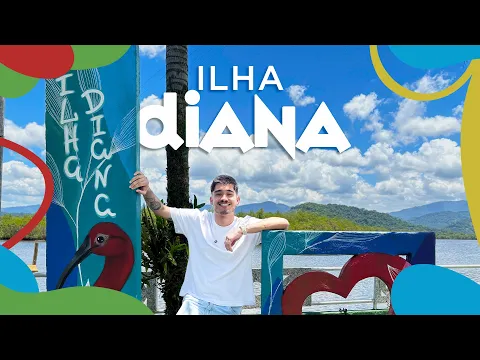
According to information released by the municipal administration, the first residents moved to the current area after recognizing that stretch as a more favorable position for fishing.
There are also historical records and studies about the region indicating that part of the occupation gained strength from movements linked to the establishment of the Santos Air Force Base, a process that marked the territorial reorganization of the continental area in the following decades.
Caiçara community resists urbanization
The exact chronology of the emergence of the island as a neighborhood does not appear uniformly in the consulted sources.
The most widespread version in tourist materials and reports points to the beginning of the occupation in the early 20th century, with the presence of fishermen, and the consolidation of the community by the end of the 1930s.
Meanwhile, the city hall also records that Diana Island began to be inhabited in the 1940s, in the context of the transformations caused by the construction of the Air Force Base.
Common to all versions is the emphasis on fishing, family ties, and adaptation to the estuary as the basis for local permanence.
This history helps to understand why the island preserves such a marked identity.
Daily life is still associated with shellfish gathering, artisanal fishing, religious festivals, and forms of sociability typical of caiçara communities.
In January 2025, the Santos Archive and Memory Foundation classified Diana Island as one of the last remaining spaces of this culture in the region.
By 2026, the city hall again presented the neighborhood as a refuge of tranquility, tradition, and flavors linked to local cuisine, reinforcing the notion that the place sustains itself more through cultural continuity than urban growth.
Small population and own rules of coexistence
The numbers regarding the population vary according to the source and the period.
There are municipal records from 2022 that mention about 200 inhabitants, distributed among 50 families, while more recent reports cite approximately 150 residents.
The most reliable data, therefore, is that it is a small community, formed by a few dozen families and with a population reduced by the urban standards of Baixada Santista.
This scale helps explain both the preservation of internal bonds and the resistance to the entry of new residents outside the community network.
For visitors, the experience is often defined less by conventional tourist infrastructure and more by contact with the estuarine landscape and community life.
The island appears in materials from the city hall and local tourism as a destination linked to community-based tourism, nature observation, and caiçara cuisine.
In 2022, for example, the municipal administration reported that the community promoted guided visits in the Vida Caiçara project, developed in partnership with DP World and the city hall, within an axis of environmental education and territorial appreciation.
Even with this openness to visitation, Diana Island does not present itself as a space molded for large flows.
Restricted access by boat, limited capacity, the symbolic cost of the crossing, and the small size of the population create a rare combination: a place close to downtown Santos, but with a different scale of time and occupation.
Still, the proximity to the largest port in the country and areas of strong urban pressure makes the permanence of this way of life an even more singular trait on the São Paulo coast.






Seja o primeiro a reagir!