





 Portuguese
  English
  Spanish
  5 min of reading
  0 comments


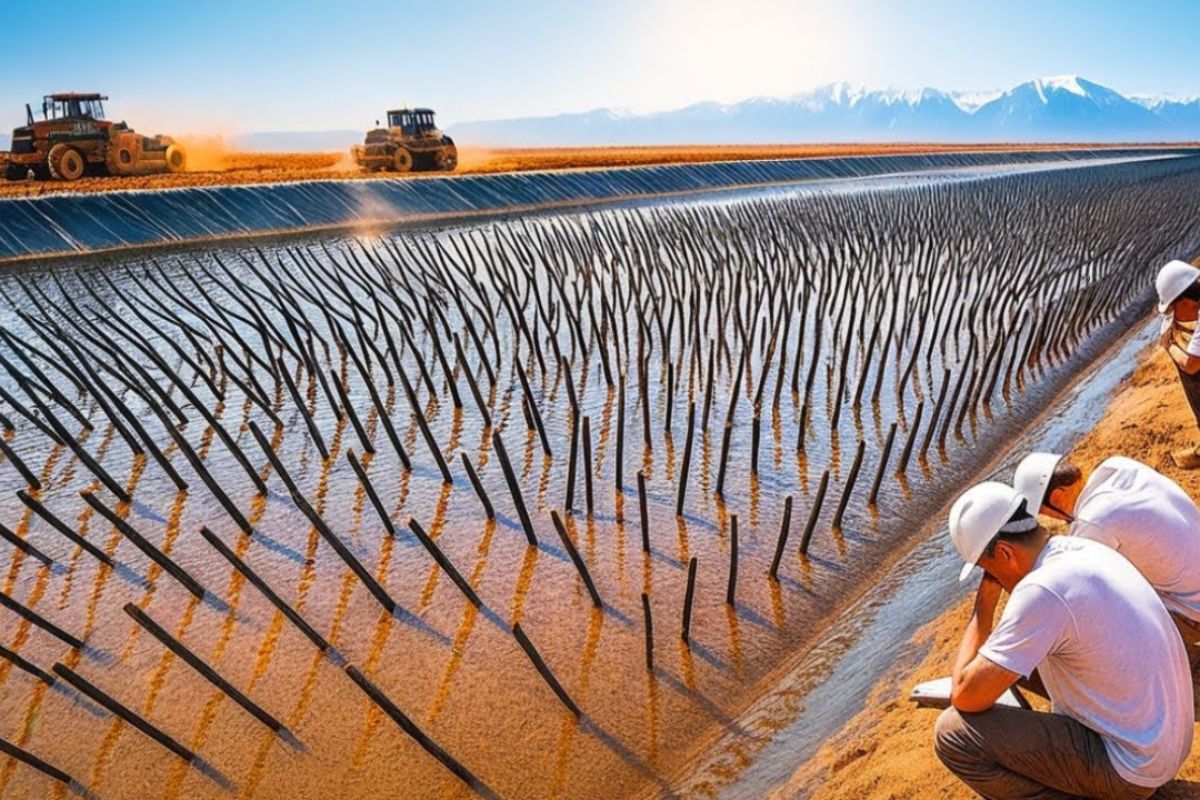
With Deserts Advancing on Cities, Crops, and Roads, the Country Combined Straw Grids, Reforestation, Biocrusts, and Soil Engineering to Stabilize the Sand and Recover Degraded Areas.
When advancing deserts began to swallow productive land and bring dust storms to major cities, China understood that it was not just an environmental problem. It was a direct risk to food, economy, and regional stability.
The response did not come only from cutting-edge technology. It came from a simple solution, repeated on an industrial scale and sustained by people on the ground in the desert: straw placed in a grid, continuous planting, and applied science to “hold” the sand and bring life back to the soil.
Why Advancing Deserts Became a National Threat
In 2000, almost 30% of Chinese territory had already been affected by desertification, with previously arable areas turning into dry and unproductive land.
-
Elon Musk focused on Brazil and lowered the price of Starlink, his internet service, but the question remains: is it worth it? An expert provides a detailed analysis of the internet that promises to connect any part of Brazil.

-
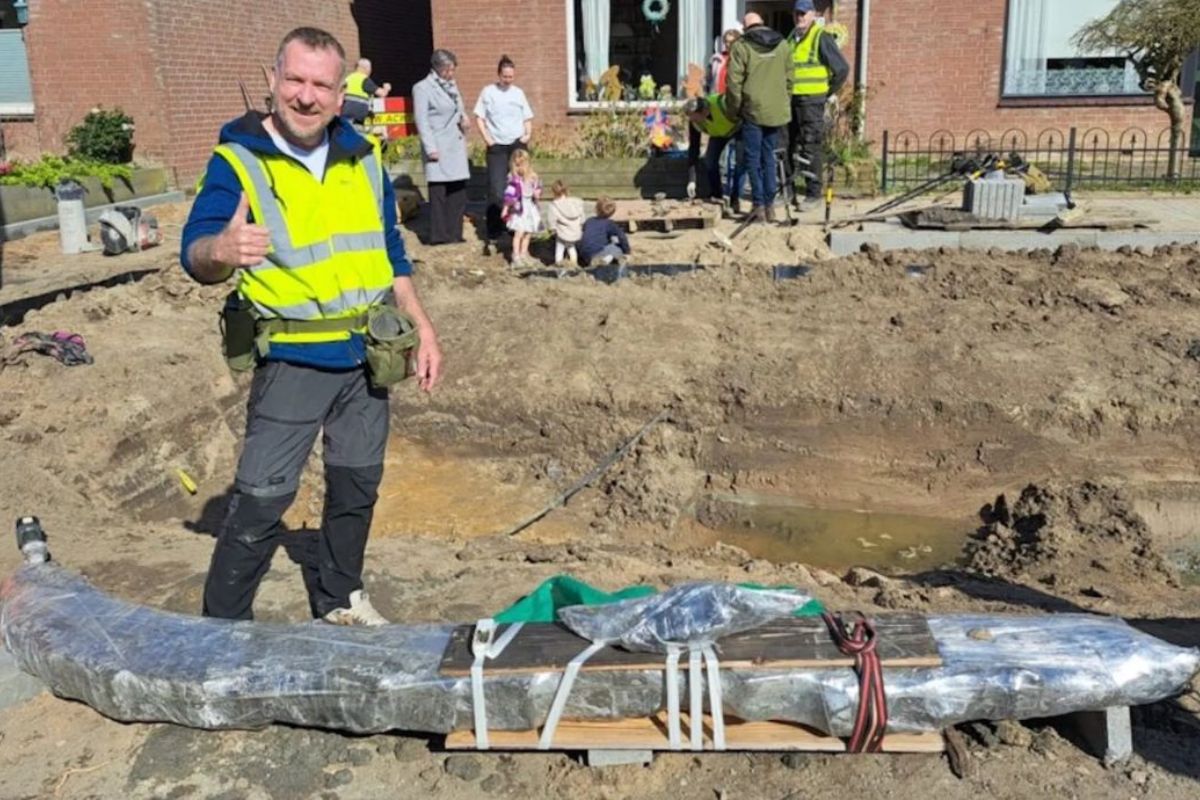
Workers were performing maintenance on the sewage system when they found a 3.2-meter beam that may be part of a 1,300-year-old Viking ship buried under the pipes since the medieval period in Europe.
-
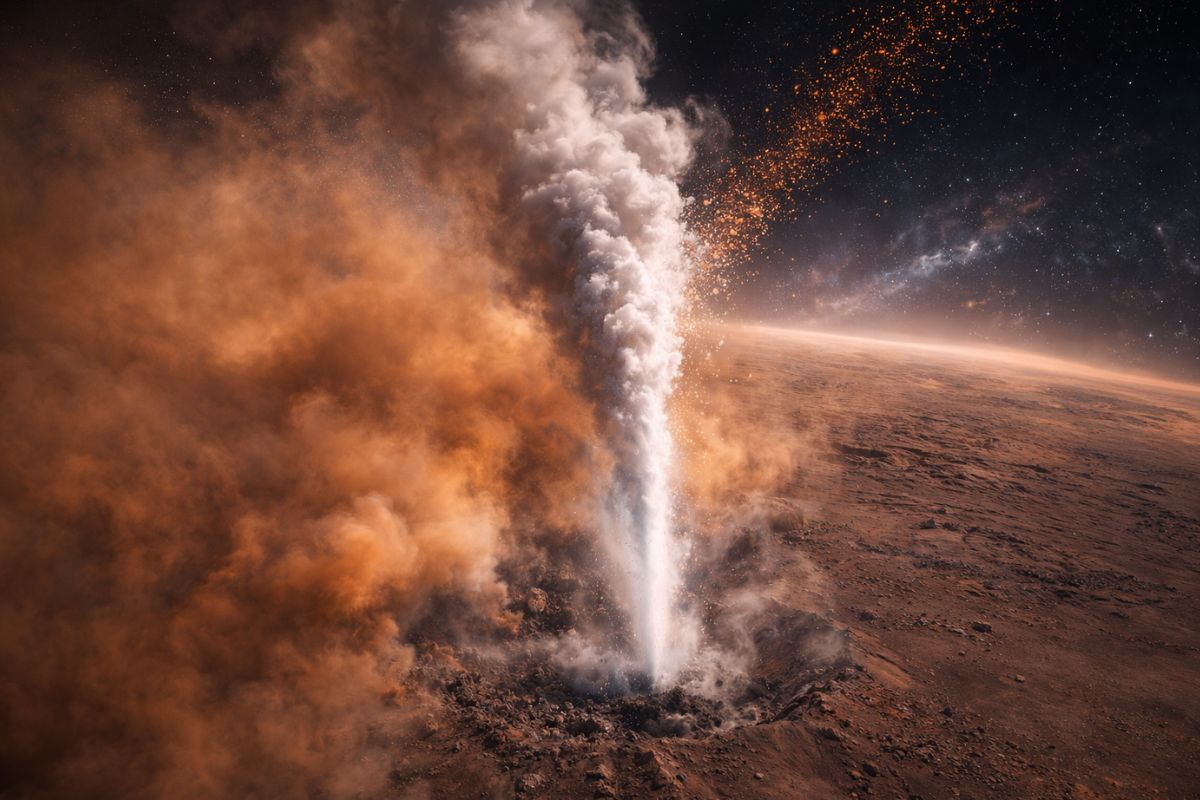
Scientists caught a water vapor explosion on Mars exactly when it shouldn’t have happened: an unexpected dust storm launched the water to an altitude of 80 kilometers and accelerated the escape of hydrogen into space by 2.5 times.
-
The Brazilian Navy launched the NPa Mangaratiba (P-73) on April 27: a 54.2 m Macaé-class patrol vessel, with 43 crew members, 6 days of autonomy, and a range of 4,000 km to monitor the entire Blue Amazon.


Advancing deserts meant failed harvests, declining rural income, and communities being forced to relocate.
One of the symbols of this pressure was the Gobi, which was advancing at about 1,390 square miles per year, and the dust storms known as Huang Sha, which reduced visibility and covered entire streets with sand in cities like Beijing. When the desert reaches the city, the entire country feels it.
The Unlikely Turnaround: Straw Grids to “Lock” the Sand

The strategy that drew attention for its simplicity was the creation of barriers in a checkerboard pattern, the so-called straw checkerboard barriers.
The logic is straightforward: dig trenches, position straw in squares, and create cells that break the wind, reduce sand displacement, and give resilient plants a chance to take root.
With advancing deserts, this type of grid became an environmental engineering tool. When well installed, the straw grid can block almost all sand movement, reducing displacement by up to 99% in certain scenarios. It’s not “decorating the desert,” it’s preventing it from continuing to march.
Why Simply Planting Trees Wasn’t Enough
Trees help because roots hold the soil and reduce sand mobility. The problem is that in an active dune, many seedlings do not survive: the wind exposes roots, the sand buries shoots, nutrients are lacking, moisture is lacking. In other words, advancing deserts do not provide the minimum for the plant to “take hold.”
That is why China approached the challenge with two fronts at the same time: to plant, yes, but also engineer the surface to create real survival conditions.
The Human Force and Scale: Millions of Cells, Extreme Heat, and Mechanization
Building straw grids requires heavy, repetitive work in a hostile climate. To gain scale, the country began using long manufactured straw ropes, transported and installed with machines, increasing efficiency by about 60%.
These ropes can last up to 6 years, double the lifespan of older methods, and some can even be removed and reused if they haven’t degraded.
Machines were also developed that dig trenches, position straw, and cover it with sand in a single pass, replacing the work of four to six people.
The message is clear: with advancing deserts, the solution needs to be repeatable and scalable.
Where This Was Truly Tested: Railways, Highways, and the Desert Trying to Swallow Everything
The technique did not remain in the laboratory. One cited example is the Baotou Lanzhou railway, built in 1958 across the Tengger desert.
Many believed it would be buried over time, but the straw protection helped keep it operational. The technique received a national science award in 1988.
Later, the same logic was applied to protect roads. A highway inaugurated in 2022 spanned about 76 miles through severe desert terrain, with straw grids, stone barriers, and gravel strips holding the sand.
When advancing deserts threaten infrastructure, stabilizing the ground becomes an economic priority.
The Science Beneath the Straw: Biocrusts to Create “Skin” in the Desert

Even with grids and trees, the real battle continued: the desert is a system, and the surface needs to gain cohesion. This is where biocrusts come in, microscopic communities that form a thin, living layer, linking sand particles and transforming loose dunes into more stable ground.
In nature, these crusts take decades to form. To speed things up, scientists developed inoculants grown in the lab and applied through spraying.
The cited results are substantial: up to 80% reduction in wind erosion even without vegetation, as well as greater moisture retention and a biological basis for seeds to germinate. With advancing deserts, gaining time is gaining territory.
Transforming Sand into “Soil”: Biomass Engineering and Plant-Based Binder

An even more radical approach mentioned is to alter the structure of the very “ground.” In test areas, China experimented with burying plant biomass mixed with a biodegradable binding agent derived from plant matter, creating a structure more akin to real soil, with air pores and organic matter.
In laboratory studies with biochar and carboxymethylcellulose, relevant gains were observed: a 36% increase in water retention capacity and a 30% increase in moisture retention, as well as improved soil aggregate stability.
In field tests, crops like tomatoes, peppers, corn, and sunflowers grew with minimal irrigation, something previously unfeasible in loose sand. This is the most direct response possible to advancing deserts: making the ground work again.
What Changed in Practice: Fewer Dust Storms and More Area Recovered
The effort is described as visible. Between 2016 and 2020, China converted about 21.7 million acres of desertified land into green areas. In 2022, it planted another 9.3 million acres of forest and, in 2023, covered more than 9.8 million acres of degraded land with trees.
One of the clearest signs pointed out is the decrease in the frequency of dust storms: northern cities that were once suffocated by “yellow dust” saw the frequency drop by 20% between 2009 and 2014. When advancing deserts recede, the air improves, and life improves as well.
The Economic Effect: When Restoration Becomes Investment

Restoration does not just appear as “beautiful green.” In areas like the Kubuchi desert, restoration has become the basis of the local economy, with tourism exceeding one million visitors per year and ecosystem service estimates totaling over 500 billion yuan.
About 77.6 billion dollars, in accumulated value linked to cleaner air, carbon storage, fertile soil, and flood control. Restoring nature ceases to be a cost when it becomes protection and income.
Why This Turnaround is One of the Largest on the Planet
The central point is combination. China did not bet on a single “miracle.” It combined reforestation, straw grids, mechanization, biocrusts, and soil engineering, applying science where nature alone would take decades to react.
And all of this happened with the same objective: to halt advancing deserts before they swallowed food, cities, and infrastructure.
If you could choose one measure to implement in your country against advancing deserts, would you start with straw grids, biocrust science, or soil engineering?







-

-

-

-

-

-

29 pessoas reagiram a isso.