





 Portuguese
  English
  Spanish
  4 min of reading
  0 comments


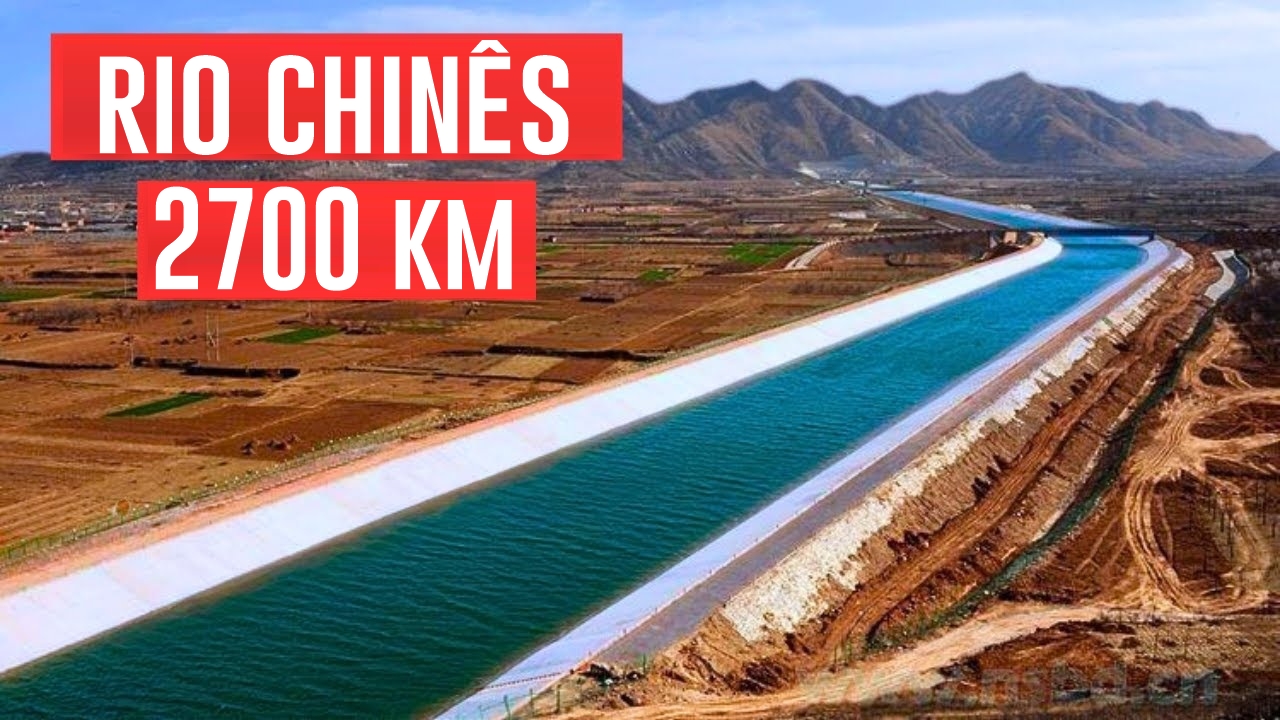
China Is Developing An Artificial River In A US$ 62 Billion Project, One Of The Largest Engineering Works In The World, To Solve Supply And Irrigation Problems.
The South-North Water Diversion Project of China, the largest water diversion initiative in the world, has been transforming the landscape of water distribution. Spanning approximately 2700 km, the project was designed to tackle severe water shortages in northern the country.
As the project has progressed over the years, it has impacted millions of Chinese lives.
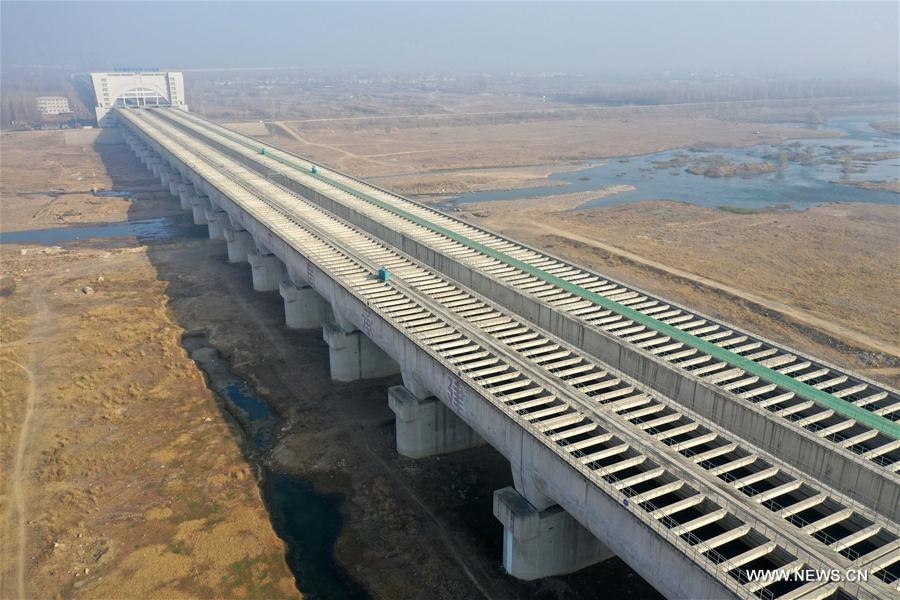
The South-North Water Diversion Project of China is not exactly an “artificial river”, but rather a vast network of canals, tunnels, and reservoirs designed to transfer water from the wetter southern regions to the drier northern areas of China.
-
The project that was supposed to be ready for the 2014 World Cup in Brazil debuted with a 12-year delay and nearly R$ 6 billion invested: the Line 17-Gold of the São Paulo monorail opened with reduced hours and is only expected to operate fully in October.

-
Neither the Pyramids nor the Great Wall of China, this gigantic construction in Spain is the human mark on planet Earth that intrigues the most when seen in images from space.
-
Surrounded by cliffs, mist, and chilling stories, the ancient Hotel del Salto has been reborn as a museum while still unable to shake off its reputation as a haunted place.

-
This star-shaped fortified construction, hidden near the border of Spain, may be the largest fortress on the planet.


A Monumental Undertaking
Conceived in the 1950s and initiated in the 2000s, the project involves three main routes: the eastern, central, and western canals.
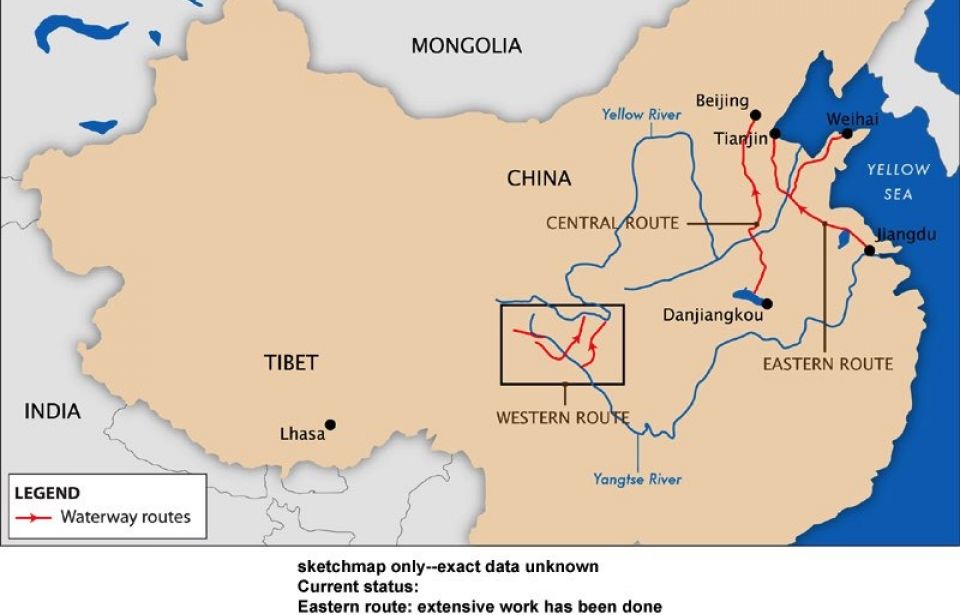
Each route has been designed to redirect water from the resource-rich south to the water-scarce north.
The eastern and central routes are already operational, while construction of additional infrastructure is ongoing to increase the project’s capacity.
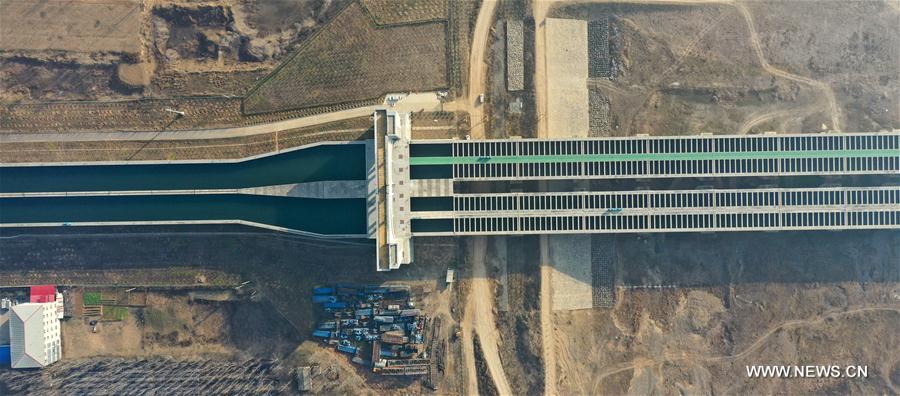
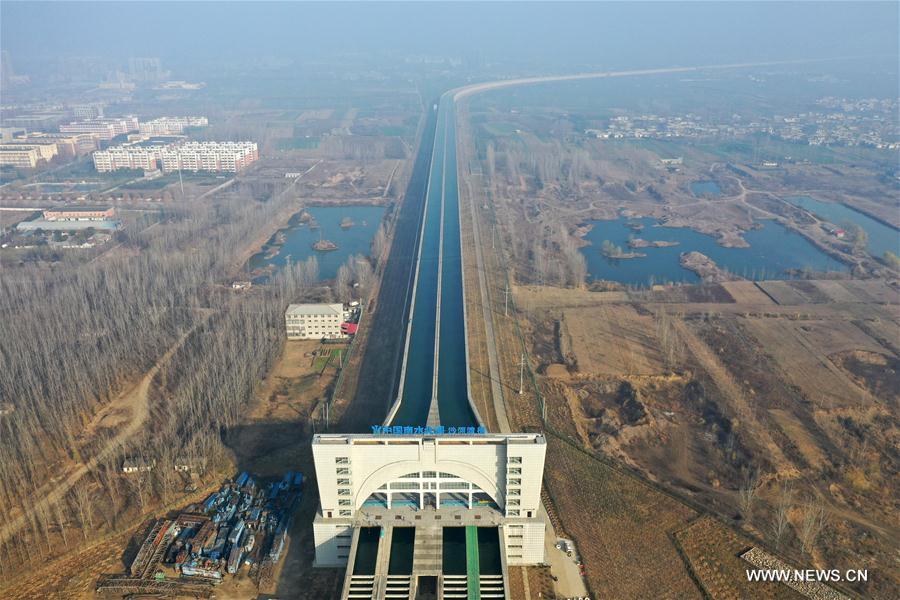
The project is monumental in scale, encompassing thousands of kilometers of canals, tunnels, and pumping stations.
Engineering challenges abound, including navigating varied terrains, addressing ecological concerns, and managing the displacement of local communities.
Record-Breaking Water Diversions In China
According to the Chinese government, which updated the information a few days ago, the South-North Water Diversion Project has transferred over 76.5 billion cubic meters of water to northern provinces.
This volume has directly benefited over 185 million people, ensuring water supply for urban households, industrial sectors, and agricultural activities.
In 2023, the eastern and central routes diverted 8.54 billion cubic meters, exceeding their annual targets. This achievement highlights the operational efficiency of the project and its capacity to meet growing demand.
Beijing, one of the main beneficiaries, has received over 10 billion cubic meters of water since the central route became operational.
Of this, nearly 7 billion cubic meters were allocated for domestic consumption, meeting the needs of over 16 million residents.
Infrastructure Improvements
To ensure the long-term success of the initiative, new infrastructure projects are being developed by the Chinese government.
In early 2024, construction began on a complementary project to channel water from the Three Gorges Reservoir to the Hanjiang River, a tributary of the Yangtze River.
This ambitious undertaking is expected to enhance the capacity of the central route, crucial for meeting the water needs of northern China.
The new canal will allow for more efficient water transfers, especially during low precipitation periods.
This is a critical development, as northern China faces frequent droughts that strain local water resources.
Balancing Development And Environment
One of the most significant challenges of the project is balancing economic development with environmental preservation.
The water diversion has implications for ecosystems in both the donor and receiving regions.
To address this, Chinese authorities have implemented rigorous water quality monitoring systems and environmental protection measures.
Over the years, water quality along the eastern and central routes has consistently met national standards, demonstrating the project’s robust management practices.
Additionally, efforts are underway to rehabilitate ecosystems affected by construction, ensuring the preservation of local biodiversity.
The South-North Water Diversion Project has far-reaching implications for China’s economy. By ensuring a reliable water supply to the north, the project supports industrial and agricultural productivity in provinces that contribute significantly to the country’s GDP.
Communities that previously faced chronic water scarcity now have access to a stable supply, improving living standards and public health.
Furthermore, the project has created thousands of jobs, from construction to maintenance, providing a boost to local economies.
Continuous Challenges
The western route, still in the planning stage, faces significant engineering and environmental obstacles.
This route aims to divert water from the upper reaches of the Yangtze River to the Yellow River basin, a task complicated by the rugged terrain of the Tibetan Plateau.
Moreover, the project’s total cost—estimated at over US$ 62 billion—presents financial challenges to the world’s second richest country.
Ensuring affordability for end users while covering operational and maintenance costs requires careful financial planning.
Another concern is the long-term sustainability of water sources in the south.
As climate change affects rainfall patterns, maintaining a stable supply for both donor and receiving regions will be crucial.
The Future Of China
The South-North Water Diversion Project is still far from completion, but progress is substantial.
With billions of cubic meters of water already transferred, the initiative is transforming the lives of millions and addressing one of China’s most urgent challenges: water scarcity.
Future developments, including the completion of the western route and the new canal from the Three Gorges Reservoir, will further increase the project’s capacity.
These efforts, combined with ongoing investments in technology and sustainability, ensure that the project remains a central piece of China’s development strategy.








-

-

3 pessoas reagiram a isso.