





 Portuguese
  English
  Spanish
  4 min of reading
  10 comments


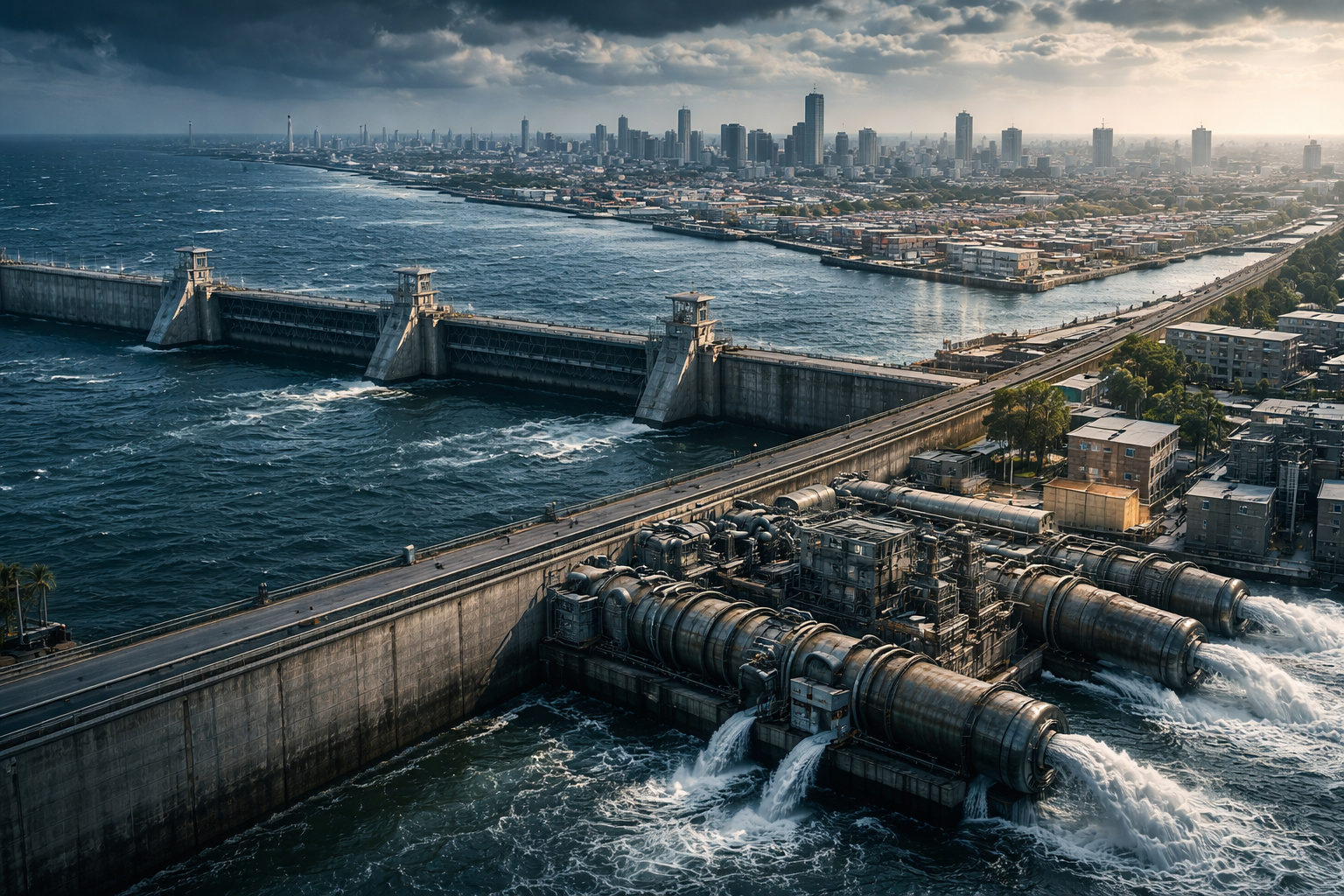


City Below Sea Level Relies on Dikes and Pumps 24 Hours to Avoid Flooding. Understand How the System That Keeps Millions of People Safe Works.
The city built below sea level is neither a metaphor nor journalistic exaggeration. It is a concrete reality, measured in negative meters, constant water pressure, and an engineering system that must function without interruption to ensure that streets, houses, subways, and entire neighborhoods do not disappear beneath the ocean. In this place, human occupation is only possible because dikes, sluices, and pumping stations operate 24 hours a day, every day of the year, turning the fight against water into an invisible, yet vital, part of urban routine.
This city is Rotterdam, in the Netherlands, one of the most extreme examples of human adaptation to the environment and perhaps the largest living laboratory of hydraulic engineering on the planet. Rotterdam is, on average, between 5 and 7 meters below sea level, with some neighborhoods situated even deeper. Without artificial protection, much of the city would be permanently submerged. Unlike coastal areas subject to occasional flooding, here the risk is not occasional: it is constant and structural.
Rotterdam: A City Below Sea Level by Geographical Definition
The Netherlands as a whole is already a unique case. About 26% of the country’s territory is below sea level, and approximately 60% is at direct risk of flooding without protection systems.
-
A promise made to their father led three men to unearth a forgotten house that had been swallowed by time for over 70 years, in a story of memory, abandonment, and reconstruction that seems straight out of a movie.
-
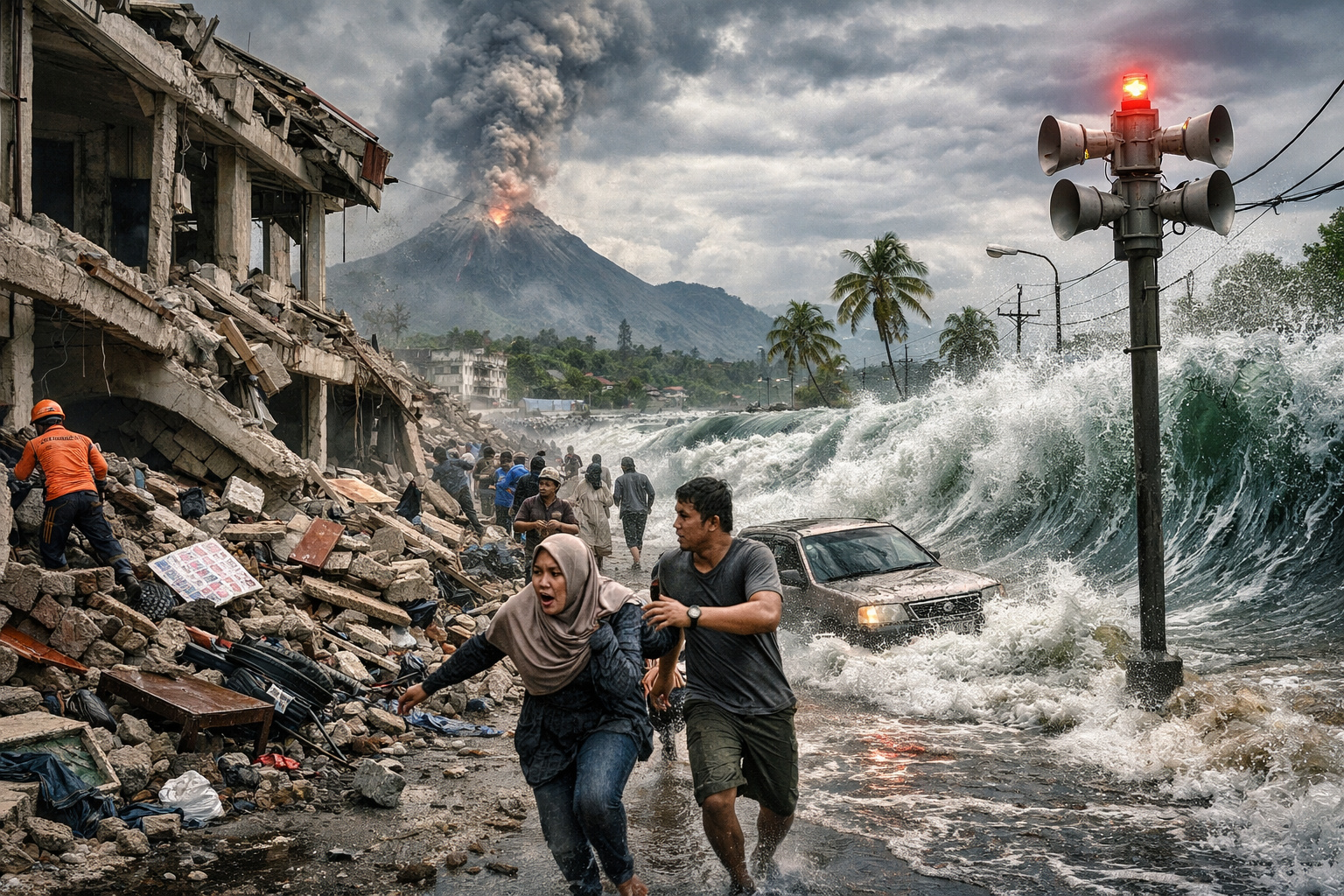
A strong earthquake in Indonesia affects houses and schools, causes panic, triggers a tsunami alert, and records a rise in sea level of up to 30 centimeters in some areas.
-
The Argentine government celebrates the lowest poverty rate in 7 years, but experts warn that the methodology has changed, real wages have fallen, unemployment has risen, and the number of people on the streets of Buenos Aires has increased by 57% since Milei took office.

-
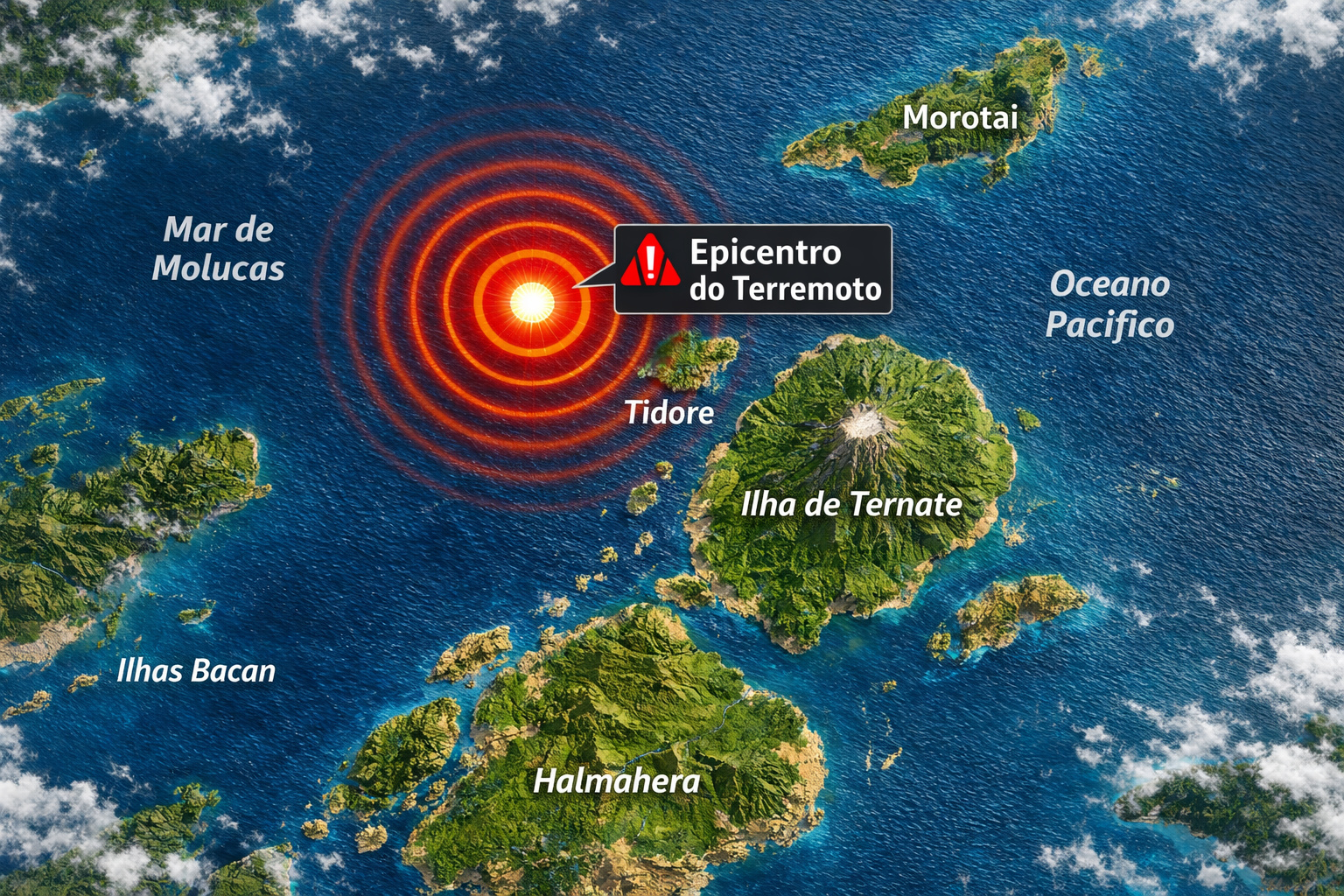
7.8 magnitude earthquake in Indonesia frightens the population, triggers tsunami alert, and hits an island with over 200,000 inhabitants this Thursday.

Rotterdam, located in the delta of the Rhine, Meuse, and Scheldt rivers, concentrates several of these challenges at once: maritime pressure, voluminous rivers, tides, storms, and heavy rainfall.
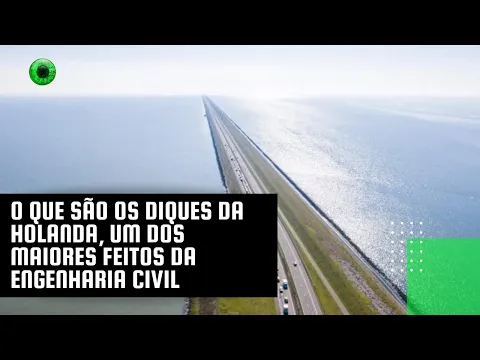

Historically, the region was made up of swamps, flood-prone areas, and natural channels. Over centuries, the Dutch drained these areas to create habitable land, known as polders. Rotterdam grew precisely on this type of artificial land, supported not by natural geography but by continuous engineering.
Dikes, Sluices, and Walls Against the Ocean
The city’s first line of defense is the dikes, some extending for dozens of kilometers, designed to withstand not only the current sea level but also extreme storm scenarios and future ocean rise.
Among the most impressive structures is the Maeslantkering, a gigantic movable barrier located near the port of Rotterdam. It functions like two floating metal doors, each the size of the Eiffel Tower laid down, that automatically close when there is a risk of severe storms coming from the North Sea.
This system is so critical that its activation involves advanced climate models, pressure sensors, tides, and wind. If it fails, millions of people become vulnerable within hours.
Pumps That Can Never Stop
If the dikes prevent water from entering, the hydraulic pumps have the opposite function: to remove the water that inevitably accumulates within the city. Rain, groundwater, and infiltration cause water to always try to return to its natural level.

Rotterdam has dozens of pumping stations that operate continuously. Many of them are automated and redundant, meaning they have independent backup systems to prevent total failures.
A prolonged interruption of these pumps would not just cause minor flooding but could lead to progressive and irreversible flooding in entire neighborhoods.
That is why, even during blackouts or energy crises, these stations receive absolute priority in energy supply.
A City Designed to Coexist with Water
Unlike cities that merely try to keep water away, Rotterdam has begun to incorporate water risk into urban planning. Squares that function as temporary reservoirs, underground parking lots with advanced drainage systems, and buildings designed to withstand water pressure are part of the city’s design.
There are neighborhoods with floodable squares, which remain dry most of the time but are intentionally flooded during extreme rains to protect residential areas. Instead of constantly fighting against water, the city has learned to redirect it.
The Invisible Cost of Keeping the City Dry
Keeping Rotterdam habitable comes at a high and permanent cost. It is estimated that the Netherlands invests billion euros a year in maintaining dikes, updating pumping systems, climate monitoring, and reinforcement works.
This is not a completed project but a continuous process. The rising sea level caused by climate change forces the country to constantly revise calculations, raise dikes, and modernize infrastructure. What was safe 30 years ago may not be sufficient in the coming decades.
Climate Risk and the City’s Future
Climate projections indicate that sea levels may rise between 0.6 and over 1 meter by the end of the century, depending on emission scenarios. For a city that already lives below sea level, every centimeter matters.
Rotterdam is often cited as a global example of climate adaptation but also as a warning. The model works, but it requires financial resources, technical knowledge, and long-term planning that few countries can replicate on a large scale.
A Normal Life on an Artificial Base
The most impressive aspect is that, for those living in Rotterdam, all of this is practically invisible. People work, study, take the subway, visit cafes, and walk the streets without realizing that, technically, they are living in a territory that would not exist without constant human intervention.
The city below sea level is an extreme demonstration of how far engineering can enable human occupation and also a reminder that, when technology fails, nature always attempts to reclaim its space.
Rotterdam does not challenge the ocean out of pride. It simply proves, every day, that survival there depends on constant vigilance, rigorous planning, and the awareness that, in that place, turning off the pumps is never an option.







Esse é o preço do desenvolvimento .
Achei o máximooooo!
Água é uma bênção, pena que esses países industriosos não vejam Assim. Para eles, água só é necessária para esfriar o motor de suas máquinas. Os países estão afundando devido às grandes indústrias que eles têm. Não sei quantos carros nos estacionamentos de carro a céu aberto enferrujando. A construção da modernidade não previu nem preocupou-se com o esgotamento da terra. Mais valeria colocar esse dinheiro enorme para construir essas barragens horrorosas em pesquisas da situação real do país, controlar a poluição, reduzir os dias de navegação acima e abaixo do mar no Mar Negro para um dia sim, um dia não, ou dois dias, um dia não, ou coisa similar. Apesarde existir o governo, na prática, os governos estão totalmente afastados do que deve ser controlado para que não sucumbam diante do poder da natureza de arrumar a casa dela
Quanta besteira!!! Vc pensou isso sozinha ou teve ajuda de alguém?