





 Portuguese
  English
  Spanish
 5 min of reading
  3 comments


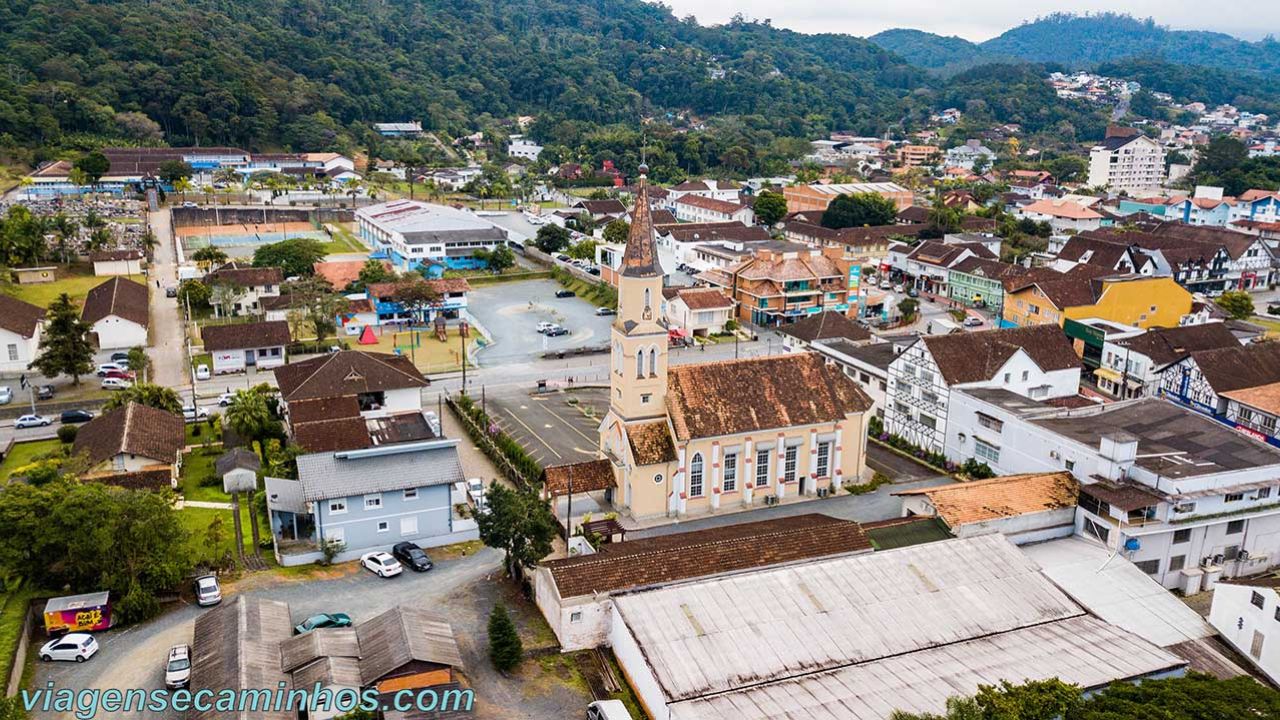


Far Beyond Accent and Architecture, the Santa Catarina City Preserves the Dialect, Traditions, and a Unique Festive Calendar That Makes It a Sanctuary of German Culture Outside Europe.
Located in the heart of the European Valley in Santa Catarina, Pomerode stands out as a cultural phenomenon. Walking through its streets, the feeling of being in a small town in Germany is immediate and authentic, the result of a heritage proudly preserved by its inhabitants. Officially known as the “most German city” in Brazil, Pomerode is not just a tourist destination with beautiful facades, but a vibrant community where the language, customs, and history of immigrants from Pomerania shape daily life, transforming the municipality into a guardian of a culture that has almost disappeared in its continent of origin.
The title is not just a tourist perception, but a reflection of an identity built and maintained over more than 160 years. From the half-timbered architecture, which boasts the largest concentration of houses in this style outside Germany, to the strong presence of the Pomeranian dialect in everyday life, the city has become an example of how cultural preservation can be the engine of social and economic development. This dedication to authenticity is what attracts thousands of visitors each year, curious to understand what makes Pomerode such a unique and vibrant piece of Europe on Brazilian soil.
The Historical Roots That Justify the Title
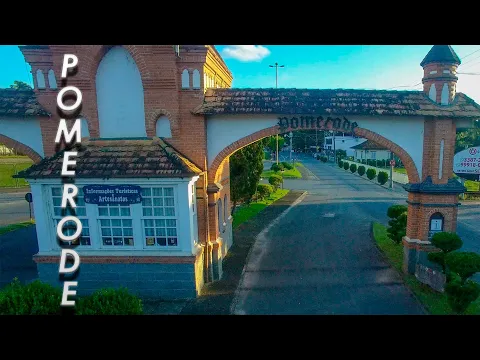

The foundation of Pomerode in 1863 was established by immigrants from Pomerania, a historic region located in northern Germany, as detailed by the portal Mystras. This origin is fundamental to understanding the local identity. One of the most striking symbols of this connection is the city’s entrance arch, a faithful replica of the gate of Stettin, the former capital of European Pomerania. The choice of this landmark is laden with meaning, as after World War II, the Pomerania region was dissolved and its territory largely annexed by Poland.
-
Meta’s new smart glasses are not just for seeing; they use artificial intelligence, analyze your food, summarize messages, and can even change the way you work in professions like engineering.

-
According to an analysis by NASA, only one human-made structure is visible from space, and it is not the Great Wall of China or the Pyramids of Egypt.
-
After 377 years of history, the Brazilian Army will have its first female general: Colonel Claudia Cacho has been promoted to brigadier general by Lula and will receive the sword and command baton this Wednesday in Brasília.

-
A Mercado Livre customer opened their package and found 32 resumes of people looking for jobs crumpled as protective paper inside the box, exposing names, addresses, documents, and phone numbers of dozens of candidates.


With cultural extinction in their homeland, Pomerode in Brazil became one of the main refuges for this identity. This explains the strong preservation of the Pomeranian dialect, a variant of Low German that is now rarely heard in Europe. As pointed out by Mystras, the Brazilian city has taken on the role of guardian of a culture orphaned of its geographical home, which motivates the rigorous maintenance of its customs, traditions, and, most importantly, its language.
Half-Timbered Architecture: The Landscape That Tells a Story
The visual identity of Pomerode is inseparable from its half-timbered architecture. The portal Viagens e Caminhos highlights that the city has the largest concentration of buildings in this style outside Germany, with about 50 houses listed by the National Institute of Historical and Artistic Heritage (IPHAN) along the famous Half-Timbered Route. This construction technique, characterized by wooden structures fitted together without the use of nails, with spaces filled with bricks, is the most visible manifestation of the German heritage.
More than beauty, the architecture reflects the pragmatism and resilience of the settlers. The houses could be disassembled and transported, an ingenious solution for a community that needed to adapt to a new territory. Today, the Half-Timbered Route is not just an open-air museum, but a living cultural landscape, where many families still reside, maintaining the authenticity of a place that has been recognized by the UN as one of the “Best Tourist Villages” in the world.
Language, Festivals, and Flavors: The Culture That Is Lived and Tasted
The immersion in German culture in Pomerode goes far beyond what is seen. According to the agency Freeway Viagens, about 80% of the population speaks German, whether it’s the Pomeranian dialect or standard German. The language is so present that it has been established as co-official in the municipality, being taught in schools and used in public signage, ensuring its transmission to new generations. This linguistic vitality is one of the pillars that sustain the title of the “most German city” in Brazil.
The culture is also celebrated in a festive calendar that attracts visitors year-round. Freeway Viagens highlights the Pomerana Festival in January as one of the main events, where for 10 days the city celebrates its roots with music, folk dances, shooting competitions, and typical foods. Dishes such as Stuffed Duck and Eisbein (pork knuckle) are highlights of the local cuisine, which also includes the artisanal production of beers, award-winning chocolates, and sausages, offering a complete German experience.
What to Do in Pomerode? Attractions for the Whole Family
Although the cultural heritage is the major attraction, the city offers a variety of tourist spots for different audiences. The guide Viagens e Caminhos mentions the Pomerode Zoo, the oldest in Santa Catarina, as a must-stop for families, housing over a thousand animals. Next to it, Vila Encantada, with a dinosaur theme, and Alles Park, with its famous Snow Village, complement the entertainment options.
For those interested in delving deeper into local history and flavors, museums such as the Pomerano and the Automobile Museum are recommended visits. The Nugali Chocolates factory offers tours that showcase the production process “from bean to bar,” with tastings that captivate visitors. This combination of historical and leisure attractions consolidates Pomerode as a complete destination, where it is worth spending several days exploring its multiple facets.
A Living Legacy in Constant Celebration
Pomerode proves that preserving cultural identity does not mean standing still in time. The city has managed to transform its heritage into its greatest asset, creating a model of sustainable development based on tourism and pride in its roots. The fame of being the “most German city” in Brazil is, therefore, more than a slogan: it is a daily commitment of its community to keep alive a culture that has found a new home in the Itajaí Valley. With each restored half-timbered house, each festival held, and each conversation in Pomeranian, the city reaffirms that its history is its greatest strength for the future.
And you, have you visited Pomerode or do you wish to get to know it? Do you think other Brazilian cities with a strong immigration heritage could follow this example of preservation? Leave your opinion in the comments, we want to know how you see the importance of keeping our history alive.






Que tal conhecer a região de Domingos Martins, Venda Nova do Imigrante e Santa Leopoldina, no Espírito Santo?
Venham fazer uma matéria sobre os Alemães e Polmeranos naquela região que já foi qualificada como o 3⁰ melhor clima de montanha do mundo.
Detalhe: da praia (Grande Vitória e Guarapari) para as montanhas em menos de uma hora de carro, com paisagens belíssima e muitos pontos de café colonial.
SENSACIONAL!!!!
Queeuropa que ro muito ir conhecer um pedaço da Europa que tenho saudades dos meus cantores prediletos da alemanhas dos anos 80 que ouço suas músicas todos os dias onome do grupo Die-flippers são fantásticos sempre muito cintonizados e com vozes harmoniosas e românticas!
18 pessoas deixaram o deslike porque devem inveja😅