





 Portuguese
  English
  Spanish
  5 min of reading
  0 comments


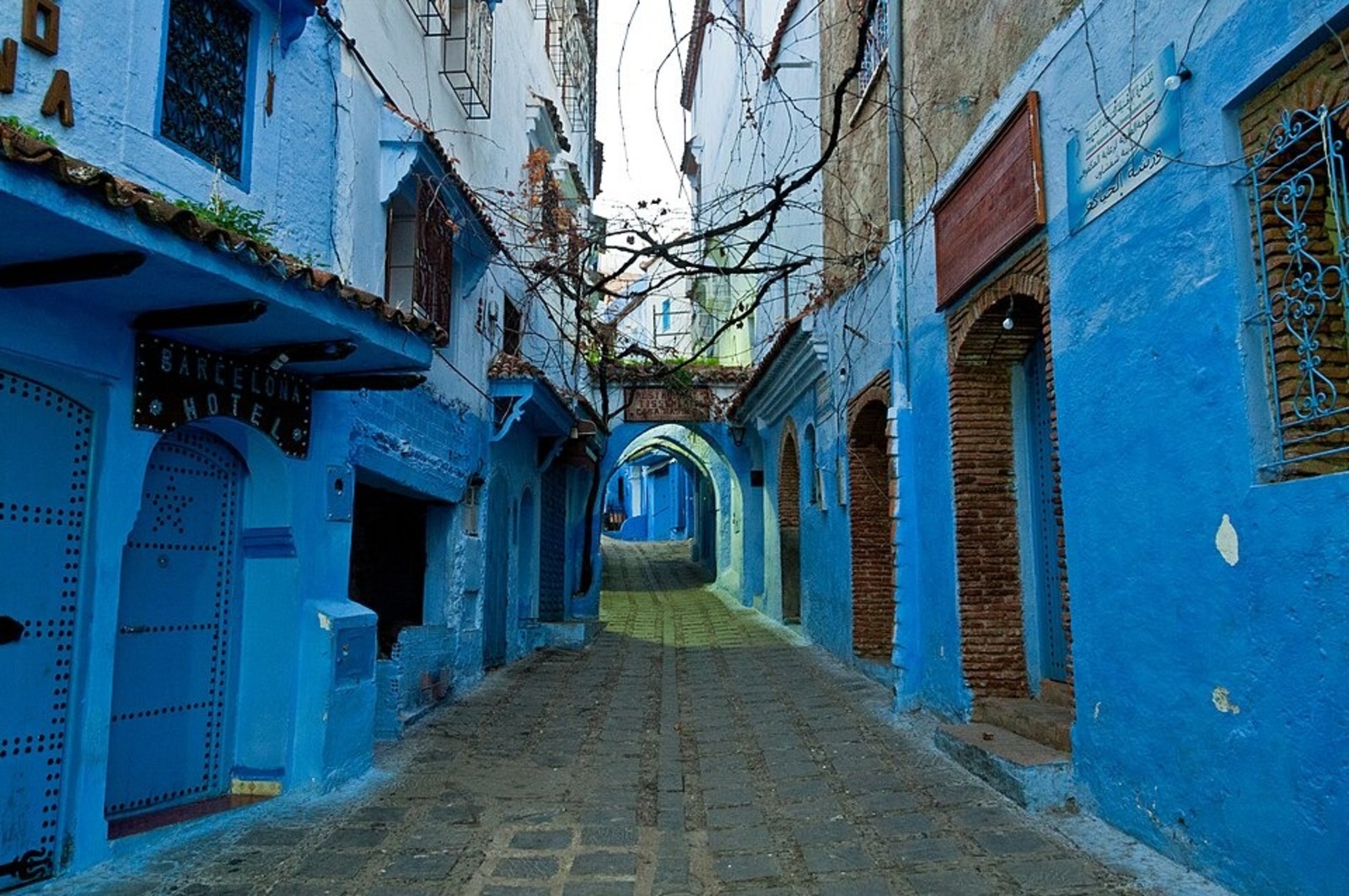
Known as the Blueest City in the World, Chefchaouen Preserves Continuous Painting on Streets and Facades, a Historical Practice that Shapes Urban Landscape, Influences Tourism Economy, and Structures Daily Life of Residents
Chefchaouen, located in northern Morocco, has gained international fame for painting streets, staircases, and facades in shades of blue, a practice maintained by residents over time, defining local identity, boosting tourism, and projecting the city globally until 2025.
The city is situated in the mountainous Rif region and stands out for the almost total presence of the color blue in its historic center, creating a strong visual impact for visitors, researchers, and photographers who circulate daily through the medina.
As you walk through the narrow streets, blue appears dominantly on walls, doors, windows, fountains, and decorative details, forming a continuous scene that reinforces the direct association between Chefchaouen and this color palette.
-
Man never set foot on the Moon? 5 scientific proofs confirm that humanity has been there and definitively dismantle conspiracy theories.
-
The Brazilian Army will adopt humanoid robots to test the concept of future combat, says a website, surprising everyone, but later revealing that it was all just an allusion to April Fool’s Day.

-
There is a city in China right next to Hong Kong where people speak Portuguese, the streets have names in Portuguese, and the architecture looks like it came straight out of a historic city in Brazil.
-
Rare frog thought to be extinct after only appearing in fossils reappears, becoming a ‘living relic’ of evolution and gaining a real path to spread after combating introduced predators.

The contrast between the blue houses and the mountainous terrain around enhances the visual perception of the urban ensemble, highlighting the city within Morocco as a unique example of architectural identity based on color.
This color choice has ceased to be merely aesthetic and has come to function as a local symbol, influencing how Chefchaouen is recognized both inside and outside the country, including in widely disseminated photographic records.
Why Does Chefchaouen Have the Fame of the Blueest City in the World?
The main factor sustaining the fame lies in the extent of blue’s use, which dominates almost the entire historic center, unlike other cities where strong colors appear only in specific areas.
This almost absolute presence generates a sense of visual immersion, causing visitors to perceive blue as the dominant element in every path taken through the streets and staircases of the medina.
The repetition of painting over decades has contributed to the homogeneity of the urban scene, avoiding significant visual variations and maintaining the aesthetic cohesion that supports the nickname attributed to the city.
Residents regularly renew the paint on the facades, a practice that prevents complete wear of the color and preserves the image that has made Chefchaouen widely recognized internationally, including in photographic records.
This continuous maintenance reinforces the visual identity and contributes to the city being immediately associated with blue, without the need for additional explanations for visitors.
Historical Origin of the Color in Chefchaouen
The adoption of blue has explanations related to local history and culture, particularly the presence of Sephardic Jewish communities that settled in the region starting in the 15th century.
For these communities, blue had spiritual significance, linked to the sky and the remembrance of the divine in daily life, influencing the choice of color for walls and residential spaces.
Over time, this custom was adopted by other residents, transforming into a collective practice that transcended religious origins and became part of urban identity.
Another recurring explanation associates the use of blue with the attempt to repel insects, as residents report that the pigment helps repel mosquitoes and small animals.
Even without definitive scientific proof, this narrative is part of local lore and contributes to the continuity of the practice, being passed down through generations.
There is also an association of blue with thermal regulation, as light colors reflect sunlight, creating a cooler feeling in warm climate regions.
Taken together, these interpretations show that the color choice did not arise from a single factor, but from a set of traditions, beliefs, and needs incorporated over time, with natural tones serving as adaptations.
What Are the Main Characteristics of the City?
Chefchaouen combines traditional architecture, mountainous terrain, and compact urban organization, elements that intensify the visual presence of blue from almost every angle observed.
The streets are narrow, with irregular steps and frequent curves, revealing new painted facades at every change of route within the medina.
The city brings together Arab, Berber, and Andalusian influences, evident in internal courtyards, intricately worked doors, and geometric details integrated into the blue surfaces.
The compact medina contributes to the sense of chromatic uniformity, while the variation in shades, from light blue to deeper tones, avoids visual monotony.
Simple decorative elements, such as flower pots, rugs, and handmade pieces, complement the scene without detracting from the prominence of the predominant color.
The integration with the Rif mountains creates a striking contrast between the natural environment and the painted facades, reinforcing the visual impact of the urban ensemble.
How Does the Color Tone Influence Tourism and Daily Life in Chefchaouen?
The fame of the blueest city in the world directly influences tourist traffic, attracting travelers interested in personally experiencing the scenery widely depicted in images.
The increase in visitors generates economic activity for hotels, restaurants, local guides, and artisans, who have adapted their services to the growing demand associated with the city’s visual identity.
The daily life of residents is also impacted, with specific periods dedicated to renewing the paint on walls, doors, and staircases, maintaining the characteristic appearance.
This constant maintenance is not only aesthetic but a way to preserve the nickname that projected Chefchaouen internationally, transforming painting into a collective practice.
The use of blue extends to handmade products and souvenirs, reinforcing visual identity in local commerce and expanding its presence beyond the urban space.
In 2025, Chefchaouen continues to be mentioned in travel guides, articles, and digital content as a visual reference in Morocco, keeping blue as a central element of recognition.
The continuity of this tradition demonstrates how historical and cultural choices have shaped the city over time, resulting in a consolidated identity that remains relevant and easily identifiable in the global urban scene.
With information from Terra.



-

2 pessoas reagiram a isso.