





 Portuguese
  English
  Spanish
  8 min of reading
  0 comments


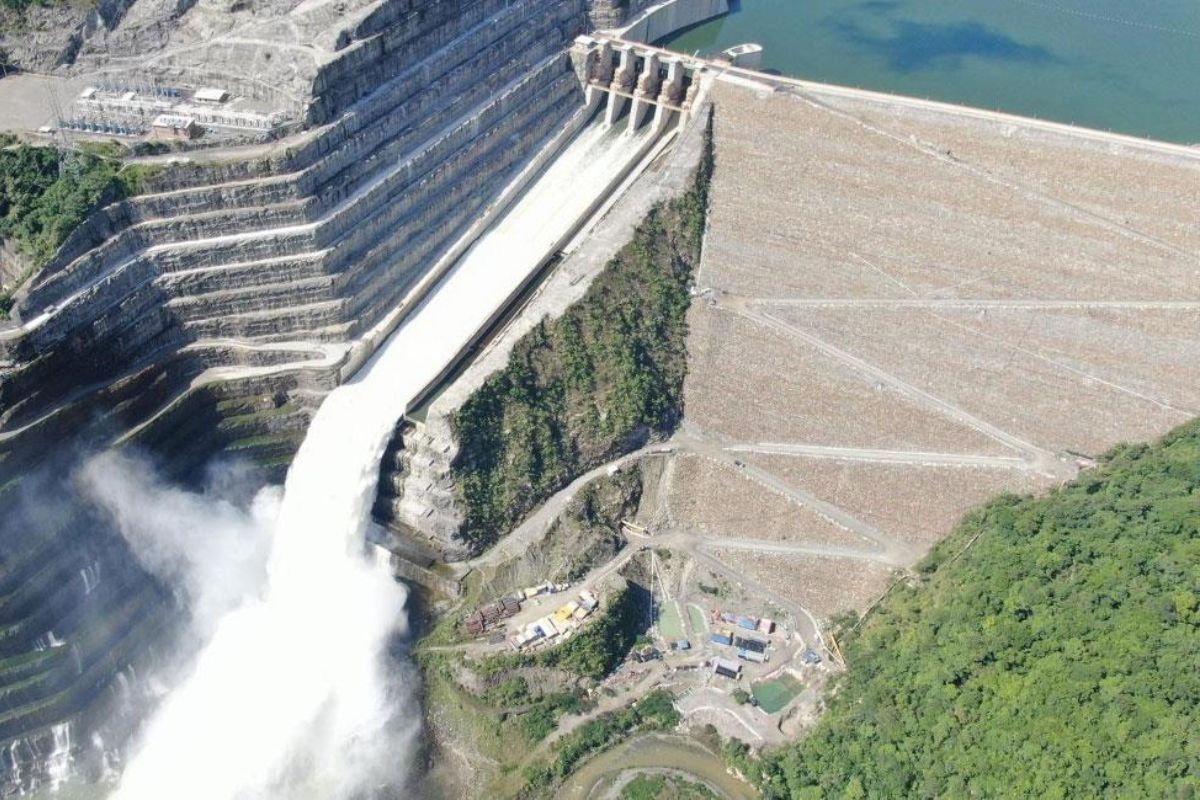
The Ituango Dam, Colombia’s Largest Hydroelectric Plant, Suffered Operational Collapse in 2018, Forcing the Evacuation of Puerto Valdivia, Putting the Cauca River Out of Control, and Exposing Serious Engineering Failures, Schedule Issues, and Political Pressure
The Ituango dam, valued at US$ 4 billion, faced imminent operational collapse when a diversion tunnel failed and the Cauca River lost its flow direction. The alert on May 13, 2018, led to the urgent evacuation of residents downstream, with 25,000 people evacuated amid fears of a rupture.
The immediate impact was devastating in Puerto Valdivia: 59 houses destroyed, two schools, a health center, essential infrastructure, and the city bridge were hit. The city became a void, with over 400 families homeless, and the authorized return did not mean a real return, as the territory had been altered, and social problems deepened in an already unstable region.
The Alarm Day and the Evacuation of Puerto Valdivia

On May 13, 2018, authorities sounded the alarm because the largest dams ever built in Colombia was about to collapse. The plan began with a partial evacuation: 600 residents left Puerto Valdivia. A few days later, evacuation escalated, and the entire city had to be abandoned, relocating to temporary shelters.
-
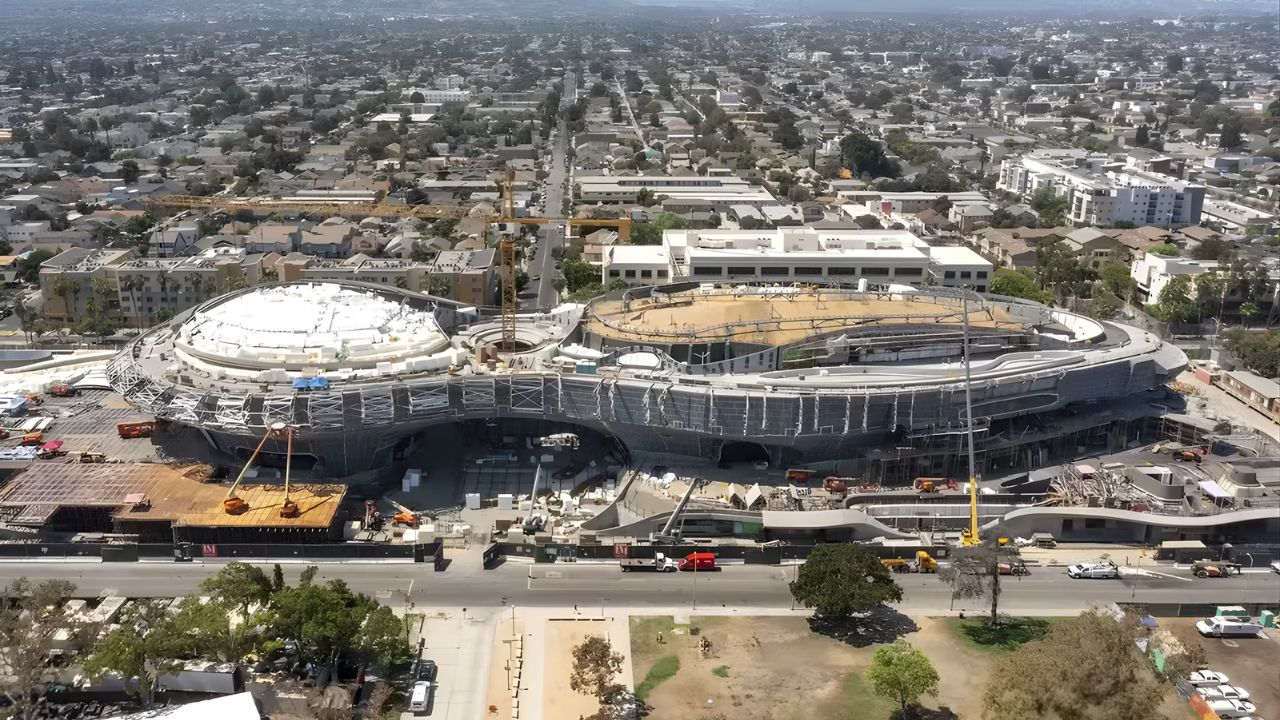
Created by George Lucas with over $1 billion, a futuristic museum in the shape of a spaceship with 1,500 curved panels is about to open in Los Angeles and will house one of the largest private collections of narrative art in the world.
-
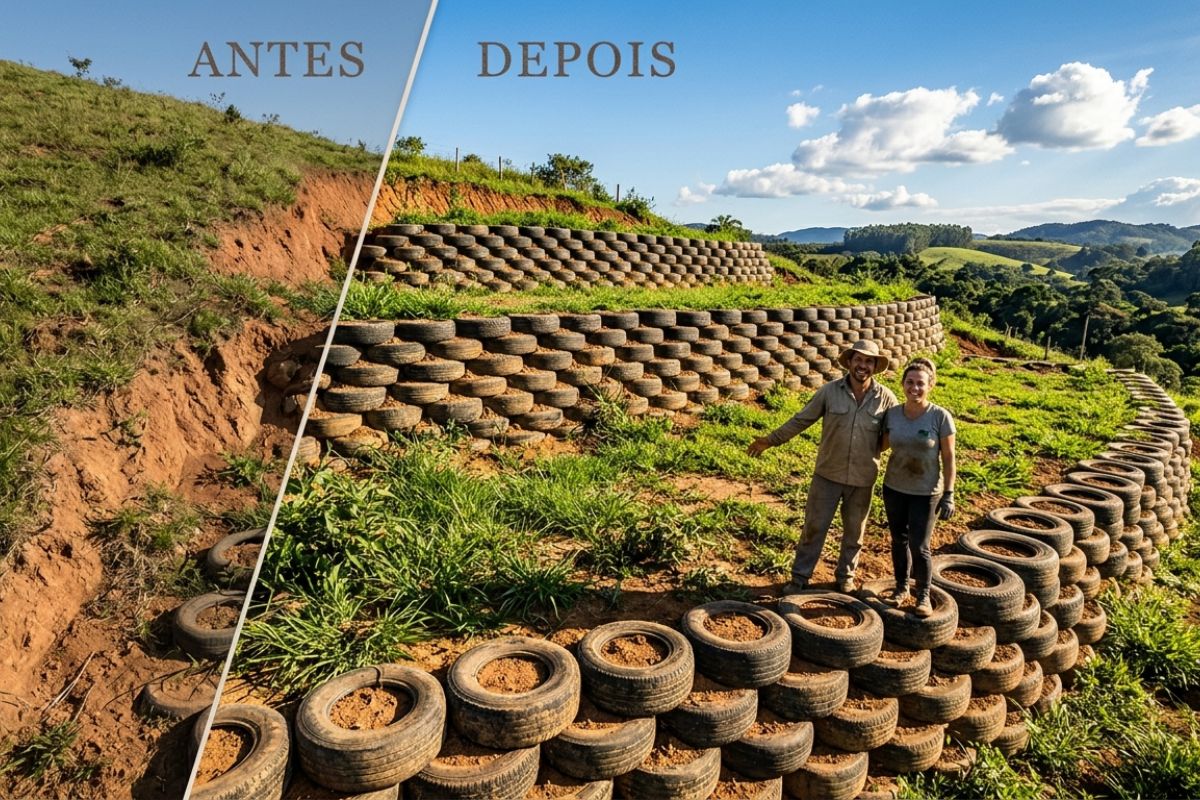
Couple shows how they built a retaining wall on their property using 400 old tires: sloped land turned into plateaus, tires are aligned, filled, and compacted with layers of soil, with grass helping in support and at almost zero cost.
-
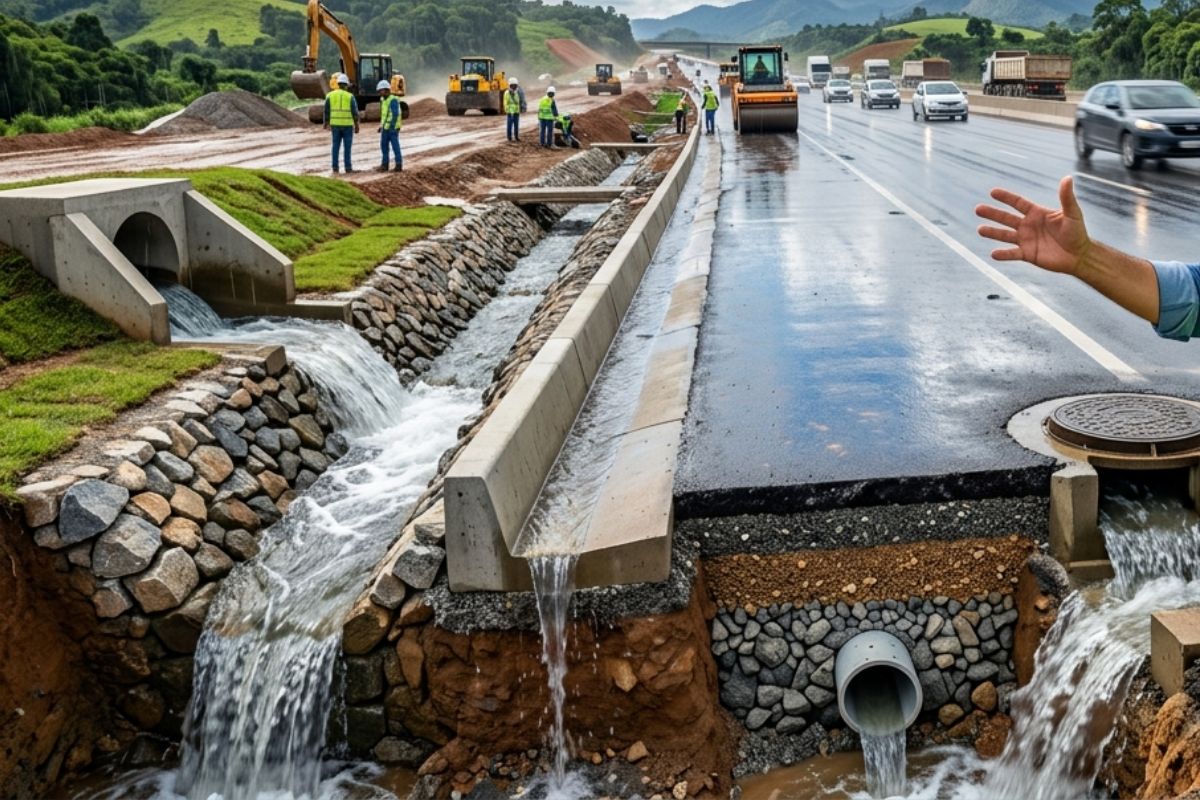
Engineer explains drainage during the rainy season: the difference between surface water and deep water, ditches, gutters, and water outlets on the road, as well as drains and drainage mattresses, to prevent erosion, aquaplaning, and flooding at the construction site today.
-
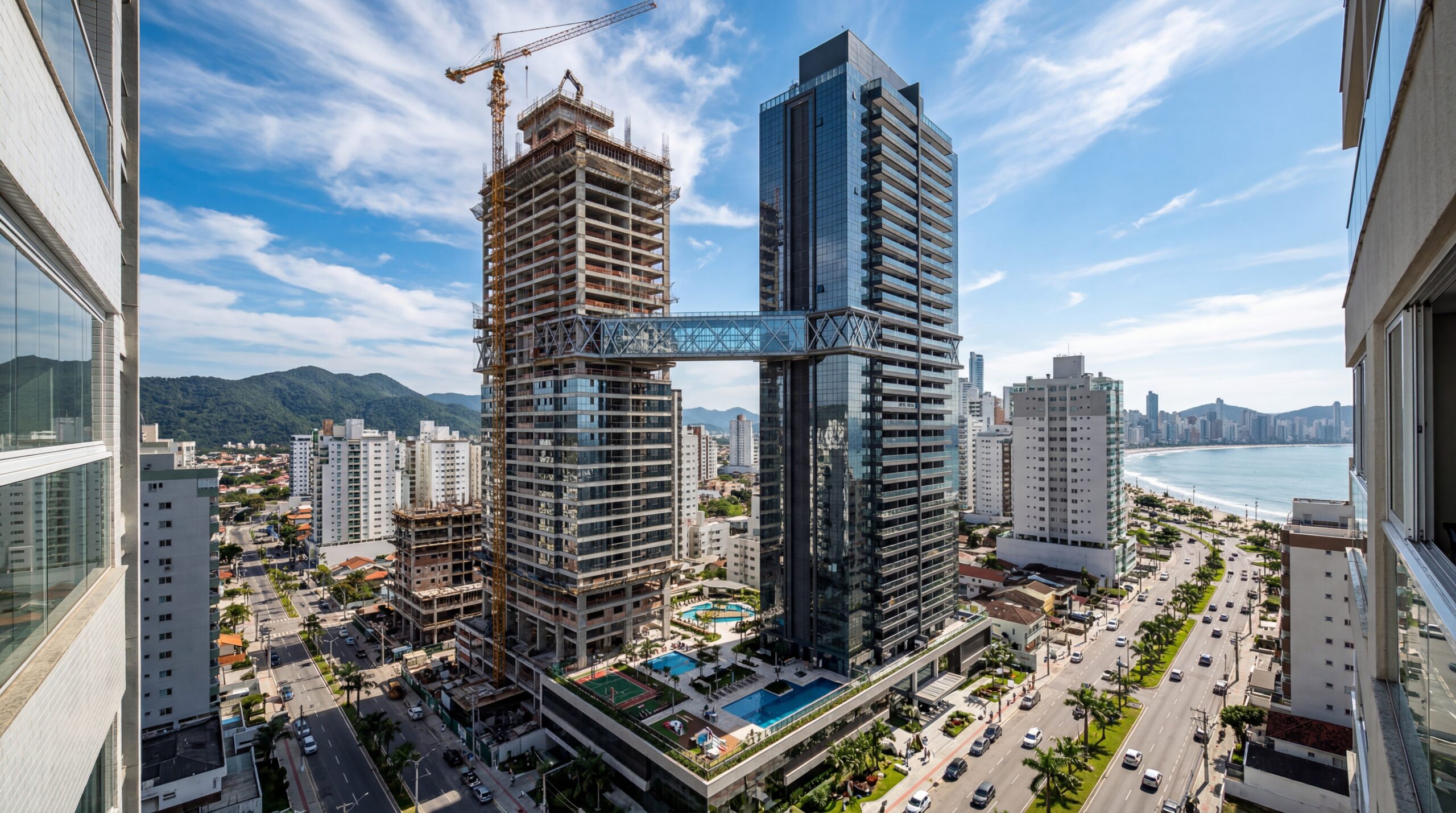
With 55 floors, 177 meters in height, a 15-meter walkway between the twin towers, ventilated facade, and 6,300 m² of leisure space, Ápice Towers already has one tower completed and another nearly at the top.

The described scenario was one of a chain evacuation, typical of hydraulic risk: when the threat involves a dams and a reservoir, time is short, and the margin for error is minimal. The magnitude of the risk stemmed from the Ituango system itself: a structure 225 meters high, taller than a skyscraper, containing a reservoir that can reach 127 km in length and store up to 2.72 billion cubic meters of water.
What Was Destroyed and Why the City Became a Ghost Town

Flooding destroyed 59 houses, two schools, a health center, essential infrastructure, and the local bridge. What remained was described as a ghost town. The mass displacement exacerbated social problems in a territory already marked by violence and instability.
Even after authorization for return, few wanted to go back. The social impact of the crisis was not only material: more than 400 families became homeless, and the loss of basic services, along with insecurity and economic disruption, prolonged the condition of abandonment.
Why This Dam Was Central to Colombia

The Ituango dam was planned to be the largest hydropower project in the country and eventually provide 17% of Colombia’s electricity. It was seen as a piece of a national strategy: to reduce the risk of blackouts, decrease dependence on expensive thermal plants, and sustain an infrastructure boom associated with the ambition for energy independence.
This structural weight appears in the demographic background cited: the population rose from 33 million in 1990 to 46 million just before the start of construction, reaching over 53 million today. With demand increasing, the pressure for additional capacity placed a project of this scale at the center of political and economic decisions.
The Cauca River as an Artery of Energy, Agriculture, and Transport
In addition to generating power, the dam also aimed to control the Cauca River, described as the second-largest in Colombia, behind the Magdalena. The Cauca meanders through the Andes for 965 km, passing through major cities and flowing into the Magdalena near Magangué.
Human and productive dependence is vast. Indigenous groups and Afro-Colombian communities rely on the river for fishing and transport. The river valley hosts millions of Colombians and forms one of the most densely populated Andean corridors. The Cauca also sustains the Valle del Cauca, one of the most productive agricultural regions in the country: the sugar industry operates over 200,000 hectares of sugarcane, accounting for over 90% of the country’s sugar and 100% of fuel ethanol blends from sugarcane, with irrigation drawing water directly from the river. Further up in the basin, especially in the Eje Cafetero, tributaries of the Cauca sustain another crucial export: coffee.
The same river that supports also destroys. Historically, the Cauca has caused agricultural losses, soil erosion, and infrastructure damage from seasonal floods. The official logic was that the Hidroituango reservoir could act as a buffer, reducing flow peaks during rainy periods, protecting riverside communities and lowering recovery costs after major floods.
A Difficult Construction Site: Central Andes, Violence, and a Project on Impossible Terrain
Construction began in 2010, and the location in the Central Andes proved extremely challenging. The challenge was geographic but also political: the region was described as violent, associated with conflict and instability. There is also a very serious element mentioned around the reservoir: it is believed that the flooded area covers dozens of mass graves, and experts estimated 3,500 murders, 600 forced disappearances, and 110,000 displacements between 1990 and 2016.
The project, funded with public money, was promoted as a development tool capable of bringing peace and prosperity. On the ground, access required the construction of roads on steep slopes like cliffs, with large equipment transported through narrow canyons, increasing logistical complexity from day one.
The River Diversion and the Decision That Paved the Way for Disaster
The first classic step of any dams is to divert the river. In Ituango, geography constrained the project: deep canyon walls, with no space for conventional diversion channels. The solution was to dig tunnels through the mountains.
In 2012, as the diversion tunnels began, the project became embroiled in controversy over fraudulent bidding processes, allegations of corruption, and successive delays. Nevertheless, work progressed. With no space for TBMs, the tunnels were excavated using drilling and blasting: holes in the rock, controlled charges, sequenced explosions to fracture the mass, removal by loaders and trucks, application of shotcrete, as well as anchor bolts, steel reinforcements, and mesh for stabilization.
As this is a geologically complex and active region, with landslides and earthquakes described as routine, the tunnels required constant ventilation, drainage, and monitoring to prevent collapses. In 2014, the tunnels were completed, and the river could be diverted, creating the operational architecture that, four years later, would be the epicenter of the collapse.
The Urgency, the Incentives, and the Construction Site 24 Hours a Day
The execution was under the responsibility of EPM, Empresas Públicas de Medellín, the state utility that designed and built the dam. In 2015, with accumulated delays, EPM signed a contract for US$ 100,000 to expedite construction. The construction site began operating 24 hours a day, 7 days a week, recovering 18 months of delay.
There were explicit financial incentives to stay on schedule: EPM would receive US$ 22.3 million if the project began generating electricity before December. The revenue from the dam had already been included in the financial budget, increasing the pressure for delivery. In 2017, the work was 70% complete, and on May 13, 2018, only weeks remained for total completion when the system failed.
The Tunnel Collapse and the Domino Effect on the Diversion Tunnels
The breaking point was the collapse of one of the diversion tunnels. The described scenario combined fractured geology, geological failures, and crushed rocks prone to sudden deformation. The groundwater softened the rock mass, reducing its load-bearing capacity. The variability of the material was extreme over just a few meters, ranging from strong rock to brittle rock, complicating long-term stability predictions.
Added to this was hydrology: it was not the dry season, and the period was particularly rainy, raising the volume of water circulating in the system. A small problem quickly escalated. A deformation in the lining caused blockage, generated pressure buildup behind the obstruction, and the tunnel became a pressurized cavity. Without an outlet, it collapsed.
After the collapse, the river lost its main diversion route and flooded two other tunnels. Within days, all the tunnels were unstable or had also collapsed. The project lost control of the river, exactly the scenario that makes a dam an existential risk for downstream communities.
The Emergency Response: Raising the Dam and Opening an Untested Spillway
Faced with the risk of rupture, engineers quickly raised the height of the dam within weeks, keeping the construction site back to a rhythm of 24 hours a day, 7 days a week, with dump trucks and loaders. The motivation, described straightforwardly, shifted from economic to the fear of a rupture.
The wall was raised to 225 meters, high enough to contain rising waters. Subsequently, it became necessary to open and use the spillway, which had not yet been used or tested. Once opened, the spillway began to provide a controlled outlet for the Cauca River, restoring only partial stability and not ending the crisis.
The Structural Damage Downstream and the Flooded Machine House
The crisis extended beyond the risk of rupture. Among the consequences was unplanned flooding of the machine house, structural damage to water intake components, and months of construction interruption. The solution involved a specialized operation: a Dutch underwater construction expert was tasked with isolating intake structures.
Custom mechanical plugs were manufactured that allowed divers to isolate and drain entire sections of the dam. Concurrently, new diversion tunnels were constructed, and several of the old ones were abandoned, effectively redesigning the system that would originally support the work.
What Remained Pending and the New Completion Deadline
Despite all the intervention, the dam was not operationally closed with the event. There are still four turbines left to come online. When these pieces are installed, the project will be practically complete. The total completion is expected by 2027, following a process that began in 2010, passed through the completion of the tunnels in 2014, and exploded into crisis in 2018.
The sequence makes it clear that the collapse was not attributed to an old and degraded dam. The central shock was to see a brand-new dam, expected to be completed a few weeks after the disaster, enter into a state of extreme risk, resulting in the evacuation and destruction of a city.
The Declared Lessons: Engineering, Political Pressure, and Community Consultation
The final takeaway is harsh: money and political pressure do not replace rigorous engineering practice. Social and environmental criticism also emerges: local communities may not have been adequately consulted, and impact reports may not have incorporated the risk and human cost that a failure of this scale could impose.
The story of Ituango, with evacuation, destruction of infrastructure, and threats to 120,000 people in the Cauca River basin, serves as a portrait of how megaprojects can both sustain a country and push it into crises when schedules and incentives override technical controls.
Do you think that the pressure to deliver energy and meet schedules weighs more than engineering when a dam is at real risk like in Ituango?









-

Uma pessoa reagiu a isso.