





 Portuguese
  English
  Spanish
  4 min of reading
  0 comments


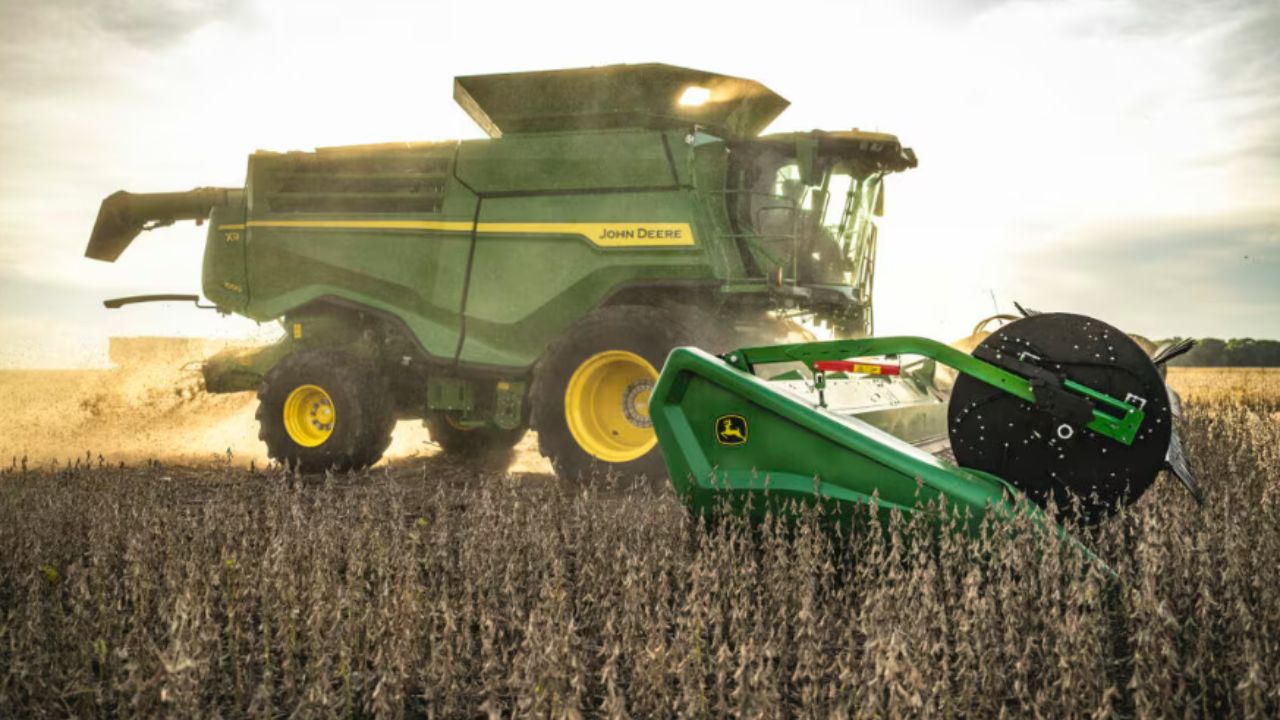
Satellite-Guided and Equipped with Artificial Intelligence, a Single Next-Gen Harvester Performs the Work Equivalent to 100 Men, Harvesting Grains in Record Time and Redefining Productivity in Agribusiness.
The image of a harvester costing R$ 5 million operating autonomously is a reality in Brazilian agribusiness. Guided by satellite, it is capable of performing the work of a hundred men. This machine represents a profound transformation in the field, combining cutting-edge engineering, artificial intelligence (AI), and total connectivity. It is not a vision of the future, but a present technology that redefines the limits of agricultural productivity.
Discover the Most Advanced Harvesters on the Market
At the top of the agricultural equipment market, three models stand out. The John Deere Series X9, the Case IH Axial-Flow 9250, and the New Holland CR11 define what is most modern in harvesting technology.
The John Deere X9, known as the “100-ton harvester,” has in the X9 1100 model a 690 hp engine and a grain tank of 16,210 liters, focusing on harvesting at a very high speed. Meanwhile, the Case IH Axial-Flow 9250 is the leader in automation, with its AFS Harvest Command™ system that uses 16 sensors to adjust the machine in real time.
-
Couple transforms abandoned house after years of being closed; residence was overgrown with weeds, had a green pool, and a deteriorated structure in the interior of Rio de Janeiro.

-
Hidden marks on the walls of the site associated with the Last Supper of Jesus for centuries have been deciphered in Jerusalem, revealing medieval inscriptions left by pilgrims, European nobles, and travelers from the Middle East.

-
One of the most important lakes in the United States for birds, the balance of nature, and the climate has dried to historic levels, leaving boats stranded, revealing salt flats, and showing how the lack of water can transform an entire landscape.

-
It’s not Cristiano Ronaldo or Messi: the richest football player in the world is only 27 years old, has a fortune of 100 billion reais, and is the nephew of a sultan from an Asian country that few people know about.


On the other hand, the New Holland CR11, with a 775 hp engine and an impressive 20,000-liter tank, was designed for maximum productivity and near-zero losses. The cost reflects this technology. Used models from 2024, like the John Deere X9 1100, can reach R$ 4.9 million. Meanwhile, a Case IH 9250 can be found for R$ 4.6 million.
How the Harvester Operates with AI and Satellite Connection
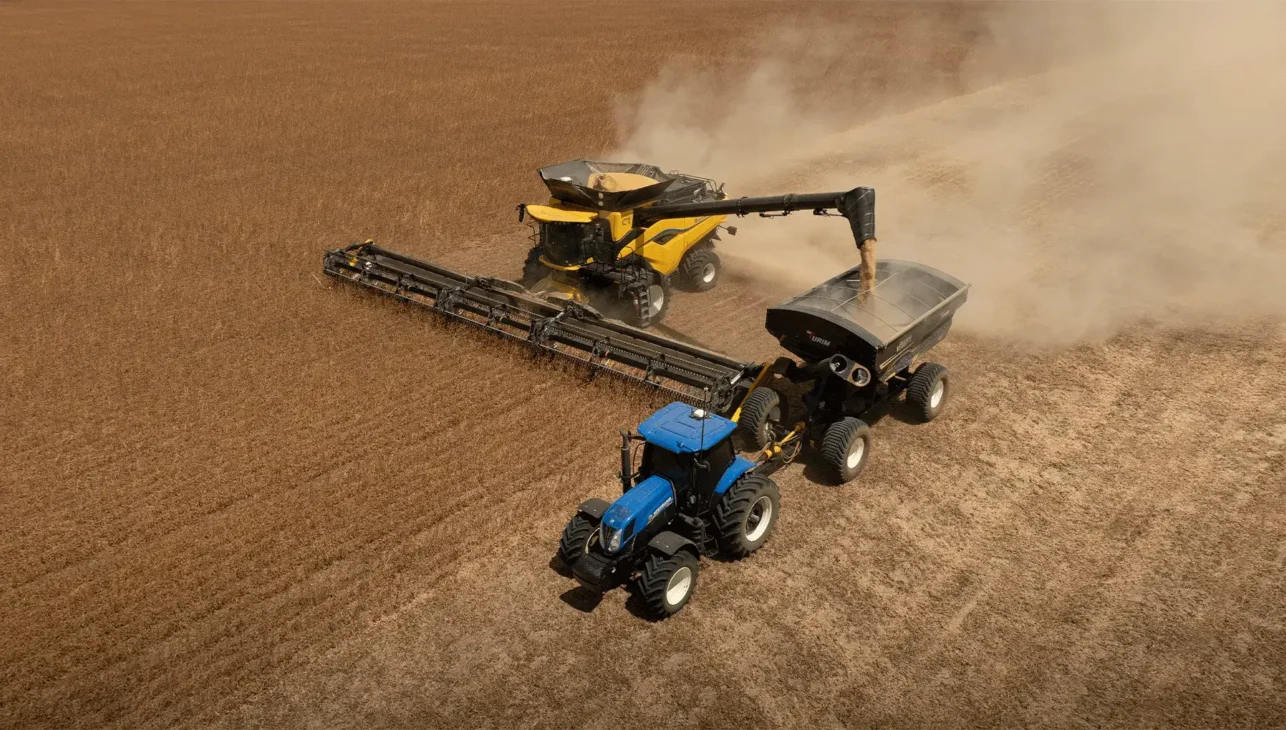
The concept of a harvester that “works on its own” comes from the fusion of AI and connectivity. These machines are not yet 100% autonomous. They operate at an advanced level of automation, where the machine manages most functions, but an operator supervises the process in the cabin.
The role of the professional has shifted from driver to systems manager. The onboard AI is the heart of this automation. Systems like Case IH’s AFS Harvest Command™ utilize multiple sensors to monitor operation.
They adjust dozens of parameters automatically to achieve the set objective, such as “Grain Quality” or “Maximum Yield.” The satellite connection is what unlocks the machine’s full potential. The strategic partnership between John Deere and SpaceX, utilizing the Starlink network, solves the connectivity problem in rural areas.
This constant connection allows for real-time data sending and receiving, remote diagnostics by the dealer, and direct communication between machines in the field (M2M). This service, scheduled to launch in Brazil starting in the second half of 2024, is the missing link for digital agriculture.
The Real Impact on Productivity and Employment
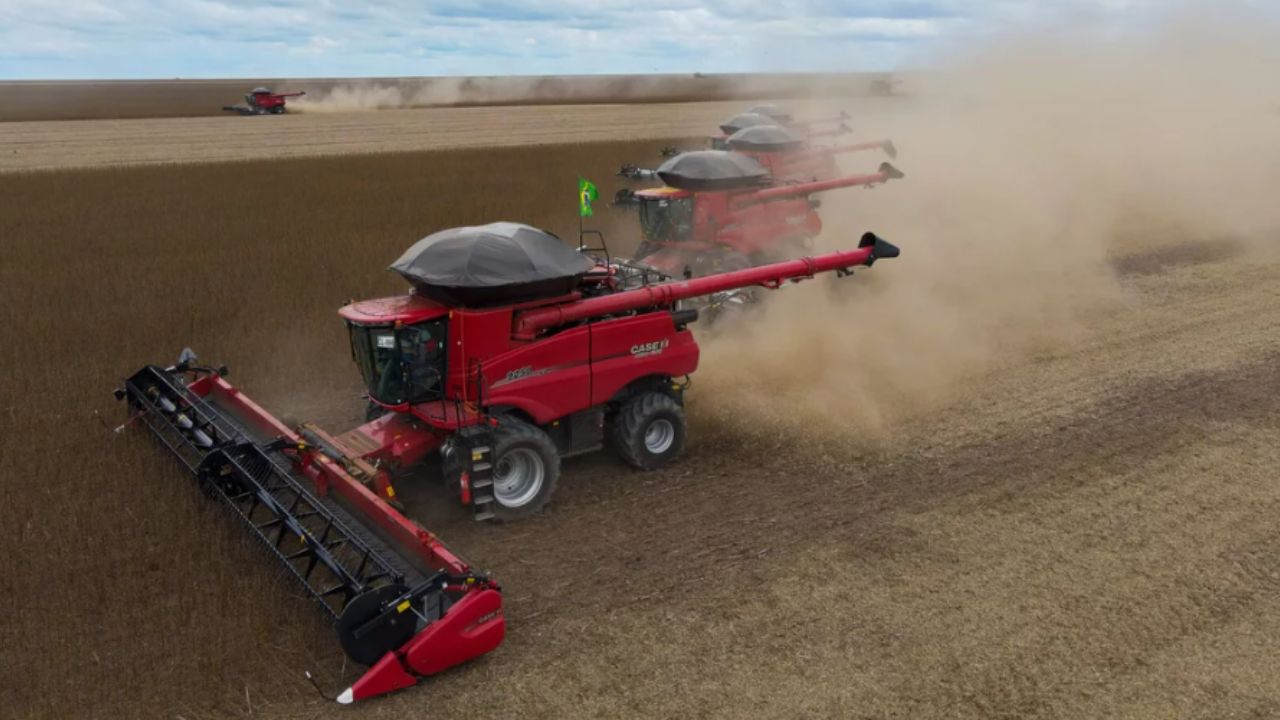
The claim that a machine does the “work of 100 men” comes from the mechanization of sugarcane harvesting. There, a single harvester has indeed replaced dozens of manual cutters. The case of Edgar Batista da Silva, in Minas Gerais, illustrates this reality. After 22 years in sugarcane cutting, he became unemployed with the complete mechanization of the mill.
In grain harvesting, the dynamic is different. The sector has been mechanized for decades. Here, the metaphor represents the consolidation of tasks. A single operator in a John Deere X9 harvester can harvest about 102 hectares in a day. This task would require a fleet of 3 to 5 older machines, each with its operator.
Automation also changes the worker’s profile. The demand for manual labor decreases. In its place, the need for qualified technicians grows, capable of managing and maintaining these complex systems. New roles such as data analysts and agricultural robotics specialists are emerging.
Analysis of the Return on Cutting-Edge Harvesters
The decision to invest R$ 5 million in a harvester is strategic. The return on investment (ROI) comes from increased revenue and reduced costs. Revenue increases with the reduction of grain losses to less than 1% and with the opportunity to harvest the crop at the ideal time, avoiding losses due to weather.
Costs decrease from greater fuel efficiency and reduced need for labor. The investment makes sense in specific scenarios. It is ideal for large-scale operations, in high-yield farms and in regions with a shortage of qualified labor.






Seja o primeiro a reagir!