





 Portuguese
  English
  Spanish
  3 min of reading
  5 comments


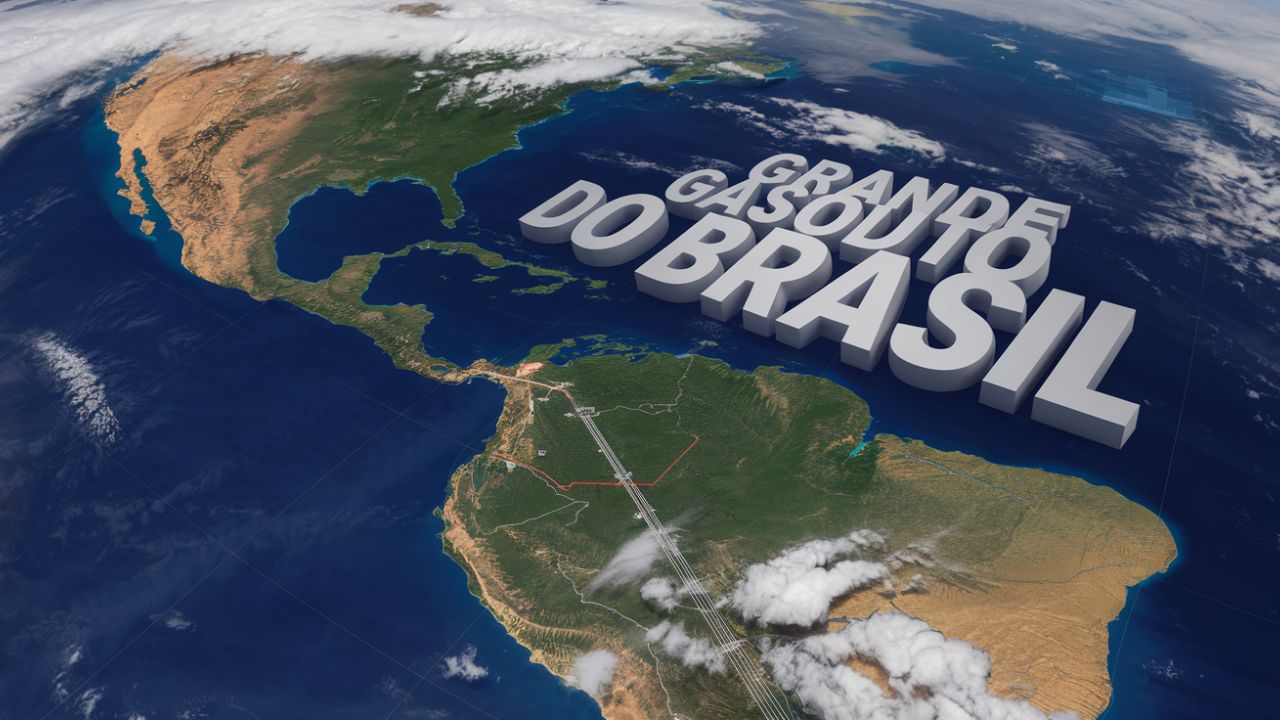


With more than 3,000 km in length and an investment of US$ 2.5 billion, the construction of the largest gas pipeline in Latin America connects Brazil and Bolivia, guaranteeing the daily transport of 30 million cubic meters of natural gas and boosting industries, the economy, and sustainability in the region.
Connecting two countries with a gigantic underground pipeline that crosses mountains, rivers, and forests. It seems impossible, but this is the reality with the Brazil-Bolivia Gas Pipeline, an engineering landmark that redefines the limits of the possible. See how the construction of the largest gas pipeline in Latin America transformed the energy landscape of the region, uniting nations and strengthening economies.
The Birth of a Giant: The Brazil-Bolivia Gas Pipeline Project
In the 1990s, Brazil faced a challenge: to diversify its energy matrix to sustain industrial growth. Bolivia, with vast reserves of natural gas, sought reliable markets. Thus, the Brazil-Bolivia Gas Pipeline project was born, the result of intense diplomatic and commercial negotiations.
With an estimated cost of US$ 2.5 billion, the gas pipeline began construction in 1997, facing challenges such as rugged terrain and political instability in Bolivia. In 1999, it commenced operations, becoming the largest energy infrastructure project in Latin America.
-
Scientists transform sawdust into fire-resistant panels, stabilize the compound with an enzyme extracted from watermelon seeds, and turn waste into promising material for construction.
-
Forget concrete: architects are replacing tons of concrete with giant blocks of expanded polystyrene to build the roofs of houses and reduce structural weight by up to 50%, cut costs, improve thermal insulation, and speed up construction.
-
The Brazilian state enters the center of the global race for critical minerals by starting the construction of the largest underground nickel mine in Latin America, a mineral essential for electric car batteries that the entire world is competing for at this moment.
-
New CCR concrete paving technology promises roads up to 3x more durable, less maintenance, and cost reduction in Brazil.


Impressive Engineering: The Construction of the Largest Gas Pipeline in Latin America

With a total length of 3,150 km, the construction of the gas pipeline is a true masterpiece of engineering. It crosses five Brazilian states and more than 5,000 properties, connecting Bolivia to Brazil.
One of the innovations was the use of horizontal drilling, a technique that allows crossing natural obstacles without large excavations, reducing environmental impacts. The project includes 15 compression stations that ensure a continuous flow of gas, even in challenging terrains.
Mountains, rivers, and forests are just a few of the obstacles faced. Each step was meticulously planned to ensure efficiency and safety. The depth of the pipelines varies between 1 and 3 meters, protecting the system from natural and human damage.
In Brazil, the gas pipeline reduced dependence on polluting sources such as oil and coal. States like São Paulo and Mato Grosso do Sul benefited from more sustainable industries and job creation.
For Bolivia, the construction of the project brought a steady flow of revenue, allowing investments in infrastructure, education, and social programs. This economic integration strengthened bilateral ties, promoting prosperity for both nations.
Comparison with Other Global Megaprojects
Compared to projects like Nordstream (Russia-Germany) and TAP (Turkmenistan-India), the Brazil-Bolivia Gas Pipeline stands out not only for its length but also for its efficiency in integrating regional economies. It transports 30 million cubic meters of gas daily, being essential for Brazil’s energy security.
The Brazil-Bolivia Gas Pipeline is not just a pipeline; it is a symbol of partnership and innovation. It shows how well-planned projects can transform challenges into opportunities, promoting sustainable development and regional integration.
The construction of the largest gas pipeline in Latin America goes beyond transporting gas; it carries the hope of a more connected and sustainable future. A monumental work that inspires for its grandeur and strategic importance. After all, it’s not every day that we see a project that literally unites nations and changes lives.










Outra roubalheira que já foi feito antes. Tanto gás no litoral brasil. 19 neles
A cultura dos povos se manifesta algo promissor com a troca de suas riquezas de modo civilizado, ou seja, ambos os países se beneficiando e se fortalecendo de modo sustentável. Parabéns aos idealizadores e operadores desta obra monulental de interesse social e econômico para todos!!!
Não resta a menor dúvida de ser uma obra monumental e de integração. Logo virá a ferrovia que ligara nosso País ao Oceano Pacífico. O Brasil será líder regional na exportação e na producao. Vai valer a pena ver.
Concordo em parte com os comentários. Acho a obra super importante, mas, além de ser muito caro, não atendeu o país no total. Precisa canalizar o gás do Pré-Sal. O gás produzido no Brasil é para ser mais barato. Precisamos de cortar o Brasil de norte ao sul com ferrovias, isso vai fazer o país se transformar numa potência mundial.