





 Portuguese
  English
  Spanish
  6 min of reading
  0 comments


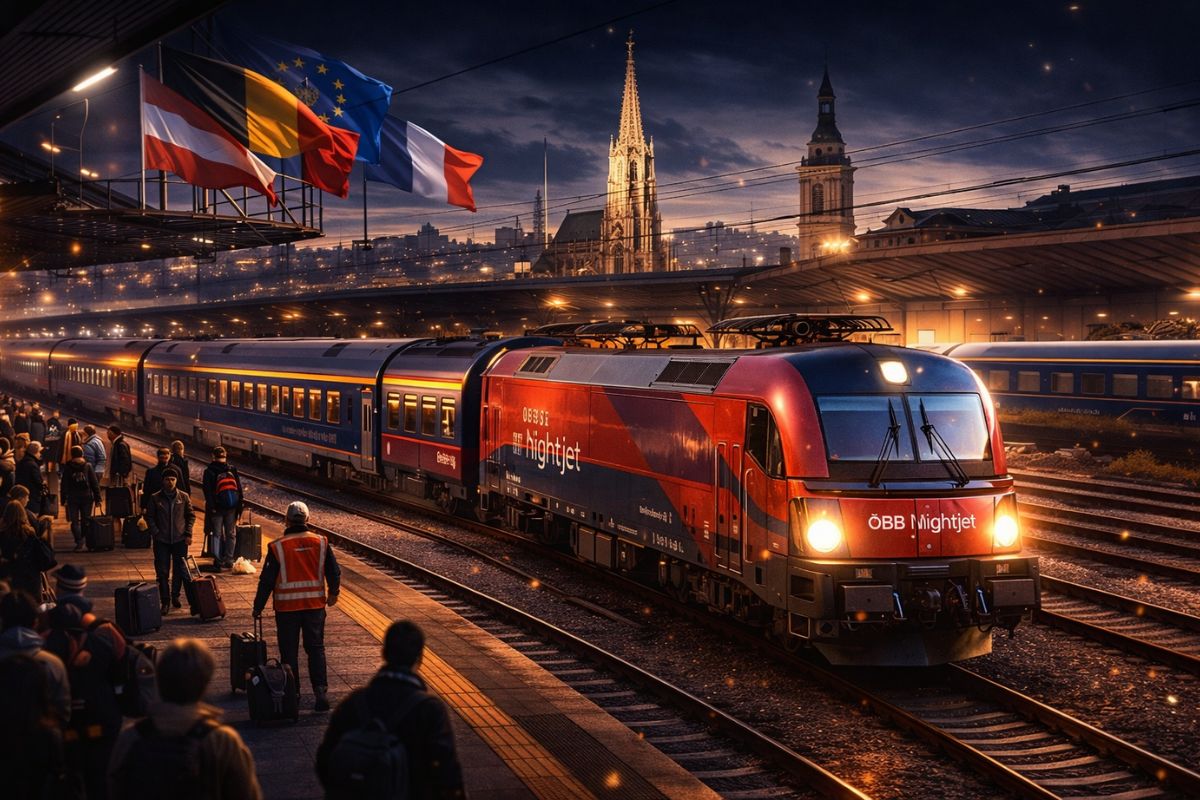
Austria operates more daily night trains than any other country in Europe, transporting 1.5 million passengers per year with routes connecting Italy, Germany, Switzerland, Belgium, the Netherlands, and the Czech Republic, all because it decided to invest heavily when all other state railways were giving up on the service.
While most European countries abandoned night trains as a deficit relic of the 20th century, Austria did exactly the opposite. ÖBB, the Austrian state railway company, not only maintained its night services but aggressively expanded them, acquiring routes and carriages that other operators discarded. The result is that a country of just 9 million inhabitants now operates the largest network of night trains in Europe, with daily connections to Italy, Germany, Switzerland, Belgium, the Czech Republic, and the Netherlands. Some of these routes don’t even pass through Austria.
According to the DW Planet channel, the turning point came in 2016 when Deutsche Bahn, the German railway giant, officially abandoned its night trains. ÖBB absorbed more than 40% of these connections and purchased dozens of used sleeper cars. “We had to decide: do we also want to drastically reduce the night train network, or do we want to become a major operator with a distinct brand?”, explained Kurt Bauer, director of long-distance services at ÖBB. The choice was clear: for a small country railway, night trains represented one of the few opportunities to become a relevant European player.
What it’s like to travel on one of Austria’s night trains
ÖBB’s night trains offer three categories of accommodation catering to different budgets. The most affordable option is the conventional seat, chosen by those who prefer to save as much as possible. The mini single cabins, costing around 99 euros, offer privacy with a bed, pillow, blanket, and their own window, in a compact space reminiscent of a Japanese capsule hotel. For those who can invest more, private suites with a bathroom and shower cost around 330 euros and accommodate two people.
-
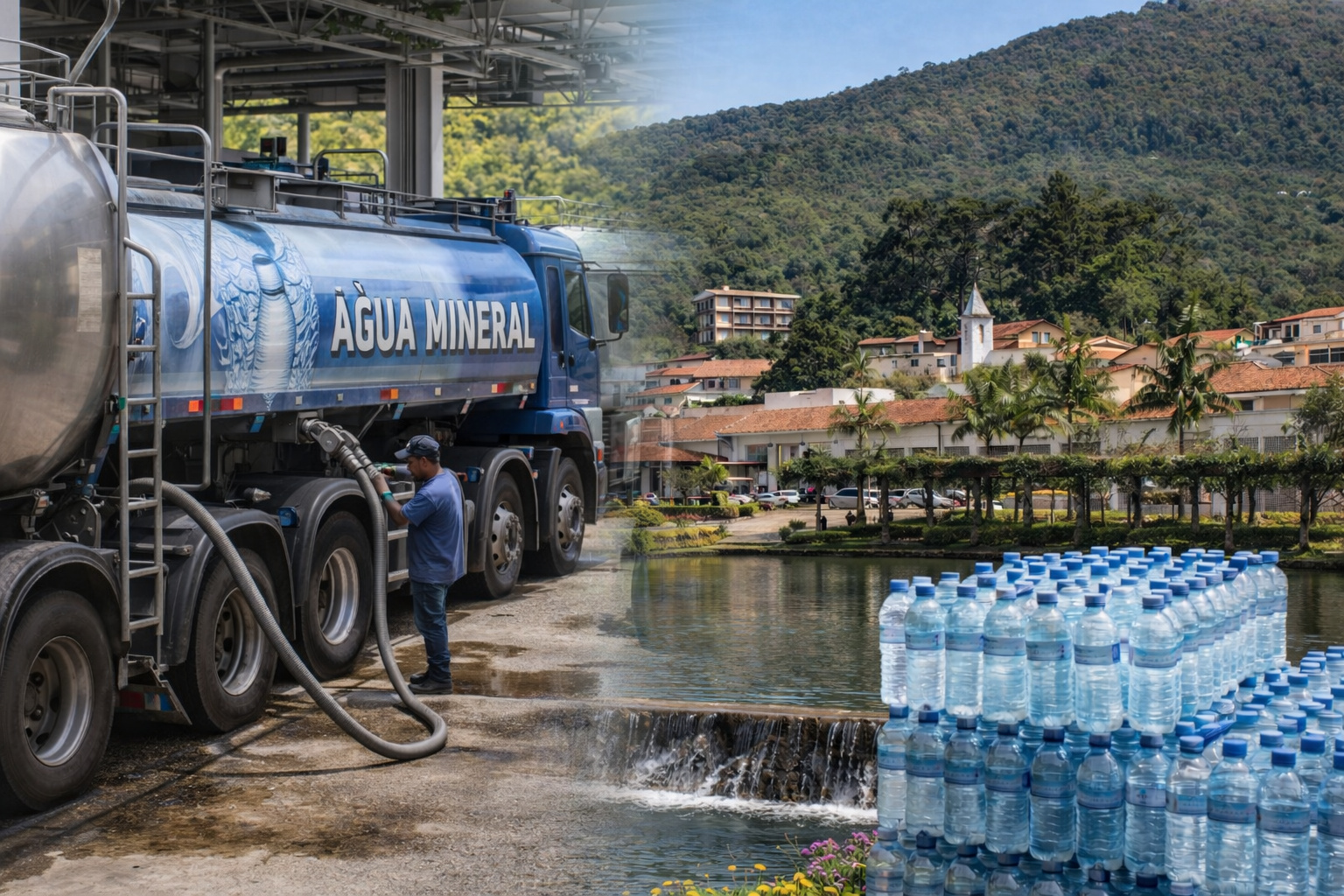
Amidst calm landscapes and a peaceful pace of life, a town in the interior of São Paulo holds a secret that impresses experts: it produces almost half of Brazil’s mineral water.
-
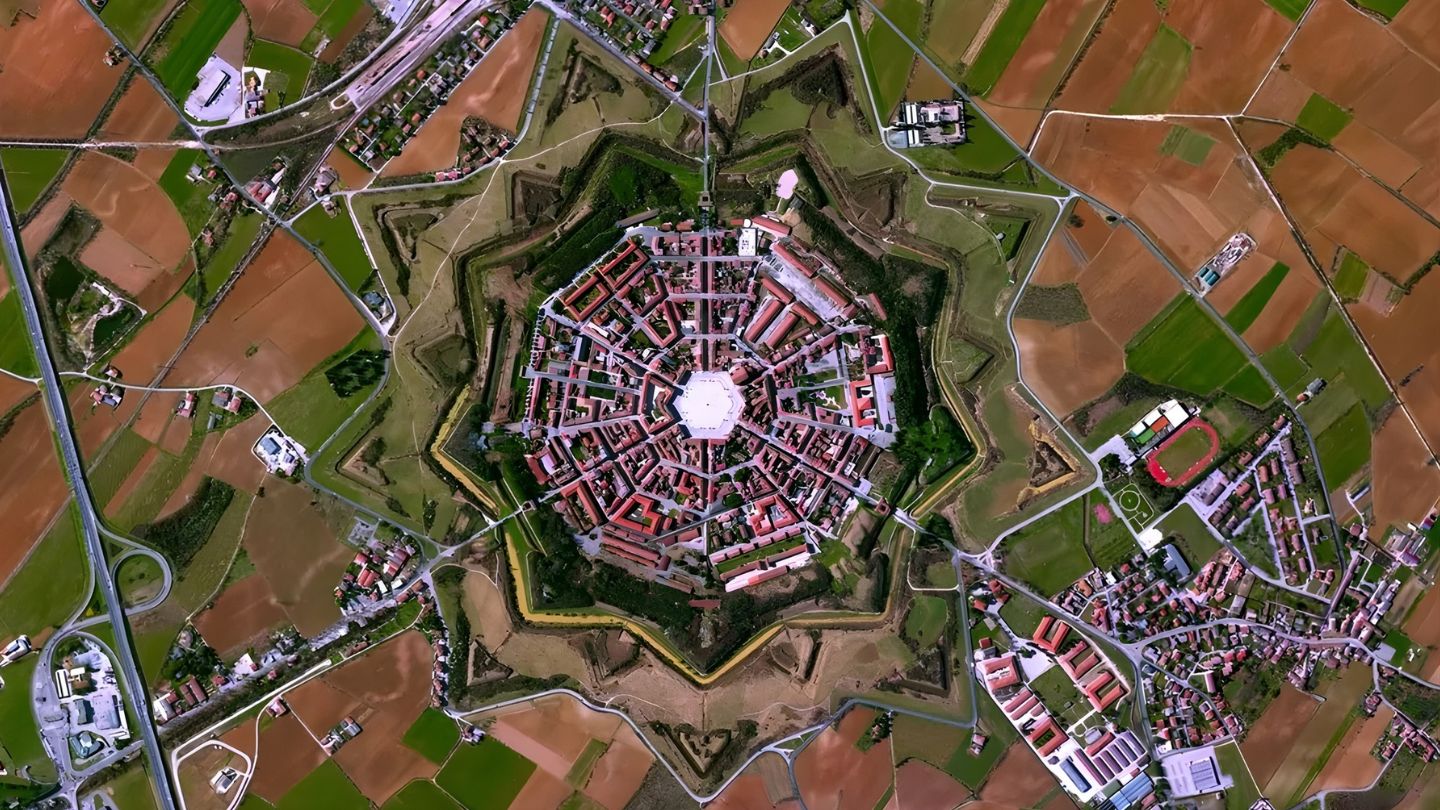
Palmanova, in Italy, concentrates its urban structure within a star-shaped layout with 9 points, walls that extend for about 7 km, and three perfectly symmetrical concentric defensive rings, creating an entire city designed as a Renaissance military diagram and one of the most geometric urban patterns ever built in Europe.
-
Meta is preparing a historic update for WhatsApp that promises to forever change the way we communicate via mobile.

-
A man moved into a new house in Santa Catarina, waited a week, decided to make a garden in the backyard, started digging the soil, and found a handmade coffin with a cross fixed on it and a human skeleton inside, and even after that, he continues to live there.

The experience varies according to each passenger’s expectations. In shared carriages, passengers report scores of six to seven out of ten for sleep quality, comparable to a hostel on rails. The journey from Hamburg to Vienna, for example, takes about 14 hours, with an average speed of 92 km/h, allowing for a full night’s sleep before reaching the destination. ÖBB’s newer night trains feature carpeting, adjustable lighting, and a meal ordering system in the cabin, a level of comfort that reflects Austria’s investment in state-of-the-art carriages.
Why Austria invested in night trains when everyone else was giving up
The Austrian decision was not romantic; it was strategic. Austria has an elongated geography that makes a trip from one end of the country to the other take almost ten hours by train. Without high-speed rail connections within the territory, night trains remain necessary to link distant cities, something countries with TGVs and ICEs could resolve with fast daytime trips. This domestic need created the operational base that allowed ÖBB to expand into international routes.
State funding was also crucial. Austria is one of the European countries that invests the most in railway infrastructure relative to GDP. Between 2000 and 2021, the Austrian state invested, on average, more than double in railways compared to roads, a ratio that contrasts sharply with countries like France, Spain, and the UK, which prioritized roads and cheap flights. Although the government directly finances only domestic night trains, the robust infrastructure benefits the entire operation. International routes need to pay for themselves, and experts indicate that ÖBB likely operates with tight margins in that segment.
The problems preventing other countries from copying Austrian night trains
If night trains work so well for Austria, why doesn’t the rest of Europe replicate them? The answer involves a list of technical, financial, and political obstacles that Jon Worth, a European railway analyst, summarizes with a sigh. The most immediate problem is the lack of sleeper cars: ÖBB is practically the only European state operator that has ordered new cars for night trains in recent years. Without cars, there is no service, and without proven profitable service, investors do not finance cars. It’s a circular deadlock.
Technical barriers exacerbate the situation. Europe has three different rail gauges, four electrification systems, and more than 20 distinct signaling systems. A train that operates in Austria may not necessarily run in France or Poland without expensive adaptations. Additionally, countries like Spain, France, and Germany charge high fees for foreign trains to run on their tracks, which increases the cost of international routes. The busiest stations already have late-night and early-morning slots occupied by freight trains, reducing the available space for night trains.
The cost of operating night trains and why major railways are not interested
Night trains are inherently more expensive to operate than daytime trains. A night train carries about 250 passengers, while a daytime high-speed train can carry almost four times as many. And while the daytime train makes multiple trips per day, the night train only makes one, which drastically reduces revenue per carriage. The crew works at night, with higher labor costs. And services like bedding, cabin cleaning, and personalized service add expenses that regular trains do not have.
For large state railways in Europe, the calculation simply does not add up. “State railways don’t care. It’s operationally complicated, doesn’t make much money, and doesn’t fit into the prevailing model of high-speed trains,” summarizes Jon Worth. ÖBB itself acknowledges that it has reached the limit of its network: in 2025, the company discontinued the Italian Riviera route and permanently closed the Paris-Vienna and Paris-Berlin connections. Kurt Bauer was clear in stating that there are no plans to significantly expand the Austrian night train network.
Private operators entering the night train market
If ÖBB has reached its limit, private operators are beginning to fill the gaps left behind. European Sleeper, founded in 2021, took over the Paris-Berlin route that the Austrian railway abandoned. The company operates with a lean approach: it eliminates stops that do not make logistical sense, runs only on days of high demand, and rents used sleeper cars instead of buying new ones, some of which are up to 60 years old. This low-cost strategy has yielded mixed reviews from passengers but allows the company to expect to achieve profitability on the Prague-Brussels route later this year.
Co-founder Chris Engelsmann explains that the advantage of private operators over state ones is focus. “Night trains are a very specific product. You need attendants, bedding, laundry. If you don’t do it right, it costs a lot. But many state railways treat night trains as a secondary business,” he states. His tip for those looking to save: Tuesday is always the day with the lowest demand, and therefore the cheapest tickets. Finland’s VR and Italy’s Trenitalia also operate night trains, but only on domestic routes, lacking the continental ambition of ÖBB or the new private players.
What passengers really think of night trains
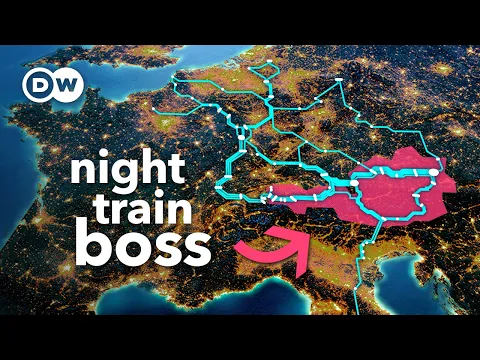

The demand for night trains is not the problem. All operators and analysts interviewed repeat the same phrase: demand is growing, driven by environmental concerns, the convenience of traveling while sleeping, and the combined cost of tickets plus accommodation. A German study showed that, per kilometer traveled, night trains emit significantly less CO₂ than cars and completely outperform airplanes. If 30% of air passengers on short routes switched to night trains, the reduction in emissions would offset the entire climate impact of domestic flights in Germany.
Passengers cite various motivations. Indian travelers accustomed to long train journeys consider European prices high but acceptable if they save a night in a hotel. European passengers mention sustainability as the main reason, followed by the practicality of not wasting useful daytime hours. The resistance comes from price, when night trains cost more than cheap flights, and from time, when the journey is too long to justify the choice. Studies indicate that between 10% and 30% of air passengers would switch from plane to night train if price and time improved, a huge potential market that depends on investments that Europe has yet to decide to make.
Austria has proven that night trains can work in modern Europe, but it has reached its own limit. Would you use night trains instead of planes to travel across Europe? Do you think Brazil should consider something similar for long distances?





Seja o primeiro a reagir!