





 Português
  Inglês
  Espanhol
  4 min de leitura
  1 comentário


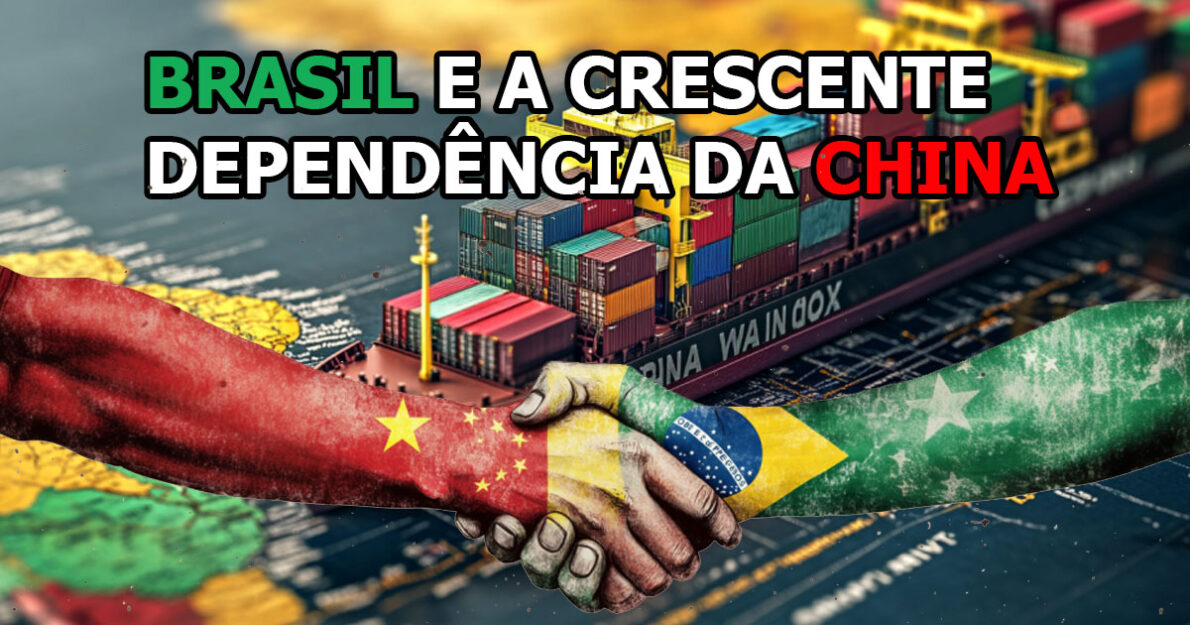

The Growing Dependence of Brazil on China Poses Significant Risks to the National Economy. The Concentration of Exports and the Invasion of Chinese Products in the Brazilian Market Require an Urgent Diversification Strategy. The Economic Survival of Brazil May Depend on the Ability to Reduce This Dependence and Strengthen Domestic Production.
The growing influence of China over the Brazilian economy is a topic that raises concerns and, at the same time, reveals a dependence that many consider dangerous.
Why does this relationship, which started hesitantly a few decades ago, now represent a potential risk to the national sovereignty and the future of the Brazilian economy?
To understand this complex dynamic, it is necessary to explore the evolution of the trade balance between the two countries and the potential impacts of this dependence on Brazil.
-
In a silent race, Shopee signs a mega contract in Guarulhos and accelerates the e-commerce war with faster deliveries, pressured shipping, and a new threat to rivals in Brazil.

-
Oil surged to $115 a barrel due to the war in the Middle East, and diesel in Brazil has already risen to R$ 7.45 per liter, while the United States…
-
Iranian drones and missiles destroyed a 270 million dollar American spy plane in Saudi Arabia, splitting the E-3 Sentry aircraft in half and injuring 12 military personnel in an attack that exposes the vulnerability of U.S. bases in the Persian Gulf.

-
Brazilian city bets on the business environment to generate jobs and attract investments in the energy sector — secretary reveals strategy at Macaé Energy 2026.


China’s Advancement as a Trading Partner of Brazil
Over the past 50 years, the commercial relationship between Brazil and China has intensified remarkably.
Since the two countries established diplomatic relations in 1974, China has transformed from an irrelevant trading partner to the main destination for Brazilian exports.
This growth has been especially marked since 2009, when China surpassed the United States and solidified its position as Brazil’s largest trading partner.
The figures are impressive. In 1981, China ranked 38th among Brazil’s main trading partners.
However, over the years, China not only climbed the ranks but also established itself at the top.
In 2023, Brazil recorded a record export to China of US$ 104.3 billion, resulting in a historic positive balance of US$ 51.1 billion.
This surplus was fundamental in strengthening the country’s international reserves, contributing to the stabilization of external accounts.
The Dangerous Dependence on Brazilian Exports
Despite the positive numbers, economist Ecio Costa from UFPE warns of the risk of excessive dependence on the Chinese economy.
According to him, the concentration of Brazilian exports in China is a phenomenon that has been worsening over time.
Only in July 2024, China accounted for 33.2% of Brazilian exports, representing one third of everything Brazil sells abroad.
This level of concentration creates significant vulnerability. If the Chinese economy suffers a slowdown or if the prices of commodities exported by Brazil drop drastically, the impact on the Brazilian trade balance could be devastating.
The economist emphasizes that Brazil needs to diversify its trade partnerships to mitigate this risk and avoid potential balance of payments crises.
The Chinese Invasion in the Brazilian Market
It is not only Brazilian exports to China that have grown exponentially. The imports of Chinese products have also surged dramatically, especially since 2018.
That year, Brazil imported US$ 35.2 billion in goods from China, surpassing the United States, from which US$ 32.8 billion in products were imported.
The growth of Chinese imports in Brazil since 1981 has been 9,800%, evidencing the increasing presence of Chinese products in the Brazilian market.
This invasion of goods, ranging from electronics to cars, has directly affected the national industry, which is pressured to compete with the low prices and high availability of Chinese products.
The Prominence of Soy and the Necessary Diversification
Among the main products exported by Brazil to China, soybean occupies a prominent place. From January to July 2024, soybean sales to China totaled US$ 24.1 billion, consolidating the grain as the flagship of Brazilian exports. However, this excessive dependence on a single product can also represent a risk.
While Brazil exports commodities like soy, minerals, and fuels, the country’s imports include more sophisticated products such as valves, thermionic tubes, and automobiles, which compete directly with domestic production.
Ecio Costa emphasizes that the diversification of exports is crucial to reduce Brazil’s economic vulnerability. The country needs to explore new market opportunities and strengthen sectors that can add more value to the economy.
An Uncertain Future for the Brazilian Economy
The advancement of China as a Trading Partner of Brazil has brought undeniable benefits, such as improving external accounts and strengthening international reserves.
However, the growing dependence on the Chinese economy also exposes Brazil to considerable risks. The lack of diversification in exports and the invasion of Chinese products in the Brazilian market are issues that demand attention and strategic action from the government and the productive sector.
In light of this scenario, the question remains: how can Brazil reduce its dependence on China and ensure economic security in the future? The challenge is significant, but the answer may lie in the diversification of trade partnerships and the enhancement of domestic production.








Seja da China, seja dos EUA, a dependência é um fato. Pois então me diga em que isso afeta a soberania nacional uma vez que somos dependentes em tudo, inclusive no nosso famoso Agro, que precisa de fertilizantes e outros insumos do exterior. Se precisamos de parcerias, que sejam parcerias, não submissão como tem sido. Me parece que nenhum outro parceiro veio com tantos investimentos e propostas com a solidez como as que tenho visto. Acho que chega de bla bla bla e ideologia comprada. Estão trazendo propostas de emprego, dinheiro, tecnologia aqui e não de fora para cá. Não querem somente levar nossos minérios, nosso dinheiro… e deixar migalhas, melhor exemplo que a NESTLÉ.