





 Portuguese
  English
  Spanish
  4 min of reading
  1 comment


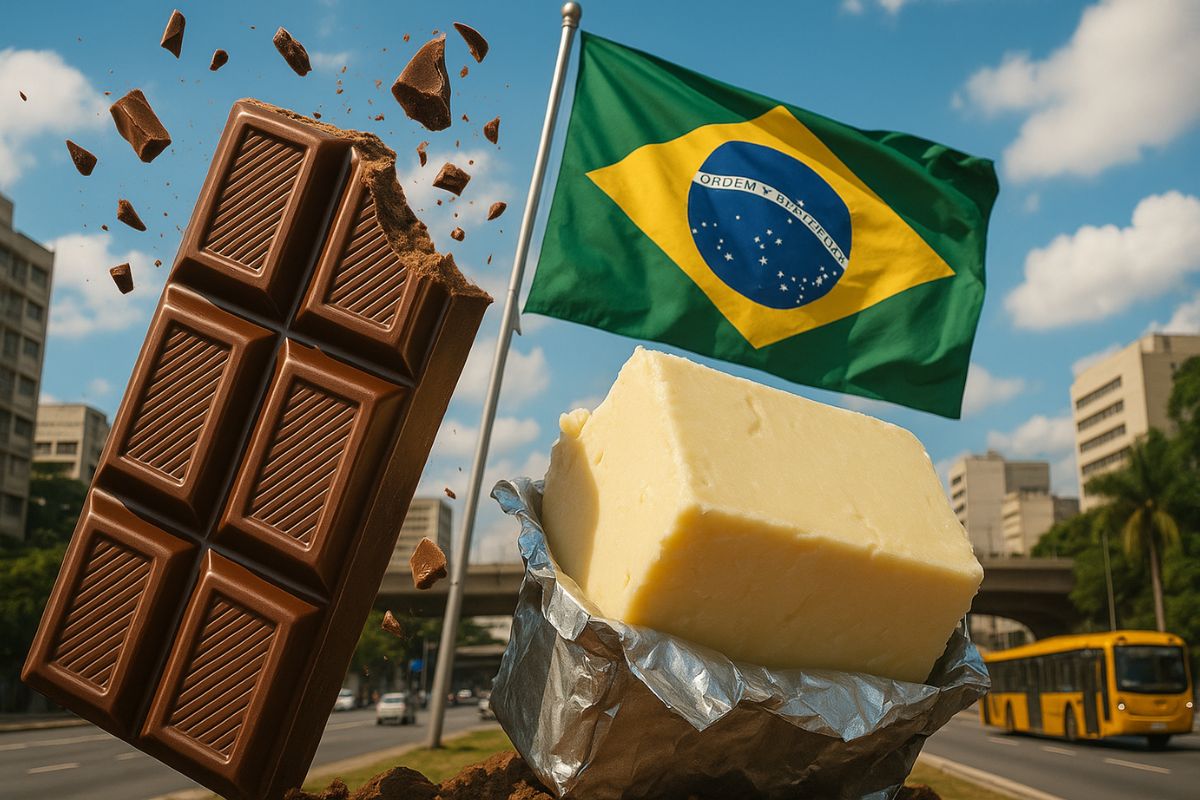


Brazilian Industry Replaces Cocoa with Hydrogenated Fat and Sells Ultra-Processed Products as Chocolate While Consumers Fall Ill Unknowingly.
The national chocolate is present in almost every Brazilian home, but can what the country consumes still be called chocolate? According to Anvisa, it is enough for the product to contain 25% cocoa solids to receive this classification. The other 75% is up to the industry, which fills the gap with sugar, vegetable oils, and hydrogenated fats.
According to the channel elementar, this regulatory loophole created the perfect scenario for the emergence of a product that looks like chocolate but isn’t. The sweet flavor and creamy texture hide a bitter reality: a poor, ultra-processed composition that is harmful to health. The problem goes far beyond taste and directly affects the average consumer, who believes they are buying a legitimate product.
The Label That Exposes the Farce
Reading labels is a habit still lacking in Brazilian consumers. It is there, in the ingredient list, that it is revealed how much the national chocolate has been adulterated over the years.
-
Attracting around 250,000 people a year, a lighthouse 200 meters from the sea, on a 60-meter high cliff, on the North Sea coast in Denmark, becomes one of the most impressive examples of how nature can threaten historical buildings.

-
The narrowest house in the world is only 63 centimeters wide, but inside it can accommodate a bathroom, kitchen, bedroom, office, and even two staircases.

-
In the middle of the sea, these enormous concrete and steel structures, built by the British Navy to protect strategic maritime routes, look like they came straight out of a Star Wars movie.

-
For years, no one could cross a neighborhood in Tokyo because of the tracks, but an impressive solution changed mobility and completely transformed the local routine.

By rule, the ingredient that appears first is the one present in the highest quantity. In many products, cocoa doesn’t even lead the list and is surpassed by sugar, fat, and chemical additives.
The same phenomenon repeats itself in other processed foods, such as ice cream, whose original recipe uses milk and natural cream.
Today, the first ingredient of most brands is water, followed by hydrogenated fat and glucose syrup.
The result is a cheap, stable product with an artificial taste but far removed from any nutritional value.
These substitutions have become common because they reduce production costs.
The use of industrial oils and fats ensures durability and ease of transportation but poses real health risks, such as increased cholesterol and cardiovascular diseases.
The “Chocolate” That Doesn’t Melt in Your Mouth
The main difference between real chocolate and industrial chocolate lies in the fat used. Real chocolate contains cocoa butter, a noble and naturally solid substance that melts upon contact with body heat.
On the other hand, the common chocolate sold on shelves uses CBE (Cocoa Butter Equivalent), a hydrogenated fat developed to partially imitate the texture and appearance of the original butter.
The hydrogenation process transforms liquid oils into solid fats through the addition of hydrogen.
It is an efficient technique, but produces trans fat molecules, recognized by medicine as great enemies of the heart.
Even after Anvisa Resolution 332, which mandated the gradual elimination of these fats by 2023, products with trans fats are still easily found in supermarkets in chocolates, ice creams, cookies, and margarines.
In countries with stricter regulations, the use of substitutes is severely limited.
In Brazil, it is enough to reach a minimum of 25% cocoa for the product to be marketed as “chocolate.” The rest is fat and marketing.
A Silent Setback in the Law
Brazil once had a higher standard. In 1978, legislation required 32% cocoa in chocolate. But the disease known as witch broom, which devastated crops in Bahia in the 1980s, led to a reduction in the requirement to 25%.
Even after the recovery of national production, the country is now the seventh largest cocoa producer worldwide, and the rule has never been revised.
The Senate is discussing raising this percentage to 35%, but the debate is progressing slowly. In the meantime, the industry continues to profit from cheap formulas, and the consumer keeps paying for a product that has little that’s genuine.
Besides the economic impact, there is an invisible cost: public health. Studies from the World Health Organization and the New England Journal of Medicine have shown that eliminating trans fats can prevent thousands of heart diseases each year.
In contrast, the continuous consumption of these substances is linked to increased premature mortality and the incidence of type 2 diabetes.
A Palate Trained for the Fake
The industry’s strategy goes beyond chemical composition; it acts on behavior.
The Brazilian palate has been conditioned to accept artificial flavors, excessive sweetness, and greasy textures.
Thus, many consumers no longer recognize the real taste of cocoa and confuse quality with sugar intensity.
As a result, genuine products with high cocoa content end up seeming “too bitter” to those who grew up with diluted versions.
This maintains the cycle of dependence on industrial products and discourages the consumption of artisanal or imported chocolates of higher purity.
The Price of Nutritional Ignorance
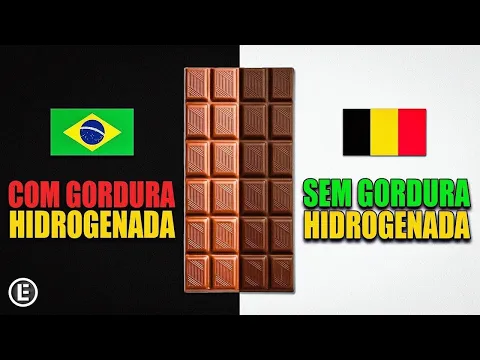

The case of national chocolate exposes a larger issue: the fragility of regulation and food education in Brazil. By prioritizing profit and convenience, the industry creates a market where the consumer is deceived and simultaneously falls ill.
More than a discussion about taste, the topic involves transparency, health, and ethics. After all, what is worth more: the pleasure of a cheap sweet or the cost of a diet that compromises the future?
Reading the label is a political act. It is the first step to breaking a system that profits from the public’s ignorance.
The national chocolate is merely a symbol of something larger: a consumption model based on illusion.
The population buys flavor and comfort, but takes home a product of low quality, full of additives and invisible fats.
As long as Brazil does not raise its standards and consumers do not demand more transparency, the country will remain hostage to an industry that sells fat as cocoa and disease as pleasure.







Nem todas as empresas seguem esse padrão. Empresas como a fabricante da marca @chocolife.br utilizam apenas produtos de qualidade certificada. E só utilizam cacau, manteiga de cacau e adoçantes naturais. São chocolates zero açucar, zero leite e zero glúten. Alguns com certificações internacionais como por exemplo chocolate 67% cacau da linha Super Foods, que tem o certificado australiano Food Map Friendly. Os consumidores precisam estar atentos na escolha dos produtos e procurarem qualidade e não apenas preço. A crise mundial do cacau elevou muito os preços dos principais insumos cacau e manteiga de cacau.