





 Português
  Inglês
  Espanhol
  5 min de leitura
  2 comentários


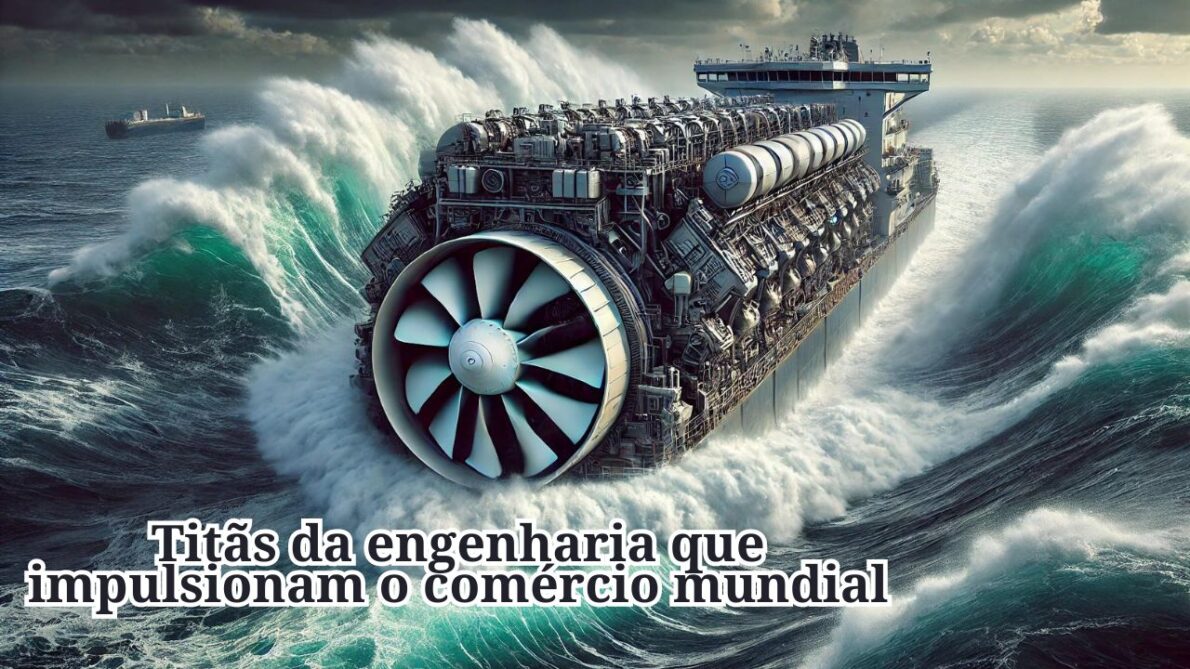

If You Think Car Engines Are Powerful, Wait Until You Meet Ship Engines — True Titans of Engineering That Drive Global Commerce.
Imagine if a thousand car engines were lined up side by side; even then, they would not reach the power of a single cargo ship engine. These giants weigh an impressive 2,300 tons — equivalent to 13 blue whales! But why do these ship engines need to be so large? The answer lies in the engineering behind them and the global demand they meet.
Nine out of ten products you buy were, at some point, transported by ships. When it comes to ship engines, the numbers are staggering. For example, a cruise ship engine weighs about 180 tons and costs over a million dollars. That’s not something to be taken lightly, right?
Ship Engines Go Through a Series of Rigorous Tests
Before being installed, these engines go through a series of rigorous tests. The first challenge is the manufacturer acceptance test. Next comes the famous sea trial, where everything is put to the test under real conditions. When the ship is delivered to the new owner, a comparative test is conducted to check if the engine’s performance meets the specifications. And that’s just the beginning — there are still more research tests and new test bench tests.
-
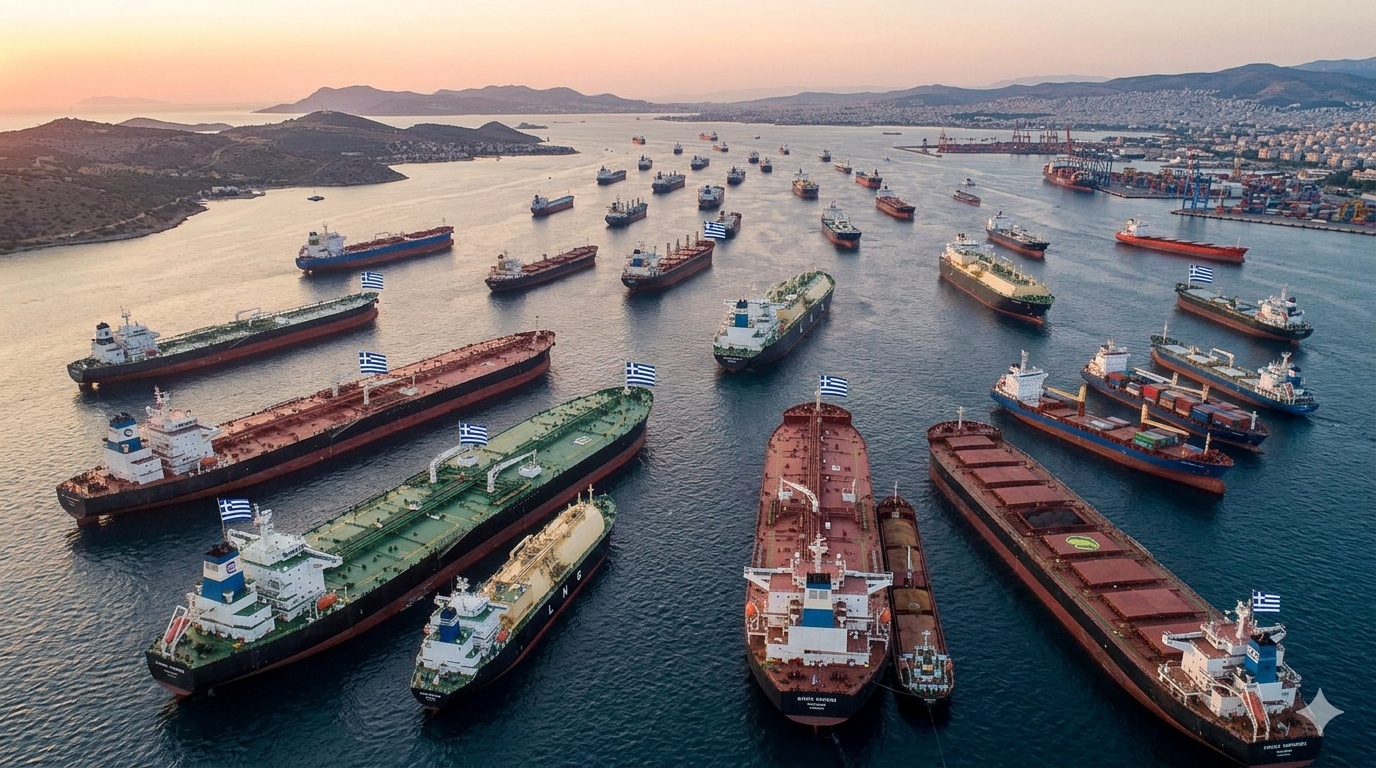
Neither the USA nor China: a small European nation has become one of the largest maritime powers on the planet, controlling one of the largest merchant fleets in the world with thousands of ships and dominating the global transportation of oil and strategic cargo.
-
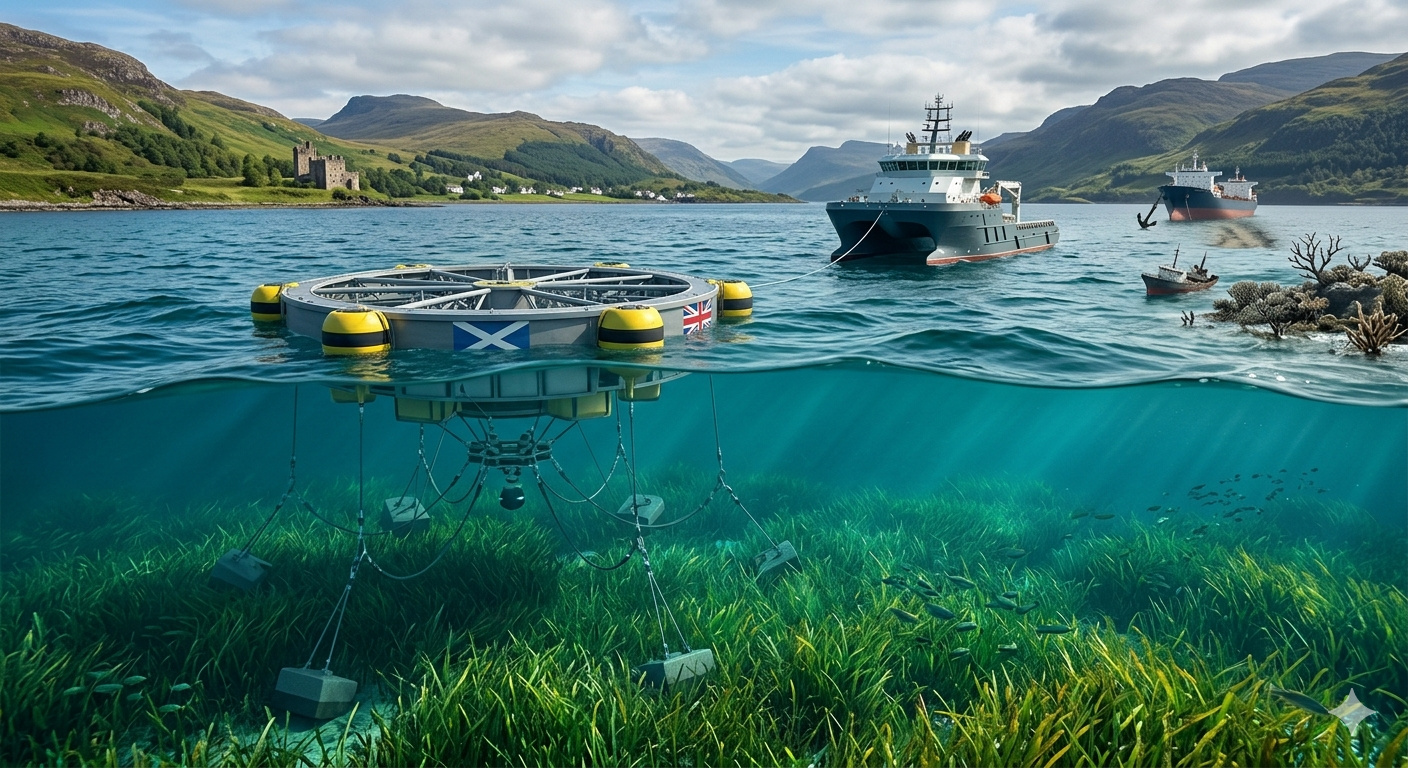
Scotland and the United Kingdom have created a new anchoring system that floats in the water without touching the seabed, after discovering that the current from a conventional anchor destroys up to 50 m² of seagrass meadow per event and that ship-damaged reefs showed no signs of recovery even ten years later.
-
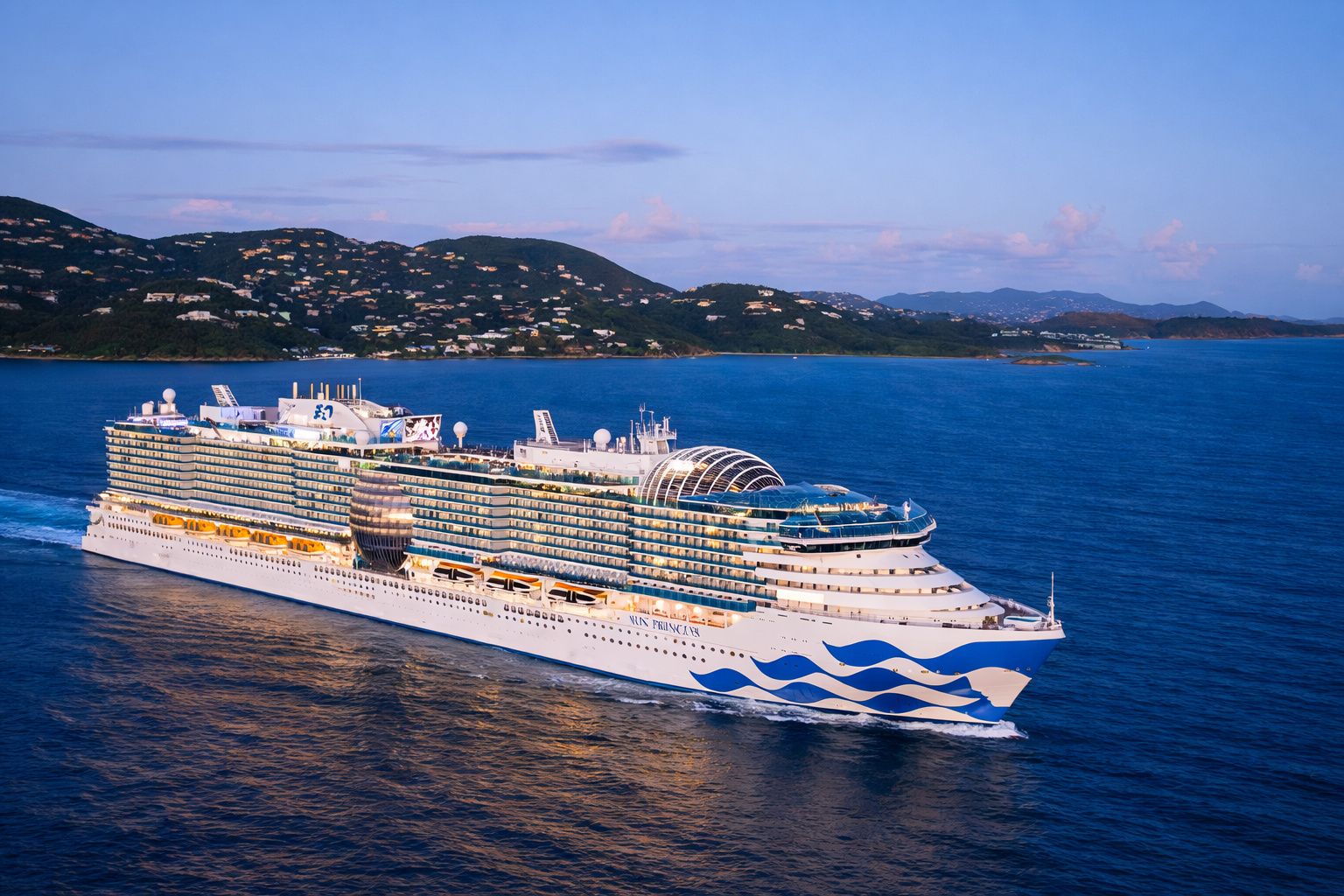
Weighing 175,500 Tons, Measuring 345 Meters Long, and With Capacity for Over 4,300 Passengers, the Sun Princess Becomes the Largest Ship Ever Built by Princess Cruises and Attracts Global Attention for Its Huge Glass Dome Inspired by Santorini’s Architecture Installed on Top of the Vessel
-
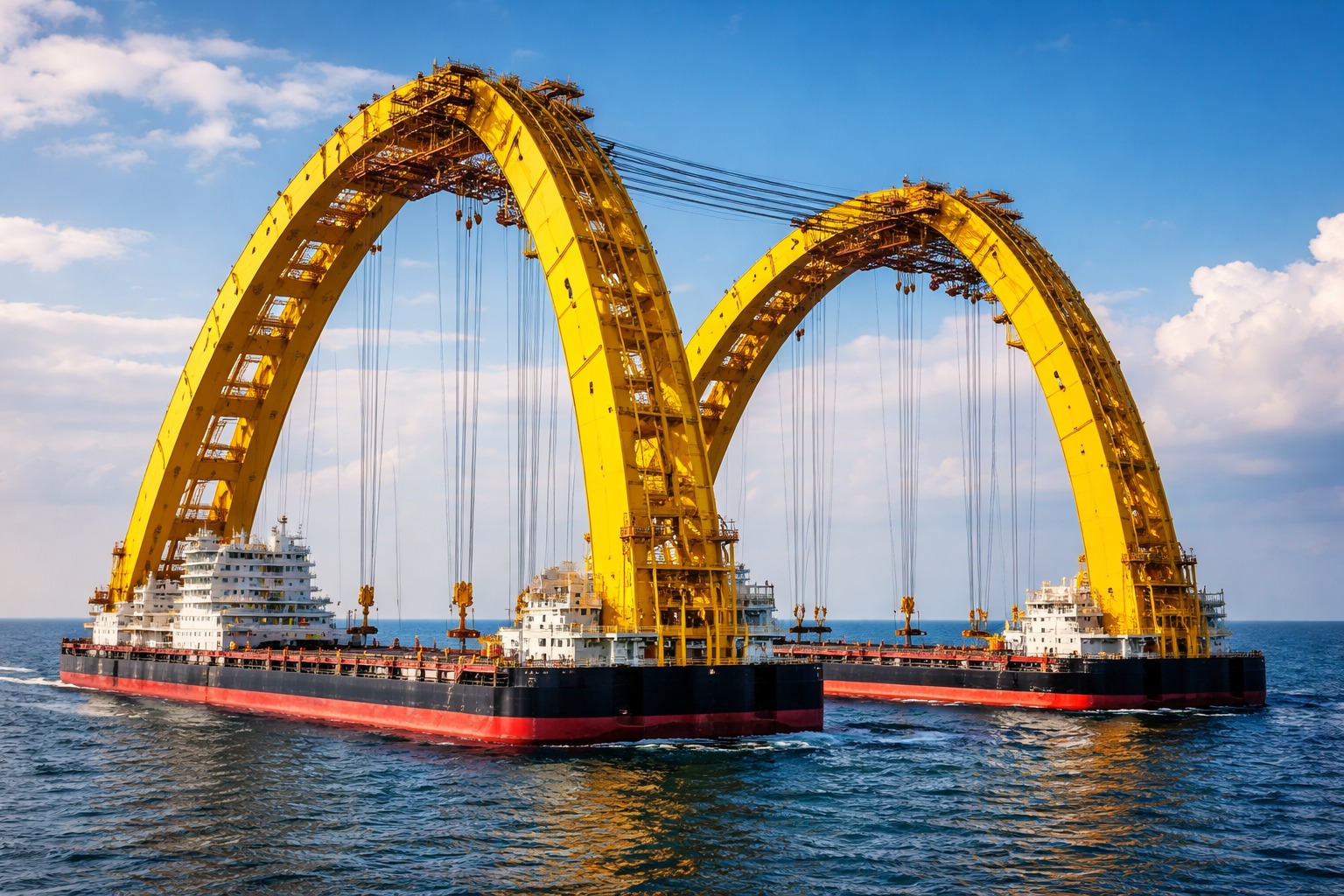
TX-10, The Colossus of The Sea: Largest Lifter Ship in The U.S., With Two Giant Barges, 73-Meter Tall Structure, and Strength to Raise 7,500 Tons of Sunken Oil Rigs

Engineering has evolved significantly since the days of steam engines. Ships have transitioned from coal-powered turbines, nuclear energy, and currently utilize diesel engines. Since the 1950s, maritime technology has advanced to the point of equipping giant vessels with nuclear reactors. However, most ships are not large enough to carry a nuclear reactor, reserving this technology for vessels like aircraft carriers.
Some Ships Have Gas Turbines
Most ships, especially cargo ones, operate on diesel engines, and many use liquefied natural gas as fuel. Some ships have gas turbines, usually found on faster vessels, and in many cases, these turbines are combined with other types of engines.
Speaking of cargo ship engines, the most common are powered by heavy fuel oil or marine diesel. The largest ship engine ever built weighs an incredible 2,300 tons, stands 14 meters tall (equivalent to a five-story building), and is 27 meters long. It features 14 cylinders and generates 84.42 MW of power — a staggering 115,000 horsepower!
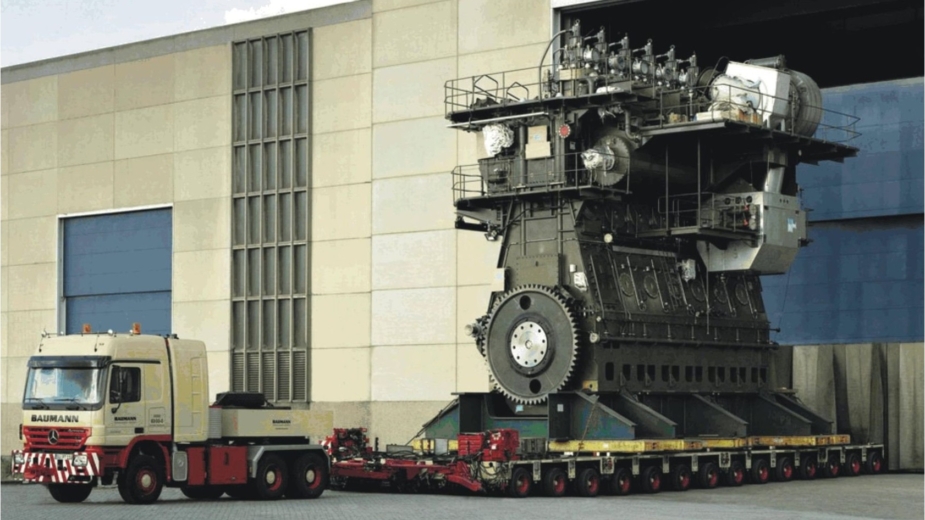
These ship engines are so massive that a person can literally stand inside the crankshaft and use a ladder to make repairs. But caution is needed: the crankshaft is covered with lubricating oil, making everything slippery.
How Does a Ship Engine Work?
Despite its colossal size, the engine of a ship operates similarly to any vehicle engine. The crankshaft moves and, instead of wheels, it drives a giant propeller at the rear of the ship. Most ships in the world are propelled by conventional propellers, but some use jet engines or water jet propulsion.
The focus of cargo vessels is to transport large volumes, not necessarily to achieve high speeds. On long-distance journeys, such as from San Francisco to Japan, where no stops are needed, the ship can travel about 1,000 km in 24 hours. During this journey, it consumes approximately 250 tons of fuel per day. This fuel, which is heavy fuel oil, needs to be heated to about 40 °C before being injected into the engine. After injection, the oil is heated further, reaching about 100 °C to ensure proper functioning.
Ships Transport Hundreds of Thousands of Tons
It may seem like an absurd amount of fuel consumption, but when we consider that these ships transport hundreds of thousands of tons over vast distances, the expenditure makes more sense. They sail at about 23 knots, which is equivalent to 42 km/h.
Manufacturer Acceptance Test
Before anything else, ship engines must undergo a series of tests to ensure everything operates as expected. The first is the manufacturer acceptance test, where the engines are placed on a test bench to determine if the specified performance values are within acceptable parameters. If approved, the ship moves on to the sea trial, where the engine’s performance is compared to contract standards.
If everything is in order, the manufacturer delivers the engine to the buyer, who will conduct their own tests throughout the ship’s lifespan. At this stage, the buyer conducts comparative tests that mark the beginning of the fourth testing phase, called research testing. This stage occurs after the new owner provides feedback on the ship, aiming to identify and resolve issues or make necessary modifications.
After completing these tests, the ship and engine can proceed to sea trials. Four major sea tests must be conducted:
- Berthing Test: occurs before the ship heads out to open sea. In this test, performance is evaluated while the ship is berthed or tied to the dock.
- Running Test: the engine’s power is controlled, and the piston rings and cylinder lining are evaluated.
- Preliminary Test: conducted just before the official engine test.
- Official Test: during this test, the engine must undergo 11 rigorous tests performed in open sea.
If all these tests are passed, they can begin stability testing. The biggest problem a ship can face in rough seas is capsizing. While any vessel can face the risk of capsizing, the likelihood is higher for smaller boats and ships, especially in severe wave conditions. This is because smaller vessels have less mass and, consequently, less stability.
Small Boats and Ships Are Designed With a Keel
To reduce this risk, many small boats and ships are designed with a keel at the bottom. This keel, which is a structure extending downward from the hull, helps increase stability, allowing the vessel to stay upright in turbulent waters. On the other hand, capsizing a giant cargo ship is much more difficult due to its size and weight. These ships have a lower center of gravity and a greater capacity to withstand abrupt movements, making them more stable in adverse conditions.
Even though smaller ships present a higher risk of capsizing, all ships, regardless of size, must undergo rigorous stability testing before being launched. Shipyards conduct advanced computational simulations and tilting experiments to assess the limits of newly constructed vessels.
The Engineering Behind Ship Engines Is a Fascinating Field
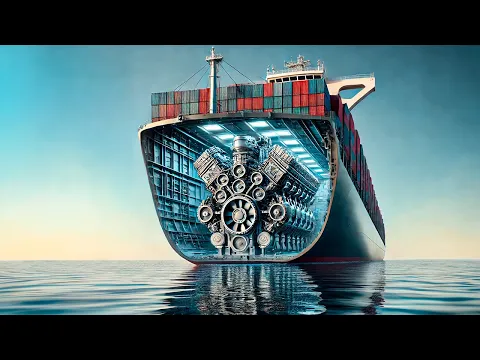

In addition to the tests already mentioned, there are other essential procedures that the ship must undertake before being deemed fit for the sea and real operations. Tests such as draft measurement, anchor testing, and engine resistance are also essential for the ship to be considered safe to operate. And we cannot forget the blackout test, where all systems are turned off to see how the ship reacts. These tests ensure that the vessel is fully prepared to meet the demands of the sea.
The engineering behind ship engines is a fascinating field that combines raw power with technical precision. It is thanks to this engineering that global trade flows, and products of all kinds reach us, driven by these giants of the seas.
Do you think the technology of ship engines will evolve even further with the use of alternative fuels, such as hydrogen or electric power?










Só faltou falar que a soma de todos os navios soltam mais CO2 que a soma de todos os carros do mundo, mas ninguém enche o saco deles porque sabem que CO2 num faz tanto mal quanto alarmado.
Qual o peso de uma **** Azul