





 Portuguese
  English
  Spanish
  4 min of reading
  0 comments


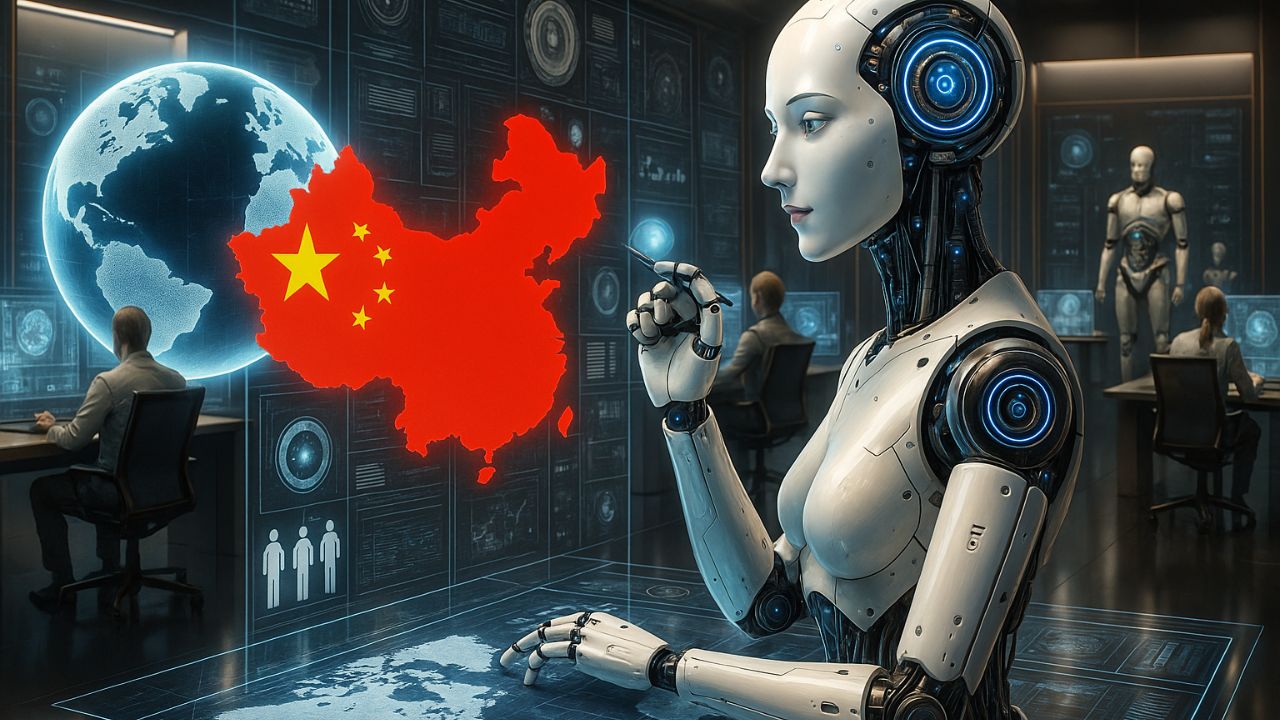
Without Realizing It, Giants Like Apple Financed And Trained The Competition That Today Threatens U.S. Technological Leadership.
The decision by companies like Apple to move their production to China has, for decades, been seen as a master move. The logic was simple: lower costs resulted in higher profits. However, this strategy ended up strengthening its future competitor. By manufacturing products for the West, China developed an industrial and technological capacity that now competes directly with the United States.
The Initial Strategy: Western Profits And The Industrial Rise Of China
To become a strong competitor to the United States, China relied on the help of Western companies. For decades, companies like Apple decided to move their production to the Asian country. The equation was clear: producing in China was cheaper, increasing profit margins.
However, American companies spent years nurturing their future competitors. China did not see this partnership as a simple offer of cheap labor. According to Kyle Chan, a researcher at Princeton University, the Asian country made a deliberate effort to use these companies to develop its own economy.
-
“No one will make us change the Pix,” says Lula after the US report.

-
Lula responds directly to Trump and says that Pix is from Brazil and will not change under pressure from anyone, after a report from the United States pointed out the Brazilian payment system as an American trade barrier.

-
Amazon has just announced a new fee on all deliveries, and your online purchases will become more expensive starting April 17, including for those buying from the United States here in Brazil.

-
He sold his share for R$ 4 thousand, saw the company become a giant worth R$ 19 trillion, and missed the opportunity of a lifetime.


“It was never just about saying: ‘OK, come produce here, get rich, and we all walk away happy’”, explains Chan. The requirement was a contribution to China’s development, involving not just Apple, but also giants like Volkswagen, Bosch, and Intel.
From World Factory To Direct Technology Competitor
The center of gravity of the global tech industry is shifting. The era in which the U.S. solely dominated the production of innovative technologies has ended. Today, competition is fierce across all sectors. Han Shen Lin, director of the consultancy The Asia Group, states that “it’s no longer a one-horse race“.
In the book “Apple in China”, Patrick McGee reveals that Apple’s decision to manufacture over 90% of its products in China brought immense profits but also financed and empowered Chinese manufacturers. Over time, Chinese suppliers replaced foreign ones in Apple’s production chain, from crystal parts to the chips themselves. An analysis from 2024 indicated that 87% of Apple’s suppliers have factories in China. The dependence is so great that the Chinese government could, if it wanted, halt Apple’s production.
The Battle For Artificial Intelligence And China’s Response To Sanctions
Artificial intelligence (AI) is the crown jewel in the tech competition. The U.S. seemed to lead with OpenAI’s ChatGPT. However, the Chinese chatbot DeepSeek emerged as a powerful competitor, developed at a fraction of the cost.
This advance challenged the U.S. restrictions on the export of advanced AI chips to China. Since 2022, the U.S. has prevented the sale of chips like Nvidia’s H100. For the Chinese, creating a competitive AI model became a matter of “patriotism”.
Measures like this, while effective in the short term to slow down China, push the country to develop its own technology and supply chain. A clear example is Huawei, which, after facing sanctions, developed its own operating system and chips.
China’s Competitive Advantages In The Tech Race
What are China’s advantages? First, a decisive industrial policy, which uses state resources to invest in strategic sectors for the long term, even without immediate profits. Additionally, the country fosters a “very, very fierce internal competition“, where regional governments support local companies, creating strong competitors at the global level.
Another crucial advantage is the “magnitude”. China’s large population allows for testing emerging technologies on a large scale. Han Shen Lin emphasizes that “China can test emerging technologies with its entire population”. This accelerates development in areas like pharmaceuticals, where recruitment for clinical trials is much faster.
The Future Of Leadership And The Risks For China
All of this places China in a privileged position to shape the future of technology. In cities like Shanghai, advanced technology is already seamlessly integrated into daily life, from AI-based logistics to digital payments.
However, this path presents risks. Without global collaboration and acceptance of international standards, China runs the danger of becoming isolated in a “echo chamber”. To avoid this, the country has been expanding its influence in the Global South with projects like the Belt and Road Initiative and seeks to dominate standardization organizations in entities like the UN.








-

3 pessoas reagiram a isso.