





 Portuguese
  English
  Spanish
  4 min of reading
  2 comments


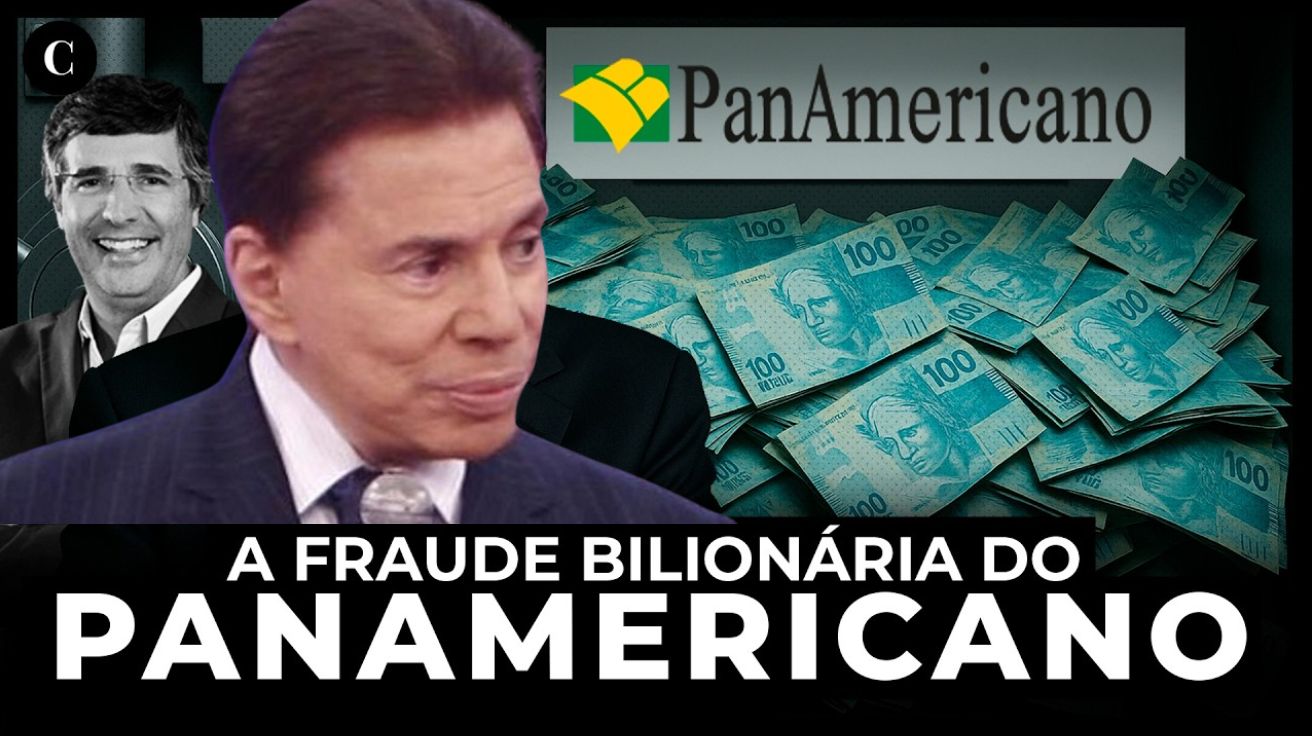

The Scandal Involving Silvio Santos’ Bank Revealed A Network Of Billion-Dollar Frauds, Hidden Deals And Direct Impacts On The Brazilian Financial Market, Shaking Institutions And Challenging Public Trust In Large Corporations.
It was 2010 when Brazil was surprised by a financial scandal that would deeply shake the image of one of the country’s greatest communicators and entrepreneurs: Silvio Santos.
Banco PanAmericano, which until then was part of the established Grupo Silvio Santos, revealed a billion-dollar shortfall caused by accounting frauds that went undetected by financial authorities for years.
The scandal, which revealed a hole of over R$ 2.5 billion in the institution’s coffers, resulted in one of the most dramatic episodes in the Brazilian financial market.
-
Sleeping at different times each day can be a bomb for your heart and even double your risk of having a heart attack.

-
Without help and without heavy machinery, a woman builds a house from scratch with stone, wood, and cement, erects a chimney, creates a complete leisure area, and transforms an empty lot into her dream home.

-
Couple transforms abandoned house after years of being closed; residence was overgrown with weeds, had a green pool, and a deteriorated structure in the interior of Rio de Janeiro.
-
Hidden marks on the walls of the site associated with the Last Supper of Jesus for centuries have been deciphered in Jerusalem, revealing medieval inscriptions left by pilgrims, European nobles, and travelers from the Middle East.

To avoid the bank’s bankruptcy and a domino effect on the banking system, the entrepreneur had to offer part of his empire as collateral for financial aid.
What Happened To The Bank Of The Owner Of SBT?
Founded in 1969, Banco PanAmericano grew focused on consumer credit, especially in vehicle financing and payroll loans.
Throughout the 2000s, with the growth of the middle class and the increasing demand for credit, the bank aggressively expanded its operations.
However, between 2007 and 2010, executives at the institution adopted fraudulent accounting practices to mask losses and present positive results.
These frauds primarily involved the sale of credit portfolios to other institutions, without removing the amounts from the balance sheet.
In other words, the loans were sold, but PanAmericano continued to register these credits as assets, artificially inflating its results and deceiving investors, regulators and the market itself.
When The Shortfall Came To Light
In November 2010, the Central Bank identified inconsistencies in the bank’s numbers, and the fraud was officially revealed.
The initially estimated shortfall of R$ 2.5 billion soon proved to be even larger, reaching over R$ 4.3 billion, according to subsequent investigations.
The Credit Guarantee Fund (FGC), to avoid a widespread loss of confidence in the banking system, acted quickly and injected emergency funds to save the bank.
Upon learning of the seriousness of the situation, Silvio Santos offered around R$ 2.5 billion in personal and business assets as collateral to the FGC, including assets such as SBT, Jequiti Cosméticos, Liderança Capitalização, and Lojas do Baú.
Emergency Sale To BTG Pactual
Despite efforts to restructure the institution, it became clear that PanAmericano would not be able to recover without deep changes.
In January 2011, the bank was sold to BTG Pactual for R$ 450 million.
With the transaction, Grupo Silvio Santos permanently exited the banking sector.
BTG took over the operation with the commitment to restructure the institution and restore market confidence.
Later, the institution was rebranded as Banco PAN, focusing even more on the digital segment and low-income audiences.
In 2021, Caixa Econômica Federal sold its stake in Banco PAN to BTG Pactual, which became the majority shareholder of the institution.
Today, PAN is one of the leading fintechs in the country, with a strong presence in payroll loans, vehicle financing and digital services.
Investigations And Convictions
With the scandal exposed, a major investigation was initiated by the Federal Police and the Federal Public Ministry.
In 2012, 17 people were indicted for crimes such as fraudulent management, ideological falsehood, and money laundering.
Among the defendants were 14 former bank directors, as well as accountants and other collaborators who actively participated in manipulating the numbers.
Convictions began to be announced in 2018.
Seven former directors were sentenced to prison terms ranging from 5 to 12 years.
The fines imposed totaled more than R$ 970 thousand.
According to the records, the executives illegally received over R$ 100 million in bonuses and other payments even during periods when the bank was incurring losses.


Was Silvio Santos Held Responsible?
Although he is the owner of the bank, Silvio Santos was not directly held responsible for the frauds.
The investigations made it clear that he did not participate in the schemes and did not even have technical knowledge or direct involvement in the institution’s accounting management.
However, his image suffered damages and the losses severely affected the structure of the business group.
In addition to losing the bank, the group sold or liquidated several smaller companies, such as Lojas do Baú and stakes in other areas.
Still, over time, the group recovered, and today SBT and Jequiti remain as established brands.
A Warning For The Financial System
The PanAmericano case became a classic example of how a lack of governance, transparency and effective oversight can compromise even the most traditional institutions.
The episode exposed weaknesses in audit mechanisms and banking supervision at the time, as well as raising discussions about the accountability of major shareholders.
Since then, the Central Bank has improved its control and monitoring methods, and the FGC’s actions have been seen as an international benchmark.
The scandal also contributed to greater rigor in internal and external audits at Brazilian financial institutions.
What Have We Learned From All This?
Beyond the billion-dollar figures and the involvement of an icon of Brazilian television, the case of Banco PanAmericano reminds us that trust is the fundamental pillar of the financial system.
When it is broken, the impacts are devastating.
Even renowned entrepreneurs like Silvio Santos are not immune to the side effects of mismanagement, negligence, or fraud committed by subordinates.
Today, more than a decade later, the story is still studied in economics, law, and administration courses as an example of how poor governance can destroy years of reputation and work.








O Banco Pan é a maior vergonha deste país.
Hoje em dia está pior como no INSS tem bancos que fazem empréstimo consignado do aposentado sem ele saber..com a biometria entre outros eles usam a mesma do primeiro empréstimo para fazer outro sem os aposentados saber