





 Portuguese
  English
  Spanish
  4 min of reading
  69 comments


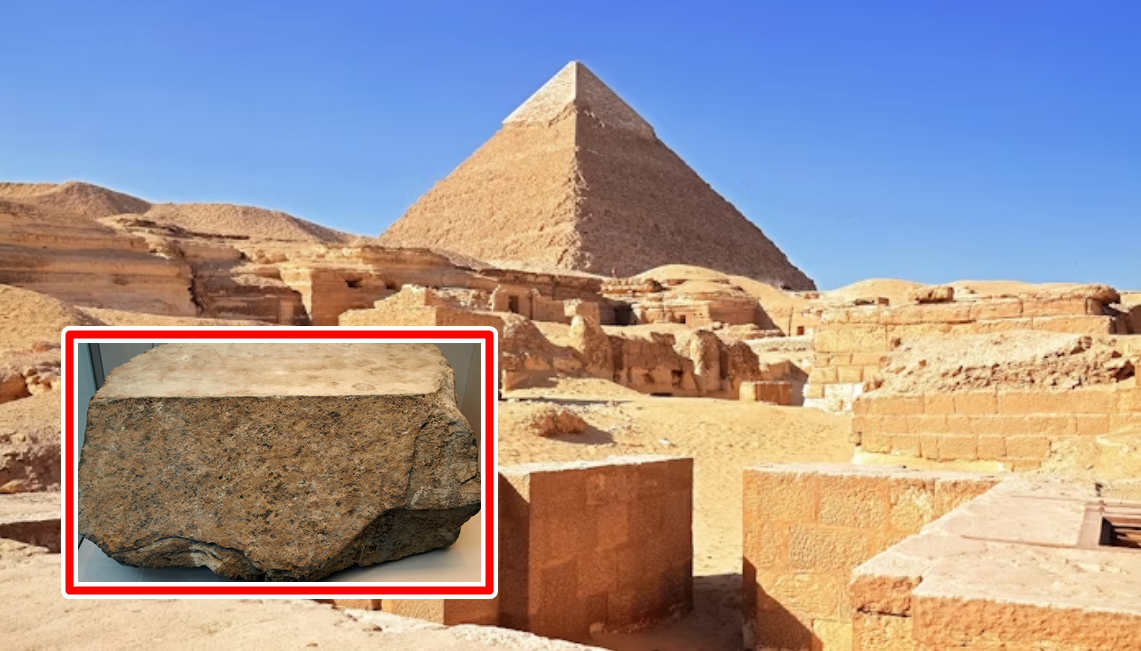


The Great Pyramid of Giza, One of the Seven Wonders of the Ancient World, is Made Up of 2.3 Million Blocks
The Great Pyramid of Giza, located on the west bank of the Nile River in Egypt, still stands as one of the most impressive monuments in human history, if not the largest.
Built over 4,500 years ago during the reign of Khufu, this architectural marvel of the Fourth Dynasty still fascinates scholars and visitors with its grandeur and GIGANTIC mysteries.
The Dimension of the Greatness of the Great Pyramid of Giza
Originally, the Great Pyramid of Giza stood 147 meters tall, but due to erosion and the removal of its polished limestone casing, the structure currently reaches 137 meters.
-
What if the Sun disappeared suddenly? Simulation shows Earth in darkness within minutes, extreme cold, and rapid collapse of life on the planet.

-
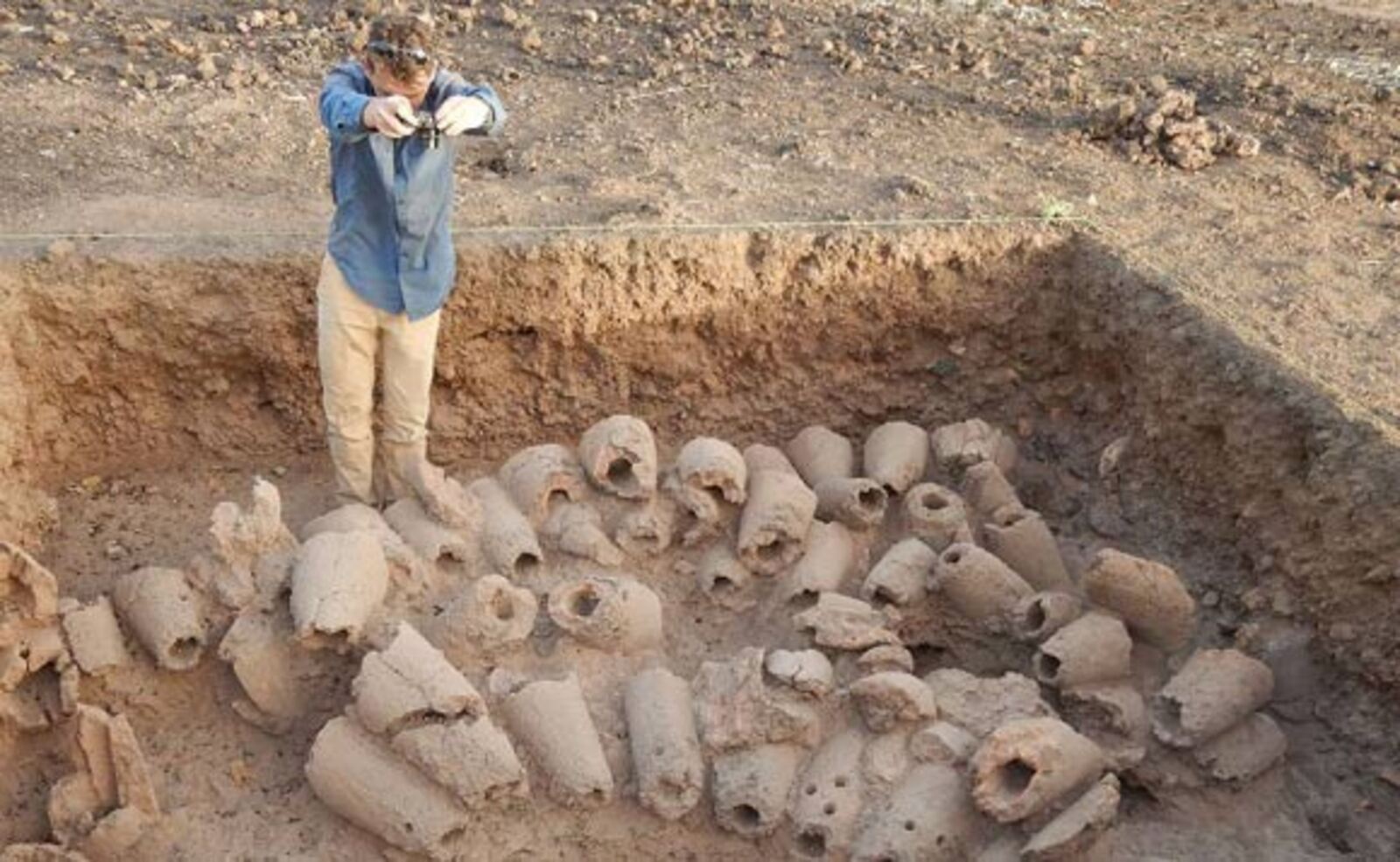
A 2,400-year-old iron foundry has been discovered in Senegal with 100 tons of slag, 35 furnace bases, and signs of nearly eight centuries of continuous metallurgical activity.
-
Four humans are flying towards the Moon inside the Orion capsule launched by the SLS rocket, and on April 6, Artemis II will disappear behind the far side of the Moon without communication with Earth for nearly an hour.

-
Worlds covered by water, atmospheres filled with hydrogen, and the possibility of life beyond Earth: ocean planets are rewriting the map of cosmic search and forcing scientists to rethink where to look.


Despite this reduction, its immense base, measuring 230 meters on each side, maintains the monument’s grandeur.
The precise alignment to the four cardinal points and the angle of 51.87° of its sides demonstrate the technical skill of the ancient Egyptians.
Constructed with 2.3 million stone blocks, weighing a total of about 5.75 million tons, the pyramid is a masterpiece of engineering.
The core is made of yellowed limestone, while the internal passages and the burial chamber use granite and finer limestone, reflecting precision in the use of materials.
The Internal Structure
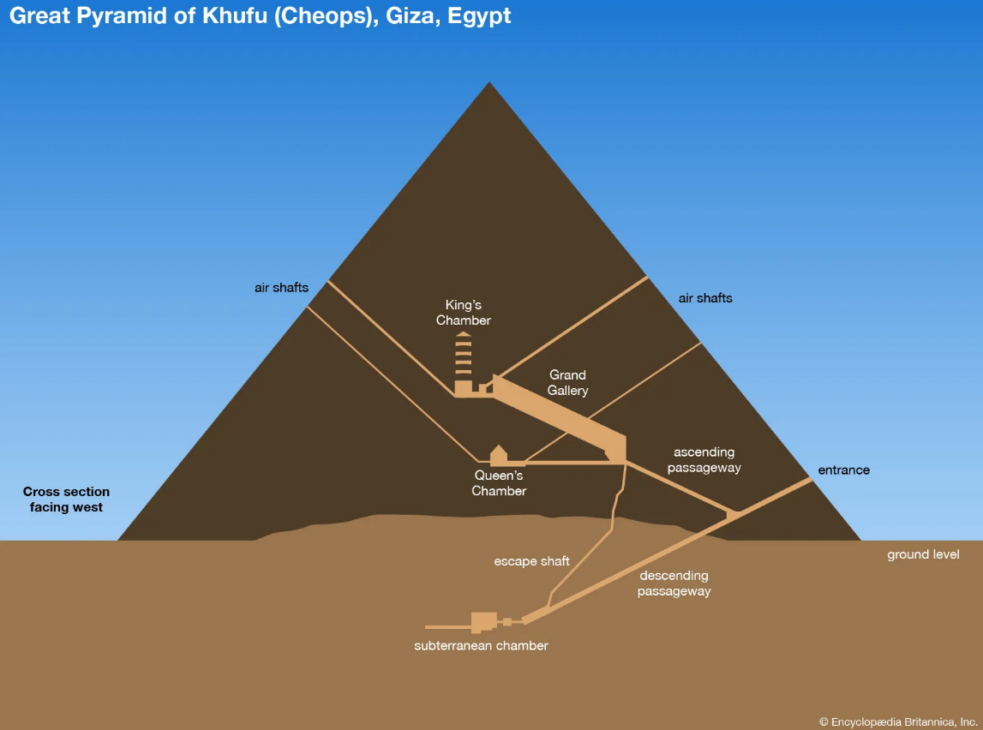
While the Great Pyramid of Giza impresses with its external scale, its interior is surprisingly simple in terms of open spaces.
An entrance on the north side leads to a descending corridor that takes you to an unfinished subterranean chamber.
This rudimentary space contrasts with the sophisticated ascending passages that extend to the Grand Gallery and the Queen and King chambers.
The Grand Gallery, with its 46 meters in length and sloped design, is one of the most intriguing features.
Above it, the King’s Chamber, entirely lined with granite, serves as the symbolic and functional core of the monument. Two narrow shafts extend from this chamber toward the exterior, but their purpose remains uncertain, attributed to either religious or ventilation purposes.
Another notable aspect is the granite slabs above the King’s Chamber, placed to support the colossal weight of the stones above.
This design demonstrates an advanced understanding of structural engineering for the time.
On the other hand, the unfinished subterranean chambers suggest that some parts of the construction may have been abandoned or re-evaluated during the project.
The Construction
The construction of the Great Pyramid of Giza continues to be a subject of debate among historians and archaeologists.
The most accepted theory suggests that the Egyptians used inclined ramps made of bricks and sand to raise the stone blocks.
These ramps, which increased in height as the pyramid was built, allowed for the transportation of stones using sledges, rollers, and levers.
The ancient historian Herodotus reported that 100,000 men participated in the construction, but modern evidence indicates that a smaller number, around 20,000 permanent workers, may have been sufficient.
These laborers, accompanied by support teams such as bakers and doctors, lived in an organized community near the site. The hypothesis of seasonal labor, with farmers contributing during the Nile’s floods, is also widely accepted.
Archaeological Discoveries
Since the 19th century, excavations have revealed fascinating details about the Great Pyramid of Giza. In 1830, internal inscriptions were discovered, confirming that the pyramid belonged to Khufu.
Later, burial boats were found buried near the structure, reinforcing the symbolic connection between the pharaoh and his afterlife journey.
However, the king’s tomb and its treasures have never been located. Many believe that tomb raiders may have breached the pyramid, taking away remains and valuable objects.
Nonetheless, technological advances, such as 3D scanners, have allowed for non-invasive investigations.
In 2023, an important discovery revealed a hidden corridor, fueling speculation about secrets still concealed within the monument.
A Timeless Symbol
The Great Pyramid of Giza transcends its original function as a royal tomb.
Today, it stands as a symbol of human ingenuity and the capacity for achievement even with limited resources.
Every stone, every detail in its construction reflects a combination of collective effort and technical innovation that still challenges modern understanding.
Despite the centuries, the pyramid endures as a testament to the power and legacy of the ancient Egyptian civilization.
Its walls not only guard mysteries but also echo stories of a people who transformed stone and sand into eternity.
Thus, the Great Pyramid of Giza continues to be not just a landmark in the Egyptian landscape but an immortal reminder of what humanity can achieve.







Querem saber como foi construída?
Assistam no YouTube o documentário
The great pirâmide 2019 , tá tudo lá e mais.
Isso é surpreendente 😲
Concordo com o leopard