





 Portuguese
  English
  Spanish
  4 min of reading
  0 comments


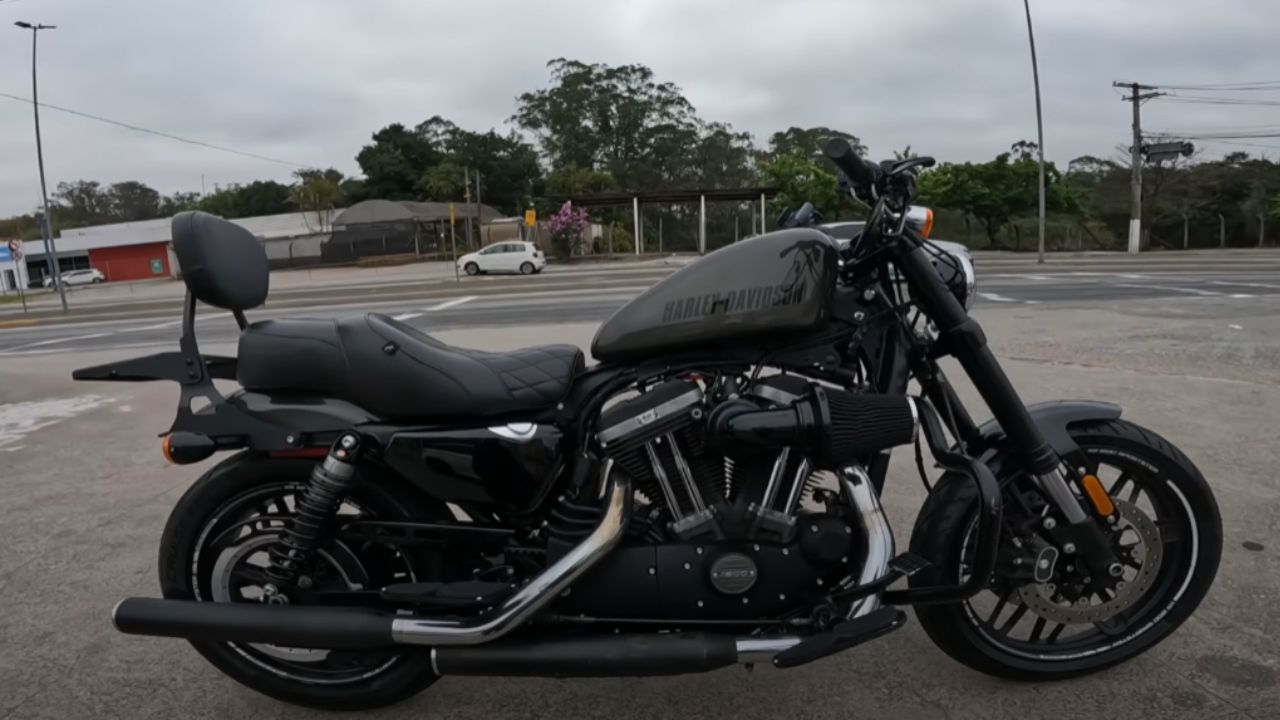
Modified XL 1200 CX Model Gains 10% Power and Achieves 11.9 kgfm Torque, but What Stands Out is the “Roar that Demands Attention”.
A Harley-Davidson Roadster XL 1200 CX, model 2018, is redefining performance boundaries for the Sportster family in Brazil. Originally equipped with 70 horsepower, the motorcycle underwent a Remap Stage 1 that raised its power to 77 horsepower measured at the wheel. This technical modification not only increased power but drastically transformed torque, jumping from 9.6 kgfm to an impressive 11.9 kgfm.
The result is a machine that delivers acceleration described as a “guaranteed hit” and a threatening roar, courtesy of a new Customer exhaust system and a K&N air filter. While the Roadster 1200 CX had a brief stint in the Brazilian market (2017-2018), this specific unit demonstrates the maximum potential of the Evolution engine when optimized, going well beyond the factory’s original proposal.
What is the Remap Stage 1 on the Evolution Engine?
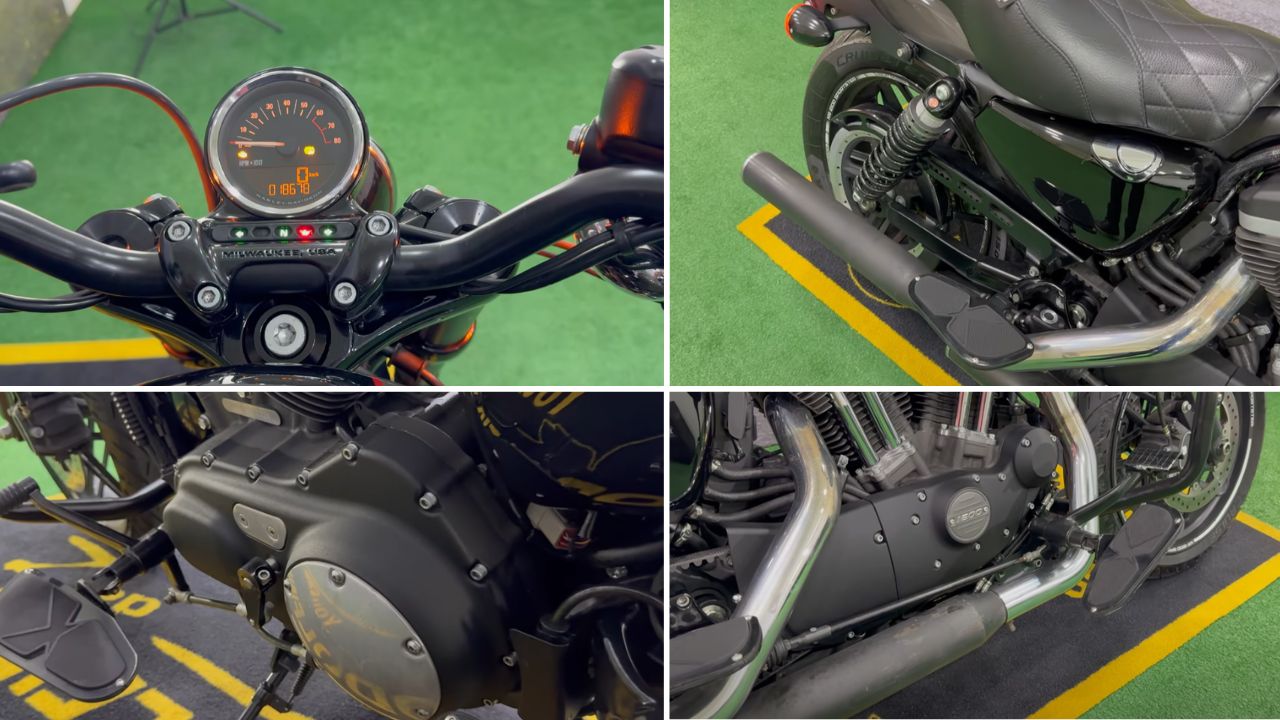
The heart of this Harley-Davidson Roadster is the iconic Evolution (EVO) engine of 1202 cc (73.4 cubic inches). This 45° V-Twin, with OHV valve train and two valves per cylinder, is known for its robustness, but Stage 1 unlocks its true potential. The “Stage 1” is not just the installation of a chip; it is the fundamental optimization of the engine’s “breathing”, involving three essential components.
-
Less than a Tera TSI, up to 710 km of range and charging in 9 minutes: the new BYD Song Ultra expands the Chinese brand’s bet on increasingly faster, more technological, and competitively priced electric SUVs.

-
With a 1.0 engine producing 75 hp and costing less than R$ 70,000, Fiat’s car returns to the podium as the cheapest in the country; a temporary promotion for the 2026 Like version reduces the price of the Fiat Mobi.
-
With a mild hybrid system of 48 V, 176 hp and a price of R$ 175,990 in the Sahara version, the new Jeep Renegade changes mostly on the inside, improves slightly in fuel consumption, and remains almost the same car.
-
With a 293.5 cm³ engine and a range of up to 400 km with a 14.1-liter tank, the Honda CB 300F Twister 2026 has up to 24.7 hp, an initial price of R$ 25,150, and already exceeds R$ 29,000 in the Fipe Table.

First, a high-flow air filter (in this case, a large K&N model) allows for much greater air intake. Second, a less restrictive exhaust system (Customer 2×2 model) facilitates the expulsion of gases.
Finally, the remapping of the electronic injection (Remap) adjusts the air-fuel mixture to this new configuration. Without this reprogramming, the engine would not take advantage of the new components. This 2.3 kgfm increase in torque is what transforms acceleration and the bike’s response at low and medium RPMs.
The Differentiators of the Roadster Version (CX)
The XL 1200 CX Roadster, launched globally in 2016 and sold in Brazil only between 2017 and 2018, was already a differentiated model within the extensive Sportster family (XL, or “Next Level”). While other bikes in the lineup focused on classic custom aesthetics, the Roadster (CX, “Cruiser Extreme”) was factory designed with a more sporty and aggressive stance, focused on handling.
Its main differentiators from the factory include a upside-down front suspension (43 mm fork), something rare in the Sportster lineup, and a front brake system with dual 300 mm discs. Additionally, its ergonomics were unique: straighter handlebars and centralized and elevated footpegs.
Interestingly, this original position of the footpegs is a common drawback, as many riders report hitting their shins when maneuvering the bike while stationary, a problem that the owner of this unit solved by installing forward-mounted platform footpegs.
The Reality of Extra Power
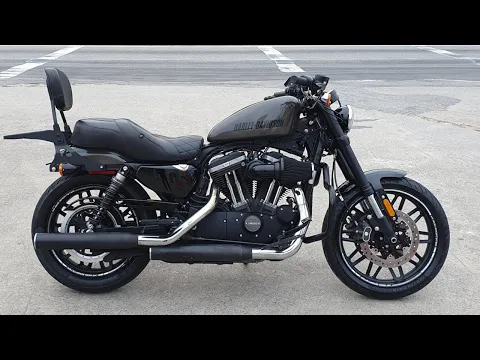

With 77 hp and 11.9 kgfm of torque in a package that weighs 259 kg in running order, the performance is visceral. The original top speed, electronically limited to around 190 km/h, is easily surpassed with the new configuration, according to reports from those who have ridden the modified model. The five-speed transmission must handle a much more abrupt power delivery, transferred to the rear wheel by the brand’s traditional toothed belt.
Naturally, “a horse that runs drinks”. The fuel consumption of this modified Harley-Davidson Roadster depends entirely on the rider’s throttle hand. In aggressive riding, exploring the new torque, the bike can record low averages, ranging from 8 to 12 km/liter.
However, at cruising speed, riding smoothly, the optimized Evolution engine can still be efficient, exceeding 20 or 22 km/liter.
The Cost of Performance and the “Harley Heat”
Despite the elevated performance, the bike retains the intrinsic characteristics of the Sportster platform, which can be considered drawbacks. The vibration, a trademark of the V-Twin, is present.
Another critical point is the heat: the rear cylinder, air-cooled, generates intense heat that bothers the rider’s leg in urban traffic or on hot days. The mixed panel (analog and digital) is beautiful but falls short due to the absence of a fuel level gauge, only having a reserve light.
The rear brake (single 300 mm disc) is described as imprecise, although the front brake (dual disc with ABS) is praised for its braking power. However, the biggest point of concern is the maintenance cost. The replacement of original Harley-Davidson parts in Brazil is notoriously expensive, a factor that weighs in the purchasing decision of a model that, according to the FIPE table, is valued at around R$ 50,200 (used model).
The transformation of this Harley-Davidson Roadster 1200 CX proves that the Evolution engine still has much to offer. The combination of Stage 1 with comfort accessories, such as the Comfort seat and forward footpegs, creates a machine that is both brutal in acceleration and viable for touring, correcting critical points of the original design.
The question that remains is: is it worth investing in a Remap that increases power so much, or does this compromise the long-term reliability of the package?








-

-

8 pessoas reagiram a isso.