





 Portuguese
  English
  Spanish
  5 min of reading
  0 comments


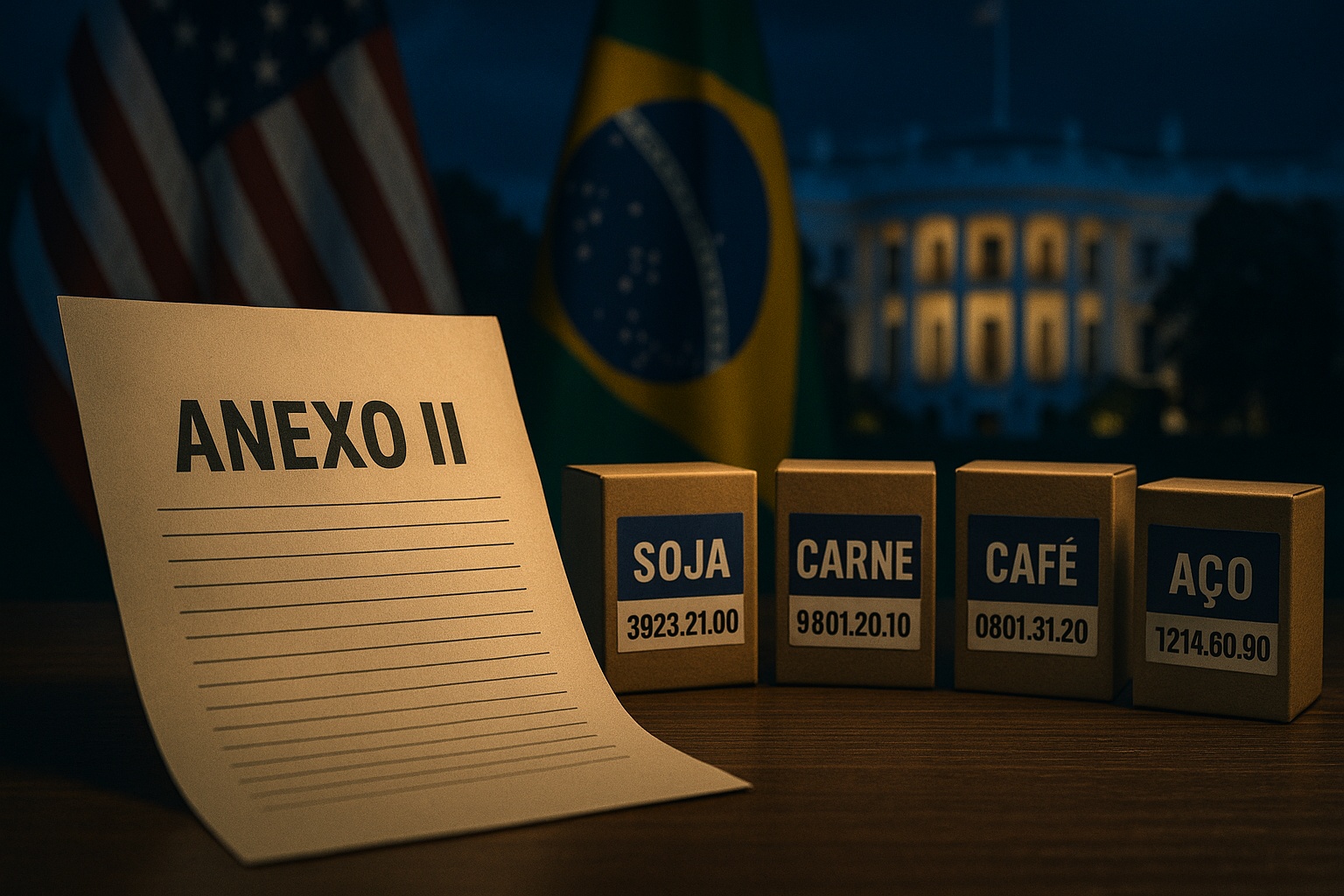
The Secret List of Appendix II of the White House Defines Who Escapes the 50% Tariff of the US. Find Out Which Brazilian Products Entered, Who Was Left Out, and the Billion-Dollar Impact of This Dispute.
The United States surprised the world in September 2025 by announcing a 50% tariff on products from countries not considered “aligned partners.” The decision, signed by President Donald Trump, hit Brazil hard and raised alarms in agribusiness, industry, and diplomacy. But behind the headlines about coffee, cocoa, and spices that entered exemption, there is a fundamental piece of this machinery: the Appendix II of the White House Executive Order, a technical document that defines who escapes and who pays the bill. It is this list that, in practice, decides winners and losers in the new trade war.
What Is Appendix II and Why Does It Matter
Unlike major political statements, Appendix II functions as a detailed tariff map, listing hundreds of Harmonized Tariff System (HTSUS) codes that are beyond the reach of the tariff.
It is a technical document, but with a billion-dollar impact, because each number there represents an entire production chain. For Brazil, the big question is: which exports were included and which were left out.
-
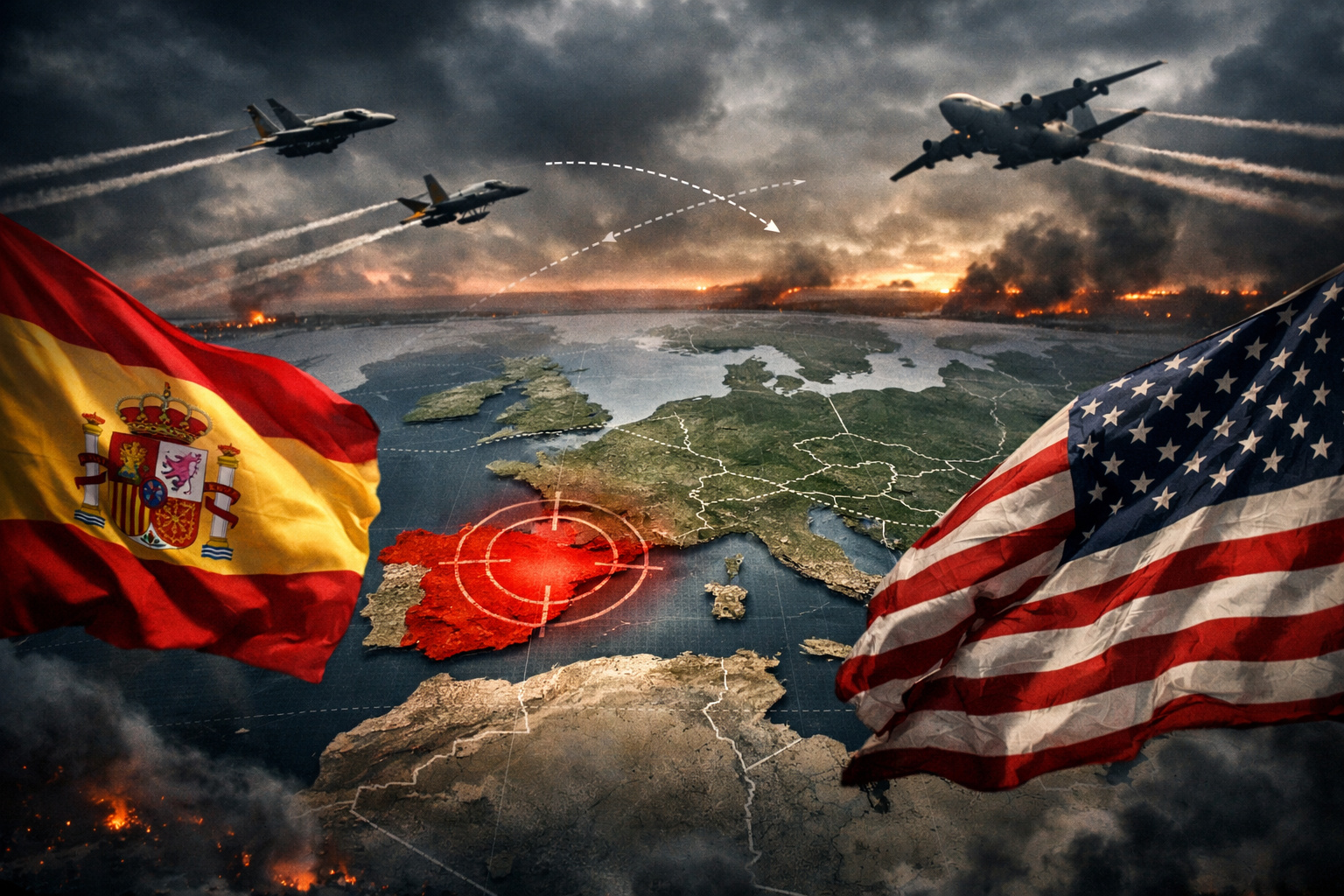
Spain challenges the USA and closes its airspace for operations against Iran, raising global tension and provoking the threat of a trade rupture.
-
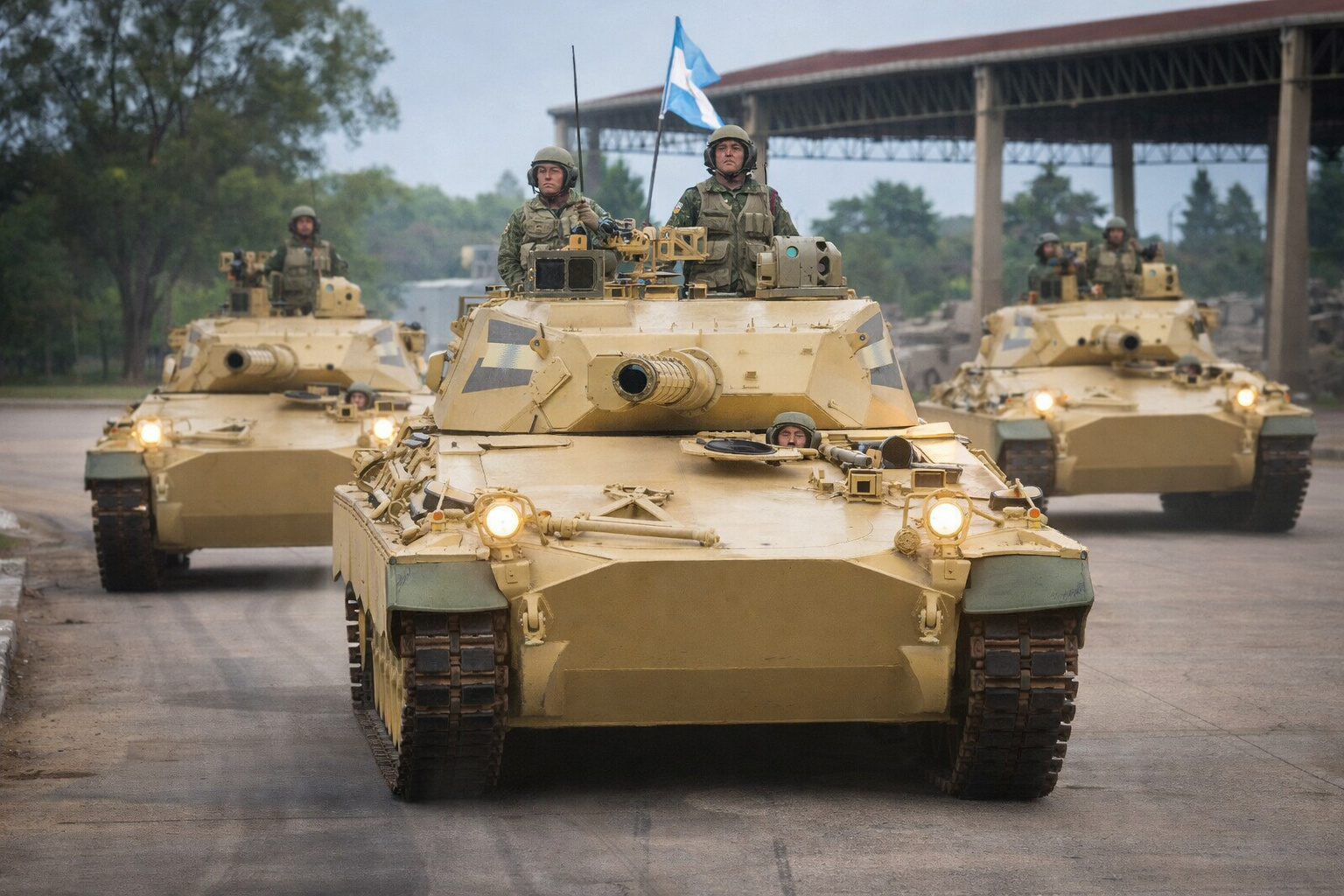
While no other country manufactures tanks in Latin America, Argentina activates the TAM 2C-A2 and raises a curiosity about the technological lag in the region.
-
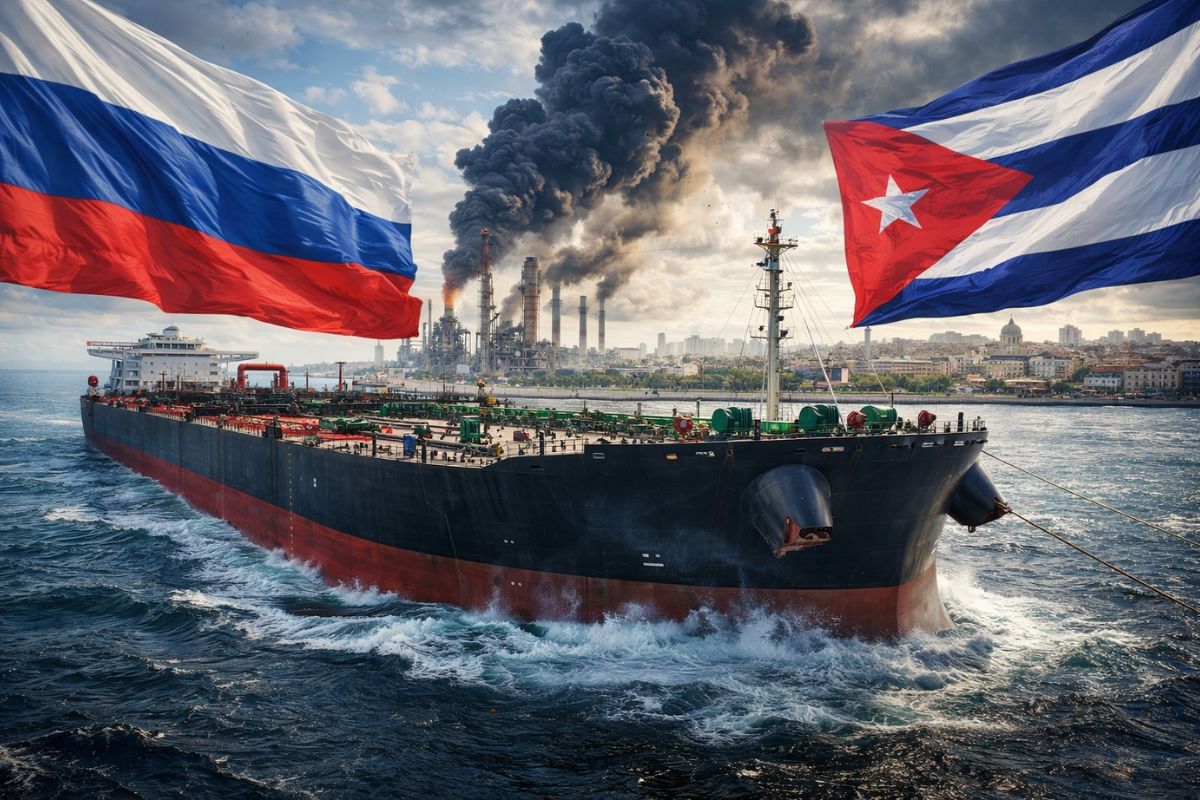
A Russian ship with 730,000 barrels of oil has just arrived in Cuba while Mexico negotiates fuel sales through private companies: the communist island is desperately seeking alternatives after losing its supply from Venezuela due to American military action.
-
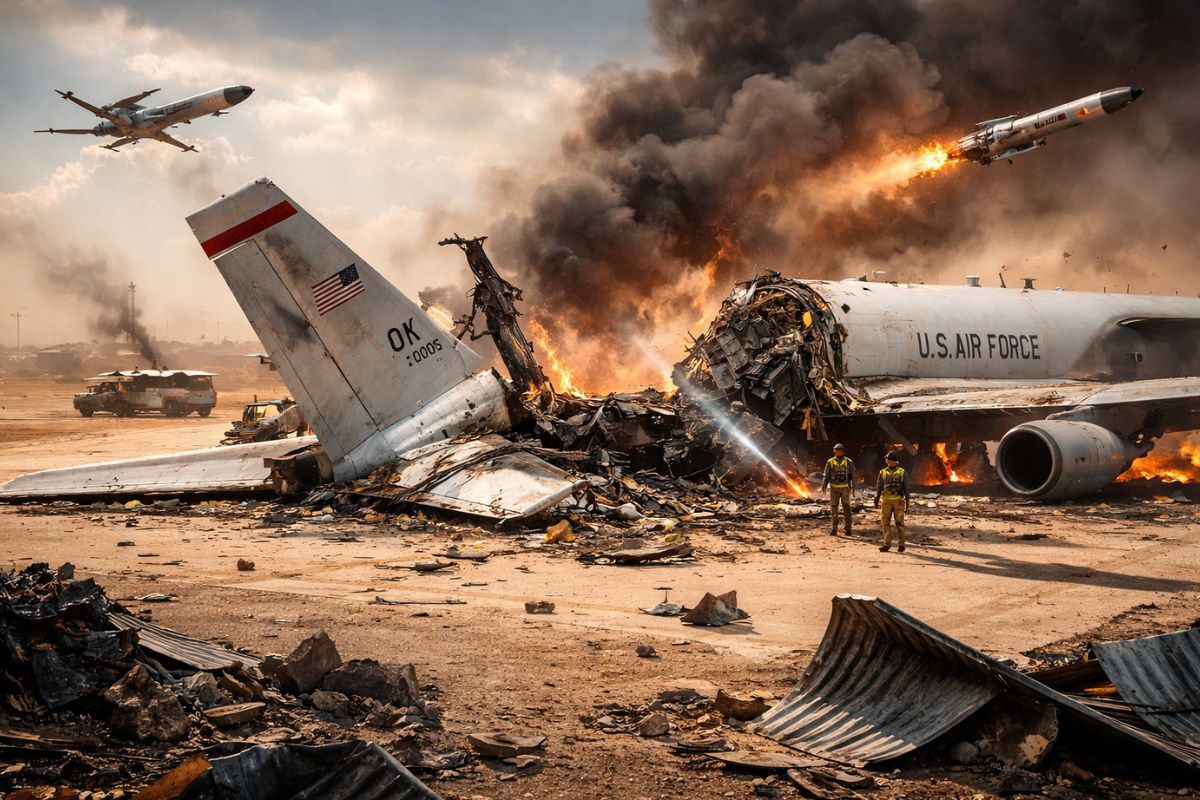
Iranian drones and missiles destroyed a 270 million dollar American spy plane in Saudi Arabia, splitting the E-3 Sentry aircraft in half and injuring 12 military personnel in an attack that exposes the vulnerability of U.S. bases in the Persian Gulf.
In the case of coffee, cocoa, and spices, the related codes were included, but sectors such as sugar, ethanol, steel, and footwear remain exposed. This selection is not random — it reflects strategic interests of the US, preserving products of greater internal relevance or that serve as tools of diplomatic bargaining.
Brazilian Products Included in the Exemption List
According to the document published on the White House website and confirmed by specialized media such as Just Food and Reuters, some Brazilian products gained a reprieve thanks to their inclusion in Appendix II. Among them are:
- Green and Roasted Coffee – Brazil’s main agricultural export item, generating more than US$ 8 billion annually.
- Cocoa and Derivatives – a sector that had been struggling with logistical costs and is now breathing easier.
- Selected Spices – including pepper and cinnamon, in smaller volumes, but with added value.
- Pulp and Ferro-Nickel – industrial sectors that had tariffs partially lifted after pressure from multinationals operating in the US.
These exceptions represent a partial victory for Brazil, but do not eliminate the risk of losses, as most exports remain vulnerable to the tariff.
Who Was Left Out and Could Lose Billions
On the contrary, the list also leaves out entire sectors that are vital to Brazil’s trade balance. The main losers are:
- Sugar and Ethanol – highly competitive in the global market but seen as a direct threat to American corn and biofuels production.
- Steel Industry – Brazilian steel, historically a target of trade disputes, remains under heavy tariffs.
- Footwear and Textiles – an industry already struggling with Asian competition and now facing a new hurdle in the US.
- Fresh Fruits and Seafood – açaí, nuts, mangoes, and fish were left out of the exemption list and are expected to feel immediate impact.
It is estimated that, in these segments alone, losses could exceed US$ 5 billion per year if the tariff remains unchanged.
Billion-Dollar Impact of Tariff Codes
Each line of Appendix II hides a dispute that can move billions. For example, the code for green coffee alone accounts for more than 30% of Brazil’s agricultural exports to the US.
Sugar, which was not included, represents a share that could generate Brazilian retaliation at the same level. In other words, the list is not merely technical: it is a bargaining weapon.
Brazilian diplomats assess that the US uses the document as a form of “privilege wallet,” granting favors to countries that align with its foreign policy and leaving others under economic pressure.
For Brazil, which seeks to expand its geopolitical independence, this creates a dilemma: give in to secure market access or resist and face losses.
The Role of Brazilian Diplomacy
As exporters calculate their losses, Itamaraty is trying to negotiate a way out. The goal is to obtain “aligned partner” status, a condition that would open the door for the inclusion of more Brazilian products in Appendix II. But the process is not straightforward: it involves political and strategic concessions that are not yet clear.
Brazilian diplomacy is also considering resorting to the World Trade Organization (WTO) to contest the measure, arguing that the tariff violates multilateral rules.
However, even a successful process would take years, and immediate losses are already being felt by producers and exporters.
A Dispute That Redefines Global Trade
Appendix II of the White House is more than a list of codes: it is the symbol of a new phase of international trade, where politics defines who sells and who buys.
Brazil, the largest exporter of agricultural products on the planet, is at the eye of the storm. If it can expand its participation in the exemption list, it may emerge stronger.
If it remains excluded, it will see competitors take up space in one of the most profitable markets in the world.
The trade war surrounding this appendix promises to be long, with effects that go far beyond numbers. It disrupts production chains, generates diplomatic uncertainties, and could even alter the geopolitics of global agribusiness.





-

-

2 pessoas reagiram a isso.