





 English
  Francês
  Alemão
  Italiano
  Japonês
  Norueguês
  Portuguese
  Spanish
  3 min of reading
  0 comments


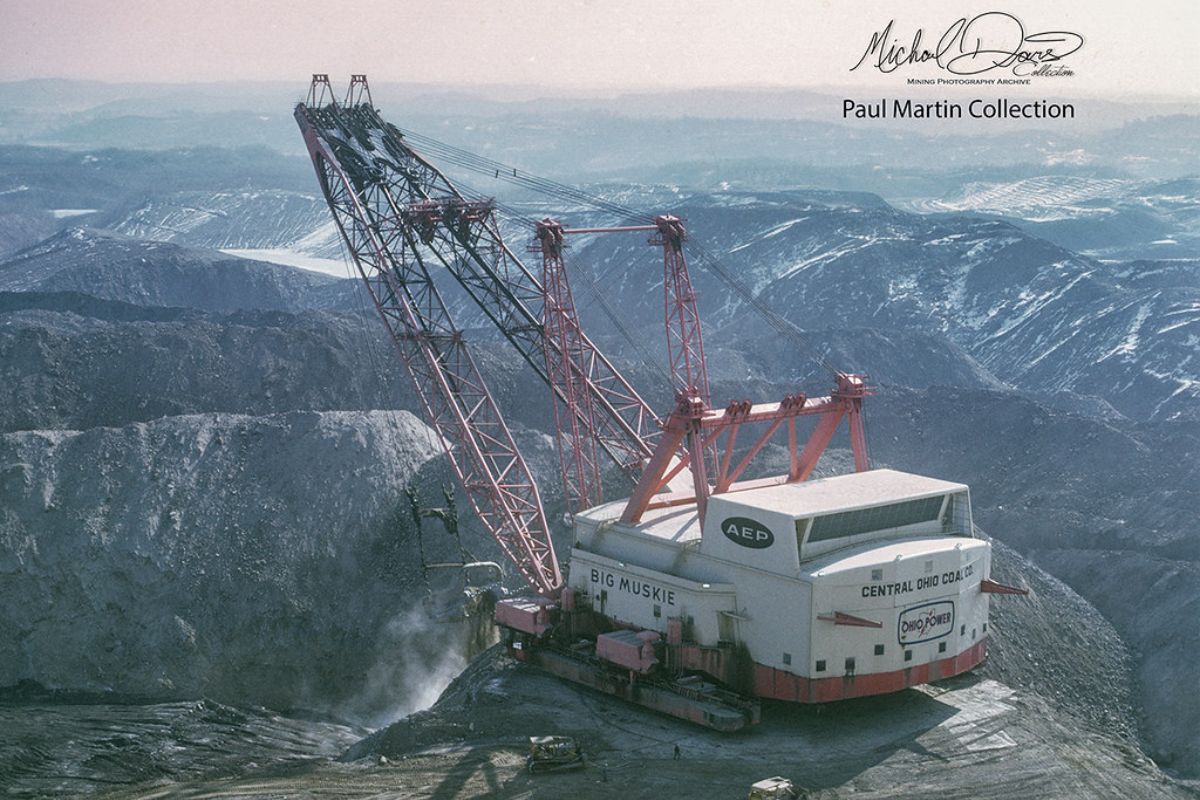
Meet the Bucyrus-Erie 4250-W, the Largest Dragline in the World Ever Built. An Engineering Marvel That Moved Mountains and Left an Indelible Mark on Industrial History.
Big Muskie, officially designated Bucyrus-Erie Model 4250-W, holds the impressive title of Largest Dragline in the World. This monumental machine was not just an engineering feat; it redefined the scale of mining in the 20th century.
Its construction represented a logistical and technical prowess. Its operation, for over two decades, was a demonstration of unmatched strength and capacity. Even after its dismantling, the legacy of Big Muskie as an industrial and technological icon endures.
Building the Largest Dragline in the World
In the 1960s, the Central Ohio Coal Company (COCCo), a subsidiary of American Electric Power (AEP), faced a challenge. The rising demand for energy required more coal. To achieve this, enormous layers of earth and rock, the overburden, had to be removed to expose the valuable Meigs Creek No. 9 coal. The solution was the creation of an unprecedented machine.
-
Brazil extracts 26.3 million tons of ore from what was previously treated as waste, transforming residues into wealth, producing over 3 million tons of sand, and demonstrating how national mining is relearning to generate value.

-
A $3.5 billion megaproject in Latin America pumps desalinated seawater at 1,050 liters per second over 194 km to keep a copper supermine in the Andes operational for another 20 years.
-
A hidden mine in the Andes valued at nearly R$ 1 trillion is starting to attract global attention, containing copper, gold, and silver, and raises an intriguing question: why do Argentina and Chile need to act together to exploit this gigantic wealth?
-
A silent discovery in the interior of Bahia could change the future of energy in Brazil: a uranium reserve in Lagoa Real has an estimated capacity to produce 400 tons per year and is already attracting the attention of energy sector specialists.

The Bucyrus-Erie Company, a renowned manufacturer of heavy equipment, accepted the challenge. The result was the Model 4250-W, which would earn the nickname Big Muskie. Its assembly took place directly at the Muskingum mine site in Ohio, between 1967 and 1969. This process, which lasted over two years, involved transporting components in hundreds of train cars and trucks, requiring about 200,000 hours of work.
The Impressive Dimensions of Big Muskie
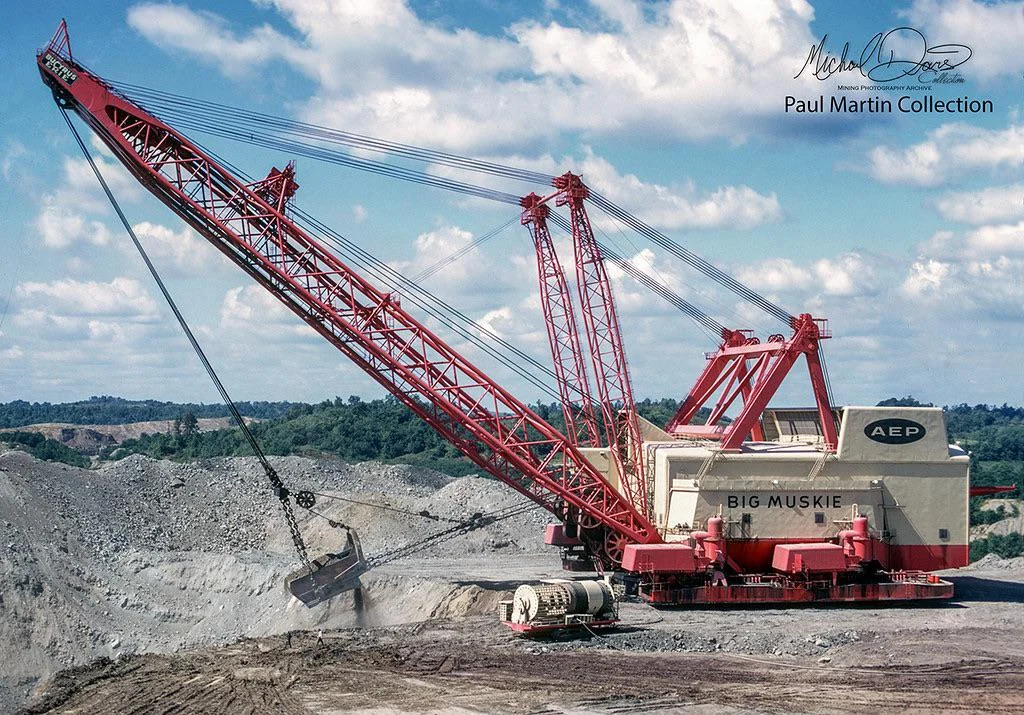
The dimensions of Big Muskie were truly colossal. Its height reached between 222 and 240 feet, equivalent to a building of approximately 22 stories. Its operational weight was about 13,500 short tons (approximately 12,250 metric tons). The boom, from which the bucket was suspended, measured an impressive 310 feet in length.
The bucket of Big Muskie was its most iconic tool: with a capacity of 220 cubic yards, it could move 325 tons of material at once. When empty, the bucket weighed 240 tons. To operate, this largest dragline in the world was fully electric, powered by a voltage of 13,800 volts and consuming electricity equivalent to a city with about 27,500 residences.
Big Muskie in Action at the Muskingum Mine
The main mission of Big Muskie was to remove the overburden, exposing the coal layers for smaller machines to extract. It operated tirelessly at the Muskingum mine from May 1969 until January 1991. It worked 24 hours a day, 364 days a year.
Throughout its 22 years of service, Big Muskie moved more than 600 million cubic yards of material – a volume that exceeds double the original excavation of the Panama Canal. This monumental effort uncovered approximately 20 million tons of coal. Despite its size, it was operated by a relatively small team, consisting of five to seven highly skilled individuals per shift.
Strength and the End of an Era for the Largest Dragline in the World
The gigantism of Big Muskie, which was its greatest strength, paradoxically became its main vulnerability. Changes in environmental regulations, such as the Clean Air Act in the U.S., reduced the demand for high-sulfur coal that it extracted. Additionally, operational costs, especially electricity, became prohibitive.
New mining technologies, smaller and more efficient, also emerged. Big Muskie was decommissioned in January 1991. Despite efforts to preserve it as a museum, costs were astronomical. In 1999, the final decision was its dismantling for scrap.
Legacy of Big Muskie
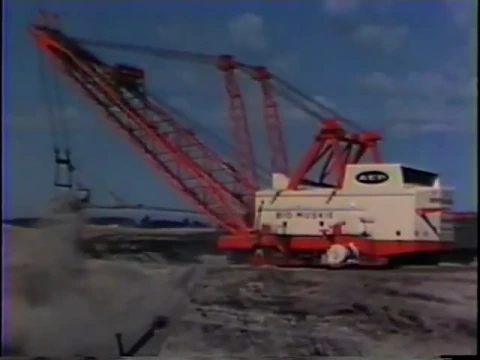

Although it no longer exists in its original form, the legacy of the largest dragline in the world is multifaceted. Its iconic 240-ton bucket has been preserved. Today, it is the centerpiece of the Miner’s Memorial Park in Ohio, a testament to its industrial grandeur.
Perhaps the most remarkable aspect of its legacy is the environmental recovery of the vast area where it operated. Much of the former Muskingum mine has been transformed into “The Wilds”, a renowned wildlife conservation center covering 10,000 acres. Another portion became the Jesse Owens State Park, offering public recreation. The story of Big Muskie is, therefore, a powerful symbol of human engineering, the industrial capability of an era, and the impressive ecological transformation that can follow the end of mining.







Seja o primeiro a reagir!