





 Portuguese
  English
  Spanish
  4 min of reading
  0 comments


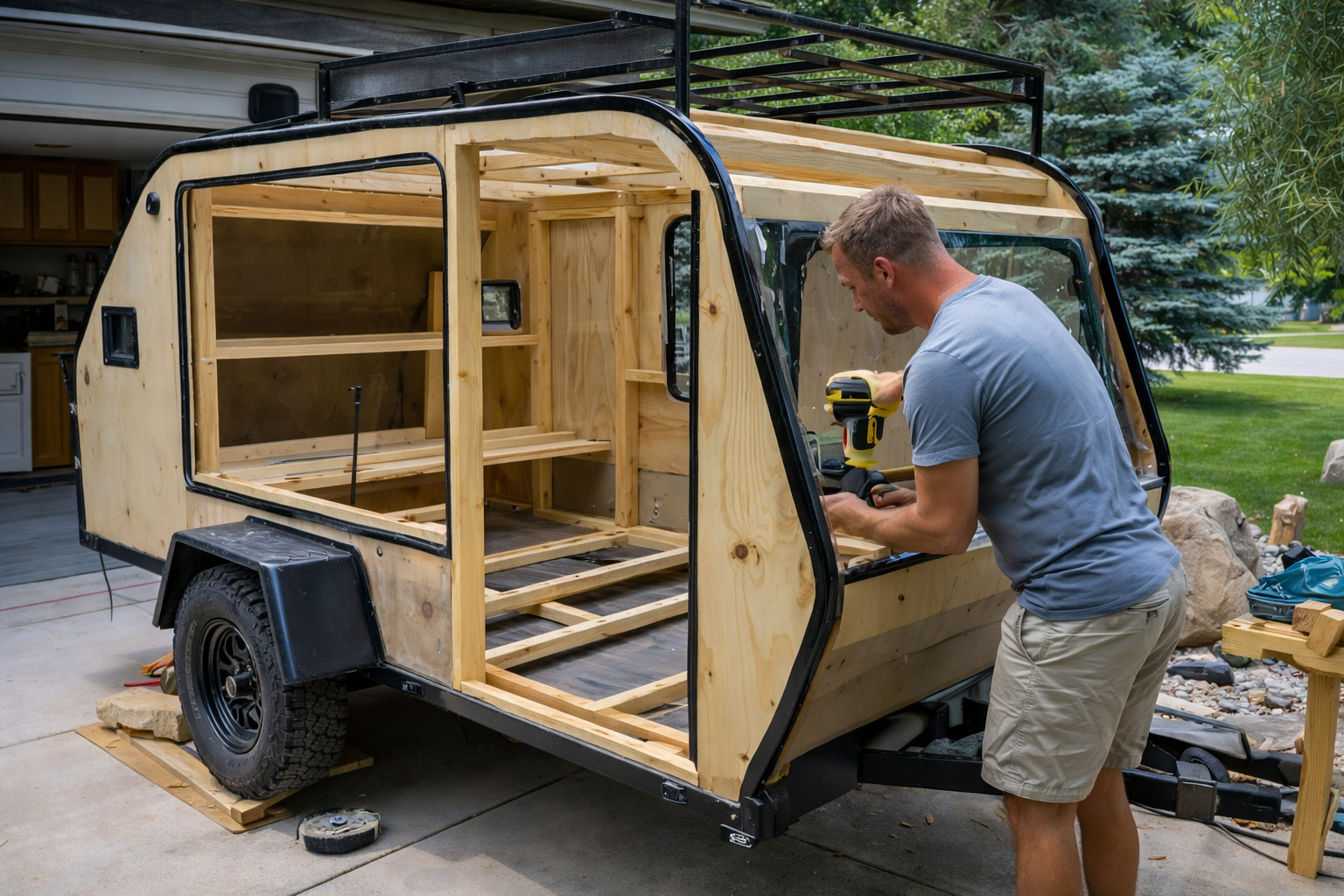
Caravan renovation shows how to transform a car into a functional trailer at low cost and for less than R$15,000
A man renovated a caravan spending less than R$15,000 and managed to transform a simple car into a small and functional trailer. The project uses wood, wheels, metal plates, and wall installation, resulting in a compact space ready for use.
The structure starts basic and evolves with manual assembly until it forms a closed shelter. The process involves cuts, fittings, and fastenings that shape the trailer throughout the stages.
The information was shared by TurnThisToThat, a digital channel with DIY construction projects, highlighting how low-cost caravan renovation can yield an efficient and usable result.
-
Children from emotionally cold homes reveal a shocking secret: early independence may hide deep traumas and silently and durably impact adult life.

-
The United States damages a millennia-old archaeological site with explosives to build the wall at the border.

-
Giant silos with a capacity of 300,000 tons have been erected outside the Strait of Hormuz to safeguard the supply of the Gulf; this megainfrastructure transforms Fujairah into one of the most strategic food vaults on the planet in times of crisis.

-
Little known, the Veryovkina cave is considered the deepest in the world, with over 2,200 meters, defying any comparison.
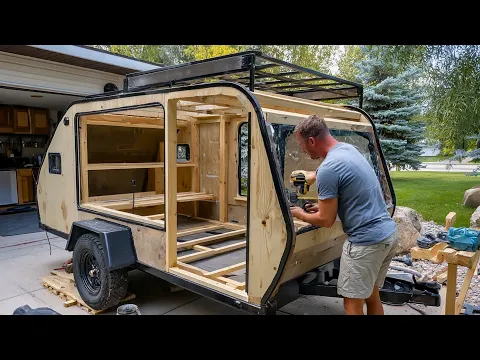

Base with wood and wheels supports the caravan renovation
The beginning of the caravan renovation features a base made of wood supported on an axle with wheels. This assembly serves as the foundation for the entire trailer.
The assembly includes cutting the sheets, aligning, and fastening with screws. The wheels are attached with metal elements that keep the structure stable during construction.
The result is a firm and mobile base, allowing the assembly to be moved even during the process. This facilitates adjustments and repositioning.
The care with leveling the pieces is evident, ensuring that the rest of the structure does not show misalignment.
Wall installation defines the shape of the small trailer
With the base ready, the installation of walls with wooden panels begins. The side panels are cut and positioned to form the body of the caravan transformed into a small trailer.
The execution involves fastening the panels with screws along the edges. Cuts are made to allow openings and fittings.
The shape of the trailer starts to appear, creating a defined internal space. The walls also help distribute the weight of the structure.
Cutting and sanding tools are used repeatedly to adjust the pieces and ensure a proper fit.
Internal structure with wood reinforces the functionality of the trailer
After the installation of walls, the interior receives reinforcements with wood. These pieces create divisions and increase the strength of the structure.
The assembly involves fastening slats and internal panels that serve as a base for practical use. The fittings are made with visible screws and manual alignment.
The space now has a defined function, no longer just an empty volume. The internal organization improves the utilization of the area.
TurnThisToThat, a digital channel with DIY construction projects, shows that constant adjustments are necessary to maintain stability and avoid looseness.
Metal plates and top closure complete the structure
The closure of the trailer uses metal plates and wooden panels to form the roof. These elements follow the shape of the installed walls.
The execution occurs with continuous fastening of the plates, creating a uniform surface. The pieces are positioned one by one and secured with screws.
As a result, the trailer becomes completely closed. The structure gains strength and a more solid final appearance.
The manual effort is evident during the fitting of the plates, especially in adapting to the curved shape.
Doors and openings make the trailer functional
The inclusion of doors and openings ensures access to the interior and air circulation. These elements are essential for the daily use of the trailer.
The assembly involves metal hinges and adjusting the doors until achieving a proper fit. Opening and closing tests are conducted multiple times.
The result is a simple and functional system. The trailer now offers real conditions for use.
The repeated movement of the doors shows the care taken to achieve precise alignment.
Painting and final finishing highlight the result of the renovation
In the final phase, the trailer receives external painting. The application covers wood and metal plates, standardizing the appearance.
The process includes sanding, cleaning, and applying paint in layers. The surface becomes more even and has a finished look.

The visual result changes completely, giving the trailer a ready-to-use appearance. The structure no longer looks like a work in progress.
The transition between painted and unpainted areas clearly shows the progress of the finishing.
Compact interior makes use of space after the caravan renovation
Inside the trailer, flat surfaces are installed for direct use. These areas serve for resting and organizing items.
The internal panels are fixed in an aligned manner, utilizing every available space. There are no areas without function.
The result shows that the renovation of a caravan spending less than R$15,000 can create a functional and compact environment.
The internal distribution highlights simple planning, focused on the practical use of space.
The transformation of the caravan into a small and functional trailer shows that wood, wheels, and metal plates can be organized efficiently. The most important factor is the assembly sequence and the careful adjustment of the pieces.
This type of project reinforces that affordable solutions can meet real needs. With dedication and organization, a simple car can become a usable and functional trailer.
Did you like this transformation of a caravan into a trailer? Leave your comment and share it with others looking for low-cost renovation ideas.






Seja o primeiro a reagir!