





 Portuguese
  English
  Spanish
  3 min of reading
  6 comments


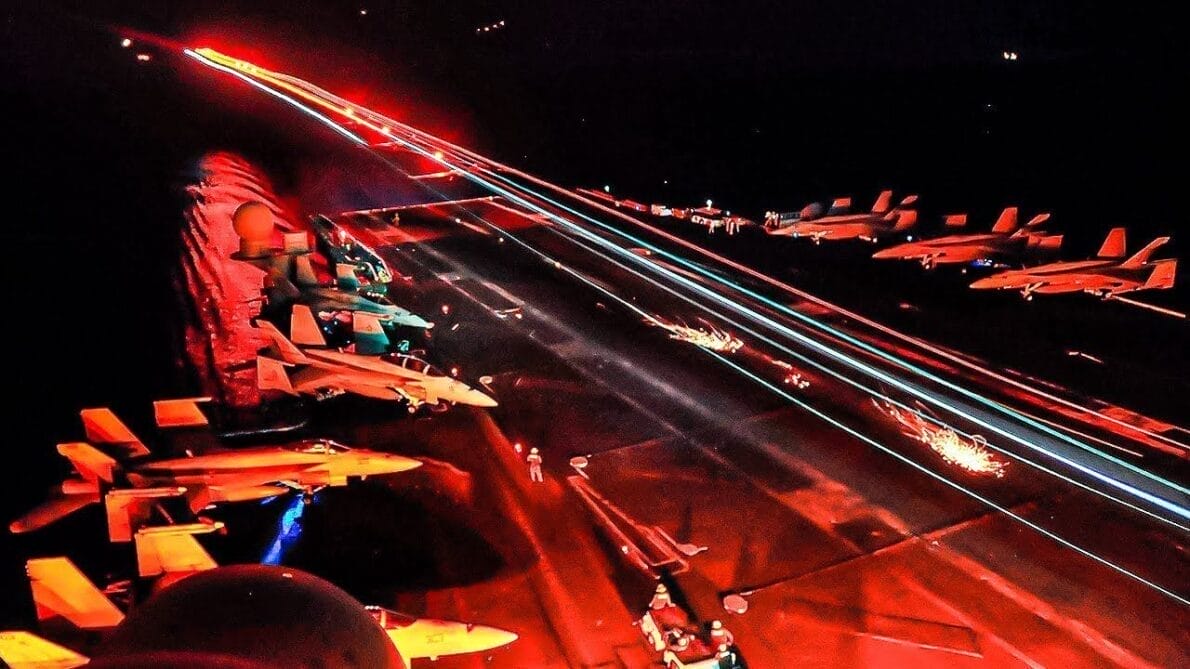

The World Of US Navy Aircraft Carriers Is Full Of Challenges, Especially When It Comes To Landing Airplanes At Night. This Task Requires Skill, Courage, And Steely Nerves. Pilots Need To Trust Their Instincts While Flying Over The Dark Ocean, But The US Navy Has A Genius Method To Make These Landings Safer And More Effective.
After a mission, airplanes return to the aircraft carrier using one of three approaches, depending on the weather conditions: clear day, night, or bad weather. Each approach follows specific procedures to ensure the safety of all aircraft by the US Navy.
Air traffic controllers at the Vessel’s Air Traffic Control Center closely monitor the returning aircraft. These controllers are responsible for ensuring that all planes land safely. They are as qualified as their civilian counterparts and can issue commands that even officers must follow without question.
Flight Operations On Aircraft Carriers Follow A Cycle That Lasts About 90 Minutes, Involving 10 To 12 Aircraft
The aircraft are launched at the start of each cycle to free up space on the deck, allowing the US Navy crew to reposition the other aircraft for the next landing. The landing method involves numbered arrestor wires on the deck. The pilots’ main target is cable number three, which is in the optimal position for a safe landing.
-
Historic bankruptcy of Centauro shocks the market, and the century-old company puts more than 500,000 products, machines, and complete infrastructure up for online auction.

-
New shoe factory in Ceará is expected to create 400 jobs and strengthen the local economy.
-
No one imagined it, but a mixture of sawdust with a mineral that fights fires surprises scientists with a result that changes the course of fire-resistant construction.

-
From empty land to a high-end house, wooden construction uses a lightweight system, metal structure for the foundation, ventilated ceramic cladding, and special windows to create an efficient and comfortable living space throughout the year.


During landing, the pilot accelerates to the maximum to ensure that if they miss the cable, the aircraft has enough power to take off again. This is known as a “bolter.” If the aircraft is unable to take off again, the pilot will need to eject.
At Night, Adverse Weather Conditions Make Everything More Difficult
US Navy pilots enter a complex holding pattern called the “Marshall Stack,” which functions like a stack of pancakes, with each aircraft at a different level. This helps maintain safe separation between the aircraft.
On the aircraft carrier deck, Air Traffic Control monitors all aircraft. Crucial information about each aircraft is displayed on status panels and transmitted via the ship’s internal TV system. This includes details like fuel quantity, pilot name, and landing attempts.
During Landing, The US Navy Pilot Approaches The Aircraft Carrier Using The Instrument Landing System (ILS)
Which provides glide slope and elevation signals to the pilot’s display, helping them to correctly align the aircraft. The US Navy landing signal officers, positioned on either side of the landing area, give verbal instructions to the pilots via radio.
The conditions at sea can make landing even more challenging. Strong waves can cause the stern of the ship to rise and fall dramatically, disorienting the pilots. During these moments, the landing signal officers are essential, guiding the pilots with precise commands.
When The Aircraft Touches The Deck, The Pilot Feels The Deceleration Upon Catching One Of The Arrestor Wires
This feeling is a relief and a sign of success after a challenging evolution. Precision is key to ensuring a safe landing. The skill and courage of US Navy pilots, combined with this genius method, make it possible to land on a moving aircraft carrier, even in the toughest conditions. This technique is a testament to the bravery and expertise of these aviators.








Tive a oportunidade de ser convidado a visitar interprise na base
Norfolk Virgínia, no ano 1999 vi de perto esse sistema poso e descolagem , ainda fui convidado pelo oficial do dia a subir no passadiço e observar o sala de lançamento míssil longa distância. A informação me passada na época e que nesses porta aviões tem lançador de míssil intercontinental. Foi uma experiência. Maravilhosa,
Eu sei o que isso. Como piloto ,passei por isso no Porta Aviões Minas Gerais. É fascinante
Foi do 1° GAE ou do VF-1?
Show gostei