





 Portuguese
  English
  Spanish
  6 min of reading
  0 comments


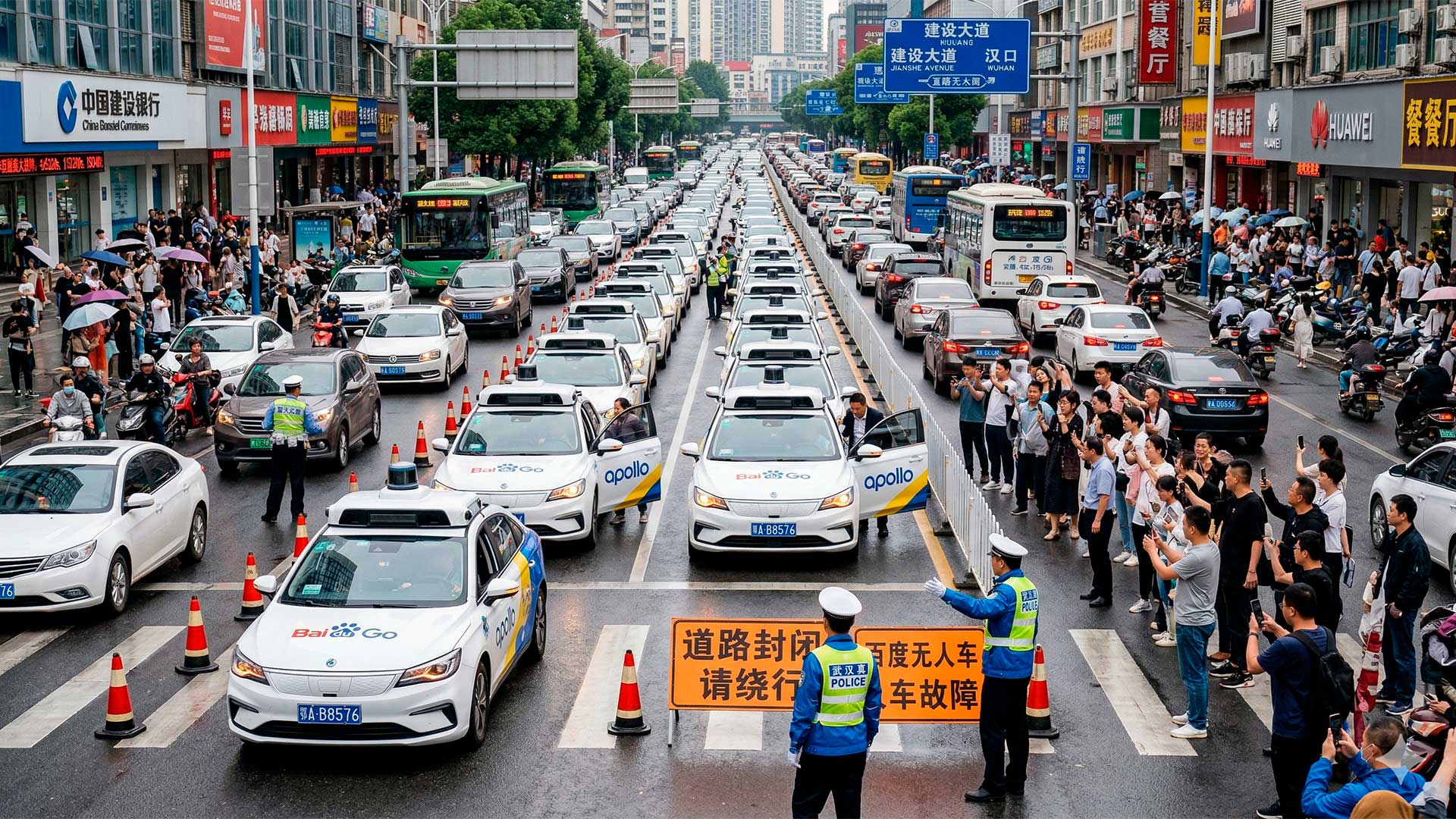
Simultaneous failure in Wuhan left passengers waiting, blocked roads, and reignited doubt about the real safety of robotaxis
A malfunction that affected more than 100 Apollo Go robotaxis, the autonomous driving division of Baidu, paralyzed vehicles simultaneously in Wuhan, in central China, on the night of Tuesday, April 1. The cars became immobile in traffic lanes, disrupted traffic, and left passengers without immediate answers while the operation tried to respond.
The incident gained weight because it did not involve an isolated vehicle, but a collective blackout in one of the largest fleets in the sector. At a time when autonomous mobility companies are seeking to expand services and convince the market that the technology is mature, the mass interruption became a public test of trust.
Reports from the scene show the magnitude of the problem. In one case, the message displayed on the car’s internal screen stated “Driving system failure. The team will arrive in five minutes”, but the response took much longer, and a passenger was only able to speak by phone after about 30 minutes, while the vehicle remained stopped in the middle of the road.
-
Archaeologists went to study a well-known trail and ended up finding another one that is even older, dated between 3,770 and 3,640 B.C., hidden under the swamp for almost 6,000 years.

-
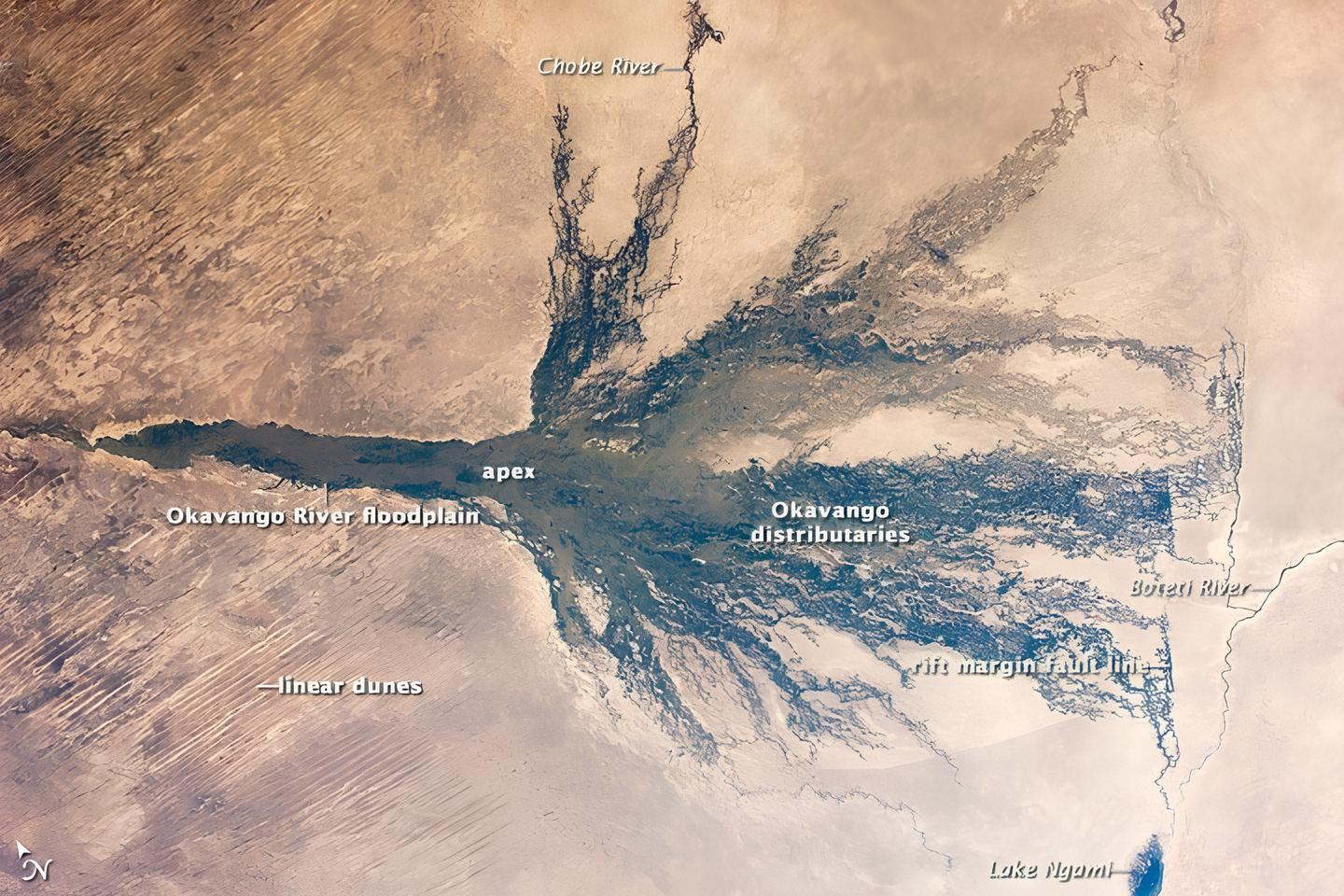
Frequently described by astronauts as one of the most improbable natural phenomena on Earth, the Okavango Delta spreads over up to 15,000 km² in the middle of the Kalahari Desert and transforms Botswana into a living maze of channels, islands, and floodplains that emerge and disappear every year.
-
Archaeologists find giant Roman necropolis with 3,000 tombs hidden beneath the city, and the discovery could rewrite the history of Zadar.

-
Asian fruit with intense red color concentrates up to 70 times more lycopene than tomatoes and contains beta-carotene at extremely rare levels in the plant world, according to scientific studies; meet gac.

Although there are no reports of injuries, the incident exposed a risk that is hard to ignore. When dozens of autonomous cars stop simultaneously on busy roads, the failure ceases to be merely technical and begins to directly affect road safety, urban operation, and the credibility of the service.
What happened on the streets of Wuhan and why the failure of autonomous cars caused so much disruption


The Wuhan police confirmed that several Apollo Go vehicles became immobilized and received calls about cars that could no longer move. In videos circulating on Chinese social media, the robotaxis are seen stopped on busy streets, forcing other drivers to swerve and causing delays at various points in the city.
In some cases, the doors could be opened, but some passengers hesitated to exit due to the heavy traffic around. There were reports of people trapped inside the vehicles for more than 90 minutes and, in other accounts, for almost two hours, which increased the feeling of insecurity.
There were also mentions of sudden braking by other cars and collisions caused by the need for sudden reactions on the roads. The fact that no one was injured helps avoid an even more serious scenario, but does not eliminate the warning signal left by the operational blackout.
Baidu tries to expand Apollo Go worldwide, but the collective blackout hits hard the scaling and reliability narrative
The scale of the case draws attention because Baidu is not a newcomer to the sector. The company operates more than 1,000 robotaxis just in Wuhan, its largest operational center, and has already accumulated more than 20 million trips made throughout the history of Apollo Go.
At the same time, the company is accelerating its international expansion. Apollo Go has started operations in Abu Dhabi and Dubai, the two main cities in the United Arab Emirates, is negotiating entry into the United Kingdom and Switzerland, and maintains an agreement with Uber to operate through the platform’s app.
This context makes the malfunction even more delicate. When a company tries to prove that autonomous driving is ready to scale, a collective blackout in its main operational base undermines the very thesis that the technology can handle failures without causing chaos on the streets.
In addition to Baidu, the Chinese market has names like Pony.ai and WeRide, which also compete for space in the robotaxi race and are advancing into international markets, including the Middle East. Therefore, the problem in Wuhan does not only affect one brand but increases pressure on the entire sector.
Explanations are still insufficient and the lack of transparency weighs as much as the robotaxi failure
So far, the exact cause of the failure has not been publicly detailed. There was a hypothesis that safety self-check systems may have identified some anomalous condition and paralyzed the vehicles preventively, which would be part of the operation’s own protection design.
If that was the reason, the technical reading is ambiguous. On one hand, the system would have acted to avoid a greater risk. On the other, the practical response showed that stopping cars in the middle of fast lanes, without immediate support and without agile management of passengers, can turn a safety mechanism into a new urban problem.
Baidu has not explained what caused the malfunction nor reported how long it took to normalize the fleet. The police confirmed the incident but also did not provide details about the origin of the failure. This lack of clarity weighs heavily in a segment that has long maintained that autonomous cars can be safer than human drivers.
In mobility technology, transparency is not a detail. Without explaining what happened, why the vehicles locked up, and what changes will be adopted, the company leaves essential questions open for passengers, authorities, and investors.
Recent cases in Chongqing, Beijing, and San Francisco show that the sector still coexists with significant failures
The blackout in Wuhan did not occur in isolation. In August, an Apollo Go robotaxi fell into a construction ditch in Chongqing. Months earlier, in May, a car operated by Pony.ai caught fire on a street in Beijing. In both cases, there were no injuries.
Outside of China, a similar episode also raised doubts. In December 2025, a power outage in San Francisco left Waymo robotaxis immobilized throughout the city, forcing the company to send software updates to the fleet.
These episodes have different natures but point to an uncomfortable pattern. Large-scale autonomous driving still faces challenges in delivering the reliability that the public expects from a service that operates without a human driver at the wheel.
In practice, the challenge is not just to make the car drive itself under ideal conditions. The central point is to ensure safe reactions, quick support, clear communication, and sufficient redundancy when something goes wrong. It is precisely in these moments that trust in technology is truly tested.
What the robotaxi blackout changes in the debate about autonomous mobility in large cities
The incident in Wuhan reignited discussions on Chinese social media about safety, oversight, and reliability of robotaxis. The topic had already been debated, but a simultaneous blockage of more than 100 vehicles makes the conversation more concrete, as it shows a visible impact on urban daily life.
For cities studying the expansion of such services, the lesson is clear. It is not enough to have a large fleet, accumulated tests, and international presence. It is necessary to prove that the operation responds well to systemic failures, that passenger support works within minutes, and that protocols prevent a software error from becoming a traffic and public safety problem.
The autonomous car sector continues to advance, but the Apollo Go case shows that the convincing phase is still far from over. Without firm answers and without transparency, the promise of safer and more efficient mobility loses strength precisely when it needs to gain trust the most.
And you, do you think robotaxis should already operate on a large scale in big cities, or do episodes like Wuhan show that this rush is greater than safety allows? Leave your comment and join the debate, because this type of technology promises to change traffic, but still divides opinions when failure occurs in the real world.









Seja o primeiro a reagir!