





 Portuguese
  English
  Spanish
  5 min of reading
  0 comments


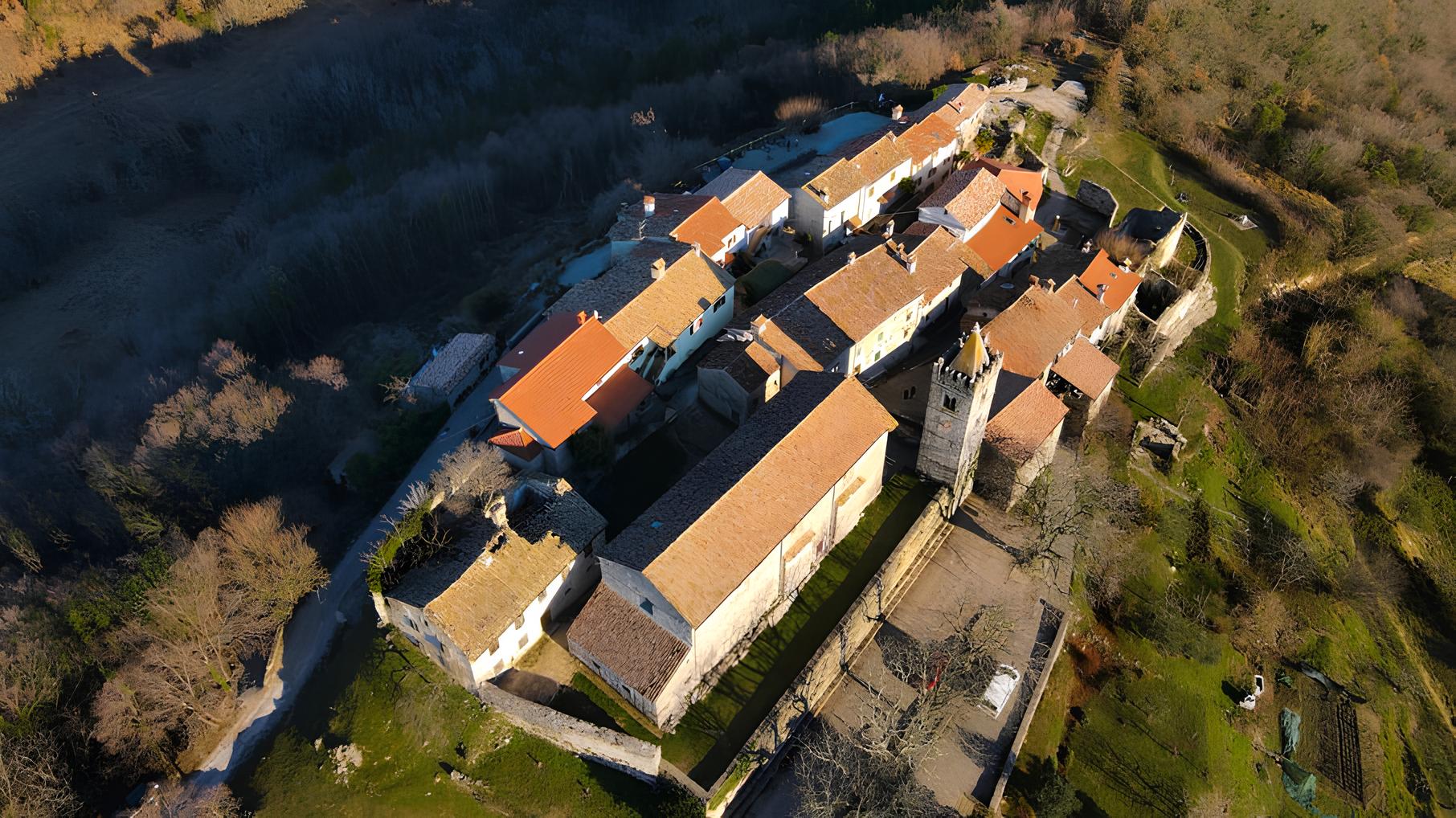
The Smallest City In The World Is Only 0.45 Km² And Has Less Than 30 Inhabitants, But It Functions As A Complete Municipality And Surprises Tourists With Its Unique Structure.
Most people imagine a city as a set of neighborhoods, avenues, entire regions taken over by buildings, cars, and urban problems. But there is a place so small, so compact, and so outside any demographic logic that it almost seems like a geographical fiction: the micro-municipality of Hum, officially known as the smallest city in the world and located in the interior of Croatia.
With only 0.45 km², streets less than a hundred meters long, and a population fluctuating between 27 and 30 residents, Hum functions as a real municipality with a mayor, symbolic elections, a church, a post office, and even local administration, despite having the size of a city block in a large Brazilian capital.
The city is so small that many upscale condominiums in São Paulo, Rio de Janeiro, and Brasília occupy a larger area than the entire territory of Hum. Still, it survives, organizes itself, and attracts thousands of tourists every year, fascinated by the idea of walking for a minute and crossing the “entire municipality.”
The Entire City Fits Within An Urban Block And Functions As A Real Municipality
The point that impresses geographers, urban planners, and curious visitors the most is simple: Hum is not a district, it is not an annexed village, and it is not an isolated historical site. It is an official municipality, recognized by the Croatian government, with its own statute and limited administrative autonomy.
-
Brazil’s nuclear submarine with a speed 5 times greater than normal advances after nearly 50 years and R$ 40 billion spent.

-
A Brazilian island charges R$ 0.50 to receive visitors and prohibits any new residents.
-
Why was the Great Wall of China built? The truth that many are unaware of!

-
At 73.8 meters tall, the world’s tallest teapot-shaped building has 15 floors, ensures stability, and impresses with an internal space of 28,000 cubic meters.




The urban area of 0.45 km² would be considered, in Brazil, small even for a gated community. In Porto Alegre, for example, the Cidade Baixa neighborhood has 1.03 km² — more than double the area of Hum. Neighborhoods like Boa Viagem (Recife), Asa Norte (Brasília), Santa Cecília (SP), or Jardim Camburi (Vitória) are dozens of times larger.
Still, Hum maintains:
• elected mayor, chosen annually by vote;
• 12th-century church, preserved as a world heritage site;
• post office, which operates under special conditions;
• municipal administration, with historical records and document safeguarding;
• territorial control, even in such a small space.
How Does A City So Small Survive? The Force Of Tradition And Tourism
Hum has stayed alive thanks to a rare set of factors:
The Tradition Of A Medieval Town Preserved Almost Intact
The urban core consists of only two medieval blocks. The houses, made of local limestone, have been kept according to the original architecture. There has been no urban expansion, new developments, or population growth since the 19th century.
Cultural Tourism
Although it has fewer than 30 residents, Hum receives thousands of visitors each year from all over Europe. Its fame as the “smallest city in the world” transforms the tiny municipality into a consolidated tourist attraction.
Visitors come to:
• walk along the medieval wall;
• visit the Chapel of Saint Jerome;
• taste the famous traditional liqueur produced there, the biska;
• mark the “crossing of the city” in just a few minutes.
The Simplified And Self-Sufficient Economy
Hum does not need a transportation system, traffic lights, schools, or a complex network of urban services. Its maintenance cost is very low, and its revenue depends mainly on tourism and regional subsidies.
The Symbolic Election That Maintains The City’s Identity
Every year, the residents gather to elect the mayor using votes recorded on wooden plaques, a ritual preserved since the Middle Ages. It’s a symbolic democracy, but it helps maintain the municipal identity.
What Is It Like To Live In A City Where Everyone Has Known Each Other For Generations
The feeling for those arriving in Hum is described by travelers as “entering a medieval movie.” There are no busy streets, shops open all day, or traffic. Silence prevails, broken only by the sound of church bells or the noise of ancient stones under tourists’ footsteps.

For the residents, life is simple, self-sufficient, and communal:
• everyone knows each other by name;
• houses are inherited from parents to children;
• there is no urban violence;
• the nature of the Istrian region surrounds the village.
Urban planning experts see in Hum a rare case of living museum city, where the historical center is also the total space of the municipality.
A Territory Smaller Than Monaco And With Simpler Management
Hum is often compared to Monaco, which has 2 km² and is already considered one of the smallest states in the world. But Hum is four times smaller than Monaco. It is even smaller than Vila Belmiro, the stadium of Santos FC, which covers an area of over 0.6 km².
Its administration is lean, its budget reduced, and its demands almost nonexistent. There are no classic problems of large cities, such as:
• public transportation;
• traffic jams;
• violence;
• irregular urban expansion;
• disordered urbanization.
On the other hand, Hum faces challenges such as:
• maintaining its aging population;
• preserving historical heritage;
• attracting young people to live and work in the microcity.
The Urban Paradox: How Can A City So Small Be So Famous?
The fame of Hum arises precisely from the astonishment: how can such a small municipality legally exist? How can it function with so few inhabitants? Why hasn’t it been annexed to neighboring cities?
The answer lies in its historical and cultural value: Hum exists as a symbol, as memory, and as a geographical curiosity. It is living proof that a city is not defined by size but by identity, community, and history.
Final Reflection To The Reader
In a world where metropolises grow without limits and entire neighborhoods disappear into verticalization, Hum goes against the tide: minuscule, silent, preserved, and symbolic.
And you, reader: could you live in a place where the entire city fits into a few minutes of walking?
Or do you believe that this model of preserved microcities should be replicated in other countries to maintain traditions and reduce uncontrolled urbanization?








Seja o primeiro a reagir!