





 Portuguese
  English
  Spanish
  4 min of reading
  0 comments


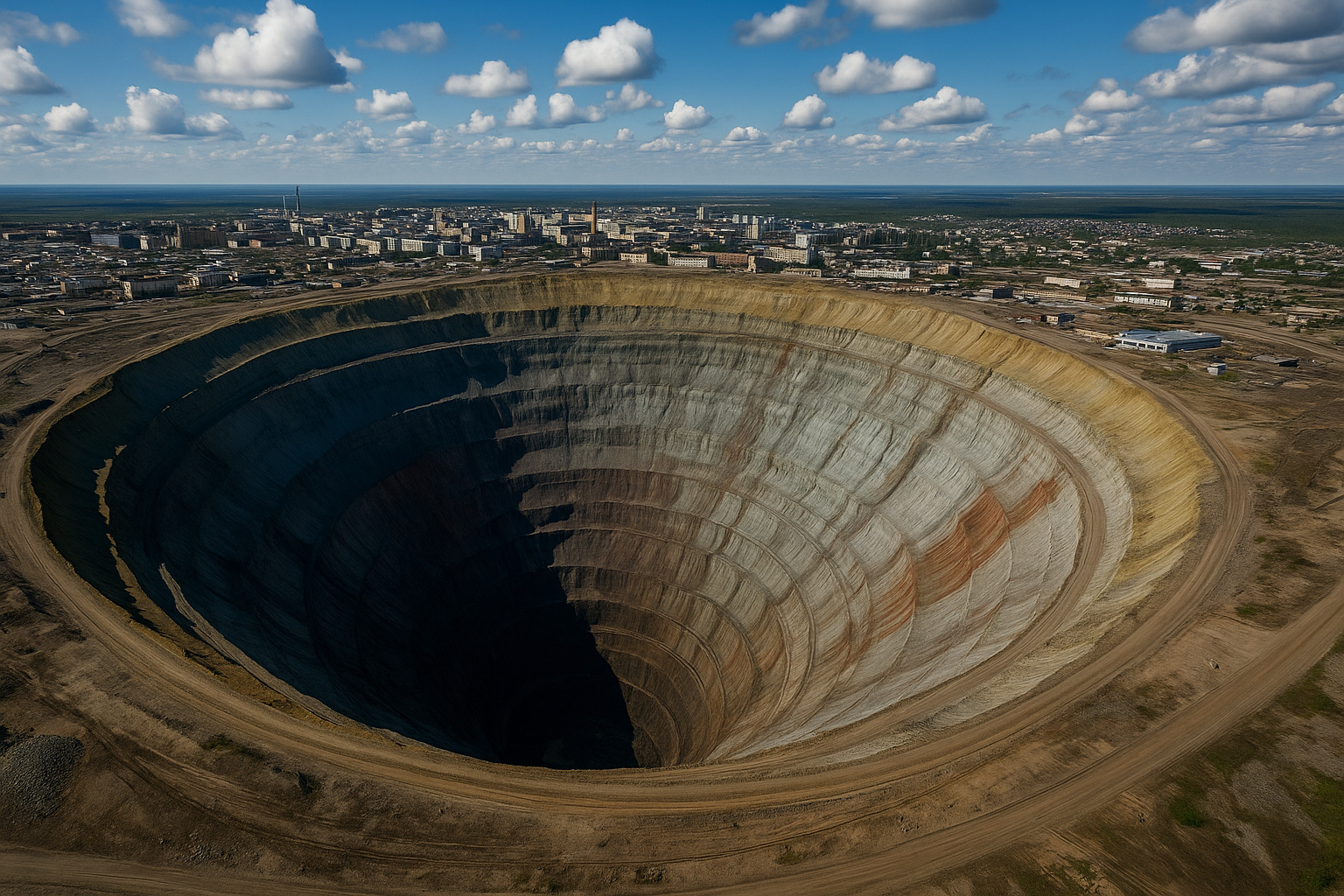
The Mirny Mine in Siberia Is 1.2 Km Wide and Generated Vortices So Intense That Flights Were Prohibited. Now Decommissioned, It Still Intrigues Engineers and Frightens Pilots.
In the far east of Russia, in the icy expanse of Siberia, there is an abyss that seems to have been dug by giants or excavated to the very center of the Earth. At first glance, it looks like a meteorite impact crater, but it is a work of human ambition: the Mir Mine, or Mirny, as it is also known. A hole with a diameter of 1,200 meters and more than 500 meters deep, so deep that it generated dangerous atmospheric turbulence — to the point that flights were prohibited in the area for fear of being sucked in.
This industrial colossus, now decommissioned, continues to haunt engineers, pilots, and geologists for its brutal size and the unexpected consequences it caused to the small town that grew around it.
The City Built Around the Abyss
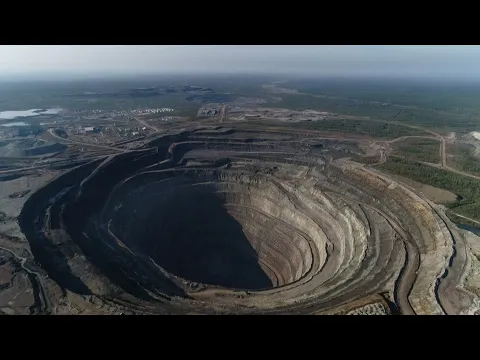

Mirny, in the Republic of Sakha (or Yakutia), was born in the 1950s thanks to the Soviet diamond rush. In the midst of the Cold War, the Soviet Union sought to reduce its dependence on imported gemstones and accelerate its economic dominance.
-
Rare earths are in everything, from cell phones to bullet trains, and what almost no one realizes is why they have become the target of such a delicate global war.

-
Brazil extracts 26.3 million tons of ore from what was previously treated as waste, transforming residues into wealth, producing over 3 million tons of sand, and demonstrating how national mining is relearning to generate value.

-
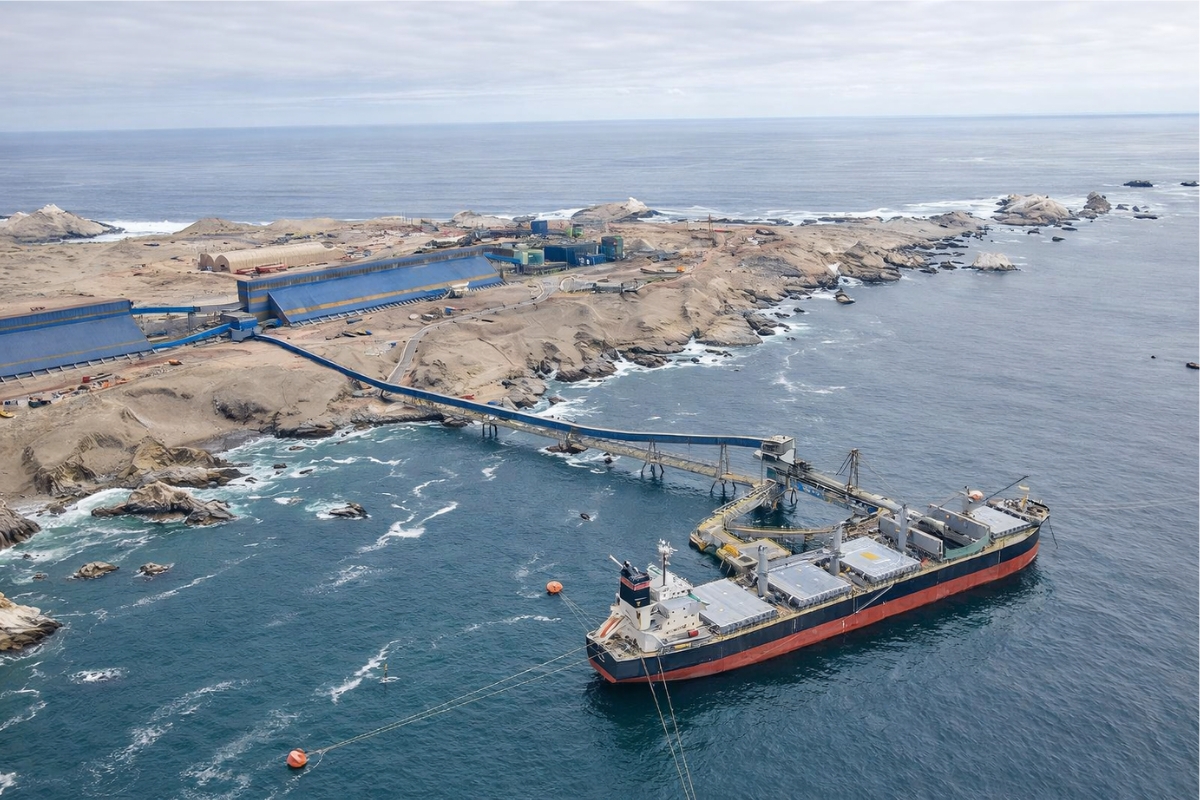
A $3.5 billion megaproject in Latin America pumps desalinated seawater at 1,050 liters per second over 194 km to keep a copper supermine in the Andes operational for another 20 years.
-
A hidden mine in the Andes valued at nearly R$ 1 trillion is starting to attract global attention, containing copper, gold, and silver, and raises an intriguing question: why do Argentina and Chile need to act together to exploit this gigantic wealth?
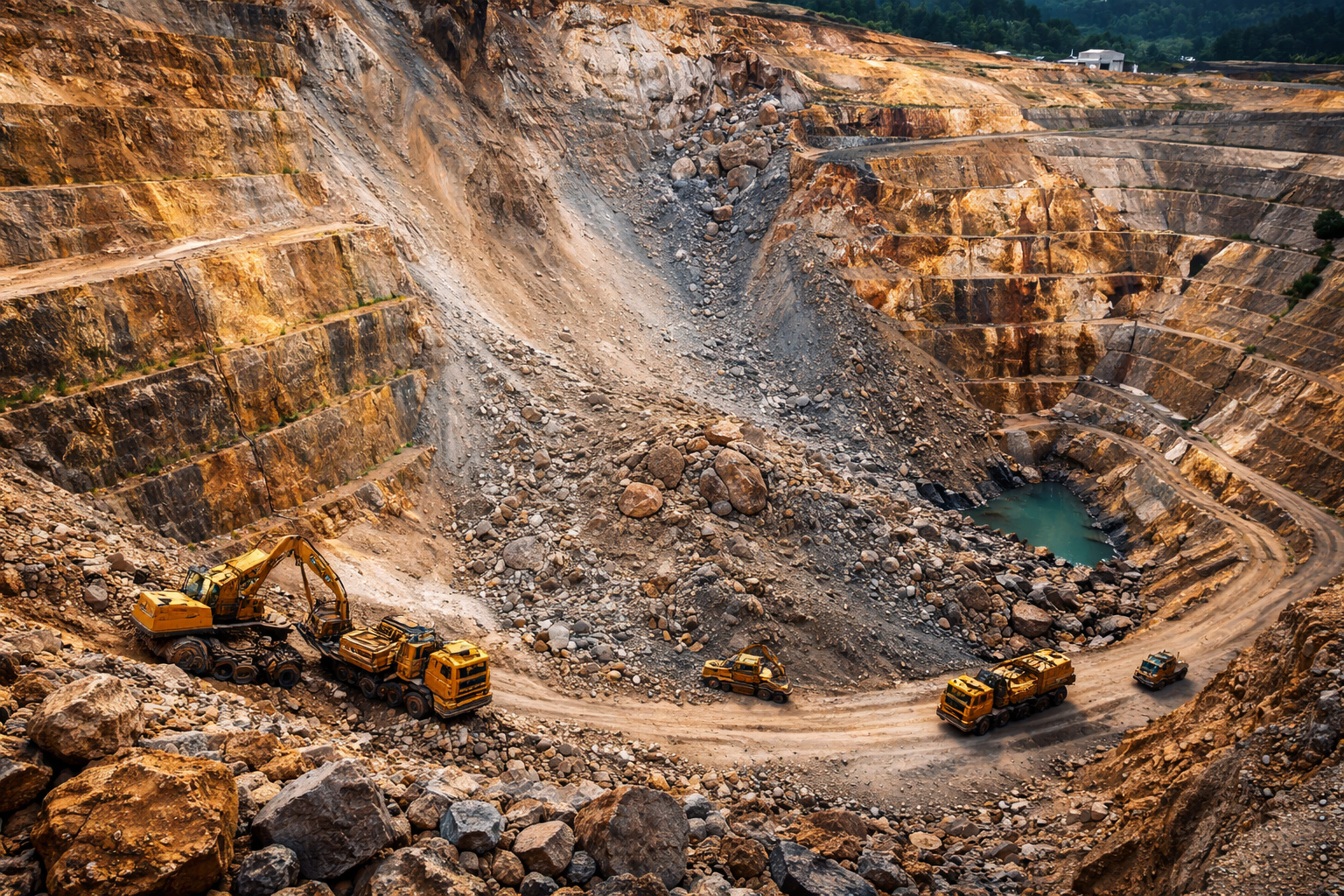

The discovery of diamond deposits in Russian territory was a milestone — and the chosen locale for intensive exploration was the remote and inhospitable Siberian east, where temperatures can drop to -60°C.
To enable exploration, the Soviets established an entire city: Mirny. What began as a small technical settlement evolved into a functioning city of over 30,000 inhabitants, built alongside the gigantic open-pit mine.
One of the Largest Holes Dug by Man
The Mir Mine was excavated between 1957 and 2001, operating as one of the largest diamond mines in the world in continuous operation. The numbers are impressive:
- 1,200 meters in diameter;
- More than 525 meters deep;
- A production of around 10 million carats of diamonds per year at peak years;
- Total extraction estimated at over US$ 17 billion in diamonds.
The crater was so large that workers nicknamed it the “Devil’s Mouth” — a gigantic pit in the middle of the city that seemed to swallow everything around it.
When the Hole Affected Even the Sky: Deadly Turbulence
But what really made the Mir Mine legendary — and dangerous — was a rare and alarming phenomenon: the air currents that formed over the crater. Official and unofficial reports indicate that the combination of:
- Columns of heated air rising from the base of the pit;
- Sharply cutting winds from Siberia;
- And the lack of obstacles around,
created strong vertical whirlwinds and atmospheric vortices over the crater, which affected aircraft flying over the area.

The force of the turbulence was so unexpected that, according to some local sources and historical accounts, at least two small helicopters were “sucked” into the crater between the 1970s and 1980s — resulting in fatal accidents.
Although the exact number of incidents is uncertain and shrouded in Soviet secrecy, the consequence was real: flights were officially prohibited within the radius of the mine, including helicopters and small planes. To this day, the airspace above the Mirny Mine is restricted, as a precaution against possible air instability.
The End of Extraction and the Invisible Threat
Open-pit extraction ceased in the early 2000s, after the mine reached maximum depth and geotechnical risks increased. From then on, the state-owned ALROSA began underground exploration — until, in 2017, a sudden flooding caused the death of eight workers, leading to the permanent suspension of underground operations.
Today, the crater remains there: open, deep, unsettling, as a reminder of the cost of mineral ambition.
Experts differ on whether to admire the Mir Mine as a feat of Soviet engineering or classify it as an extreme example of limitless exploitation.
On one hand, the construction demanded:
- Excavation in Arctic weather;
- Transport of tons of frozen gravel per day;
- Logistical structure to keep a city functioning in one of the most hostile environments on the planet.
On the other hand, the environmental and human impact is undeniable. The mine completely altered the local ecosystem, imposed constant risk to the population of Mirny, and left a permanent scar on the Siberian soil.
Interestingly, despite all the risks, the mine has become a tourist attraction in Siberia. Visitors can view the crater from overlooks, take guided tours, and visit the local diamond museum. From above, the hole looks otherworldly: a colossal spiral embedded in the ground, visible even from satellites.
But the Mirny hole is more than a geographical curiosity. It is a brutal warning of what happens when mining surpasses all physical, environmental, and human limits. And it continues to haunt not only the town but also pilots, engineers, and environmentalists to this day.









-

-

2 pessoas reagiram a isso.