





 Portuguese
  English
  Spanish
  6 min of reading
  3 comments


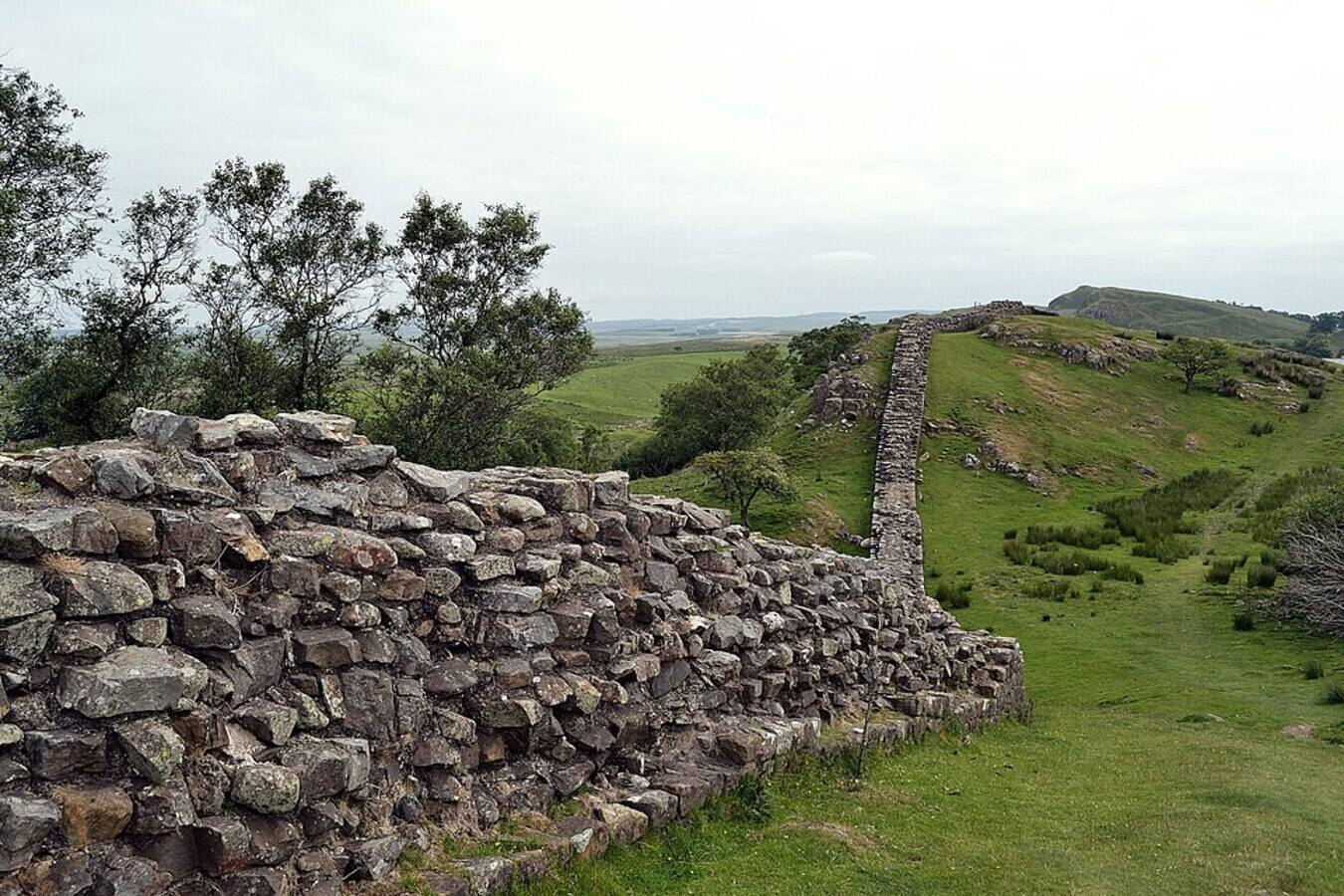


Hadrian’s Wall Marked the Northern Limit of the Roman Empire for Centuries, Revealing Traces of War, Daily Life, and Resistance in Northern England
Hadrian’s Wall marked the northernmost limit of the Roman Empire for 300 years. It stretches for about 118 kilometers in northern England, between Bowness-on-Solway to the west and Wallsend to the east.
Construction began around AD 122, shortly after the visit of Emperor Hadrian, who ruled from AD 117 to 138.
Its purpose was to consolidate the empire’s boundaries. England and Wales had been under Roman control since AD 61, after the defeat of Queen Boudica. Scotland, however, resisted, thanks to the Caledonians, who prevented permanent occupation.
-
Home environment can influence the brain, mood, and well-being: studies indicate an increase of up to 15% in productivity, a reduction of 12% in stress with plants, and a direct impact of the circadian rhythm on the 24 hours of the day.

-
A Brazilian millionaire couple restores a farm over 150 years old in the interior of São Paulo and transforms the historic property with Portuguese tiles, antique furniture, and new spaces into a refuge that blends tradition, comfort, and sophistication.
-
Submerged city in a lake in Minas reveals intact streets, preserved vehicles, and houses after more than 60 years, impressing divers.

-
Yellowstone has started to rise again in an area of the caldera, and the movement rekindles fears surrounding the U.S. supervolcano, as scientists monitor the deformation and try to understand what is happening underground.


This resistance led Hadrian to create a defensive barrier, separating the Romanized south from the still-independent north.
Structure and Dimensions of the Wall
Soldiers of the II, VI, and XX legions built the wall with local materials. The eastern part, made of stone, measured 65 km long, 3 meters wide, and about 4.4 meters high. It was later extended to Wallsend.
The western part, made of turf, stretched for 47 km to Bowness-on-Solway. Its width reached 5.9 meters. According to researcher Nic Fields, the choice of turf indicated haste in completing this section.
To the north of the wall, there was a V-shaped ditch. To the south, the “vallum” was constructed, another ditch flanked by large earth mounds, serving as additional defense.
Every mile, there was a “milecastle,” with a small gate and capacity for a few soldiers. Among them, two towers were erected. Larger fortifications appeared every 11 km, covering up to 9 acres and rectangular in shape.
These fortifications included buildings such as the principia (headquarters), the praetorium (commander’s residence), and granaries (horrea). The barracks and other structures occupied the front and rear areas.
Women on the Frontier
Excavations at the fort of Vindolanda revealed hundreds of wooden tablets with Latin inscriptions. They show that some commanders lived with their wives, like Sulpicia Lepidina and Claudia Severa, who exchanged letters.
These messages dealt with everyday matters, such as invitations to visits. Claudia, for example, invited Sulpicia for her birthday, saying that her friend’s presence would make the day more pleasant.
Soldiers of lower ranks could not officially marry, but many maintained wives and children in nearby settlements, even against the rules.
Traces of Daily Life
Vindolanda also preserved thousands of leather artifacts. Tent panels, saddles, bags, and primarily shoes for men, women, and children were found, proving that military life included families.
At the fort of Magna, archaeologists found shoes equivalent to men’s size 14 in the U.S. They may indicate either very tall soldiers or the use of extra layers to cope with the cold and dampness.
Additionally, toy swords surfaced, possibly used by soldiers’ children, along with evidence of bedbugs infesting the camps.
Changes Over the Centuries
After Hadrian’s death, his successor Antoninus Pius abandoned the wall and moved north, building the Antonine Wall in Scotland. This conquest was short-lived, and by the end of his reign, Hadrian’s Wall was resumed.
Significant modifications occurred, such as replacing sections of turf with stone and constructing a military road to the south. Over time, the towers were deactivated and the gates narrowed.
In the 4th century, under greater military pressure, some gates were completely blocked.
Decline and Reuse
With the collapse of the Roman Empire in the 5th century, the wall lost its strategic function. Its stones were repurposed for medieval castles.
An iconic point of the wall was Sycamore Gap, with a centennial tree that attracted visitors. In 2023, it was illegally felled, and those responsible were charged with damage to the tree and the wall itself.
Hadrian’s Wall: A Historic Symbol
Over the centuries, Hadrian’s Wall ceased to be merely a military structure and became a symbol of Roman presence in Great Britain.
Even with parts damaged or repurposed, it continues to attract researchers, tourists, and curious minds, preserving stories of resistance, adaptation, and daily life at the edge of the Empire.
With information from Live Science.
You May Also Like: Romans Turned 450-Million-Year-Old Fossil Into a Jewel Used as a Spiritual Amulet and This is Surprising
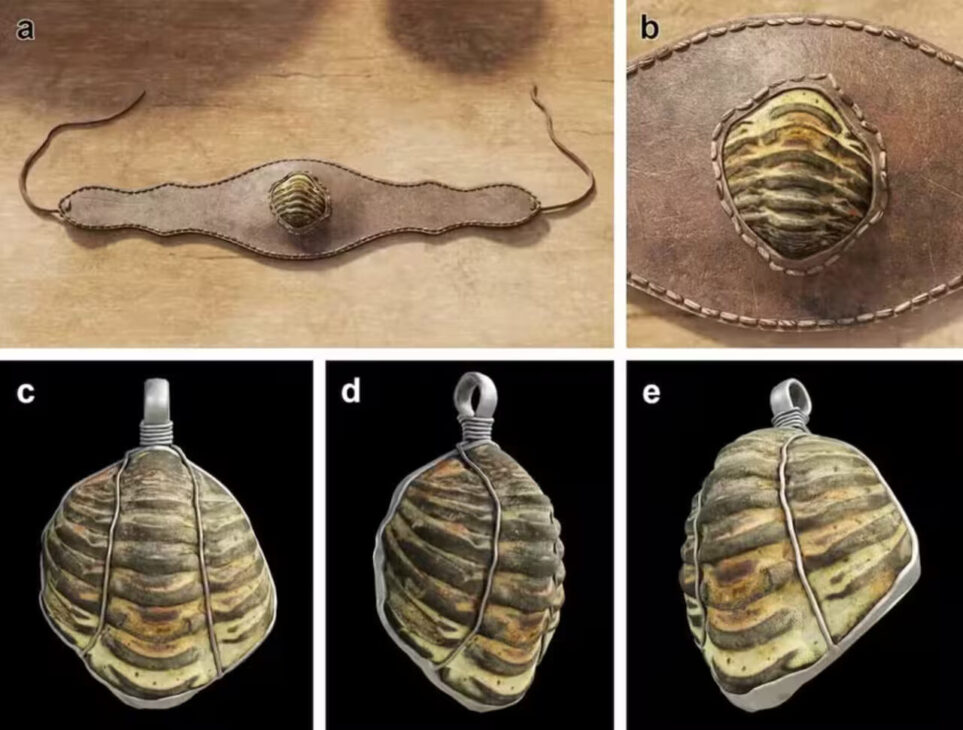
Researchers made an unusual discovery at the Roman archaeological site “The Cibdá of Armea,” located near the city of Ourense, Spain. During excavations at the site, a fossilized trilobite was found among ceramic remains, coins, and animal bones. The fossil, about 4 centimeters long, may have been used as a jewel or amulet between the 1st and 3rd centuries AD.
Trilobites are extinct marine animals that lived between 520 and 250 million years ago. They were arthropods, with segmented bodies and a beetle-like appearance.
Despite being well known to modern science, with over 22,000 described species, fossils of this kind in archaeological contexts are extremely rare.
According to the magazine La Brújula Verde, this is the first trilobite found at a Roman site.
Worldwide, only 11 specimens are known to be associated with ancient cultures. The item found in Armea stands out for having seven signs of artificial wear located on its underside, indicating that it was adapted for use as a pendant or bracelet.
The article describing the find was published on July 15 in the journal Archaeological and Anthropological Sciences.
The responsible team concluded that the trilobite belongs to the genus Colpocoryphe sp. and lived during the Ordovician period, about 450 million years ago.
The reddish coloration and fossilization in iron oxide suggest that the fossil did not originate from Galicia, but rather from central-southern Iberia.
Possible origins include regions such as Toledo, Ciudad Real, or Badajoz, located more than 430 km from Armea.
For researchers, the transportation of this object to the site may be linked to the ancient trade routes of the Roman Empire, especially the Via de la Plata.
This route connected important cities of the time, such as Mérida (Emerita Augusta) and Astorga (Asturica Augusta).
“The trilobite could have traveled with metals and other goods as a unique and exclusive object, valued in Galicia for its protective and healing properties,” the study states.
Another hypothesis is that a visitor from the Lusitania region brought the fossil, attracted by the mining in the area where it was found.
In Ancient Rome, fossils were often considered mystical objects. Remains of large animals, for instance, were associated with mythological creatures.
Fossilized invertebrates, like trilobites, were seen as protective amulets against supernatural forces. The team points out that the Armea specimen likely served this function.
Marks on the base of the fossil suggest that it was fixed to some support, such as leather or metal, leaving its upper face visible.
The segmented shape and characteristic design may have helped reinforce its symbolic function. One possibility considered is that the item was part of a lararium, a household altar used in Roman homes for offerings and rituals.
This use is based on the inscription “MAXSIMVS” found alongside the object. The word may indicate that the site was a sacred space of a high-status house, where the fossil served as a spiritual symbol or protector of the family.
Additionally, researchers note that the shape of trilobites may have influenced a typical decorative piece of Ancient Rome: the bead necklace known as trilobitenperlen.
Made from black glass or jet, these beads imitated the segmented appearance of the fossil and were popular among women and children.
Although none of these jewels were found in Armea, they reinforce the idea that the trilobite could have had a protective and symbolic role.
The find in Armea expands knowledge about the use of fossils in ancient times and shows how natural objects were reused with other meanings in the Roman world.
The presence of the fossil in a dump indicates that, at some point, it lost its value or broke, and was then discarded.
Still, it is one of the few trilobite specimens with evidence of human modification and symbolic use in a Roman archaeological context.
The discovery raises new questions about the trade of fossils and their spiritual value in different regions of the Empire.
With information from Revista Galileu.








Bela matéria,parabéns!
Excelente matéria, parabéns!!!
Assunto rico e extremamente intetresante para o conhecimento histórico da humianidade, vivido há anos e ainda permanece vivo para o nosso saber.👏👏👏👏👏👏