





 Portuguese
  English
  Spanish
  5 min of reading
  2 comments




First Human Trip Around the Moon This Century Is Expected to Happen in 2026 with NASA’s Artemis 2 Mission
The Artemis 2 mission, from NASA, could be the major space milestone of 2026. The expectation is that humans will orbit the Moon, something that hasn’t happened in over half a century.
The trip draws attention for putting people once again far from Earth. The impact goes beyond symbolism, as this stage is seen as preparation for future missions, with new interests and rules at play.
Plans for the same year also feature important milestones with robotic probes. European missions are expected to reach Mercury and the double asteroid Didymos, expanding the exploration of the Solar System.
-
Marine fossils found at over 8,800 meters altitude on Everest and in large mountain ranges have proven that entire continents move, oceans disappear, and tectonic plates collide over millions of years, revolutionizing science in the 20th century.

-
What if the Sun disappeared suddenly? Simulation shows Earth in darkness within minutes, extreme cold, and rapid collapse of life on the planet.

-
A 2,400-year-old iron foundry has been discovered in Senegal with 100 tons of slag, 35 furnace bases, and signs of nearly eight centuries of continuous metallurgical activity.

-
Four humans are flying towards the Moon inside the Orion capsule launched by the SLS rocket, and on April 6, Artemis II will disappear behind the far side of the Moon without communication with Earth for nearly an hour.

What Happened and Why It Got Attention
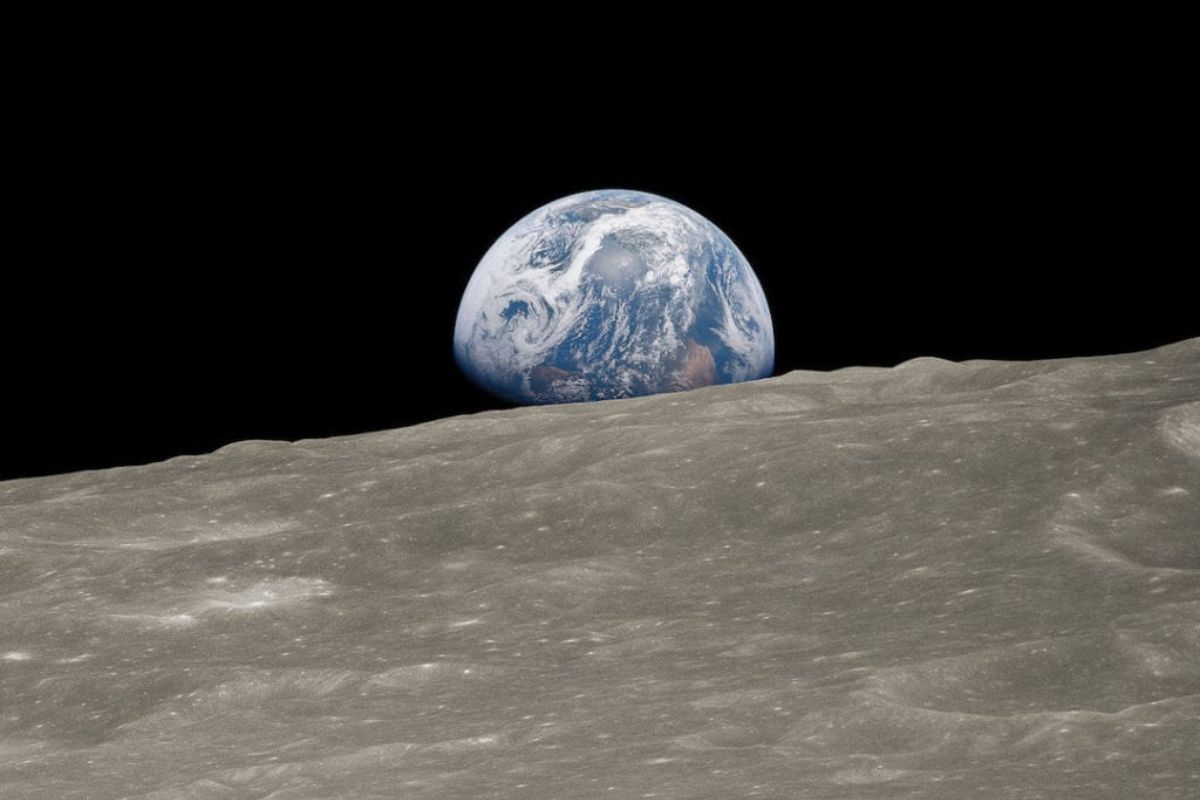
The Artemis 2 mission is set to take four astronauts on a journey to orbit the Moon. The proposal is to replicate a type of flight not conducted since the Apollo program era.
Between 1968 and 1972, this route was taken only nine times. It started with Apollo 8 and ended with Apollo 17, before a long gap of 53 years without new flights of this kind.
The most remembered milestone of the Apollo era occurred on July 21, 1969, when Neil Armstrong stepped onto the lunar surface. Now, the return to the path around the Moon is back in the spotlight.
Who Is on the Crew and What It Represents

The crew includes Reid Wiseman, Victor Glover, Christina Koch, and Jeremy Hansen. The group was presented with a focus on diversity and international participation.
For the first time in this journey, there will be one non-American, the Canadian Jeremy Hansen. It will also be the first presence of a woman, the American Christina Koch, and of a Black astronaut, the American Victor Glover.
The command will be with Reid Wiseman, described as a white American commander. The makeup reflects changes in the profile of missions, even as there are clear continuities in who leads the flight.
How the Journey Will Be and Why the Route Changes
The flight plan foresees a free-return trajectory. This means that the spacecraft can be guided back to Earth by gravity, without relying on additional maneuvers to complete the return.
This choice reflects a stance of greater risk aversion. The comparison made is to 1968, when Apollo 8 had already fired its engine to be captured by the Moon’s orbit on the first flight to the satellite.
In that scenario, a failure in restarting the engine could prevent the return. For Artemis 2, the proposal reduces this dependence and still puts the crew in a position described as the farthest humans have ever been from Earth.
What Are the Deadlines Mentioned for Launch in 2026
The launch is planned to occur in early February. There is an effort to advance a schedule that initially forecast the mission for April.
The opportunity windows are described as short, opening for only a few days each month. The expectation is that, at most, by the end of the first semester, the flight will have already taken place.
The mentioned departure location is the spaceport of Cape Canaveral, in Florida. The mission is regarded as an event without competition in 2026 in the space landscape.

What Changes Practically for the Space Race and the Moon
The mission is described as the first step in a new space race. The focus would not just be on reaching the Moon, but influencing the rules related to natural resources of the Moon and other celestial bodies.
The main competition mentioned involves the United States and China. Both have plans to send astronauts to the lunar surface, in search of dominance in exploration.
NASA aims to do this in Artemis 3, but there is a risk of delay due to the development of Starship by SpaceX, Elon Musk’s company. The mentioned date for the flight is 2027, with an assessment that it could be delayed by at least one or two years.
For the Robots, Missions, and Arrivals That Also Mark 2026
The company Blue Origin, founded by Jeff Bezos, plans to make its first uncrewed lunar landing with the Blue Moon Mark 1 module in 2026. The project receives attention because it could be considered as an alternative to accelerate Artemis 3.
The Blue Moon Mark 1 was designed to transport cargo. Nonetheless, it is described as the largest lunar module ever sent to space, including the crewed ones from the Apollo era.
In the interplanetary field, the Japanese-European probe Bepi Colombo, launched in 2018, is expected to insert itself into Mercury orbit in November. Also at the end of the year, on December 28, the European probe Hera is expected to arrive at the double asteroid Didymos, related to the Dart mission test.
What May Happen from Now On with Cuts and Risks in the Budget
There is mention of the risk of a blackout on various ongoing missions due to cuts in the NASA budget. These cuts are associated with the Donald Trump administration.
Space programs are planned years, sometimes decades, in advance. Therefore, the assessment is that the greatest impacts of these cuts may only become more apparent in the coming years.
The scenario outlined indicates a future with two blocs of countries exploring the lunar surface concurrently. This movement would be part of the early steps of human expansion throughout the Solar System.
The Artemis 2 mission concentrates expectations on putting humans back on a journey around the Moon in 2026. Beyond its historical value, the flight is presented as part of a larger plan.
At the same time, Blue Moon Mark 1, Bepi Colombo, and Hera reinforce that the year may also be eventful for robotic probes. The practical result is a simultaneous advancement in crewed and uncrewed missions, with direct impacts on the next stages of lunar exploration and beyond.









E o que o ônibus espacial tem a ver ?
Muy interesante y seria el primer paso en el retorno a nuestro satelite natural.