





 Portuguese
  English
  Spanish
  5 min of reading
  0 comments



Discover What the New White Traffic Sign with a 5 in the Center Means on the Roads. Understand Its Function and Avoid Confusion During Your Trip.
Many Brazilians crossing the roads of Argentina end up encountering a new type of signage that, at first glance, may be confusing. In the middle of the highway, a white sign, with black edges, and in the center, a solitary number: the number 5. No speed warnings, no additional symbols. Just the number, highlighted. But what exactly does this new traffic sign mean? Does it indicate a new rule? Is it a warning? A speed limit?
The question is common — especially for those driving far from home, on unfamiliar roads and often under different laws. But the answer to this signage is much simpler than it seems. The new traffic sign with a red circle and white center is confusing drivers — find out what it really means.cur
Let’s get straight to the point: the new white traffic sign with a 5 in the center does not indicate a speed limit, nor a warning, nor a prohibition. It objectively informs the exact mileage of the point on the highway where the driver is located.
-
Few remember, but the submarine that disappeared in 1968 with 52 crew members was found after 51 years at the bottom of the sea at more than 2,000 meters, intriguing the entire world.

-
With 1,200 tons suspended, the Japan mega-structure in a grid shape with a floating sphere from Fuji TV features two 25-story towers connected by elevated walkways, titanium panels, and impresses the world with its ability to reduce wind impact.

-
The village where two rivers run side by side without mixing in Santarém and Alter do Chão reveals some of the most beautiful freshwater beaches on the planet.

-
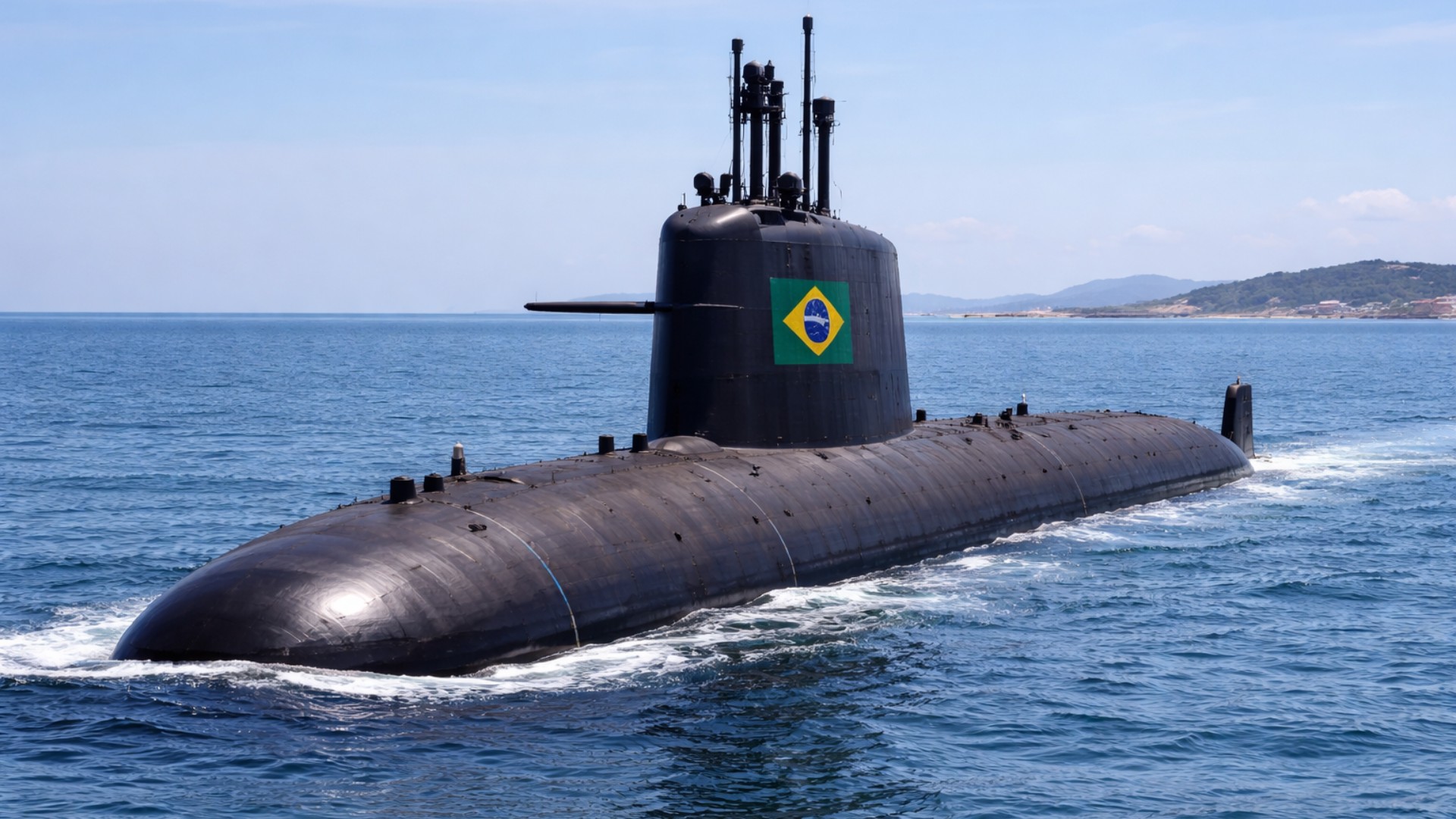
Brazil’s nuclear submarine with a speed 5 times greater than normal advances after nearly 50 years and R$ 40 billion spent.
The New Traffic Sign is a Reference Sign, Not a Warning
This type of sign with a white background and central number serves exclusively for mileage identification. In other words, the number 5 indicates that the driver is exactly at kilometer 5 of that highway or road.
In countries like Argentina and in several regions of Brazil, this signage is becoming increasingly common, being used on both national highways and on state, rural, and local roads. The idea is to create an exact location reference, which facilitates the work of:
- Assistance in case of accidents;
- Mechanical assistance;
- Emergency services;
- Location of roadworks;
- Precise identification in traffic inspections.
In summary: it is a geographical location sign, and not a speed or traffic regulation sign.
Why Have These Signs Emerged More Frequently?
The increase of these signs with central numbers in countries like Argentina and even in some stretches of Brazil is related to the modernization of highway management. They are part of a monitoring and road logistics system that allows, for example:
- Quickly locate the exact point of incidents;
- Optimize towing and ambulance services;
- Simplify maintenance and monitoring reports of sections.
This accuracy is especially useful in long stretches, where visual references may be few. In many cases, these signs appear every kilometer traveled, allowing the driver to know exactly their position along the route.
How to Identify This New Sign with a Number in the Center
Although the most common example reported by Brazilian tourists is the sign with the number 5, the format is always the same, regardless of the number:
- White background;
- Thin black edges;
- Central number in black, corresponding to the current kilometer;
- Position on the side of the road, usually on the shoulder.
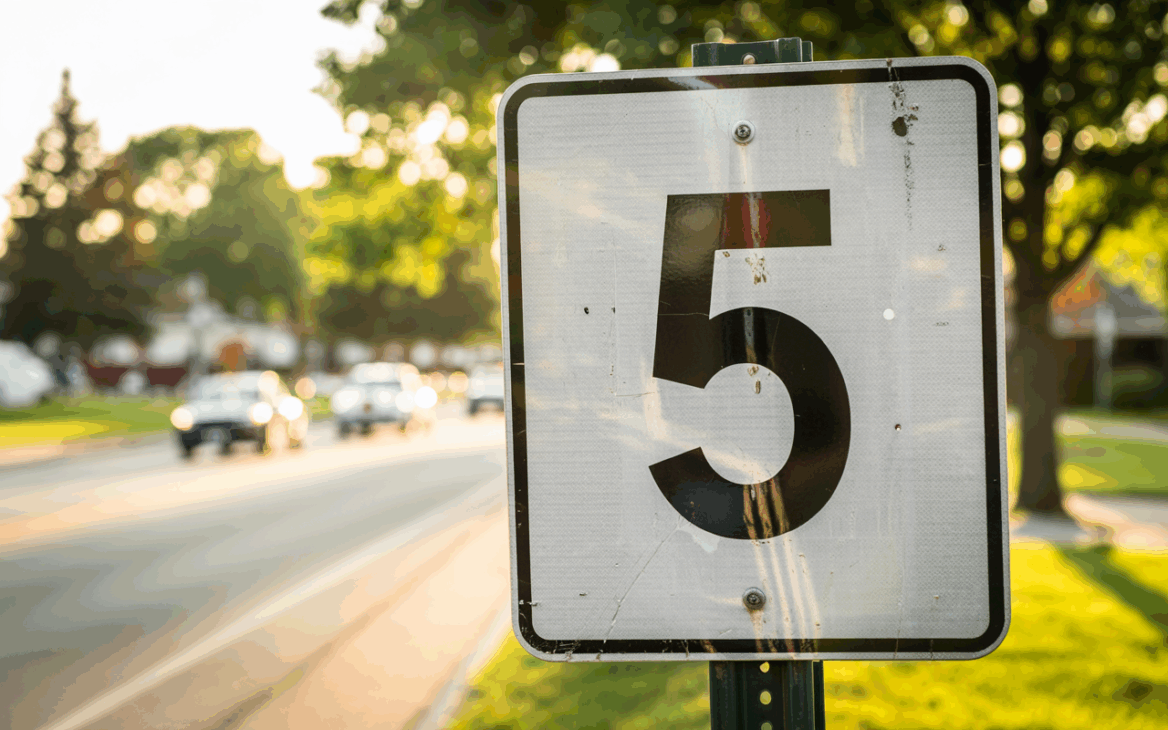
If you are, for example, at kilometer 12 of a highway, you will see the sign with the number 12, and so on.
Common Confusion: Speed vs. Mileage
It is normal for many drivers, upon seeing a sign with an isolated number, to automatically associate it with the idea of speed. Especially because we are used to round signs, with numbers inside, indicating maximum permitted limits.
However, in this case, the rectangular format and white background already reveal that it is not a speed regulation sign, but a distance marking.
Therefore, when spotting the new sign with a number 5 (or any other number), the driver can continue traveling normally, without the concern of violating any speed or direction rules.
Practical Utility for the Driver
In addition to serving as a reference for authorities, rescues, and monitoring, this mileage marking is also extremely useful for the driver themselves.
Imagine, for example, that your car experiences a mechanical failure and you need to inform your location to the insurance company or tow service. By stating, “I am at km 5 of highway X,” the rescue team will know exactly where to find you.
This signage is also crucial for truck drivers, transport companies, and logistics apps, which work with extremely detailed routes that depend on these references for load control, scheduled stops, and even travel time management.
Important: Brazil Also Adopts the Same System
Although the increase of these signs has drawn attention from those driving in Argentina, it is important to remember that Brazil also has very similar mileage signs.
On several Brazilian federal and state highways, it is already possible to find kilometer signs with the same basic format:
- White or light gray background;
- Black or blue border, depending on the road network;
- Central numbering indicating the exact km.
The main difference is that, in Brazil, in many cases, these signs are positioned next to kilometer markers or accompanied by acronyms indicating the name of the highway. But the function remains the same: location.
The new white traffic sign with a 5 in the center may cause confusion at first glance, especially for those driving outside Brazil and encountering different rules and designs. However, its function is quite simple and objective: to inform the driver about the exact mileage point at which they are on the highway.
It is a geographical orientation sign, not a warning or speed regulation. It serves both for navigation and emergencies, being a useful tool for both drivers and authorities.
Therefore, when spotting a similar sign on your next trip, you now know exactly what it means — and can continue your journey with peace of mind.







-

-

-

-

-

-

64 pessoas reagiram a isso.