





 Portuguese
  English
  Spanish
  6 min of reading
  1 comment


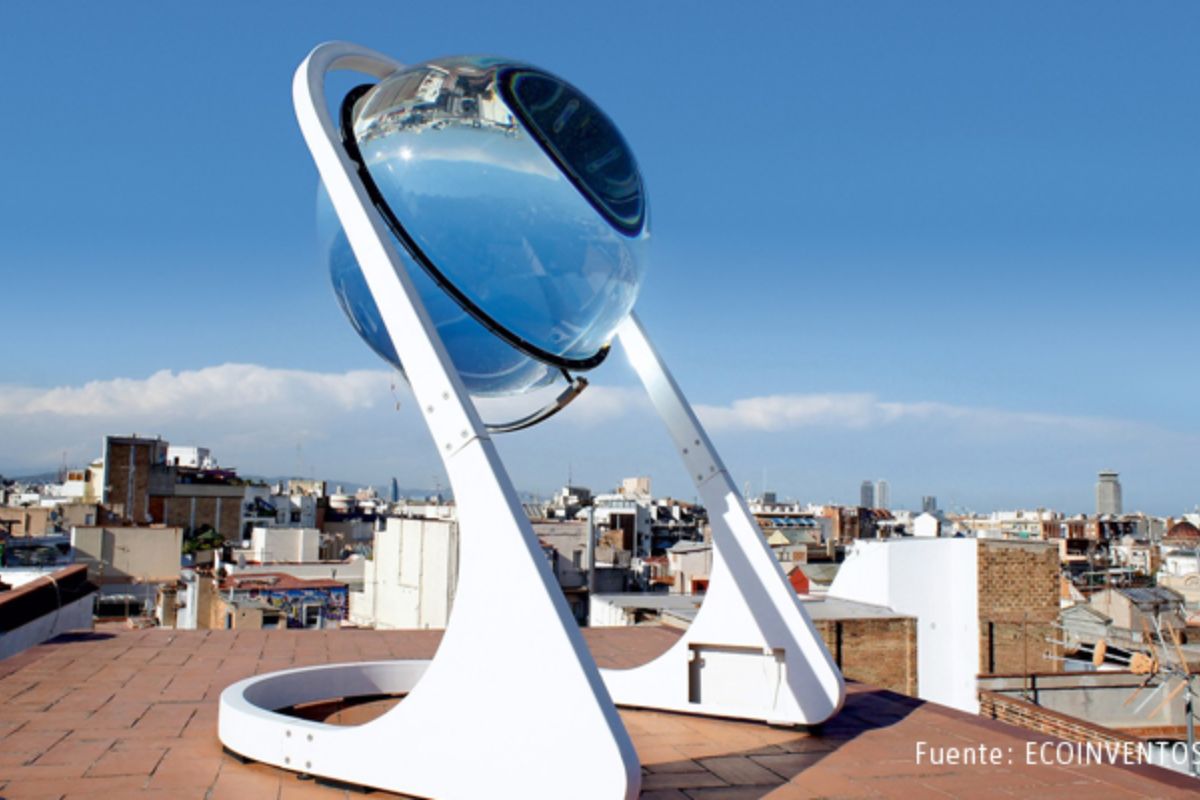


In Design Labs And Studios, The Small White Sphere Emerges As An Alternative To Solar Panels, Using Spherical Lens With Fluid To Concentrate Diffuse Light Onto Smaller Photovoltaic Cell; Rawlemon Supports 10,000 Times Focus And Tests Suggest Up To 70% More, Even On Cloudy Days.
The small white sphere enters the solar energy discussion as an unlikely object: it is not a rigid panel, does not have the typical rectangular shape, and does not depend on a single direction of light incidence. What attracts engineers and researchers is the argument that geometry can do the heavy lifting, concentrating light in a way that traditional solar panels rarely achieve under real conditions.
The idea gained traction on February 12, 2026, when Rawlemon appeared as a reference for a system that replaces the flat surface with a spherical glass lens filled with fluid. The most repeated promise requires precision: it is not about generating 10,000 times more electricity, but rather achieving optical concentration of up to 10,000 times at a focal point, with tests suggesting gains of up to 70% compared to solar panels.
Why The Small White Sphere Challenges The Standard Of Solar Panels

In the solar energy imagination, solar panels operate as plates that “point” towards the sun, seeking the ideal angle and direct irradiance.
-
The oceans are darkening all over the planet – what is happening?
-
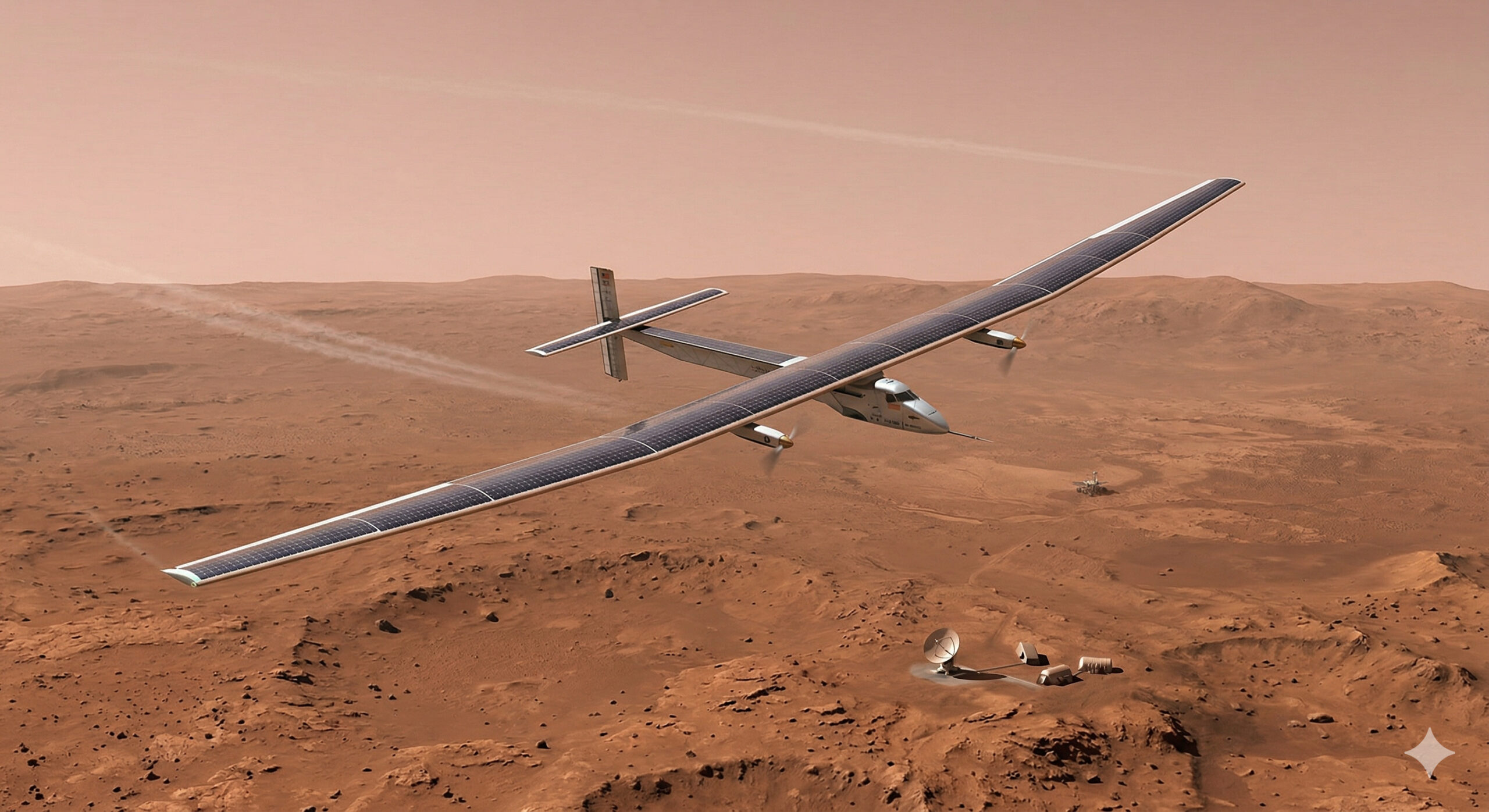
An engineer designs a solar plane to fly on Mars at an altitude of 1,000 meters and a speed of 300 km/h, covering 16,000 kilometers in a Martian year, 900 times the distance traveled by the Ingenuity helicopter in three years on the planet before experiencing a rotor failure, and NASA is already funding the feasibility study.
-
A new phenomenon of contactless magnetic friction intrigues scientists and questions a theory that has been valid since the 17th century.
-
An impressive phenomenon in Northern Brazil causes rivers of different colors to flow side by side, revealing secrets about sediments, currents, and biodiversity.


This pattern was born from a simple logic: spread light over a large area of photovoltaic cells and convert part of that energy into electricity, with more predictable performance when the sky is clear and the sun is high.
The small white sphere proposes an inversion: instead of enlarging the photovoltaic area, it attempts to amplify light intensity at a point, using a spherical lens to collect light from various directions.
In this view, the problem is not only physical; it is cultural and design-related, because solar panels have become synonymous with solar energy and the habit becomes the main barrier to testing other geometries.
How The Spherical Lens Works With Diffuse Light And Low Angles

The spherical lens used in the concept associated with Rawlemon is described as a glass sphere filled with fluid that curves and concentrates sunlight onto a tiny photovoltaic cell positioned below.
The optical logic is repetitive: the incident rays are refracted as they pass through the volume, converging to a narrow and high-intensity focal point.
The practical effect, according to the description, is to reduce dependence on the “perfect sun”.
The small white sphere can capture light even when it is diffuse, when the sun is low, and when the sky does not cooperate, scenarios in which solar panels tend to lose efficiency due to not receiving direct incidence at the ideal angle.
The intended result is a solar energy system more tolerant to daily variations, at the cost of requiring mechanical precision and thermal stability at the focal point.
What Does 10,000 Times Better Mean And Where The Phrase Changes Meaning
The expression “10,000 times better” seems an impossible leap when read as a multiplier of electricity.
Experts cited in the context of the debate warn about the difference between electrical power generated and optical concentration: the number 10,000 does not refer to producing energy from nothing, but rather to intensely concentrating light at a single point.
In practice, the small white sphere attempts to transform area into intensity, and this changes where efficiency can appear.
Conventional solar panels distribute light over a broad surface; the spherical lens, on the other hand, seeks to deliver a narrower and more powerful beam to a smaller photovoltaic cell, which suggests less active material to capture the same concentrated light flow.
The technical discussion, therefore, is not about “miracles”, but rather about optical engineering applied to solar energy.
Reported Gains Of Up To 70% And The Border Between Testing And Home Use
When the debate moves from metaphor to numbers, the most concrete data is this: tests suggest gains of up to 70% compared to traditional flat solar panels.
This level is relevant in engineering because it is not a marginal variation, and it can alter the cost per installed watt if the reduction of photovoltaic material compensates for the optical and structural complexity of the system.
At the same time, the small white sphere does not eliminate limitations; it shifts the type of limitation.
Instead of only depending on the angle of incidence, the system now depends on focus alignment, fluid durability, glass maintenance, and heat control at the focal point, which is precisely where the optical concentration of 10,000 times tends to raise energy density.
Therefore, the number 10,000 should not be confused with total electrical production, and experts avoid framing the phrase as a guarantee of immediate replacement of solar panels.
Solar Energy Outside The Ideal Sun, From Cloudiness To Moonlight
A recurring argument in favor of the spherical format is the operation under low ambient light.
The description indicates generation even on cloudy days and even under moonlight, points that enter the debate because solar panels are often evaluated only at peak sunlight, and not on the sum of performance throughout the day and year.
There is also an architectural integration component that changes public perception.
Instead of a visible panel, the small white sphere is presented as a sculptural and minimalist element, something that can be installed in different locations, capturing light from multiple directions.
Aesthetics is not neutral: in residential solar energy, adoption often depends on how the equipment fits into the house, on the roof, and in urban space, in addition to efficiency numbers.
What Still Needs To Be Clear To Become Home Infrastructure
To become an applicable solar energy system in everyday life, the concept needs to demonstrate consistency, not just optical focus.
The spherical lens must maintain performance with dirt, rain, thermal variations, and long cycles, in addition to proving that the smaller photovoltaic cell does not suffer accelerated degradation under intense concentration.
It is also necessary to separate innovation from narrative.
The small white sphere can be an incremental solution that improves efficiency and reduces material, or it can open a design language where solar panels cease to be the dominant reference for photovoltaic capture.
In either scenario, the decisive metric will be performance under real conditions, maintenance, and reliability, without confusing optical concentration with total electrical production.
What makes the small white sphere relevant is not a promise of “infinite energy,” but rather the hypothesis that geometry and optics can redesign how solar energy is collected, especially outside the ideal conditions in which solar panels are usually tested.
The spherical lens, by concentrating light on a smaller photovoltaic cell, shifts the conversation from area to focus and exposes where habit may be blocking other solutions.
Thinking about your home, would you replace solar panels with a small white sphere that relies on a spherical lens and 10,000 times concentration, even with the challenge of maintenance and heating at focus, or do you prefer the predictability of the flat format? What practical condition, such as cloudy skies, shading, or maintenance costs, would be decisive in your choice of solar energy?









Eu trocaria.