





 Portuguese
  English
  Spanish
  5 min of reading
  0 comments


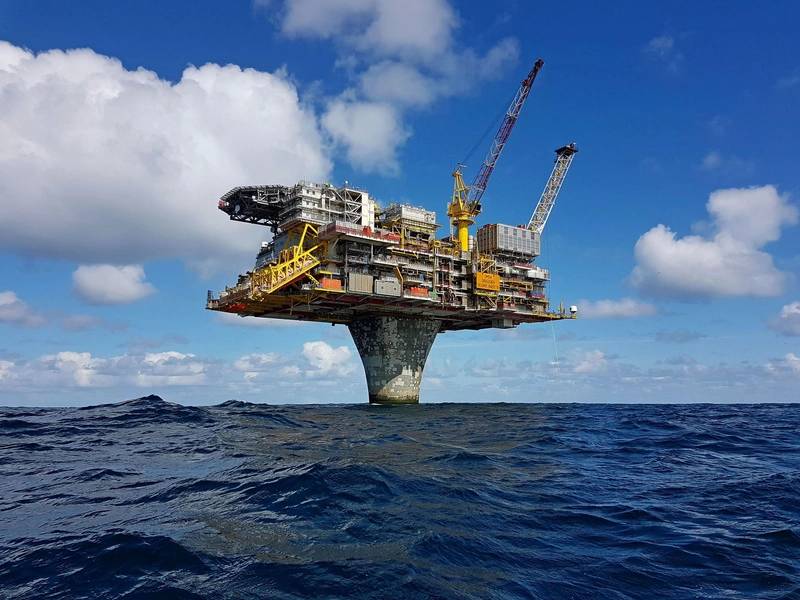
Ryan Conger from ABB Energy Industries Discusses the Evolution of APM to APM 4.0: Predictive Analytics, Automation, Insights into Asset Integrity, and Data Transmission to the Cloud.
Ryan Conger, Technical Sales Manager for APM at ABB Energy Industries, highlights the importance of APM 4.0 in the oil and gas sector. Through this evolution of reactive asset performance management, operators can avoid costly downtime and maximize profitability, especially when partnering with reliable technology providers.
Over the past two decades, asset performance management (APM) has shifted from a routine concern to a priority in process industries. Digital innovations, such as artificial intelligence (AI) technologies, the industrial internet of things, and predictive data analytics, have propelled this evolution and underscored the importance of investing in asset performance management strategies.
APM 4.0: Innovative Solutions in Asset Performance Management
The digitization solutions and automation that extract and analyze data from OT, IT, and ET are empowering sectors like oil and gas to proactively manage and monitor their critical assets, rather than reacting when machines or equipment fail, resulting in costly production downtime.
-
The rise in oil prices could ensure an extra revenue of R$ 100 billion for the Federal Government, indicates a recent economic study.

-
Naturgy begins an investment of R$ 1.6 million to expand the gas network in Niterói and benefit thousands of new residences and businesses.

-
A major turn in the Justice system suspends tax increases and directly impacts oil and gas companies in Brazil by affecting costs, contracts, and financial planning, leaving uncertain what could happen to the sector if these costs had increased.

-
Brava Energia begins drilling in Papa-Terra and Atlanta and could change the game by reducing costs in oil while increasing production and strengthening competitiveness in the offshore market.


This remarkable evolution from ‘run to failure’ or reactive APM to today’s cutting-edge quantitative risk analysis and the current state of machine health solutions – often referred to as ‘APM 4.0’ – provides a competitive advantage for resource-intensive industries like oil and gas, which now more than ever need to ensure they leverage the vast amounts of data available to them to maximize production and profitability, reduce downtime, energy consumption, and carbon emissions, and maintain a competitive edge.
Partnership with Technology Provider in APM 4.0 Solutions
APM, when implemented cost-effectively in partnership with a reliable technology provider like ABB, can help offshore operators establish a strong reliability culture by providing insights into asset integrity and recommending proactive measures to predict and prevent failures, generating genuine commercial value.
In this article, we will focus on the key trends in APM 4.0 and explain how a layered approach can help demystify technology and assist customers in identifying the right solution based on their operational and risk profile, as well as take a look at ABB’s innovative project with the Norwegian oil and gas operator OKEA to transmit live process data from its offshore platform to the cloud, enabling remote monitoring of asset health.
A Layered Approach to APM 4.0: Real-Time Failure Prevention and Detection
There are many keywords in the APM ecosystem, but the ultimate goal is simple: to predict process issues in real-time, resolve small problems before they escalate, and prevent unplanned shutdowns, ensuring that industrial assets operate at their optimal levels of performance and productivity while minimizing operational risks and maintenance costs.
When we talk about APM 4.0, it all starts with an initial event – process disturbance, asset degradation, upstream or support equipment failure – that allows us to create layers of protection around that asset to prevent further failures. This first layer of protection is what we call rules-based monitoring: it can be a single sensor that sends an alert if the temperature or pressure exceeds a predefined limit, or a more complicated if-then statement using multiple sensors.
Advanced APM 4.0 Models: Maximizing Asset Protection
However, there are additional layers that ABB can deploy to maximize protection around the asset, and typically, the more advanced the layer, the greater lead time the customer will have in terms of predicting when something is going wrong. Using a medical analogy, the APM solution alerts the operator to the existence of artery calcification three years before a heart attack.
This more sophisticated layer revolves around ‘first principles’ models. ‘First principles’ models are based on engineering design and the physics behind how equipment operates. We create physics-based models that tell us, from a performance standpoint, how something should function, which can be quickly implemented across similar types of assets. By comparing actual performance with theoretical performance, degradation or suboptimal operation can be quickly identified.
Digital Innovations: Driving the Future of APM 4.0
The final layer utilizes statistical and data-driven models, also known as AI and machine learning (ML) models. We teach the algorithms what good asset performance looks like across different variables. It then alerts the operator if and when the asset deviates from these conditions. Based on the variables that have deviated from past good behavior, we propose the failure mode with the highest likelihood of occurring.
An important differentiator of this type of model is that it can be deployed across any type of asset or system (rotating, electrical, and fixed equipment) that can provide adequate levels of sensor data. When we combine ‘first principles’ with data-driven models, we create a hybrid modeling approach to provide maximum protection for the most critical assets. Depending on the criticality of the asset and its specific risk profile, the customer can decide how many layers they want to implement.
APM 4.0: Innovative Partnership with OKEA
I previously mentioned that partnering with a technology provider that has deep domain knowledge of APM and its role in process industries is a prerequisite for success. This is vividly illustrated by ABB’s digital partnership with the Norwegian operator OKEA, which resulted in the Norwegian operator becoming the first oil and gas company to successfully transmit contextualized process data to the cloud.
Located 130 km off the coast, Draugen is one of Norway’s largest oil fields. Real-time data transmission directly from the control system to the cloud was a significant achievement. The time it takes for high-resolution data, including structures, objects, alarms, and events, to be generated and made available in the cloud is just 0.8 seconds. Utilizing ABB’s portfolio of digital solutions, including asset performance management applications and services, OKEAs can remotely monitor asset integrity almost in real-time. This project achieved distributed updates of asset data securely, enabling personnel to view, analyze, and forecast operations more efficiently for more informed, data-driven decision-making, as well as cost savings of up to 30%. Additionally, fewer personnel were required on the platform to monitor equipment. This allowed for safer operations without an increase in risk.
Projects like this demonstrate the power of streaming solutions, such as ‘Software-as-a-Service’ (SAAS), and how APM 4.0 – incorporating innovations like AI and ML, combined with creative problem-solving, expertise, and collaboration – can help unlock the disruptive power of APM 4.0.
Sources: 1,2 https://new.abb.com/process-automation/genix/genix-apm
3 What is Asset Performance Management (APM)? | ARC Advisory Group (arcweb.com)
5,6 https://new.abb.com/oil-and-gas/digital/okea-digital-partnership (video and text)









Seja o primeiro a reagir!