Floating barriers installed in Guatemala are designed to contain waves of garbage during floods in the Motagua River system. The Interceptor 006 captures 1.4 million kilograms in one night and over 10 million in 15 months, while the estimated pollution reduction reached 70% at the site.
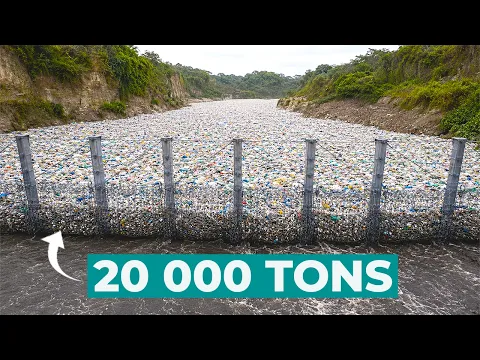
The floating barriers installed in the Motagua River system in Guatemala are now facing an extreme problem during the rainy season: waves of bottles, wood, and other waste flow rapidly toward the Caribbean Sea. According to estimates provided, the river system could carry up to 20,000 metric tons of plastic per year.
A video published by Innovative Techs on YouTube on August 15, 2026, shows that a project developed by The Ocean Cleanup has increased in scale after various attempts to intercept waste. After years of development, the Interceptor 006 retains 1.4 million kilograms of waste overnight and surpassed 10 million kilograms in the first 15 months of operation.
Pollution begins before waste reaches the Motagua
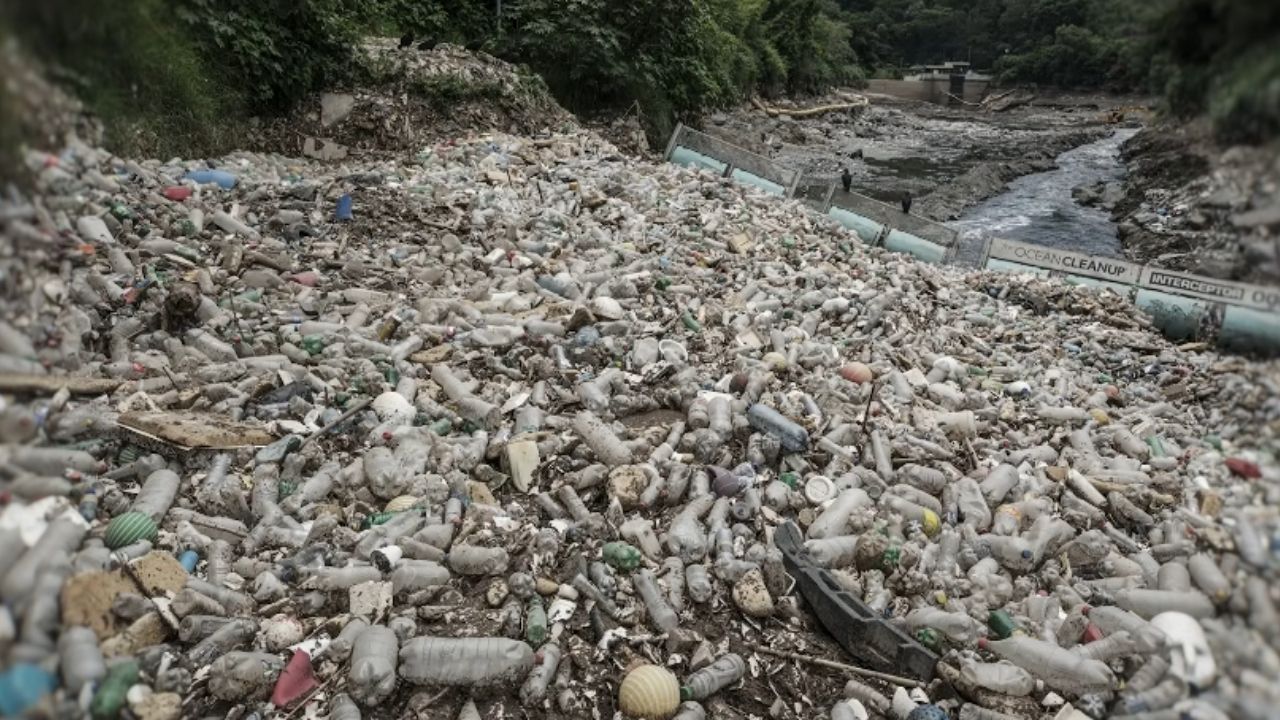
The problem does not originate solely from the river’s main bed. According to the material, some of the waste comes from Guatemala City and flows through a network of ravines, small streams, and tributaries before reaching the Motagua.
-
A spacecraft traveling at 60,000 km/s: the Starwisp project would use microwaves to propel an ultralight mesh to Alpha Centauri and return images to Earth

-
Researchers Map Over 2 km of Submerged Caves in Mato Grosso, Diving Beyond 130 Meters in Search of New Channels

-
Brazil Unveils $1.06 Billion AI Supercomputer with 7,200 Petaflops, Aiming for Global Top 10 and Plans to Transform Rio Grande do Norte and Rio de Janeiro into AI Hubs by 2027
-
This New Technology Transforms 72,000 Contaminated Laboratory Disposable Bottles into Recyclable Plastic


One point mentioned is the landfill in Zone 3, which is used to collect waste from the capital. During heavy rains, materials discarded in areas near the ravines can be swept away by water, feeding into streams that reach the Las Vacas River and, subsequently, the Motagua system.
Insufficient collection increases pressure on rivers
The transcript states that only about one-third of the country’s solid waste is collected, while approximately 4 million people live in the watershed associated with the Motagua.
The lack of organized waste collection in various communities and the presence of illegal dumping sites mean that plastic enters the system at numerous points, making it insufficient to rely solely on cleaning one stretch of the river.
Up to 20,000 tons could reach the Caribbean each year

According to estimates attributed to The Ocean Cleanup in the report, up to 20,000 metric tons of plastic could be transported annually by the Motagua system towards the Caribbean.
The current does not limit its effects to Guatemala. Part of the waste may reach Honduran waters and Caribbean coastal beaches, creating cleanup costs and impacts for fishing communities and tourism-dependent regions.
Initial barriers could not withstand major floods
Attempts to block the waste began before the implementation of the current systems. From 2016 onward, local authorities and volunteers used improvised structures with steel cables, drums, nets, and floating tubes.
These initial floating barriers managed to retain some bottles and debris under normal conditions. The problem arose during heavy rains: the pressure of the current and the amount of waste caused some structures to break or allowed debris to pass over them.
About three years of studies led to a new system
The scale of the floods presented a challenge different from that encountered in other rivers. According to the report, hundreds of thousands of kilograms of waste could surge forward in a matter of minutes during extreme events.
After more than three years of research and development, The Ocean Cleanup installed an experimental system in May 2022 called Interceptor 006, initially known as Trash Fence.
The first version featured a steel structure standing 8 meters tall

The first concept was inspired by structures used for rockfall protection in mountainous areas. A large steel mesh was supported by vertical posts fixed to the riverbed and connected to cables anchored on the banks.
The barrier reached approximately 8 meters in height and was designed to allow water to pass while retaining solid waste. The idea appeared appropriate until it faced one of the first major floods.
Flood Exposed Flaws in Original Project
When a large amount of water and debris struck the structure, the accumulated waste restricted the flow more than engineers had anticipated.
The water began to exert significant pressure on the foundations, leading to erosion around the support points. Part of the structure collapsed, and a large portion of the material that had been contained was swept back downstream.
Project Shifted from Fixed Screen to Floating Barriers

The failure led to a complete redesign. The following year, the concept based on a mesh crossing the river was replaced by a system called Interceptor Barricade.
Instead of directly resisting the force of the entire flood, the project began utilizing two floating barriers made of connected modules, installed in a hydropower reservoir where the current was expected to be less intense.
First Barrier Was 51 Meters; Second Reached 107 Meters

The first structure was approximately 51 meters long and was connected to the shores by chains anchored to large concrete foundations.
Further downstream, a second line measuring approximately 107 meters was designed to intercept any waste that managed to bypass the first barrier. The design allowed water to flow underneath while containing debris that remained on the surface.
One Single Night Brought 1.4 Million Pounds of Waste
The new concept faced an extreme test during one of the largest floods recorded at that location. In a single night, the Interceptor 006 captured 1.4 million pounds of waste.
According to the source, this volume would equate to about 272 truckloads of waste and represented the largest capture in a river recorded by The Ocean Cleanup up to that point.
More than 10 million kilograms have been intercepted in 15 months
The outcome was not restricted to a single event. In the first 15 months of operation, the Interceptor 006 is estimated to have prevented the passage of over 10 million kilograms of waste.
The volume was compared to more than 2,200 garbage trucks. The floating barriers have thus functioned as a containment line for one of the largest influxes of waste from the capital region.
System reduces pollution, but cannot intercept everything
The Interceptor 006 is located on the Las Vacas River, upstream of its confluence with the Motagua. This means it targets a significant portion of the waste, but does not cover all points where new debris enters the system later on.
During certain floods, some materials may also surpass the structure. The reduction attributed to the system is estimated at approximately 60% to 70% of the pollution, according to the data presented by the source.
Second interceptor installed closer to the Caribbean
As waste continued entering the Motagua after the first barrier, a new structure became necessary near the river mouth. The project was named Interceptor 021 Barricade XL.
Installed in the El Quetzalito region, the system has been described as a larger and more robust version. The structure reaches approximately 158 meters and was designed to withstand stronger currents and impacts from large logs carried by floods.
Interceptor 021 captures 500 thousand kilograms in the first month
Results appeared quickly. According to the source, the second system captured approximately 500 thousand kilograms of waste in just the first month of operation.
Thus, the two interceptors began to operate in complementary positions: the 006 retains a large portion of the material coming from the capital region, while the 021 functions as a new barrier for waste continuing down toward the sea.
Disposal of removed waste also became a challenge
Capturing millions of kilograms raises another question: what to do with the material after it exits the water. In Interceptor 006, the waste is sent to a facility where recyclable items are separated.
In the second system, sorting occurs at the collection point itself. Organic material can be sent for composting, wood can be repurposed, and PET bottles are compacted before heading for processing, according to the provided description.
Part of the plastic is recycled into products
The recovered PET is sent for processing in Honduras. The material states that the plastic can be transformed into items such as pillows, mops, and brushes.
The revenue generated from PET helps cover part of the sorting costs, but a significant problem remains: a substantial portion of the collected waste has no economic recovery or simple recycling possibility.
Floating barriers do not address the source of the problem

The project itself acknowledges a structural limitation. Guatemala’s waste system continues to exhibit deficiencies, and new materials keep entering the rivers.
The floating barriers can prevent some of this waste from reaching the Caribbean, but they do not replace proper collection, correct disposal, and prevention at the source. They act as a defense along the waste’s path, not as a complete solution to its generation.
Cleanup has also advanced to coastal areas
After installing the interceptors, the project began working on the plastic that had already reached the coast. According to the source, in 2025 The Ocean Cleanup started collaborating with local communities to remove waste accumulated along the shoreline.
Honduras Gulf has not been completely restored, but the material reports visible signs of change. In El Quetzalito, residents have managed to celebrate Easter at the beach again after 12 years without doing so due to the local situation.
System shows the scale of a battle that is not yet over
The figures help to illustrate the challenge: up to 20,000 metric tons of plastic estimated per year in the system, 1.4 million kilograms captured in a single night, over 10 million in 15 months, and an estimated reduction of up to 70% in part of the pollution flow.
The floating barriers have succeeded in containing volumes that previous structures could not handle, but the continuous inflow of waste shows that the technology addresses the consequence of a larger problem. Do you believe that investments should prioritize more interception systems in rivers or first expand collection and treatment of waste in cities? Share your opinion in the comments.