





 Portuguese
  English
  Spanish
  5 min of reading
  1 comment





New Proposal of Theoretical Physics Suggests That We Live in a Universe with Three Dimensions of Time, Where Space Would Be Just an Emergent Consequence. Understand How This Radical Theory of Reality Could Change Everything We Know About Time vs Space
A new theoretical proposal formulated by Gunther Kletetschka, a physicist at the University of Alaska Fairbanks, is sparking heated debates in the scientific community. According to him, time is not linear or one-dimensional — but rather composed of three dimensions, while space would merely be an emergent phenomenon. This theory of time with three dimensions proposes a radical inversion of the model established by Einstein, challenging the foundations of modern physics. The idea is based on precise mathematical calculations and promises testable experiments, potentially representing a milestone in theoretical physics.
Why Is The Radical Theory of Reality Attracting Attention?
The theory published in the scientific journal Reports in Advances of Physical Science proposes that time is the fundamental structure of the universe. While Einstein’s relativity describes spacetime as a mesh of four dimensions (three spatial and one temporal), Kletetschka inverts this model, bringing time vs space.
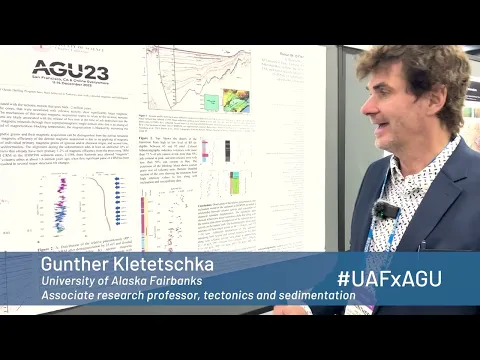

For him, the universe would be composed of three temporal directions, and the space as we know it would arise as a projection or a byproduct of that structure. This view, described as a radical theory of reality, opens up space for a reformation of the laws of physics, especially regarding the origin of matter, the nature of gravity, and the behavior of subatomic particles.
-
China is testing a train that will operate at 400 km/h in daily service, which is 80 km/h faster than the French TGV, and uses carbon fiber, magnesium alloys, and more than 4,000 sensors to become the fastest commercial train on the planet.

-
Forget about having an air fryer, electric oven, and steam pot taking up space in your kitchen because a 30-liter smart oven combines all these functions, automatically selects the ideal temperature, and even turns off by itself when cooking is done.

-
Engineers rewrote all the apps from scratch and bet everything on a buttonless screen: now the creator of the iPhone says that Apple needs to make the same revolution again because of AI.

-
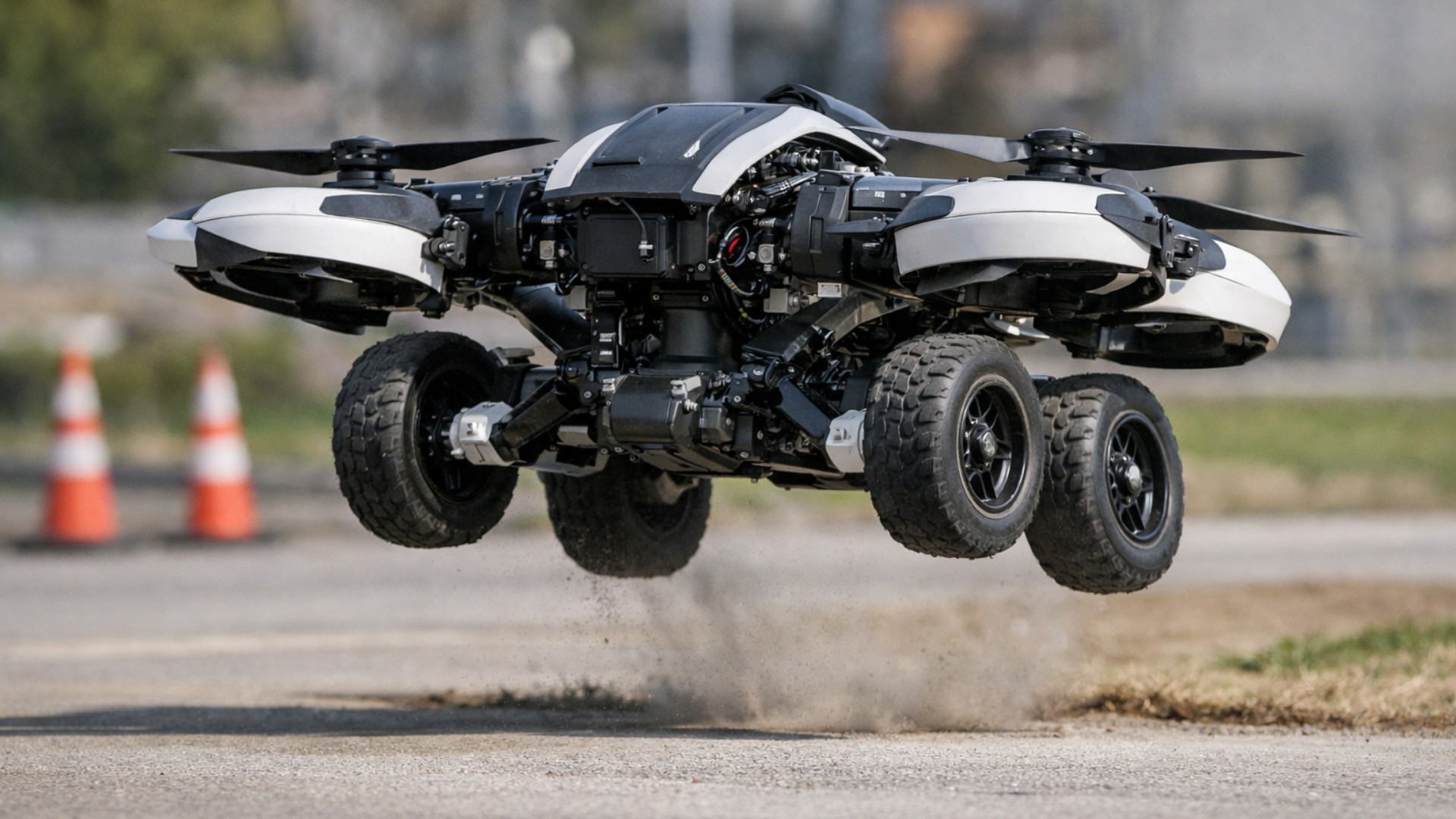
Researchers in the U.S. have created a flying robot that transforms into a land vehicle while still in the air. The technology, based on aerodynamic transition, converts landing into a scene worthy of Transformers and redefines mobility between sky and ground.

Time vs Space: A New Approach
According to Kletetschka, time unfolds in three distinct directions:
- One dimension represents the temporal flow that we know — from the past to the future.
- The second, associated with alternative futures, encompasses the possibility of branching and parallel realities.
- The third would allow transitions between these different timelines.
This new model of time and space not only maintains the principle of causality (essential for physics) but also offers a novel explanation for the emergence of space, proposing that it would be derived from these temporal interactions.
Space as a Secondary Effect in the Universe
The proposal also completely reformulates the function of space in the cosmos. Instead of being a fundamental structure, space would be a consequence of the dynamic behavior of time.
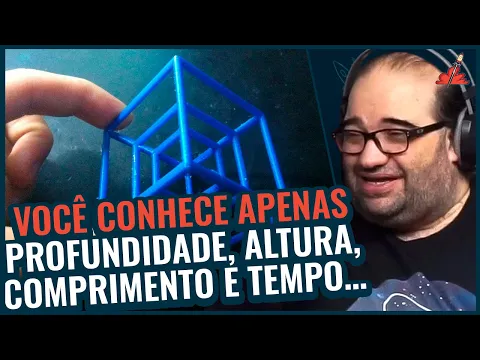
Kletetschka uses the analogy of a canvas and a painting: time would be the invisible base, the “canvas” where everything happens, while space would be the “paint,” visible but derived. Thus, space as a secondary effect becomes an emergent characteristic, not a basic component of the universe.
This paradigm shift could alter our understanding of movement, location, and even the very existence of matter as we know it.
A Proposal with Mathematical Foundations and Testable Predictions
Unlike previous theories that addressed multiple dimensions of time in a purely theoretical manner, Kletetschka’s proposal stands out for its ability to be tested. The model presents:
- Exact mathematical predictions about the mass of particles such as electrons, muons, and quarks.
- Potential explanations for phenomena that are still not understood, such as the behavior of neutrinos.
- Suggestions for detecting variations in gravitational waves, which could validate the existence of multiple temporal dimensions.
These elements make the theory empirical rather than merely speculative, increasing its value within the field of theoretical physics.
How This Proposal Differs from Other Theories
Other approaches that have sought to unify the laws of physics — such as string theory or loop quantum gravity — add extra spatial dimensions and have yet to fully integrate general relativity with quantum mechanics. Kletetschka’s proposal differentiates itself by focusing solely on time as the main structure.
The theory of time with three dimensions also differs from M-theory, for example, by prioritizing causality and experimental verification. While bold, it does not discard previous models but suggests a different hierarchy between time and space.
Possible Implications for Science and Technology
If validated, this theory could redefine basic concepts of physics, cosmology, and even philosophy. Some potential implications include:
- A new structure for understanding the Big Bang and the origin of the universe.
- Advances in technologies that depend on the manipulation of time and gravity.
- Deep changes in the way we interpret quantum entanglement and multiverses.
Moreover, it could pave the way for more unified models of reality — something theoretical physicists have been seeking for decades with the so-called “Theory of Everything.”
Reactions from the Scientific Community
The scientific community has received the proposal with a mix of skepticism and interest. Experts highlight that, although the theory is innovative, it will need to undergo rigorous testing to be accepted.
Some physicists observe that the reinterpretation of space and time requires a profound revision of well-established concepts. However, the fact that the theory presents measurable predictions is one of its strong points.
Like any major paradigm shift, this idea may take time to be digested and properly evaluated through experiments and observations.
What Makes This Theory of Time with Three Dimensions So Relevant?
This proposal is not just another speculation about parallel universes or time travel. It is grounded in consistent mathematics and aims to address still-open questions in contemporary physics.
The focus on space as a secondary effect, derived from temporal interactions, breaks traditional logic but offers plausible solutions to gaps that current science has yet to fill. Additionally, the idea of a new model of time and space, with a three-dimensional temporal structure, provides a new foundation for understanding the universe.
In a scenario where various theories compete for scientific attention — many of them without any capacity for experimentation — Kletetschka’s proposal stands out for its practical testability potential.
Why Should We Follow This Possible Revolution in Physics?
While still in the early stages of validation, Kletetschka’s theory represents one of the boldest efforts to redefine the pillars of modern physics. By inverting Einstein’s logic, transforming time into the protagonist and space into a supporting role, it not only alters equations but also challenges our common sense.
This radical theory of reality could be a game-changer if its predictions are confirmed. The possibility of seeing time as an entity with three directions and space as an emerging illusion compels us to rethink not only the universe but our role within it.
For scientists, philosophers, and the curious, the invitation is made: reconsidering reality in light of time — and no longer space — may be the key to understanding what we really are.







comprobado el tiempo es emergente