





 English
  Francês
  Alemão
  Italiano
  Japonês
  Norueguês
  Portuguese
  Spanish
  4 min of reading
  0 comments


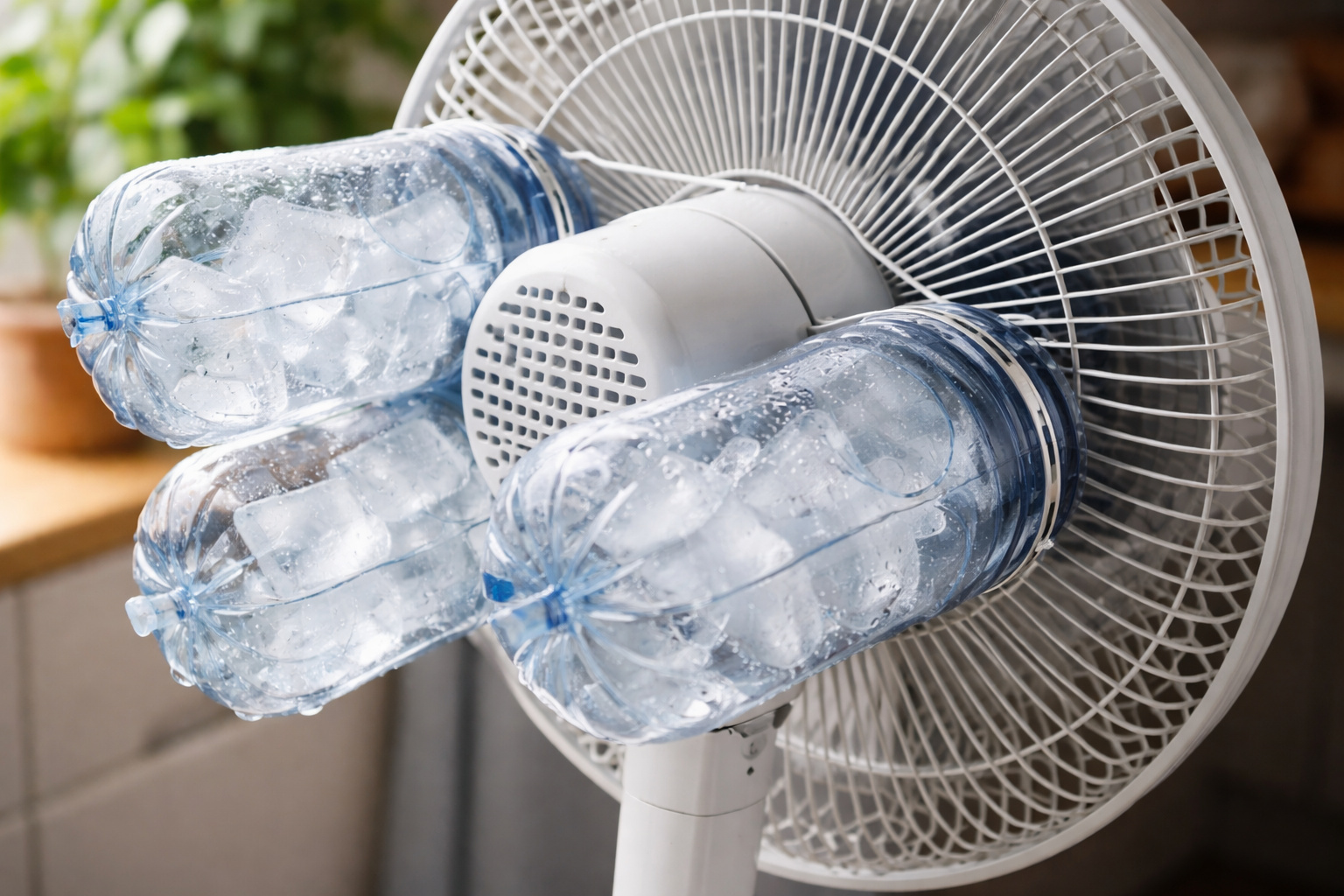
Improvised solution gains strength on social networks in the face of high temperatures, but experts warn that thermal relief is limited and requires attention to safety and humidity in the environment
The intense heat of 2026 has led thousands of Brazilians to seek affordable alternatives to mitigate high temperatures indoors. In this scenario, a simple method involving a fan and a PET bottle has gained prominence on social media, promising a feeling of freshness without significantly increasing the electricity bill.
Moreover, the popularity of this homemade solution is directly linked to the rise in out-of-season temperatures and the difficulty many families face in investing in more advanced cooling systems. Therefore, understanding how this method works in practice becomes essential before adopting it in daily life.
How the PET bottle and fan trick works
Generally, the method consists of attaching cut PET bottles to the back of a fan. In some versions, these bottles are filled with ice or cold water, with the aim of cooling the air before it is directed into the environment.
-
A 176,000-hectare farm in the Northeast is up for sale for R$ 1.2 billion, featuring a runway, fuel station, river, schools, and warehouses, and has become a phenomenon on social media due to its size, which surpasses that of Brazilian capitals.

-
Finding a 3.9 mm larva of the lionfish in the Amazon raises maximum alert and indicates that the invader may already be reproducing in the region.
-
On a tiny island of 6.3 hectares, Mitsubishi created a city for over 5,000 residents, sustained by underwater coal mining, until the project’s collapse left ruins that still impress Japan.

-
Scientists open a 1-million-year-old capsule in New Zealand and find fossils of 16 species that reveal extinctions caused by volcanoes and climate changes before humans.


This information was shared by “Olhar Digital,” based on technical analyses and explanations from experts, who highlight the basic functioning of the system and its real limits of efficiency.
Additionally, according to an article published by PubMed, homemade adaptations do not replace climate control systems designed for adequate thermal management. In other words, despite seeming efficient at first glance, the method does not actually lower the room temperature as an air conditioner would.
Still, the trick can create a more pleasant thermal sensation for a short period. This happens because the air passes over the ice, creating a momentary localized cooling effect.
See how the system works in practice:
Use of ice
The air passes over the ice and creates a cooler thermal sensation around the fan.
️ Air circulation
The fan distributes this more humid and slightly cooled air throughout the environment.
⏳ Temporary effect
The freshness gradually decreases as the ice melts, reducing the effect over time.
Therefore, although the method is interesting as an emergency alternative, it does not promote a real drop in the room temperature.
Real efficiency: does it really work or is it just a sensation?

Despite its popularity, experts make it clear that the fan, by itself, only moves the air already present in the environment. In other words, it does not have real cooling capacity.
However, when combined with ice or cold water, there is a slight improvement in the thermal sensation, especially in areas close to the device. Thus, the relief is localized and not uniform throughout the space.
Additionally, factors such as ventilation of the environment, external temperature, and air circulation directly influence the effectiveness of the method. In very hot or stuffy places, the result tends to be even more limited.
Another important point is that continuous use can increase the humidity of the environment, especially when there is constant melting of the ice. Consequently, this can generate additional discomfort, depending on the region and weather conditions.
Essential care when using the homemade method
Although it is a low-cost solution, using the fan with a PET bottle requires extra attention to safety.
Experts warn that improvised adaptations can pose electrical risks, especially if there is contact between water and components of the fan. Therefore, following some basic recommendations is essential:
- Avoid any contact of water with wires or outlets
- Use well-sealed containers
- Maintain a safe distance between the ice and the fan motor
- Avoid prolonged use without supervision
Additionally, the risk of electrical overload should also be considered, especially in older or already worn-out equipment.
Is it worth using this solution in the heat of 2026?
Overall, the PET bottle and fan method can indeed provide momentary thermal relief on extremely hot days. Moreover, it stands out for being cheap, easy to assemble, and accessible to most people.
On the other hand, it is important to emphasize that this solution does not replace efficient climate control systems, such as air conditioning or air coolers. Therefore, the choice directly depends on the need, budget, and conditions of the environment.
Here’s a summary of the evaluation:
Cost: low investment and easy assembly
Efficiency: limited and temporary thermal relief
Safety: requires care with electricity and humidity
Thus, the trick can be useful in emergency situations, but it should not be seen as a definitive solution to face the intense heat of 2026.
Have you already tested this trick with a fan and PET bottle or know another simple way to relieve heat without spending much?








Seja o primeiro a reagir!