





 Portuguese
  English
  Spanish
 5 min of reading
  7 comments


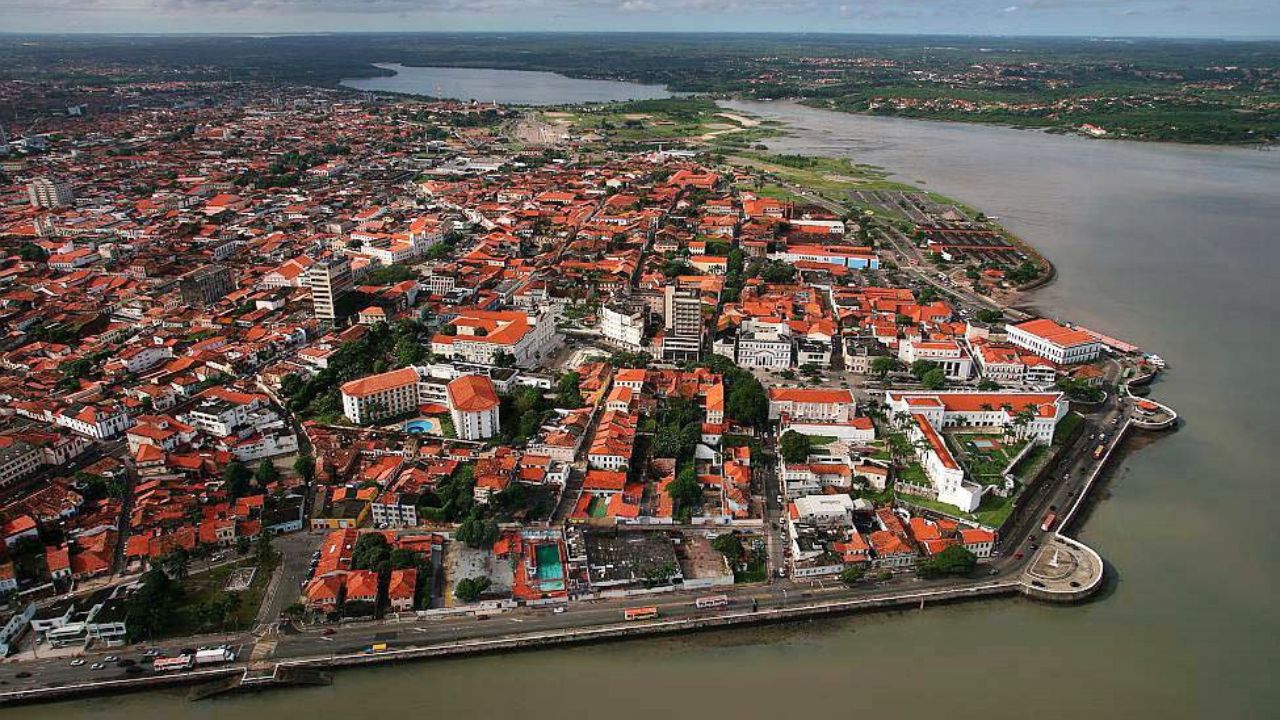


In Addition to Being the Only Brazilian Capital Founded by the French, São Luís, in Maranhão, Is Known as “Island of Love”, Boasts a Historical Center of Portuguese Tiles and Pulses to the Contagious Rhythm of Reggae, Which Earned It the Title of “Brazilian Jamaica”.
São Luís is a city of multiple and fascinating identities. Officially known for being the only Brazilian capital founded by the French, a historical fact that distinguishes it in the national scenario, the capital of Maranhão challenges easy labels. Its streets tell stories that go far beyond its European origin, revealing an urban landscape shaped by the Portuguese, a vibrant popular culture, and a soul that resonates with Caribbean sounds. This complexity is visible in its nicknames, architecture, and, most importantly, in its music.
Far from being contradictions, these different facets are layers of a rich urban palimpsest. The French heritage, the architectural legacy of Portugal recognized as World Heritage by UNESCO, and the powerful reggae culture are not isolated elements, but interconnected chapters that form the biography of one of Brazil’s most unique cities. Understanding São Luís is diving into its historical disputes, the opulence of its large houses, and the cultural strength that emerged from its periphery to conquer the country.
France, Portugal and the Netherlands: The Disputed Genesis of the Capital
The history of São Luís officially begins on September 8, 1612, when a French expedition led by Daniel de La Touche established the Fort of Saint-Louis in honor of King Louis XIII. According to data from IPHAN (National Institute of Historical and Artistic Heritage), the goal was ambitious: to create a permanent colony called Equinoctial France, challenging Iberian dominance in South America. The French sought alliances with the local Tupinambá peoples, who were hostile to the Portuguese, consolidating their position in a strategically important territory.
-
Why was the Great Wall of China built? The truth that many are unaware of!
-
At 73.8 meters tall, the world’s tallest teapot-shaped building has 15 floors, ensures stability, and impresses with an internal space of 28,000 cubic meters.
-
Ambev has planted over 3 million trees and restored an area equivalent to the coastline from São Paulo to Natal, and the result after 15 years of silent investment has finally appeared for all of Brazil to see.
-
A new AI collar technology for cattle eliminates physical fences, creates virtual barriers, monitors animals 24/7, and detects changes in behavior and health.


Despite the planning, the French presence was extremely brief. The Portuguese Crown reacted quickly, and in 1615, just three years after its founding, forces led by Jerônimo de Albuquerque defeated the French at the Battle of Guaxenduba, incorporating the city into Portuguese-Brazilian rule. Instability, however, continued. As detailed by IPHAN, the city would still be invaded and occupied by the Dutch between 1641 and 1644, who were expelled by a revolt of local settlers. It was only after this tumultuous period that the Portuguese colonization solidified, redesigning the city under a new urban perspective.
The City of Tiles: World Heritage in the Tropics


With the consolidation of Portugal, São Luís experienced its economic peak in the 18th and 19th centuries, driven by the export of cotton and rice. This prosperity financed the construction of imposing houses and buildings that today make up its famous Historical Center. In 1997, this architectural ensemble was recognized as World Cultural Heritage by UNESCO, a testament to its exceptional preservation and value. The protected area, according to IPHAN, covers about 4,000 properties that form a unique example of a Portuguese colonial city adapted to the equatorial climate.
The most striking feature of this architecture is the covering of façades with tiles. São Luís has the largest collection of tilework from the 18th and 19th centuries in Latin America, a detail that earned it the nickname of “City of Tiles”. According to IPHAN, the use of these materials, mostly Portuguese, was not merely aesthetic. The tiles served a crucial practical function: to protect the walls from moisture caused by heavy tropical rains and to reflect sunlight, helping to keep indoor environments cooler. This ingenious solution is a symbol of the adaptation of European architecture to local conditions.
Island of Love or Brazilian Athens? The Nicknames That Tell Stories
The identity of São Luís is also expressed through its multiple nicknames, which reveal different eras and views about the city. The most famous today is “Island of Love”. According to the magazine Viagem e Turismo (Abril), the origin of the term is uncertain, with theories pointing to a popular song by composer Cláudio Fontana or even a tourism marketing campaign. Regardless of its origin, the nickname has been embraced by the locals and visitors, who see in the charm of the stone streets and the city’s sunsets a genuinely romantic setting.
Another historical epithet, although less used today, is “Brazilian Athens”. This title emerged in the 19th century, when São Luís became an important intellectual and literary hub in the country, the birthplace of great writers such as Aluísio Azevedo and Graça Aranha. This nickname reflects an erudite, Eurocentric self-image of the local elite at the time. The coexistence of these two titles, “Island of Love” and “Brazilian Athens”, shows how the perception of the city has evolved, transitioning from an ideal of high culture to an image more connected to affection and tourism.
Brazilian Jamaica: How Reggae Redefined Local Identity
The most impactful cultural transformation of São Luís is, without a doubt, the one that granted it the title of “Brazilian Jamaica”. An analysis from the portal Brasil de Fato details how Jamaican rhythm, which arrived in the city in the late 1970s, became a pillar of local identity. Reggae was not only consumed; it was reinvented with unique characteristics, such as the dance style “agarradinho”, which differs from how the rhythm is danced elsewhere in the world, and the culture of radiolas, gigantic sound systems that are the heart of the parties.
The movement grew in the periphery and was initially looked down upon by the elite, but its popular strength was overwhelming. One of the most creative phenomena of this cultural appropriation, according to Brasil de Fato, was the creation of “melôs”: as the lyrics in English were not understood, the songs gained nicknames in Portuguese based on phonetics. What began as a subculture became an official symbol, culminating in the creation of the Reggae Museum and the sanction of Federal Law 14.668, in 2023, which conferred upon São Luís the title of National Capital of Reggae. This rise represents a redefinition of the identity of the city, now marked by the strength of its Afro-diasporic culture.
São Luís is a city of many layers, each with its own story. Which of these facets surprised you the most? The French origin, the beauty of the Portuguese tiles, or the strength of reggae? Let us know in the comments what your view is on the identity of this unique capital!






Excelente trabalho com detalhes de conteúdo muito diferente! Adorei a matéria! Muito bem direcionada!
Tenho muita vontade de um dia conhecer São Luís. Parabéns pela linda história
Boa tarde! Como não sou fã do reeg, achei interessante a origem da Capital de São Luís. Desconhecia sua origem Francesa e seus dias Holandeses. E também as guerras travadas contra os Franceses e Holandeses.
Amo História e principalmente a nossa! Parabéns pela matéria!
Obrigado!