





 Portuguese
  English
  Spanish
  4 min of reading
  1 comment




In Nigeria, Thousands of Women Catch Edible Termites During the Rains to Turn Them Into Nutritious Snacks. See How This Ancestral Tradition Became a Source of Income and Sustainable Protein.
In the darkness of tropical nights, when the first rains of the year fall on villages in southwestern Nigeria, thousands of women gather with torches, aluminum basins, and improvised nets, in a scene that blends ancestral tradition, nutritional science, and an economy based on the invisible to the modern world. The goal is simple: to catch winged termites — known as “esunsun” in the Yoruba language — which will be transformed into one of the most consumed alternative proteins in the country.
What may seem exotic or even strange at first glance is, in fact, an ancestral food system that is efficient, sustainable, and highly nutritious, feeding millions of people and driving informal markets and regional fairs. Amid the rising global debate on alternative proteins, Nigeria has already had a functional model based on edible insects for centuries, where women are the protagonists of collection, processing, and commercialization.
Edible Termites: An Alternative Protein from Africa
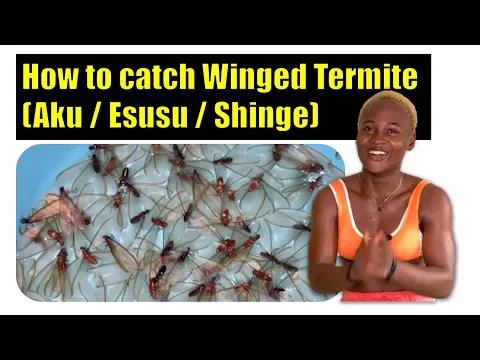
Although the term may still sound unusual to many Westerners, the consumption of edible termites is well-documented in various African countries. In Nigeria, especially in the rural regions of the south and southwest, the hunting of winged termites occurs during the rainy season, when the insects emerge in swarms, attracted by moisture and light. It is at this moment that the community mobilizes: women and children go out with lanterns, basins, or bamboo torches to catch the insects, which are easily attracted by the lighting.
-
Hidden beneath the dense forest of the Sierra Nevada, Betoma emerges in a neighbor of Brazil as the greatest archaeological discovery of the century, revealing a colossal ancestral city covering over 18 km², with 8,334 stone structures and the potential to rewrite the history of South American civilizations.

-
Goodbye iron: new technology from Xiaomi promises to revolutionize the way we iron clothes with 500 kPa steam, continuous flow of 120 g/min, heating in 65 seconds, and six smart modes for different fabrics.

-
Rio Pardo, the most mysterious city in Rio Grande do Sul: untouched Pampas castle, the missing treasure of the Devil Boy, bride’s saint, invisible tunnels, and a 200-year curse today.

-
China retires the J-7 fighter after years of military protection and can now transform military items into drones, following more than 60 years of operation of the J-7, derived from the MiG-21, with thousands of units produced and strategic use in the PLAAF and PLANAF.


The process is simple but effective. The termites fly erratically and collide with shiny surfaces, making them easy to gather by hand or with improvised sieves. In just a few hours, hundreds of grams of insects are collected, cleaned, dried, and prepared — either for immediate consumption or for sale at local fairs and urban markets.
The most common species is Macrotermes bellicosus, which can reach 2 centimeters in length and is considered one of the tastiest among edible insects.
Nutritional Profile and Medicinal Uses of Winged Termites
From a scientific perspective, edible termites represent an impressive source of nutrients. Academic studies indicate that the “esunsun” contains:
- High protein concentration (between 35% and 45%)
- Essential amino acids
- Iron, zinc, calcium, and phosphorus
- B vitamins
- Low saturated fat content
Additionally, regular consumption of termites is associated with traditional medicinal practices, especially in Yoruba and Igbo communities, where it is believed that the food:
- Improves lung health (used in the treatment of asthma)
- Helps in wound healing
- Aids pregnant women suffering from anemia or weakness
- Strengthens immunity in children and the elderly
These uses are passed down from generation to generation and, while still lacking systematic scientific validation, are part of the cultural and therapeutic repertoire of dozens of Nigerian communities.
Traditional Diet and Insect Hunting: African Cultural Heritage
The traditional diet in Nigeria is marked by a deep connection to the natural environment and a logic of maximizing the use of available resources. The practice of insect hunting for food has been recorded for centuries, especially among ethnic groups such as the Yorubas, Ibibios, and Tivs.

Interestingly, this practice, once relegated to “subsistence food,” has gained international visibility as an example of food sustainability. Compared to beef, for example, termites require 99% less water, 90% less land, and emit minimal greenhouse gases.
Furthermore, collection does not require weaponry, expensive technology, or environmental degradation — it is done in a handcrafted, community-based manner, with practically no impact.
Women in the Insect Agroindustry: A Silent Protagonism
One of the most striking aspects of this chain is the female role. In many Nigerian villages, women lead the collection, preparation, and sale of termites. The work usually takes place at night, when the insects appear en masse after the rains, and extends into the early hours of the morning.
What starts as collection turns into a semi-industrial activity on a domestic scale: the termites are cleaned, sun-dried or lightly roasted, seasoned with pepper and salt, and then packaged for sale at markets or resold to intermediaries who supply urban centers like Lagos, Ibadan, and Port Harcourt.
This chain supports thousands of small local entrepreneurs, generating their own income, financial autonomy, and social status within the community. Although there is little formal literature on this, there is consensus among researchers and NGOs that the edible insect production chain in Africa is female-faced — just as it occurs among indigenous communities in the Amazon, where women also lead the collection and preparation of edible larvae and ants.
Exports and New Markets: Nigerian Termite on the Global Radar?
In recent years, with the growing interest in alternative proteins, several companies from Europe and Asia have begun to explore the potential of edible insects. Although there are still no large-scale exports from Nigeria, there are already local initiatives aiming to transform artisanal collection into certified micro-industry.
NGOs and universities have been testing controlled-scale production methods, including termite farming in nurseries, sanitary standardization, and training to ensure traceability. The goal? To enable the legal sale of termites as healthy snacks, protein flour, or functional ingredient in energy drinks, soups, and even baby food.
This marks the beginning of a transformation that could take the “esunsun” from Yoruba villages to supermarket shelves in Europe, without losing its community and ecological roots.









Na China, gafanhotos torrados fazem esse papel de fonte de proteínas. No Brasil é conhecido o consumo de tanajuras fritas por parte da população. Recentemente foi noticiado que baratas estavam sendo criadas em ambiente controlado para o fim de produzirem farinha com alto índice de nutrientes.
Determinados insetos podem ser criados para fins nutricionais, ainda que a humanidade tenha alcançado um estágio onde o mundo todo poderia se alimentar se não fosse a ganância dos muito ricos espalhados pelo mundo.
Eu gostaria de ver frangos, peixes secos, feijão e milho nas mesas do africanos e não somente cupins fritos.