





 Portuguese
  English
  Spanish
  5 min of reading
  0 comments


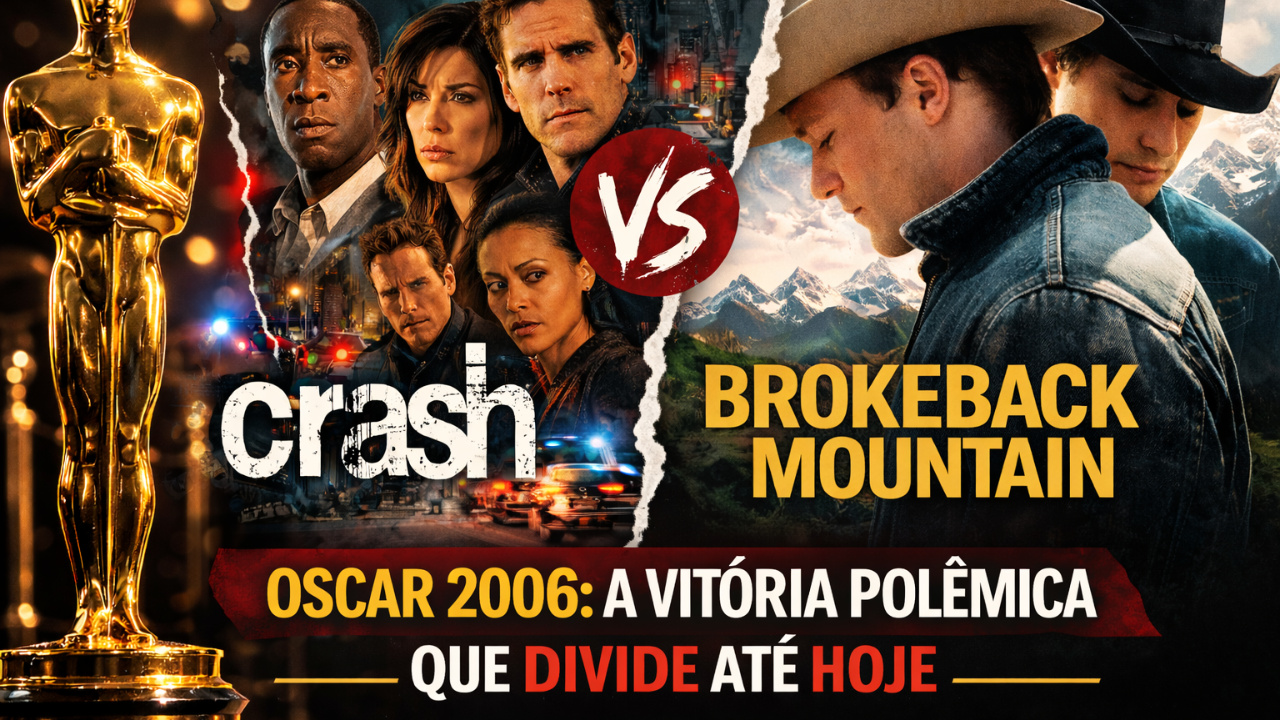
Understand How Crash Defeated Brokeback Mountain at the 2006 Oscars and Starred in One of the Most Controversial Victories in Oscar History.
On March 5, 2006, the Oscars ceremony surprised Hollywood when the film Crash, directed by Paul Haggis, won the Best Picture award and defeated the favorite Brokeback Mountain.
Actor Jack Nicholson made the announcement and reacted with a subdued “wow!” upon reading the name of the winner.
The unexpected decision quickly generated one of the most controversial victories in Oscar history and sparked debates about the award’s criteria, industry politics, and social representation in cinema.
-
Attracting around 250,000 people a year, a lighthouse 200 meters from the sea, on a 60-meter high cliff, on the North Sea coast in Denmark, becomes one of the most impressive examples of how nature can threaten historical buildings.

-
The narrowest house in the world is only 63 centimeters wide, but inside it can accommodate a bathroom, kitchen, bedroom, office, and even two staircases.

-
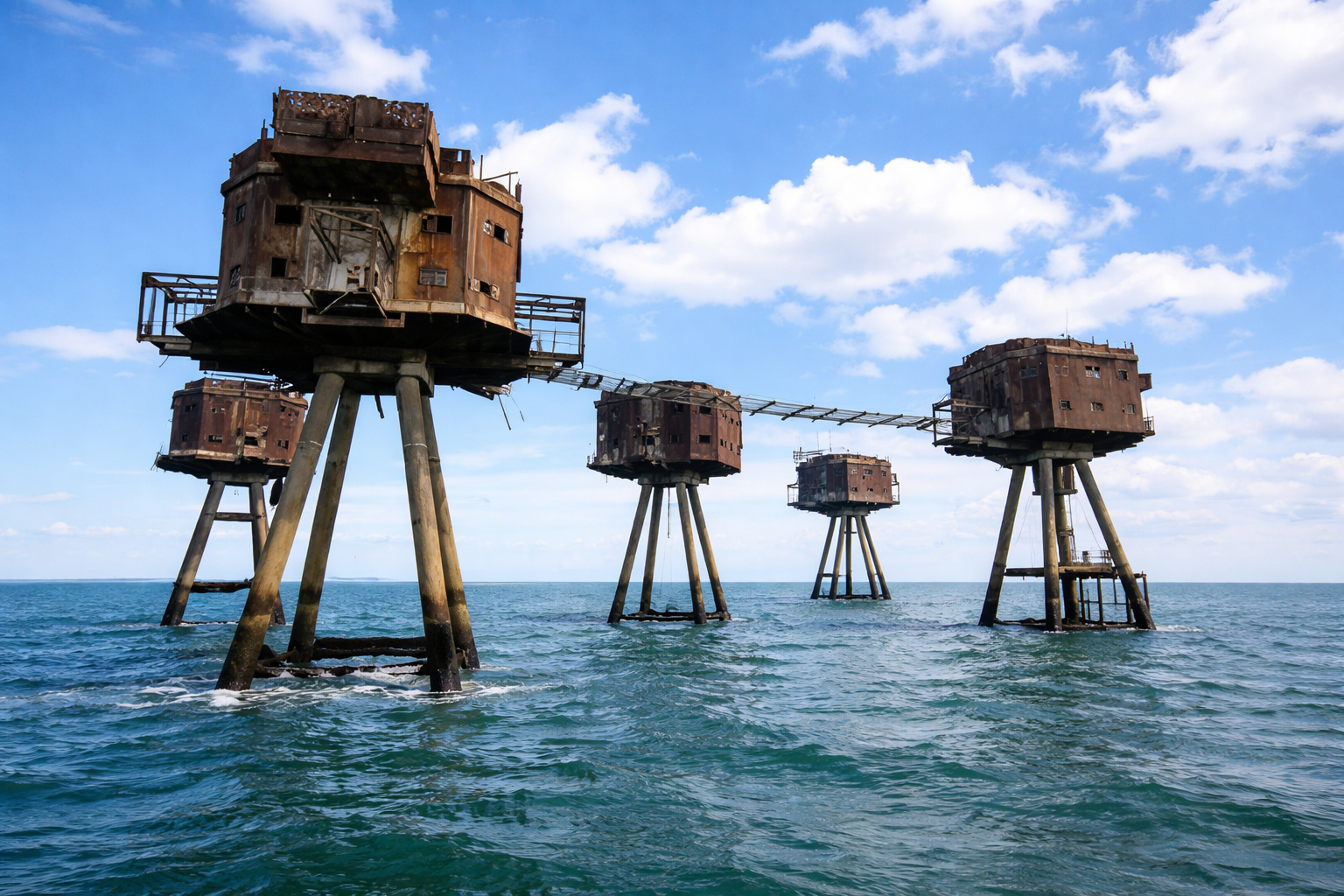
In the middle of the sea, these enormous concrete and steel structures, built by the British Navy to protect strategic maritime routes, look like they came straight out of a Star Wars movie.
-
For years, no one could cross a neighborhood in Tokyo because of the tracks, but an impressive solution changed mobility and completely transformed the local routine.


At the time, many analysts considered Crash an underdog in the race. Nevertheless, the film surpassed more acclaimed productions of the season, especially Brokeback Mountain, which had already won several major awards and was seen as the big favorite.
Nearly two decades later, critics and film fans still discuss the victory and question whether that decision is among the most controversial in Oscar history.
Crash: How the Drama That Won the 2006 Oscar Came to Be
Paul Haggis began developing the screenplay for Crash about ten years after the Rodney King incident, an emblematic episode of police brutality in Los Angeles that triggered massive protests in the city.
According to producer and screenwriter Bobby Moresco, the director believed that many people treated racism as a problem that had already been overcome and decided to address the topic in cinema.
“Paul felt that people thought the issue of racism was behind us and wanted to talk about it.”
Haggis also used a personal experience as inspiration for the story. Two teenagers mugged him in front of a video rental store.
“They ran off with the movies and maybe with some money he handed over,” Moresco recounts.
“Afterward, Paul started thinking about those two young men and wondered: who are they? What are the other elements of their lives? Where are those two guys going?”
The crew filmed the feature in just 32 days and worked with a budget of approximately US$ 6.5 million, a considered low amount by Hollywood standards.
Even with limited resources, the project gathered a star-studded cast featuring Don Cheadle, Sandra Bullock, Thandiwe Newton, Brendan Fraser, and Matt Dillon.
The Campaign That Led Crash to the 2006 Oscar
The film had its world premiere at the Toronto International Film Festival in 2004 and received applause from the audience. On the same day, distributor Lionsgate bought the rights for US$ 3 million.
Despite the positive reception, the studio did not see the film as a strong contender for the Oscar.
“It’s a fantastic movie, but it’s not a clear awards contender,” said Tom Ortenberg, then president of Lionsgate’s film division. “It’s a film that spreads mainly through word of mouth.”
Nonetheless, the campaign changed the course of the race.
The distributor sent over 100,000 DVDs of the film to members of the Screen Actors Guild (SAG), many of whom also voted in the Academy.
Additionally, a copy found its way to host Oprah Winfrey, which enhanced the visibility of the work. During her show, she encouraged the audience to watch the film and shared a personal experience related to racial discrimination.
“Suddenly, we entered the culture,” Moresco recalls.
Brokeback Mountain Was the Oscar Favorite
Even with the strong campaign for Crash, the season’s main favorite remained Brokeback Mountain, directed by Ang Lee.
The film, starring Heath Ledger and Jake Gyllenhaal, tells the love story between two cowboys and marked LGBTQIA+ representation in cinema.
Furthermore, the production dominated the awards season and won major trophies, including:
BAFTA;
Golden Globe;
Critics’ Choice;
Producers Guild.
The feature also grossed over US$ 178 million worldwide, reinforcing the perception that it would win the 2006 Oscar.
Even so, Crash earned some significant victories, including the award from the Screen Actors Guild for Best Ensemble.
“After winning the Best Screenplay award, some people said we were favorites, but I never thought we’d win Best Picture,” Moresco stated.
“I just believed it would be Brokeback Mountain.”
The Controversial Victory That Made Oscar History
When Jack Nicholson opened the envelope and announced Crash as the winner, shock enveloped the ceremony.
Right after the award, critics and analysts began to debate the Academy’s criteria and even possible biases within the industry.
Some suggested that the defeat of Brokeback Mountain could have been related to resistance to the LGBTQIA+ theme.
In a 2024 interview, Ang Lee stated that he believes homophobia may have influenced the outcome.
Writer Annie Proulx, author of the story that inspired Brokeback Mountain, also harshly criticized the decision.
“Trash [‘garbage’ in English], pardon, Crash,” she wrote in an editorial.
Criticism of Crash Grew Over the Years
With the advancement of discussions on race and diversity, critical perceptions of Crash have changed significantly over the years.
Some critics have come to regard the film as simplistic in its treatment of racism in the United States.
Critic Jourdain Searles argues that the film presents a limited view of the racial issue.
“Certainly, it makes white people feel good.”
Journalist Gene Demby also argues that the work treats racism as an individual problem rather than a structural issue.
“I don’t think a film like Crash would have been received the same way if it were released in 2009.”
Would Crash Win the Oscar Today?
Two decades later, experts remain divided over the controversial victory.
Some believe that, in the current context, a film like Crash: No Limite would find it difficult to win the Best Picture award.
“That’s why it was a milestone for representation, but today I don’t think it would win,” Searles states.
On the other hand, journalist Stacey Wilson Hunt reminds us that the Oscars have always produced unpredictable results.
“Any film can win the Oscar if it has the right publicist behind it.”
One of the Most Controversial Decisions in Oscar History
Even with divergent opinions, many critics agree that the 2006 Oscars went down in history as one of the most surprising results in the award’s history.
For some experts, the decision was not necessarily the worst by the Academy, but it certainly ranks among the most controversial.
“I don’t think it was the worst, but it was certainly one of the worst,” Searles asserts.
Regardless of critical assessment, the victory of Crash: No Limite over Brokeback Mountain remains one of the most debated moments in Oscar history—and reinforces that, in Hollywood, unexpected outcomes can always happen.
See more at: Best Picture Oscar: The Most Shocking Victory in Award History – BBC News Brasil






Seja o primeiro a reagir!