





 Portuguese
  English
  Spanish
 4 min of reading
  1 comment


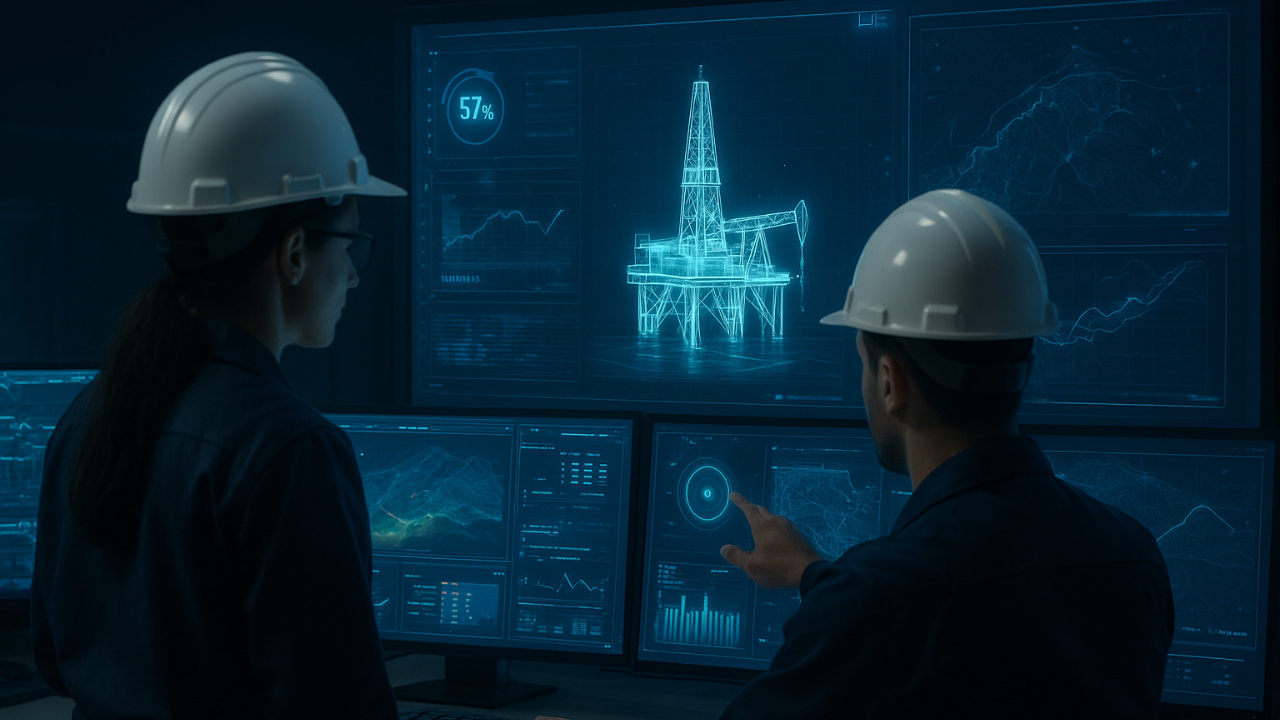

Unicamp Launches the Supercomputer Abaporu, Cutting-Edge Technology for Research That Combines AI and Petroleum Engineering, Accelerating Innovations in the Pre-Salt in Partnership with Shell Brazil.
The search for new solutions to the challenges of petroleum in the pre-salt gained momentum with the inauguration of the supercomputer Abaporu, presented by the State University of Campinas (Unicamp).
The equipment, installed in the data center of the Institute of Computing (IC), will be the core of new projects that combine artificial intelligence, engineering, and large volumes of data. According to the university, the system initially supports research developed in partnership with Shell Brazil, reinforcing a scientific bond that has lasted over six years.
Supercomputer Abaporu: High Performance and an Investment of US$ 1 Million
The new cluster from Recod.ai — the AI lab of the Institute of Computing — arrived at Unicamp after an investment of around US$ 1 million. The funds were made available by Shell Brazil through the R&D clause of the ANP, within the initiatives of the Center for Energy and Petroleum Studies (Cepetro/Unicamp).
-
The rise in oil prices could ensure an extra revenue of R$ 100 billion for the Federal Government, indicates a recent economic study.

-
Naturgy begins an investment of R$ 1.6 million to expand the gas network in Niterói and benefit thousands of new residences and businesses.

-
A major turn in the Justice system suspends tax increases and directly impacts oil and gas companies in Brazil by affecting costs, contracts, and financial planning, leaving uncertain what could happen to the sector if these costs had increased.

-
Brava Energia begins drilling in Papa-Terra and Atlanta and could change the game by reducing costs in oil while increasing production and strengthening competitiveness in the offshore market.


Named Abaporu, in reference to the modernist work of Tarsila do Amaral and reinterpreted as “data devourer,” the system features 28 NVIDIA H200 and L40s graphics cards, considered the fastest on the market for advanced AI applications.
Professor Anderson Rocha, coordinator of Recod.ai and leader of the initiative, assessed that “Abaporu should be the largest artificial intelligence cluster at Unicamp today, and one of the most robust dedicated to university research in the country.”
Partnership with Shell and Focus on Innovation Elevate the Level of Research in Petroleum
The presence of Shell Brazil is central to the advancement of this technological ecosystem. According to the company, the R&D area seeks to accelerate the adoption of emerging technologies and promote the digitalization of the energy industry. In the view of Shell Brazil’s General Technology Director, Olivier Wambersie, “projects like this enhance our ability to drive digitalization, apply artificial intelligence to complex challenges in the energy industry, integrating science, data, and innovation with a positive impact on business.”
This joint effort drives a new research cycle that will continue until 2028. During this period, Recod.ai and Shell will advance in the development of generative models applied to the simulation and management of petroleum reservoirs, especially in the context of the pre-salt.
Generative AI in the Pre-Salt: Conversations with Reservoirs and Faster Decisions
Unicamp explains that the generative models in production will allow engineers to interact with petroleum simulators using natural language. Thus, technical and parameterized commands will be replaced by conversational instructions.
Professor Anderson Rocha highlighted that the goal is to create a direct interface between the specialist and the reservoir. In his words, “today, to perform a production simulation, you need to master numerous parameters and write extensive scripts.”
With generative AI, however, this process becomes more intuitive. The concept of augmented intelligence reduces friction between the user and the system. Interaction occurs in a natural flow, making tasks faster and more accessible.
Rocha exemplifies this advancement: an engineer could request, “simulate the next 12 years of production for field X, considering wells Y and Z and variation in water injection,” and the system will automatically convert this command into technical formats, triggering traditional simulators. If there are gaps, the AI itself will ask additional questions, such as “what injection regime should be adopted?”
This approach creates a dynamic conversational environment, in which the system guides the specialist throughout the process.
Massive Data Analysis to Support Decisions in the Pre-Salt
In addition to transforming human interaction with complex systems, the algorithms under development have the capacity to integrate seismic, geological, and production data on a large scale. The identification of patterns and anomalies, often imperceptible to the human eye, occurs almost in real-time.
This potential enhances the accuracy in defining injection and extraction strategies, improves the prediction of well performance, and directly contributes to typical pre-salt challenges. In a sector where decisions need to be swift and based on multiple variables, the use of AI is expected to significantly elevate operational efficiency.
Launch Event Gathers Academic Authorities and Energy Sector Executives
The inauguration ceremony took place on November 3 and was attended by Olivier Wambersie, along with other executives from Shell Brazil. Representing Unicamp were Professor Anderson Rocha, the Vice-Rector of Research Ana Maria Frattini Fileti, the Deputy Director of Cepetro Alessandra Davólio Gomes, and Professor Denis José Schiozer, coordinator of the Unisim group, specialized in simulation and management of reservoirs.
The team involved in the projects consists of at least 35 members, including researchers, doctoral students, post-doctoral researchers, and programmers, reinforcing the collaborative nature of the initiative.
Meanwhile, the national technology sector is monitoring another relevant movement: OpenAI conditioned a US$ 5 billion investment in Brazil to changes in copyright legislation, as reported by Cointelegraph Brazil.







… [Trackback]
[…] Read More: en.en.clickpetroleoegas.com.br/Abaporu-supercomputer-inaugurates-a-new-era-of-AI-in-the-pre-salt-layer-and-transforms-oil-research-with-generative-models-at-Unicamp./ […]