





 Portuguese
  English
  Spanish
  4 min of reading
  187 comments


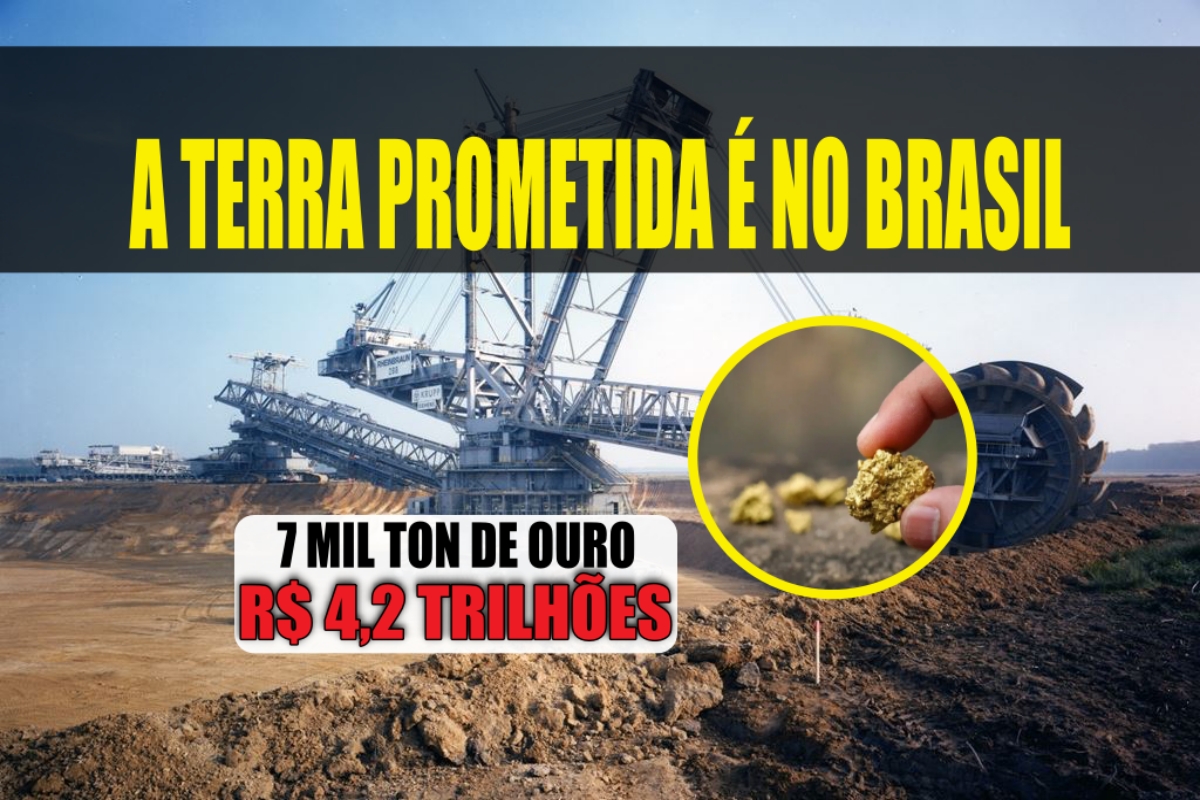


New Trillion-Dollar Discovery in Piauí Could Change Mining in Brazil: A Gold Deposit Valued at R$ 4.2 Trillion
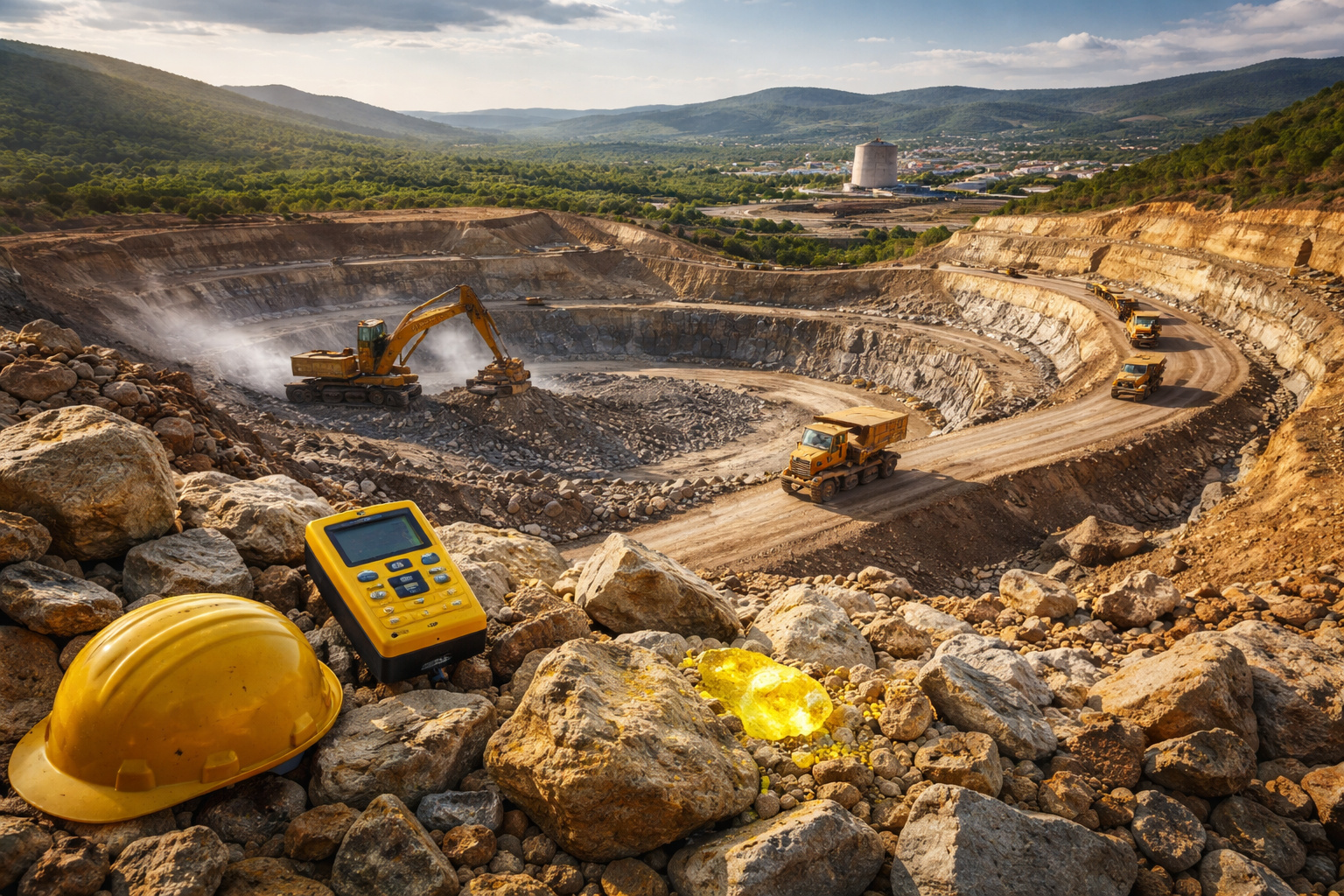
In the hinterland of Piauí, a piece of land once forgotten may be on the verge of becoming one of the most coveted regions in Brazil. A technical report released in May revealed the presence of a gigantic gold deposit in the municipality of Currais, capable of transforming the local economy and putting the state on the global mining radar. We are talking about an estimated 7,000 tons of the precious metal hidden beneath Piauí’s soil — a volume that, at current prices, exceeds the impressive mark of R$ 4.2 trillion.
Ultra-High Purity Gold Surprises Experts
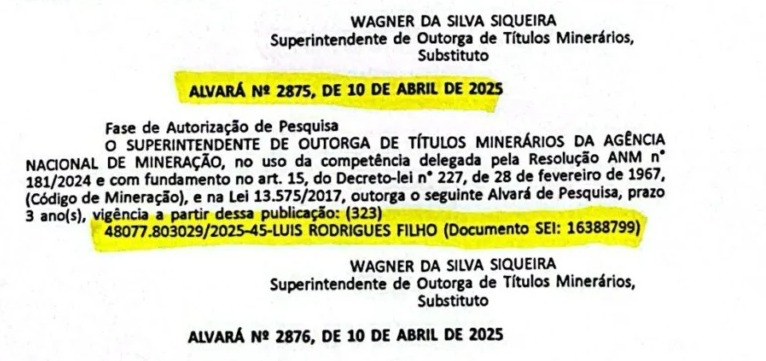
The discovery was made in the rural area of Currais, on land belonging to former councilman of Bom Jesus, Luiz Rodrigues Filho. The region already has a research permit approved by the National Mining Agency (ANM), which legalizes exploration for geological studies. What caught the technicians’ attention was the purity rate in the samples taken: 89.62 grams of gold per ton of soil — a number considered extraordinary.
To put it in perspective, the industry classifies any deposit with a content above 20 grams per ton as excellent. In other words, we are talking about something more than four times that reference value. The data was confirmed by a specialized laboratory in Bahia, according to the Gurguéia Portal.
-
Brazil extracts 26.3 million tons of ore from what was previously treated as waste, transforming residues into wealth, producing over 3 million tons of sand, and demonstrating how national mining is relearning to generate value.
-
A $3.5 billion megaproject in Latin America pumps desalinated seawater at 1,050 liters per second over 194 km to keep a copper supermine in the Andes operational for another 20 years.
-
A hidden mine in the Andes valued at nearly R$ 1 trillion is starting to attract global attention, containing copper, gold, and silver, and raises an intriguing question: why do Argentina and Chile need to act together to exploit this gigantic wealth?
-
A silent discovery in the interior of Bahia could change the future of energy in Brazil: a uranium reserve in Lagoa Real has an estimated capacity to produce 400 tons per year and is already attracting the attention of energy sector specialists.

A Deposit That Could Change the Future of Currais
Based on the analysis of the total area of 1,984 hectares — or about 19.8 million square meters — and considering an exploitable depth of two meters, it is estimated that there are approximately 79.3 million tons of soil containing gold. The average density of the region’s soil is 2 tons per cubic meter, leading to a total excavatable volume of about 39.6 million cubic meters.
The calculations are impressive:
- 79,360,000 tons × 89.62 g of gold per ton = 7,108,083,200 g
- This equates to 7,108 tons of gold.
With the current price of R$ 591.33 per gram (based on ANM data), the gross value of the deposit reaches:
R$ 4,204,293,087,456.00 — or, simplifying, more than R$ 4.2 trillion.

Development Opportunity for Southern Piauí
If extraction is authorized, the impact on the region will be massive. The municipality of Currais could establish itself as a new mining hub in Brazil, attracting major companies in the sector, international investments, and promoting significant job creation, both direct and indirect. Experts suggest that a deposit of this magnitude could also boost the entire regional infrastructure, improving roads, services, and access to cutting-edge technologies.
In an interview with the Gurguéia Portal, the landowner stated that, if necessary, he will count on the support of the Federal Police to protect the site, signaling the importance and sensitivity of the discovery.
Vale do Gurguéia: A New Frontier of Mining
This is not the first time that Southern Piauí has gained attention for its mineral potential. In Gilbués, a city near Currais, deposits with about two million carats of diamonds have already been identified, according to information from Revista Minérios & Minerales. Now, with the discovery of a gold reserve of this proportion, the Vale do Gurguéia firmly enters the map of Brazilian mineral wealth.
Even with the enthusiasm, experts warn of the challenges that involve large-scale mining: environmental issues, land regularization, and the respect for speed limits in the advancement of exploration. According to geologist Maurício Nascimento, “the race for gold needs to be conducted with technical planning and environmental responsibility; otherwise, what is today a promise of wealth could become a social and ecological problem tomorrow.”
It is still too early to say when extraction will actually begin. The process depends on various stages, including environmental licensing, economic feasibility studies, and, of course, the interest of major mining companies willing to invest heavily in the region. But one thing is certain: Currais has just entered the national and international radar, and the future of the city could be about to shine like never before.
Do you believe that the exploration of this gold deposit will really benefit the local population or just large companies? Leave your comment below or share this article with anyone who is also interested in mining and regional economics.








Vocês estão divulgando uma fake news. Pensei que o jornalismo serio verificasse as informações antes de divulga-las.
Fake new
Deveria ser td explorado por uma empresa estatal, ouro beneficiado aki no Brasil sem poder exportar pra lugar algum… Deveria ir, senão td, a maioria dele pros cofres do Tesouro Nacional, fortalecendo o Real brasileiro… Obviamente, os royalties e impostos seriam pagos pela União ao Estado e ao Município… Um projeto amplo pro desenvolvimento da região, não só mais um lugar q se beneficiou pouco ou nada de tda essa riqueza, como vemos em tantos lugares Brasil afora!