





 Portuguese
  English
  Spanish
  6 min of reading
  0 comments


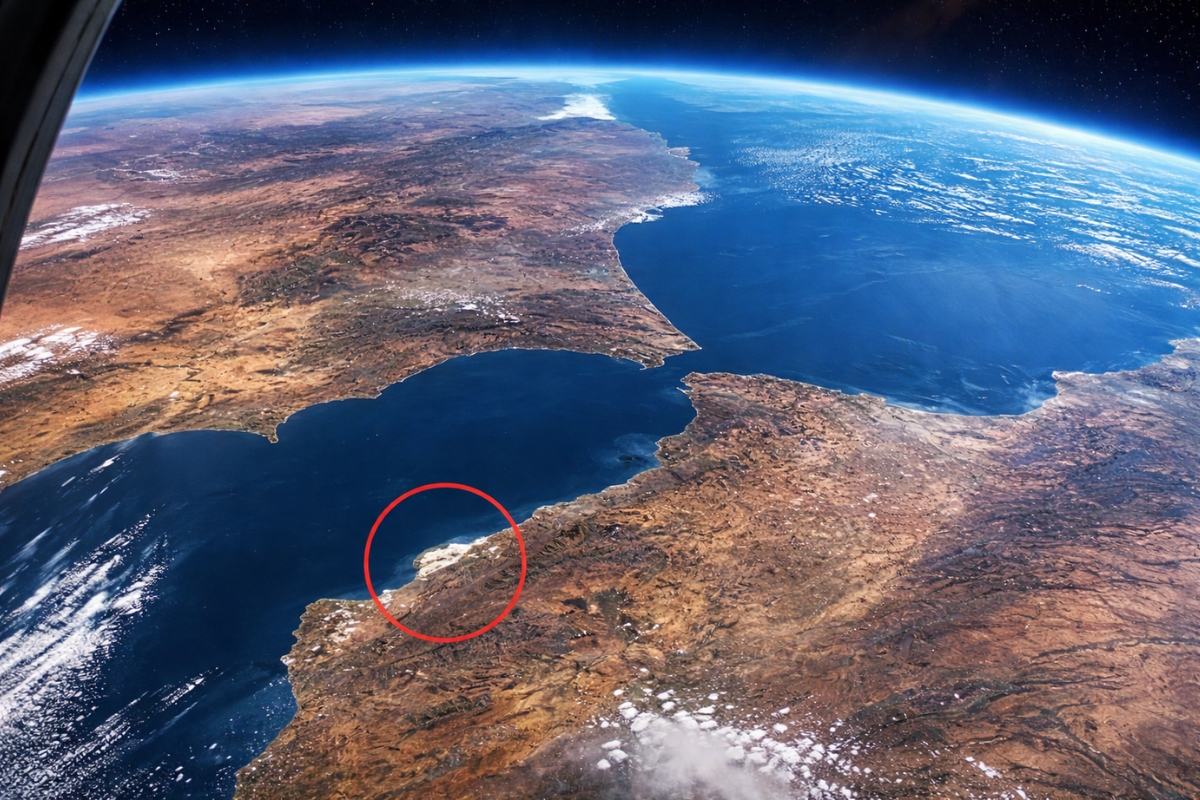
A NASA survey pointed to a white spot in southern Spain as the only human structure that clearly appears to the naked eye from the International Space Station
The idea of seeing works like the pyramids of Egypt or the Great Wall of China from space has been a popular reference for decades, but the reality is different. From the International Space Station, what stands out clearly to the naked eye is an agricultural phenomenon concentrated in southern Spain.
The name grabs attention, but the scenario is quite practical: it is the sea of plastic in Almería, a vast area of greenhouses covering more than 40,000 hectares in southeastern Spain. The complex appears as a bright, clear strip due to the way it interacts with sunlight.
The impact goes beyond spatial curiosity. The structure has transformed an arid environment into a productive hub, boosting exports and sparking debates about water and waste. To understand why this area is visible from space, one must look at the material covering the crops and the scale of this agricultural model.
-
After 377 years of history, the Brazilian Army will have its first female general: Colonel Claudia Cacho has been promoted to brigadier general by Lula and will receive the sword and command baton this Wednesday in Brasília.

-
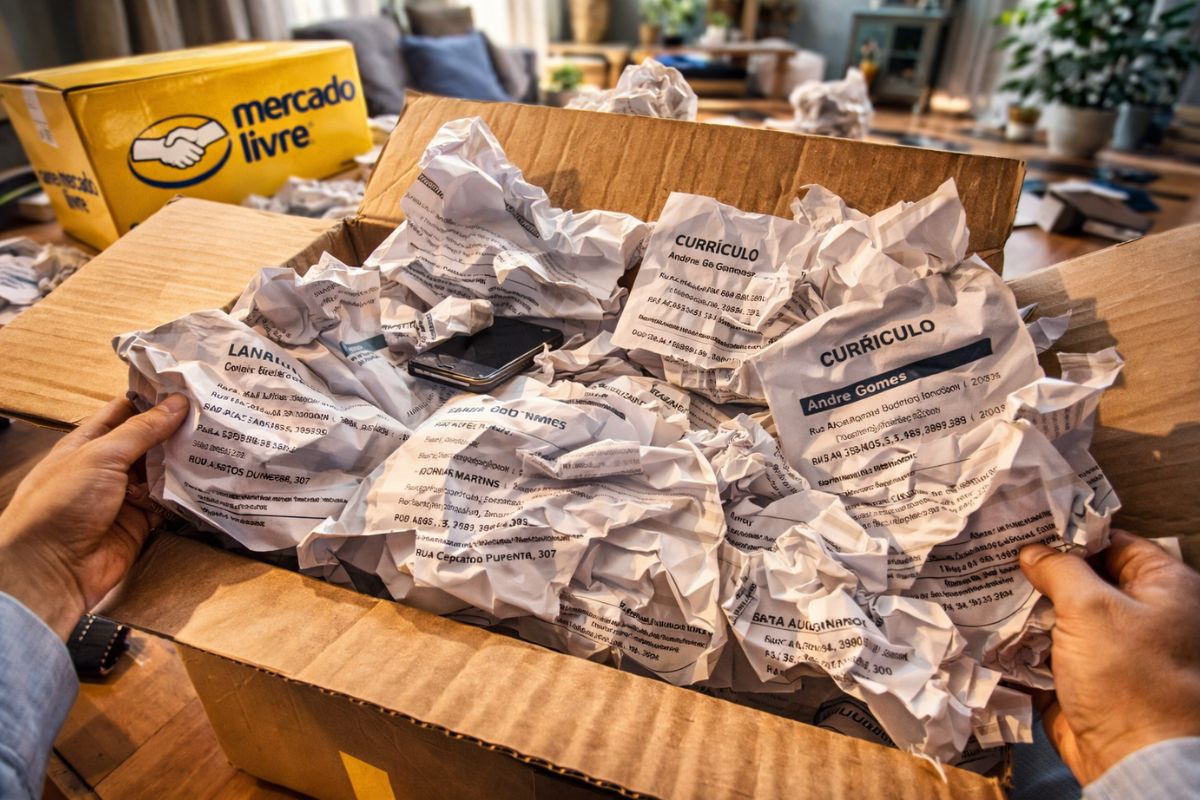
A Mercado Livre customer opened their package and found 32 resumes of people looking for jobs crumpled as protective paper inside the box, exposing names, addresses, documents, and phone numbers of dozens of candidates.
-
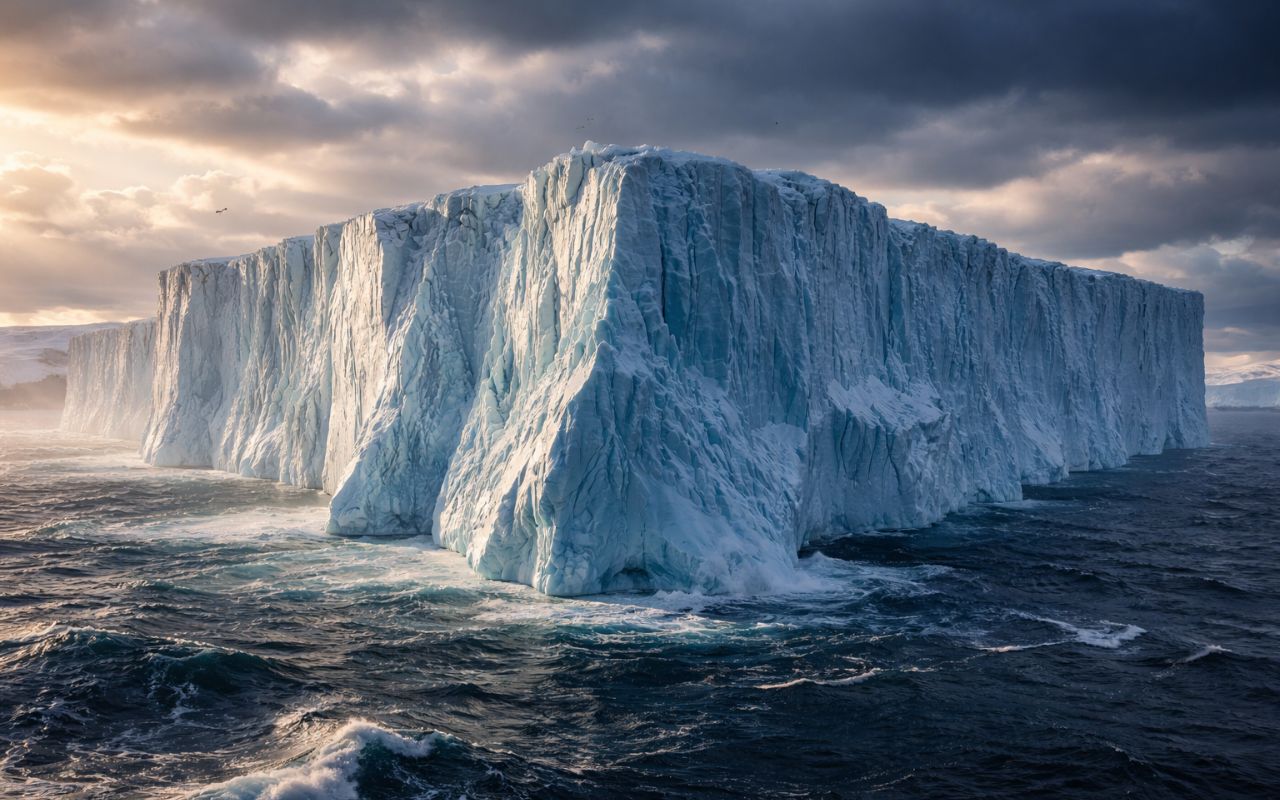
Iceberg A23a, one of the largest in the world, is undergoing accelerated collapse and may disappear: what explains the end of the ice giant?
-
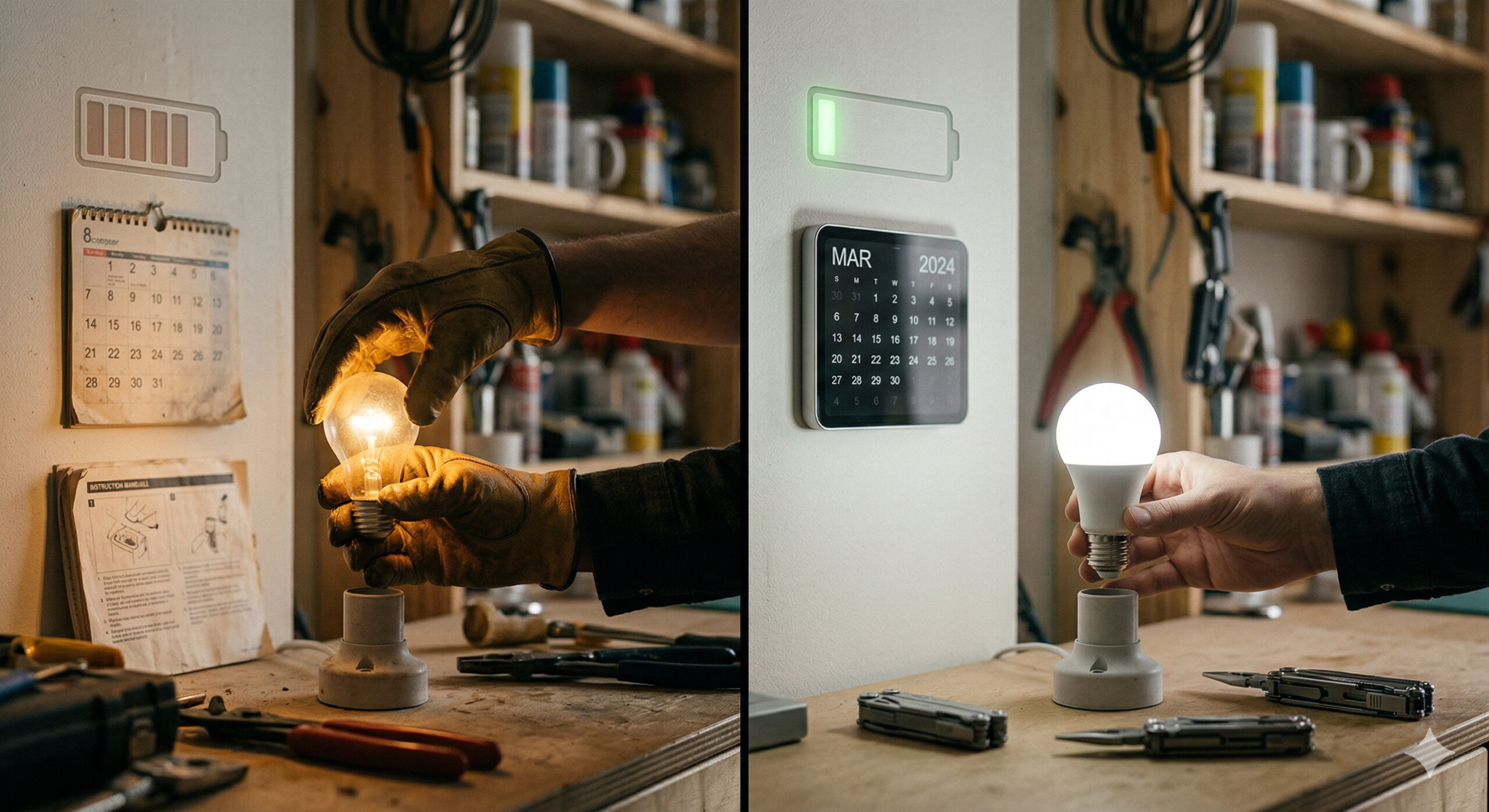
The simplest swap at home can reduce energy consumption by up to 90% without changing habits, using a technology that lasts up to 25 times longer and consumes only a fraction of the electricity.
Why the sea of plastic in Almería appears so clear from orbit

The sea of plastic is neither an ancient monument nor a classic architectural work. The visibility comes from the combination of gigantic scale and a simple detail: the roofs of the greenhouses are covered with white polyethylene, a material that reflects light strongly.
This reflectivity creates a bright area that contrasts with the semi-desert surroundings. In satellite images and records made by astronauts, the region stands out as a clear spot near the coast, attracting attention even when other constructions are camouflaged in the landscape.
Beyond color and brightness, the decisive factor is the continuity of the complex. Instead of a single small point, there is a wide and continuous expanse of reflective surfaces, which increases the chance of direct identification from the International Space Station.
Where the Dalías Field is and how the greenhouses occupy the region
The area spreads across the Dalías Field, in the province of Almería, in southeastern Spain. The land is arid, with a challenging climate, and the plastic covering has altered the appearance of the soil to the point of marking the region in records made from space.
The size of the agricultural complex is also highlighted by numbers associated with the greenhouses. There are over 28,500 hectares of greenhouses, consolidating the territory as one of the major agricultural production centers in Europe.
The practical result is a landscape completely distinct from the surroundings, with thousands of white covers forming a continuous carpet. This visual uniformity helps explain why this area manages to stand out in orbital observation.
What the confirmation in 2007 and the images of 2022 showed in practice
The identification of the sea of plastic as a structure visible to the naked eye from the International Space Station was confirmed in 2007 by Spanish astronaut Pedro Duque. The observation reinforced that the highlight came from the contrast between the light roofs and the surrounding scenery.
Later, in 2022, images showed light reflecting in the region and forming a white spot near the coast of the Alborán Sea. The area could also be seen by satellites like Landsat 9, which helps understand how reflectivity behaves in different types of capture.
This set of records makes the phenomenon easy to recognize in maps and high-altitude images. The central idea is simple: the more light reflects back into space, the more evident the mark of the land becomes in orbital observation.
Why the Great Wall and the pyramids do not make the list of what is visible to the naked eye

The Great Wall of China is often cited as visible from space, but this fame does not hold up when the criterion is to see with the naked eye. The structure follows mountains and terrain, and therefore tends to blend in with the surrounding geography, losing contrast at great distances.
Other constructions can be observed from space, but they fall into another category. Pyramids of Egypt, Bingham Canyon Mine in the United States, Three Gorges Dam in China, and Palm Jumeirah in Dubai can appear in photos taken by astronauts, but with the help of powerful cameras and lenses.
The decisive point is the equipment. There is mention of using telephoto lenses, and even the possibility of an 800-millimeter lens to capture the pyramids more clearly. To the naked eye, they do not stand out in the same way as the sea of plastic.

How advanced agriculture worked in an extremely arid climate
Besides attracting attention from space, the sea of plastic houses a production model designed for difficult conditions. In a region with little water and a very dry climate, techniques such as drip irrigation, which improves water use, and hydroponics, which allows cultivation without soil, came into play.
These choices helped increase productivity and stability of crops in an environment that would naturally have severe limitations. Temperature control and internal management of the greenhouses also contributed to creating more predictable conditions throughout the year.
In practice, this supported a leap in productive capacity and created an agricultural hub that remains active even when the external climate is hostile. The result is a constant production in a region that, without this system, would have much less space in the supply chain.
Production volume, exports, and the role of 2.5 to 3.5 million tons per year
The scale of the complex is also evident in the amount produced. The region generates between 2.5 and 3.5 million tons of fruits and vegetables per year, occupying an important space in the supply of out-of-season food for Europe.
Among the cultivated and exported products are tomatoes, peppers, cucumbers, and melons. Tomatoes and peppers stand out as relevant items in external sales, reinforcing the economic weight of the greenhouse system for the province of Almería.
This combination of volume and regularity helps explain why the sea of plastic has become a reference. It is not just about being visible from space, but about sustaining a continuous flow of large-scale production and distribution.
The climatic effect of albedo and the environmental challenge of plastic and water
The reflectivity that makes the area visible also influences the local climate. An increase in albedo of 10% was observed between 1983 and 2006, indicating that more sunlight began to be reflected back into space, creating a localized cooling effect.
This behavior contrasts with warming trends in nearby areas and shows how changes in land use can alter regional temperature. At the same time, the solution brings clear challenges related to the sustainability of the model itself.
The use of plastic in the roofs raises concerns when the material degrades, requiring research for more eco-friendly options and recycling strategies. The intense water consumption is also still under debate, especially in a scenario of increasing scarcity.
The history of this system began to take shape in the 1950s and 1960s, when farmers began using plastics to protect crops from wind, salinity, and strong sunlight. Over time, advancements in irrigation and climate control solidified the area as a reference in agricultural efficiency, but with continuous pressure to reduce impacts.






Seja o primeiro a reagir!