





 Portuguese
  English
  Spanish
  4 min of reading
  0 comments


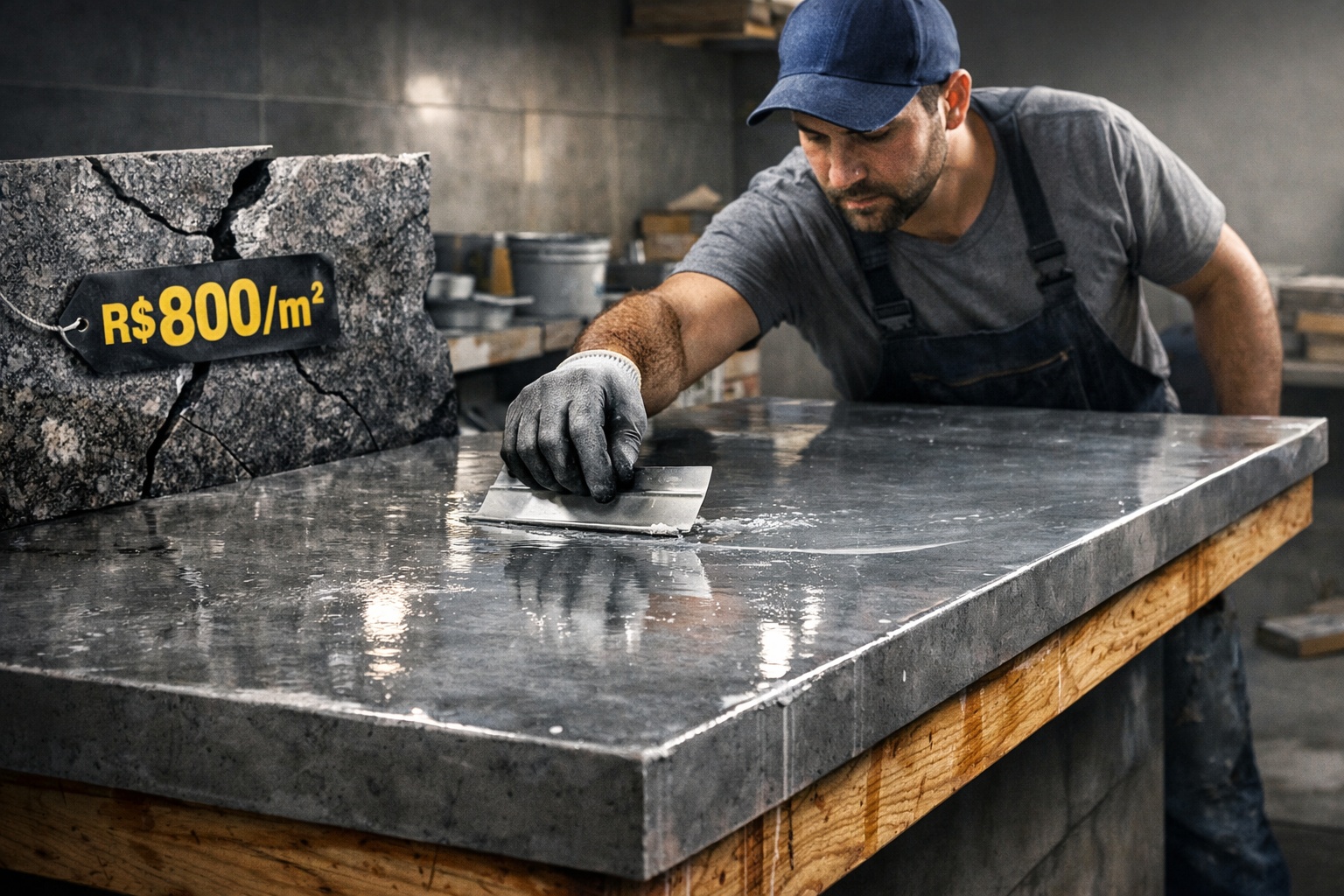
Burnt Cement Countertop Over Structural Plywood Can Cost About R$ 150 Per Meter, Replacing Granite At R$ 800 And Guaranteeing Waterproof Surface With Epoxy Resin.
The cost of granite countertops can easily exceed R$ 800 per linear meter, depending on the thickness of the slab, finish, and installation. In residential projects, this stage represents one of the largest expenses in the kitchen. In light of this, structural solutions with mortar have been gaining traction, especially the so-called burnt cement countertop over structural plywood, finished with epoxy resin for waterproofing. The technique uses a rigid base of structural wood as support and receives a layer of mortar molded on-site, creating a continuous surface with no visible seams. The resin finish creates a barrier against water and grease, allowing for use in kitchens and gourmet areas.
The proposal combines low material cost, simplified execution, and contemporary industrial aesthetics.
How The Burnt Cement Countertop Over Structural Plywood Works
The system starts from a firm base. The structural plywood – usually marine or high strength – is fixed to the carpentry or masonry structure. This base serves as support for the application of mortar.
-
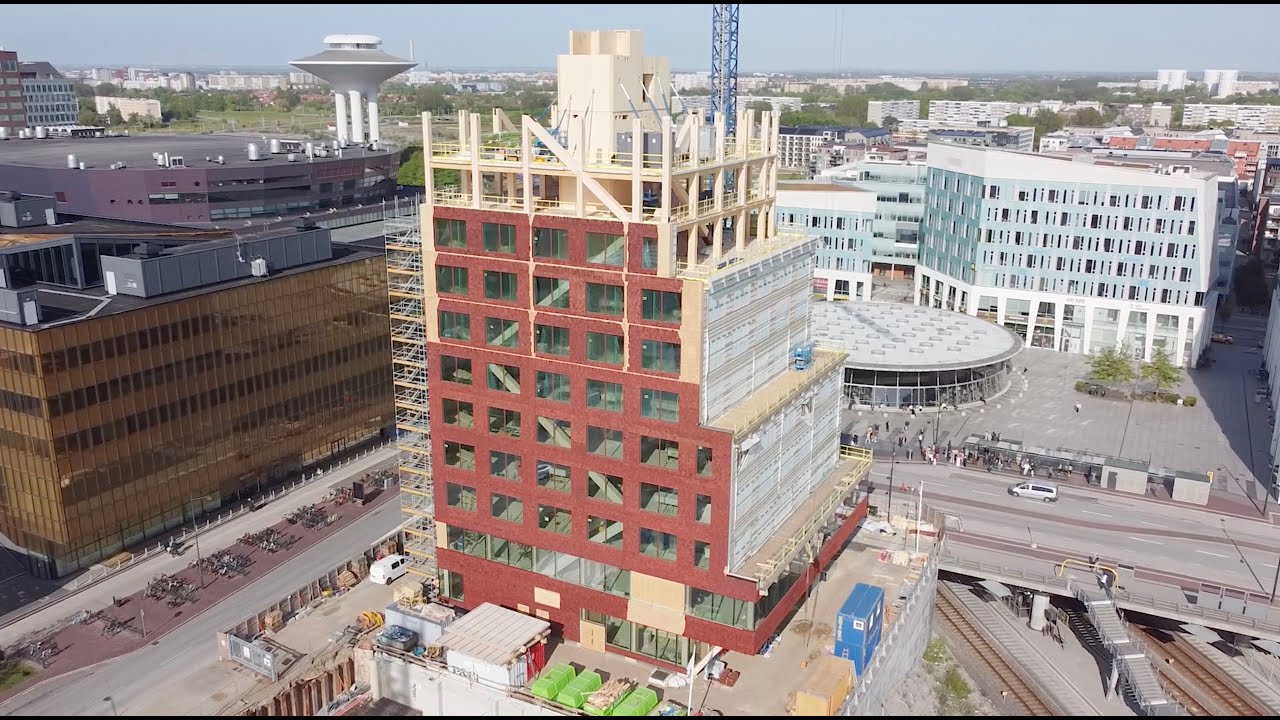
In Sweden, a 51-meter tower was built almost entirely of wood, without a concrete structural core and with solar panels integrated into the facade, using CLT and laminated beams to challenge the dominance of steel and concrete in modern buildings.
-
The section of Serra da Rocinha on BR-285 is now open in Timbé do Sul: 50 m tensioned curtains and top-down technique stabilize the slope, with a stairway duct controlling the water.

-
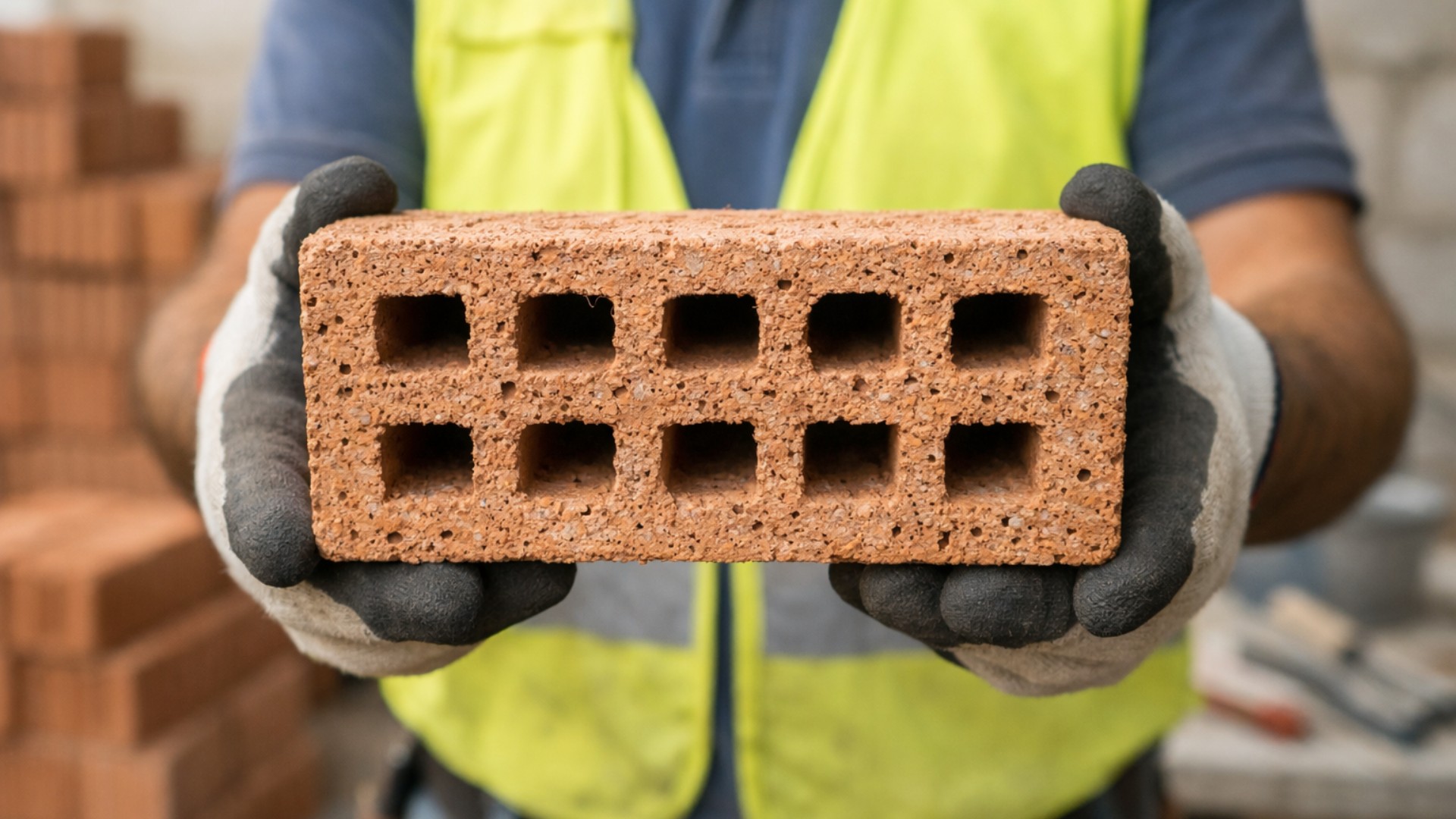
Scientists use sawdust mixed with clay to create a lighter brick, promising efficient thermal insulation and impressing by transforming waste into a solution for construction.
-
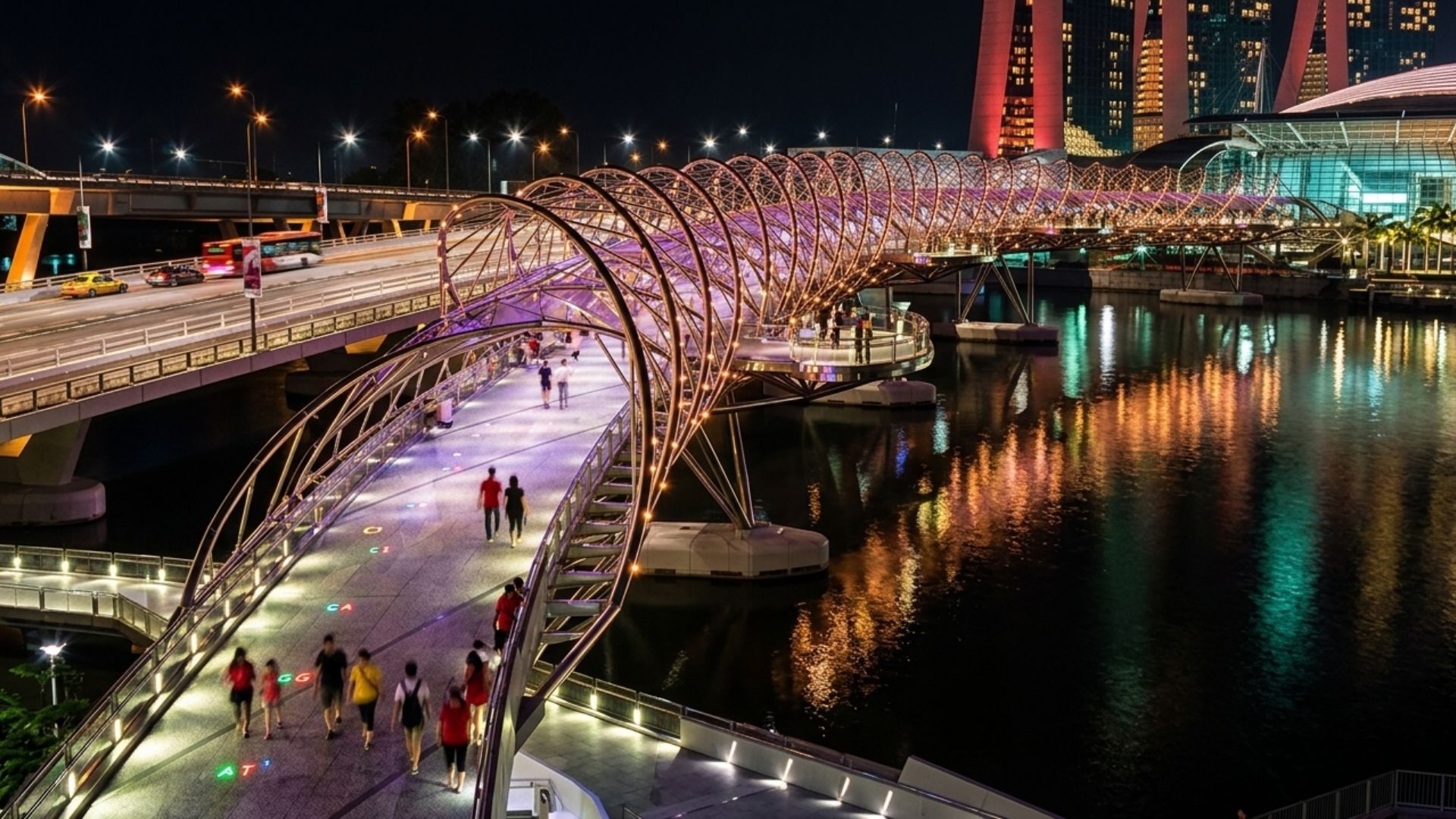
With a DNA shape, this bridge in Singapore draws attention in modern architecture and surprises tourists by transforming a simple crossing into an unforgettable visual experience in the urban heart.

On top of the plywood, a bonding bridge is applied, followed by a layer of cementitious mortar. The surface is leveled and smoothed with a metal spatula, creating the effect known as burnt cement. After the initial curing, the crucial step comes in: sealing with epoxy resin.
The resin is responsible for transforming a porous surface into a waterproof and stain-resistant countertop.
Average Costs Of The Burnt Cement Countertop
One of the main attractions is the reduced cost compared to granite or quartz. While granite can reach R$ 800 per installed meter, the cement countertop presents approximate values such as:
- Structural Plywood
- Cement and Fine Sand
- Additives and Bonding Bridge
- Epoxy Resin

The total cost can be around R$ 150 per linear meter in materials, depending on the region and thickness applied.
The difference in value can represent savings of over 70% on the kitchen budget.
Resistance And Waterproofing With Epoxy Resin
The mortar, on its own, is porous. Therefore, the application of epoxy resin is a decisive step. The resin creates:
- Waterproof Layer
- Resistance To Grease
- Protection Against Stains
- Ease Of Cleaning
When applied correctly, the surface becomes suitable for daily use in kitchens, including contact with water and food. The durability directly depends on the quality of the sealing.
Technical Comparison: Burnt Cement X Granite
Granite is a natural rock with high mechanical and thermal resistance. Burnt cement, on the other hand, is a system molded on-site.
In comparative terms:
- Granite is natural material, pre-cut and installed
- Burnt cement is molded on-site
- Granite has high thermal resistance
- Burnt cement depends on surface protection

The strong point of the cement system lies in its customization and cost. While granite requires transport and cutting in a marble workshop, burnt cement is executed directly on-site.
Industrial Aesthetics And Customization
The cement countertop allows for variations in shade through mineral pigments. It can also receive a matte or satin finish, depending on the resin used. This type of countertop is often associated with:
- Industrial Kitchens
- Minimalist Projects
- Contemporary Environments
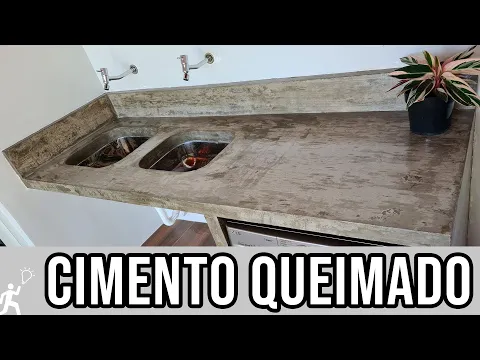

The absence of visible seams creates a modern monolithic effect.
Structure And Important Technical Care
To ensure adequate performance, some points are essential: The plywood base must be well fixed and leveled. The thickness must support the weight of the mortar. The curing process must be respected before applying the resin.
Furthermore, direct contact with extremely hot pots can compromise the resin, so it is advisable to use thermal supports. The correct execution determines the longevity of the countertop.
Maintenance Over Time
With the surface properly sealed, maintenance is simple:
- Cleaning With A Damp Cloth
- Avoid Abrasive Products
- Reapplication Of Resin If There Is Wear After Years Of Use
No periodic polishing is needed as with some types of stone. Preventive maintenance increases the durability of the waterproofing.
Advantages Of The In-Situ Molded Countertop
Among the main benefits of the technique are:
- Significant Cost Reduction
- Freedom Of Shape And Dimension
- Integration With Walls And Baseboards
- Continuous Visual
As the molding is done on-site, adaptations to irregular spaces become simpler.
Limitations Of The Solution
Despite the economic advantages, the system has limitations. It does not have the same natural thermal resistance as granite. It relies on the quality of the execution. Cracks may arise if the base is not well-structured.
Therefore, it is essential that the structure is properly sized and that the curing process is respected.
The burnt cement countertop over structural plywood emerges as an economical alternative to traditional granite. With an approximate cost of R$ 150 per linear meter in materials, it represents a significant reduction in the kitchen budget.
When finished with quality epoxy resin, the surface becomes waterproof, washable, and stain-resistant, meeting the demands of domestic use.
The solution combines economy, contemporary aesthetics, and functionality, provided it is executed with the proper technique.
More than just replacing natural stone, the proposal offers a new constructive approach to residential countertops, prioritizing versatility and cost-effectiveness.









-

-

-

5 pessoas reagiram a isso.